What function does a laboratory tube furnace serve in the powder synthesis of chalcogenide perovskites? Master Phase Purity
Updated 3 months ago
A laboratory tube furnace serves as the foundational thermal reactor for synthesizing chalcogenide perovskites. It provides the highly controlled environment necessary to drive solid-state reactions and atomic diffusion between precursor powders, such as barium sulfide and zirconium sulfide. By precisely managing temperature profiles and atmospheric chemistry, the furnace facilitates the complete sulfurization and crystallization of these complex materials into their target phases.
The tube furnace is the primary tool for overcoming the high energetic barriers of chalcogenide synthesis, enabling researchers to achieve phase-pure, high-crystallinity powders through the simultaneous regulation of heat, time, and chemical atmosphere.
Driving Chemical Transformation and Diffusion
Facilitating Solid-State Reactions
The furnace provides the thermal energy required to break and reform chemical bonds in solid precursors. For materials like BaZrS3, the furnace maintains temperatures typically between 500°C and 1050°C to ensure the reaction proceeds to completion.
Driving Atomic Diffusion
At high temperatures, the furnace promotes atomic diffusion between precursor particles. This movement of atoms is essential for transforming individual powders into a unified crystalline lattice with a specific stoichiometric ratio.
Managing Extended Dwell Times
Synthesis often requires holding a specific temperature for several hours or days. The tube furnace ensures a stable thermal field over these long durations, preventing the formation of incomplete or "half-baked" intermediate phases.
Precision Control of Material Phase and Kinetics
Regulating Nucleation Kinetics
The high-precision control systems allow for specific heating and cooling rates, such as 1°C per second. This precision is critical for managing the nucleation kinetics of grains, which directly influences the final particle size and quality.
Suppressing Competitive Phases
Careful temperature regulation helps suppress the formation of unwanted competitive phases, such as Ruddlesden-Popper phases. By staying within narrow thermal windows, the furnace ensures the product remains a single-phase polycrystalline powder.
Phase Transition Research
The furnace acts as a laboratory for studying phase transition kinetics. Researchers use the flexible heating curves to identify the exact moments when a material shifts from one crystalline structure to another.
The Necessity of a Controlled Atmosphere
Ensuring Complete Sulfurization
Unlike oxides, chalcogenides require a sulfur-rich environment to prevent oxygen contamination. The tube furnace allows for the introduction of reactive gases like CS2 or H2S mixed with inert carriers like Nitrogen (N2) or Argon.
Preventing Oxidation and Degradation
The sealed quartz or ceramic tubes prevent ambient oxygen from entering the reaction zone. This is vital because even trace amounts of oxygen can degrade the electronic properties of the resulting chalcogenide perovskite.
Chemical Vapor Transport (CVT) and CVD
Beyond simple heating, tube furnaces support Chemical Vapor Deposition (CVD). In these setups, the furnace evaporates precursors and guides their growth onto substrates through precise vapor-phase transport within a uniform thermal gradient.
Understanding the Technical Trade-offs
Thermal Gradients and Uniformity
While tube furnaces are designed for uniformity, temperature gradients can exist near the ends of the tube. If precursors are placed outside the "sweet spot" (the central isothermal zone), the resulting powder may have inconsistent crystallinity or varying chemical compositions.
Throughput vs. Precision
Small-diameter tube furnaces offer excellent control but very low throughput, often producing only a few grams of material at a time. Increasing the tube size to scale up production can introduce gas flow turbulence and uneven heating, potentially compromising the material's phase purity.
Material Compatibility and Contamination
High-temperature sulfurization is chemically aggressive and can gradually etch quartz tubes or degrade seals. Over time, this degradation can introduce silicon or other impurities into the perovskite powder, necessitating regular equipment maintenance and validation.
How to Apply This to Your Project
Selecting a Process Path
- If your primary focus is phase purity from oxide precursors: Use a high-temperature profile (approx. 1050°C) with a reactive sulfurizing gas like CS2 to ensure a complete chemical conversion.
- If your primary focus is controlling grain size and morphology: Prioritize a furnace with a high-precision digital controller that allows for ultra-slow cooling rates to encourage large, well-defined crystal growth.
- If your primary focus is investigating new doping modifications: Utilize a multi-zone tube furnace to create a temperature gradient that allows for precise elemental vapor pressure control during the synthesis.
The tube furnace remains the most reliable instrument for navigating the complex thermodynamic landscape of chalcogenide perovskite synthesis.
Summary Table:
| Key Function | Technical Mechanism | Benefit for Perovskite Synthesis |
|---|---|---|
| Thermal Activation | Solid-state reaction & atomic diffusion | High crystallinity and phase-pure powders |
| Atmosphere Control | Injection of reactive gases (CS2/H2S) | Complete sulfurization & oxygen prevention |
| Kinetics Regulation | Precise heating/cooling rates | Controlled grain size and morphology |
| Phase Stability | Stable, uniform isothermal zones | Suppression of unwanted competitive phases |
| Process Versatility | Supports CVT and CVD configurations | Enabling high-quality thin film/vapor growth |
Elevate Your Material Research with THERMUNITS Precision
As a leading manufacturer of high-temperature laboratory equipment, THERMUNITS understands the rigorous demands of chalcogenide perovskite synthesis. Our advanced Tube Furnaces, CVD/PECVD systems, and Atmosphere Furnaces are engineered to provide the ultra-stable thermal environments and precise gas control necessary for your most critical R&D projects.
From Muffle and Vacuum furnaces to specialized Rotary kilns, Hot Press systems, and Vacuum Induction Melting (VIM) furnaces, we offer a comprehensive range of thermal processing solutions. Our equipment ensures maximum phase purity, uniform heating, and reliable performance for material science and industrial research.
Ready to optimize your heat treatment process? Contact our technical experts today to find the perfect solution for your lab.
References
- Kiruba Catherine Vincent, Rakesh Agrawal. Expanding the horizons for viable precursors and liquid fluxes for the synthesis of BaZrS<sub>3</sub> and related compounds. DOI: 10.1039/d4tc02287d
Mentioned Products
- 5 Inch Two Zone Rotary Tube Furnace 1100C for Powder CVD and Material Synthesis
- High Temperature 1700C Vertical Tube Furnace for Powder Spherification and Material Sintering
- Two Zone Rotary Tube Furnace for Powder CVD Coating and Core Shell Material Synthesis 1100C
- High Temperature Automated 5 Inch Tube Furnace for Autonomous Material Research and Advanced Laboratory R&D
- High Temperature 1200C Split Tube Furnace with Hinged Vacuum Flanges and 4 Inch Quartz Tube for Laboratory Research
People Also Ask
- Why is a Tube Furnace typically utilized for CVD? Achieve Precision in Graphene and 2D Material Synthesis
- How does a rotary tube furnace improve the processing of granular materials? Enhance Uniformity and Reaction Kinetics
- In what ways do rotary tube furnaces enhance chemical and specialty mineral processing? Drive Precision and Uniformity.
- Why is the precise optimization of residence time essential in the catalyst calcination process? Maximize Your Yields.
- Why use a rotary tube furnace for FACS carbonization? Ensure uniform morphology and prevent sphere agglomeration.

Tech Team · ThermUnits
Last updated on Jun 03, 2026
Related Products
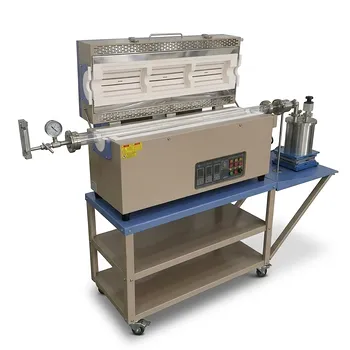
5 Inch Two Zone Rotary Tube Furnace 1100C for Powder CVD and Material Synthesis

High Temperature 1700C Vertical Tube Furnace for Powder Spherification and Material Sintering
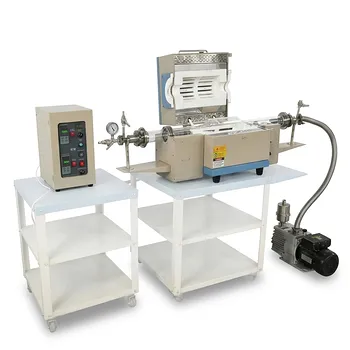
Two Zone Rotary Tube Furnace for Powder CVD Coating and Core Shell Material Synthesis 1100C

High Temperature Automated 5 Inch Tube Furnace for Autonomous Material Research and Advanced Laboratory R&D
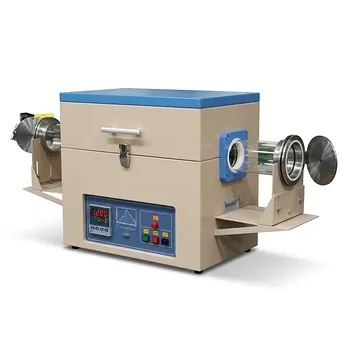
High Temperature 1200C Split Tube Furnace with Hinged Vacuum Flanges and 4 Inch Quartz Tube for Laboratory Research
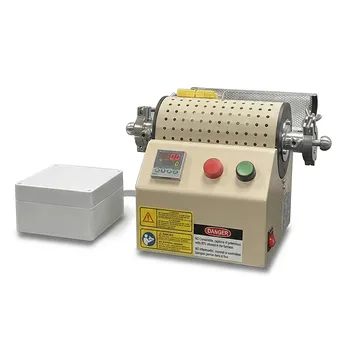
1000C Mini Tube Furnace with 20mm Quartz Tube and Vacuum Flanges for Material Science Research and Controlled Atmosphere Small Sample Processing
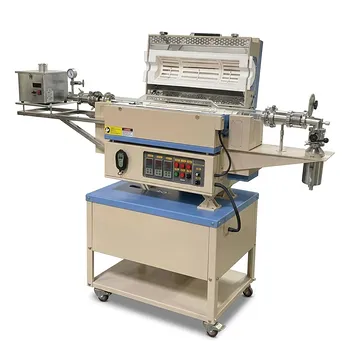
5 Inch Rotary Tube Furnace with Automatic Feeding and Receiving System 1200C Three Zone CVD Powder Processing
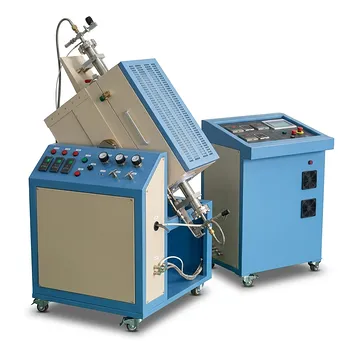
1100C High Pressure Rocking Tube Furnace with 2 Inch Super Alloy Processing Tube for Material Synthesis
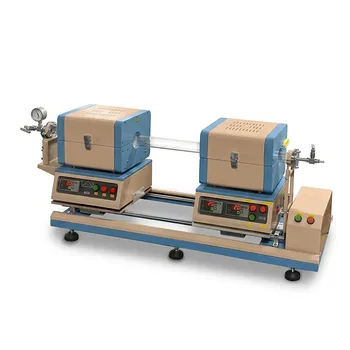
High Temperature 1200C Automatic Sliding Dual Zone Tube Furnace for 2D Transition Metal Dichalcogenides Growth and Material Sublimation Research
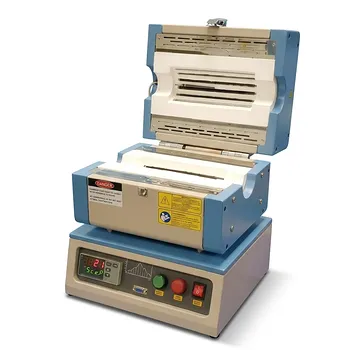
1250C Compact Split Tube Furnace with 8 Inch Heating Zone and Programmable Controller
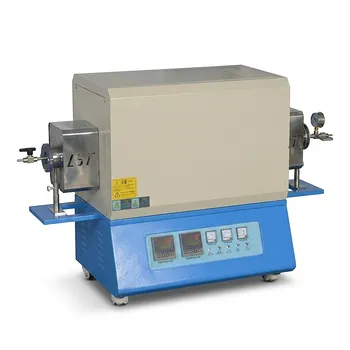
High Temperature Dual Zone Vacuum Tube Furnace for Material Research and CVD Processing
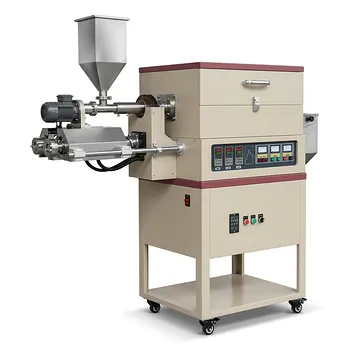
Laboratory Tilting Rotary Tubular Furnaces for Material Science and Industrial Heat Treatment
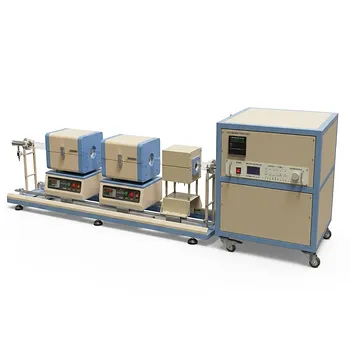
1200C Dual Sliding Tube Furnace with Dual Tubes and Flanges for PECVD Processes

1800C High Temperature Compact Vacuum Tube Furnace with 60mm OD Alumina Tube and Kanthal MoSi2 Heating Elements
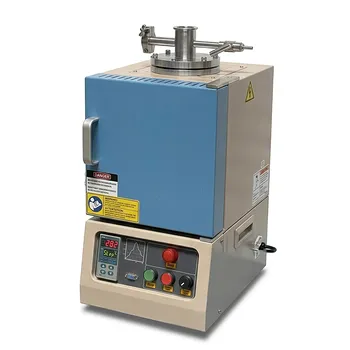
High Temperature Hybrid Muffle and Tube Furnace with Vacuum Capability and PID Control
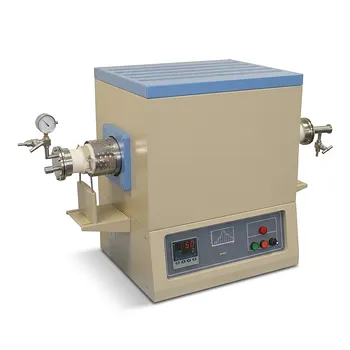
1700C High Temperature Alumina Tube Furnace with 18 Inch Heated Zone and Vacuum Sealing Flanges
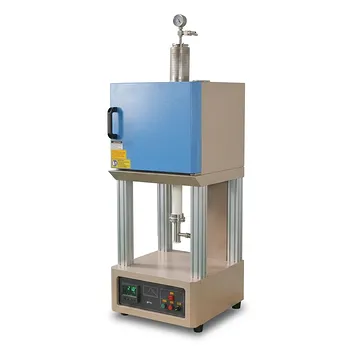
Hybrid High Temperature Tube and Box Furnace 1700C with 2 Inch Alumina Tube for Material Research

Compact High Temperature 1600C Tube Furnace with 50mm Alumina Tube and Vacuum Flanges for Material Sintering
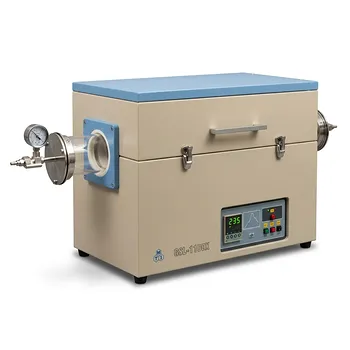
Single Zone Tube Furnace 5 Inch Quartz Tube 36 Inch Heating Zone Vacuum Flanges