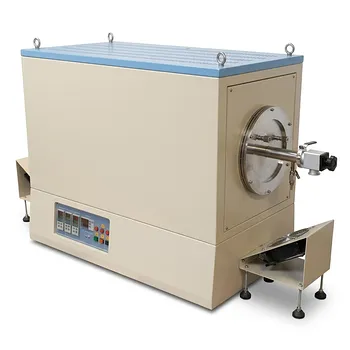
What function does a tube furnace serve in activated carbon production? Optimize Carbonization & Physical Activation
Updated 6 months ago
A program-controlled tube furnace acts as the precise environmental regulator required to transform raw organic matter into high-surface-area activated carbon. It achieves this by providing a multi-stage thermal cycle that alternates between inert atmospheres for carbonization and reactive gases for physical activation.
The tube furnace is the critical tool for managing the transition from biomass to porous carbon, using precise temperature ramping and multi-channel gas switching to create the internal pore structures necessary for high adsorption capacity.
The Role of the Furnace in Carbonization
Creating an Inert Environment
During the initial carbonization stage, the tube furnace maintains a strict Nitrogen (N2) or Argon atmosphere. This inert environment is essential to prevent the oxidative loss of the carbon structure, ensuring the material does not simply turn to ash when heated.
Facilitating Controlled Pyrolysis
The furnace operates at low to medium temperatures, typically between 600°C and 800°C, with specific heating rates like 10°C/min. This controlled heat drives off organic volatiles and moisture, leading to the enrichment of carbon and the formation of a stable carbon skeleton.
Establishing the Initial Pore Network
By regulating the thermal environment, the furnace allows for the gradual release of gases from the raw material. This process begins the development of a preliminary pore network and ensures the thermal stability of the resulting carbon carrier.
The Role of the Furnace in Physical Activation
High-Temperature Thermal Processing
Physical activation requires significantly higher energy than carbonization, often reaching temperatures of 950°C to 1100°C. The tube furnace provides the stable, high-heat environment necessary to trigger the chemical reactions between the carbon and the activating agent.
Managing Reactive Gas Switching
The "program-controlled" aspect of the furnace allows it to automatically switch from Nitrogen to a reactive gas like Carbon Dioxide (CO2) or steam. This switching is the catalyst for the activation phase, where the gas acts as an activating agent to etch the carbon surface.
Etching and Pore Development
As the CO2 or steam flows through the tube, it performs a controlled redox reaction that selectively ablates parts of the carbon skeleton. This process clears existing pores and creates new micropores and mesopores, which exponentially increases the material's specific surface area.
Understanding the Trade-offs and Limitations
The Balance of Yield vs. Porosity
Longer residence times or higher temperatures in the furnace increase the specific surface area but decrease the total carbon yield. Over-activation can lead to "burn-off," where the carbon skeleton is consumed entirely rather than just etched.
Atmosphere Integrity and Contamination
The effectiveness of the process relies on the furnace's ability to maintain a high-purity atmosphere. Any oxygen leaks into the tube during high-temperature activation will cause the material to undergo combustion, ruining the batch and potentially damaging the furnace internals.
Heating Rate Sensitivity
If the heating rate is too aggressive, the rapid release of volatiles can cause structural collapse or uneven pore distribution. Conversely, a heating rate that is too slow may lead to excessive energy consumption and reduced throughput without significant gains in quality.
How to Optimize Your Production Process
Success in activated carbon production depends on aligning the furnace program with your specific material goals and the characteristics of your precursor.
- If your primary focus is High Adsorption Capacity: Prioritize the activation stage by using higher temperatures (950°C+) and a steady flow of CO2 to maximize the creation of micropores.
- If your primary focus is Structural Integrity: Use a slower heating rate (5°C/min) during carbonization to ensure the carbon skeleton is well-developed before the aggressive activation stage begins.
- If your primary focus is Maximizing Yield: Opt for lower activation temperatures and shorter dwell times to minimize the "burn-off" of the carbon material.
By mastering the furnace's programmable controls, you turn a simple heating element into a sophisticated tool for molecular engineering.
Summary Table:
| Process Stage | Temperature Range | Atmosphere Type | Key Objective |
|---|---|---|---|
| Carbonization | 600°C - 800°C | Inert (N2, Ar) | Volatiles removal & carbon skeleton formation |
| Physical Activation | 950°C - 1100°C | Reactive (CO2, Steam) | Surface etching & micropore development |
| Cooling/Stabilization | Ambient to Room Temp | Inert (N2) | Prevention of oxidation & structural collapse |
Precision Thermal Solutions for Material Science
Are you looking to achieve superior adsorption capacity and precise pore control in your activated carbon research? THERMUNITS is a leading manufacturer of high-temperature laboratory equipment, providing the specialized thermal processing solutions required for advanced industrial R&D.
Our program-controlled tube furnaces and CVD/PECVD systems are engineered for the rigorous demands of carbonization and activation, offering multi-channel gas switching and unmatched temperature uniformity. Beyond tube furnaces, our comprehensive range includes:
- Muffle, Vacuum, and Atmosphere Furnaces
- Rotary Kilns & Hot Press Furnaces
- Vacuum Induction Melting (VIM) & Dental Furnaces
- High-Quality Thermal Elements
Empower your laboratory with the reliability of THERMUNITS technology. Contact our technical team today to discuss your specific heat treatment requirements!
References
- Teruhisa Hongo, Yuuki Kitakaze. Activated carbon from waste leaves of Japanese leeks: Preparation and <i>p</i>-cresol adsorption capacity. DOI: 10.7209/carbon.040101
Mentioned Products
- 1100C Tube Furnace with Vacuum Flange and Programmable Temperature Controller for Material Science and Industrial Heat Treatment
- 1250C Compact Split Tube Furnace with 8 Inch Heating Zone and Programmable Controller
- High Temperature Hybrid Muffle and Tube Furnace 1700C Programmable PID Controlled Box System with Vacuum Flange and Alumina Processing Tube
- Compact Vertical Split Quartz Tube Furnace with Stainless Steel Vacuum Flanges for Rapid Thermal Quenching and Controlled Atmosphere Material Processing
- Compact 1000C Muffle Furnace with Programmable Controller and 2 Inch Top Port for Vacuum and Atmosphere Material Research
People Also Ask
- What are the advantages of 1100°C tube furnaces for ORR catalysts? Boost Conductivity and Structural Stability.
- What role does a tube furnace play in PS template removal? Ensure ZnO/SiO2 Structural Integrity & High Performance.
- What core functions does a high-temperature vacuum tube furnace provide? Optimize np-CuSn Sintering & Joint Integrity
- What impact does the heating rate of a tube furnace have on biochar microstructure? Optimize Your Material R&D.
- What is the role of a high-temperature tube furnace in the calcination process of ZnO/In2O3 nanocomposites?

Tech Team · ThermUnits
Last updated on Apr 14, 2026
Related Products
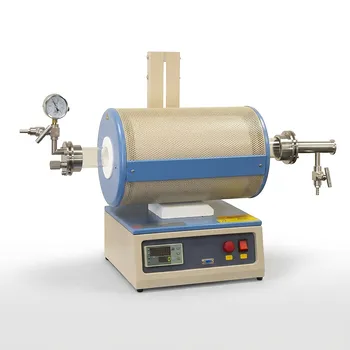
1100C Tube Furnace with Vacuum Flange and Programmable Temperature Controller for Material Science and Industrial Heat Treatment
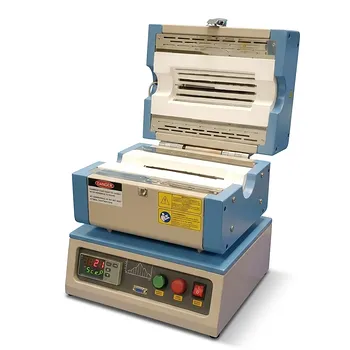
1250C Compact Split Tube Furnace with 8 Inch Heating Zone and Programmable Controller
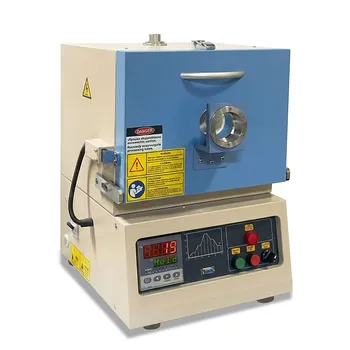
High Temperature Hybrid Muffle and Tube Furnace 1700C Programmable PID Controlled Box System with Vacuum Flange and Alumina Processing Tube
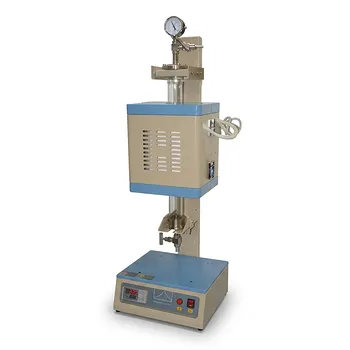
Compact Vertical Split Quartz Tube Furnace with Stainless Steel Vacuum Flanges for Rapid Thermal Quenching and Controlled Atmosphere Material Processing
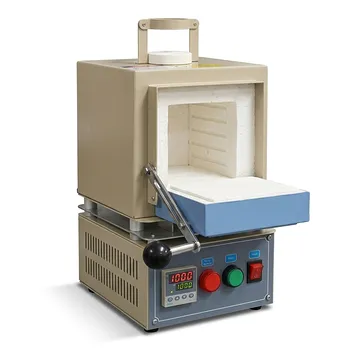
Compact 1000C Muffle Furnace with Programmable Controller and 2 Inch Top Port for Vacuum and Atmosphere Material Research
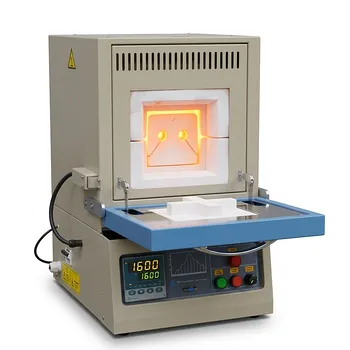
High Temperature Compact Muffle Furnace 1700 C with 30 Segment Programmable Controller and 1.7L Cubic Chamber
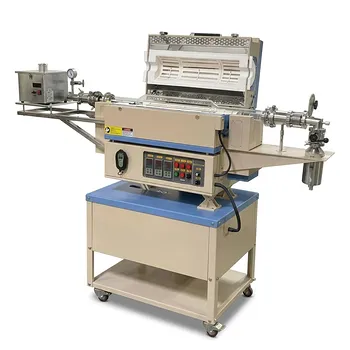
5 Inch Rotary Tube Furnace with Automatic Feeding and Receiving System 1200C Three Zone CVD Powder Processing
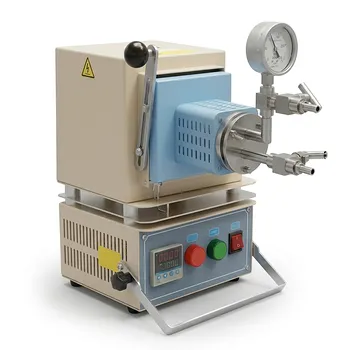
Compact Hybrid Muffle and Tube Furnace for 1000C Controlled Atmosphere Laboratory Material Sintering
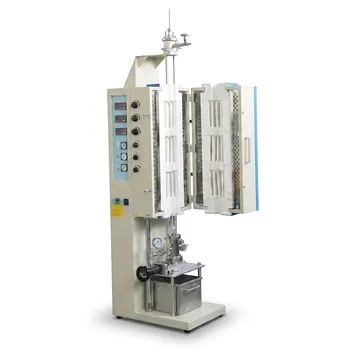
High Temperature Dual Zone Tube Furnace for Material Science Research and Professional Thermal Processing
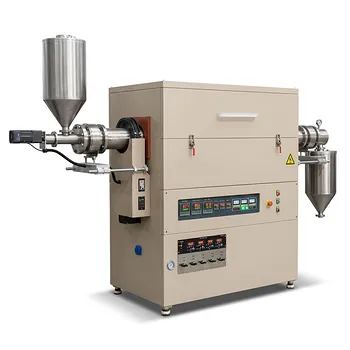
High Temperature Tilting Rotary Tube Furnace with Integrated Mass Flow Control and Multi Zone Heating
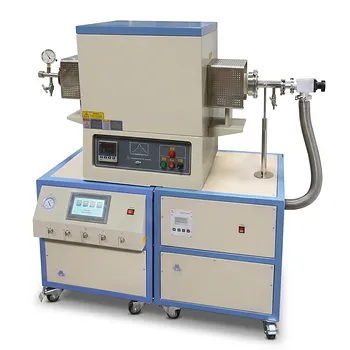
High Temperature 1700C Tube Furnace with High Vacuum Turbomolecular Pump System and Multi Channel Mass Flow Controller Gas Mixer
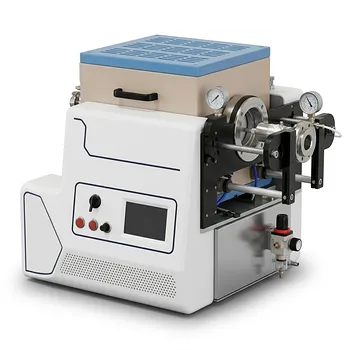
High Temperature Automated 5 Inch Tube Furnace for Autonomous Material Research and Advanced Laboratory R&D
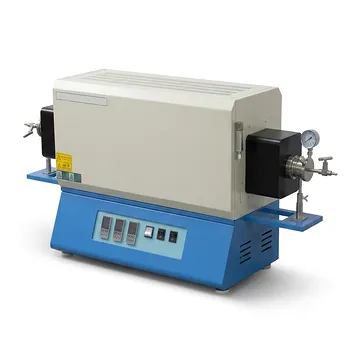
High Temperature Three Temperature Zone Tube Furnace for Advanced Material Science Sintering and Chemical Vapor Deposition Applications
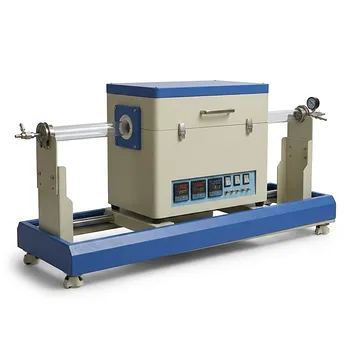
Double Temperature Zone Double Cover Tube Furnace for High Temperature CVD and Vacuum Annealing
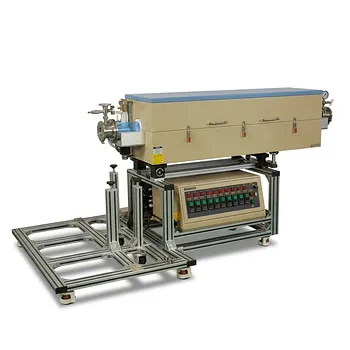
Ten Zone Multi Orientation Laboratory Tube Furnace for 1200C High Temperature Gradient Thermal Processing
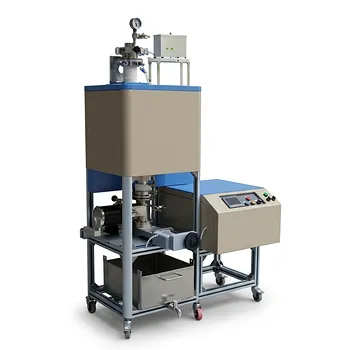
High Temperature 1700C Vertical Tube Furnace for Powder Spherification and Material Sintering
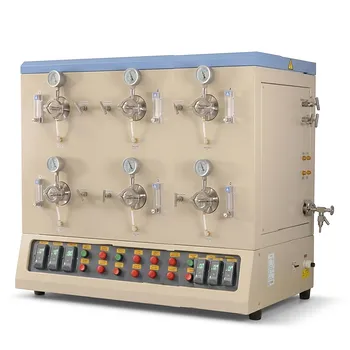
1200C High Throughput Multi Channel Tube Furnace with 50mm Quartz Tubes for Annealing and Material Phase Diagram Research
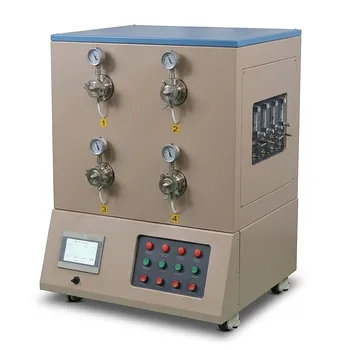
High Throughput 1200C Four Channel Tube Furnace with 3 Inch Quartz Tubes for Multi Zone Annealing and Material Research
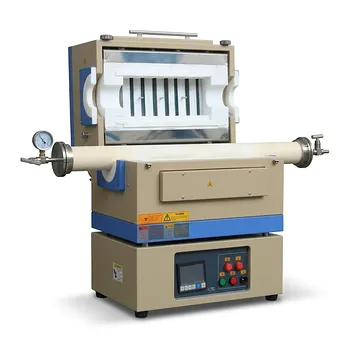
1500C Eight Zone Split Tube Furnace for Thermal Gradient Processing and Advanced Material Research