What function does a tube atmosphere furnace serve in porous carbon activation? Key for High-Surface-Area Synthesis
Updated 3 months ago
The tube atmosphere furnace is the primary reactor for controlled carbon synthesis. It provides an oxygen-free environment and precise thermal regulation necessary to transform organic precursors into high-surface-area porous frameworks. By isolating the material from the surrounding air, the furnace prevents the carbon from undergoing oxidative combustion while enabling the specific chemical reactions—such as etching and gas evolution—that create internal porosity.
The tube atmosphere furnace serves as a protective high-temperature environment that prevents material loss via combustion while facilitating the chemical and physical "etching" required for pore development. It is the critical tool for balancing inert shielding with the controlled thermal degradation needed to achieve a hierarchical porous structure.
Preventing Oxidative Destruction
Maintaining an Inert Shield
At the high temperatures required for activation (often exceeding 700 °C), carbon materials will instantly ignite if exposed to oxygen. The tube furnace mitigates this by providing a continuous flow of high-purity inert gases, such as nitrogen (N2) or argon (Ar). This shield ensures the material undergoes carbonization rather than being reduced to ash.
Eliminating Volatile Impurities
As the furnace heats the precursor, non-carbon components begin to break down and release volatile gases. The controlled gas flow within the tube effectively "sweeps" these byproducts away from the sample. This process increases the relative concentration of elemental carbon and prevents the re-deposition of impurities onto the forming pores.
Driving Pore Formation and Activation
Facilitating Chemical Etching
The furnace provides the thermal energy required for activators like potassium hydroxide (KOH) or potassium carbonate (K2CO3) to react with the carbon matrix. At specific temperatures, these agents chemically etch the carbon skeleton. This redox reaction is what defines the internal architecture of the material.
Managing Metallic Vapor Expansion
In the case of KOH activation, the furnace facilitates the release of metallic potassium vapor. This vapor migrates into the carbon structure, physically expanding the space between carbon layers. This expansion is a primary driver in creating a hierarchical structure consisting of both micropores and mesopores.
Enabling Physical Activation
Beyond inert gases, the furnace can introduce reactive atmospheres like carbon dioxide (CO2). In this context, the furnace acts as a dual-purpose reactor: CO2 serves as a physical activating agent that selectively oxidizes the carbon surface. This synergy between heat and atmosphere allows for the precise tuning of the specific surface area.
Structural and Thermal Control
Precision Heating Profiles
Advanced tube furnaces utilize PID control systems to execute multi-stage heating programs. By stabilizing at lower temperatures before reaching the final carbonization point, the furnace prevents thermal overshoot. This ensures that the precursor undergoes uniform pyrolysis and self-assembles into a stable three-dimensional framework.
Graphitization and Conductivity
To achieve high electrical conductivity, carbon materials must often be heated to between 700 °C and 1000 °C to promote graphitization. The furnace provides the stable, high-heat environment necessary for dehydrogenation. This process removes hydrogen atoms and allows carbon atoms to rearrange into a more ordered, conductive lattice.
Understanding the Trade-offs
Chemical Corrosion of Equipment
A significant drawback of using tube furnaces for chemical activation is the corrosive nature of the activators. At high temperatures, vapors from KOH or K2CO3 can aggressively attack the quartz or ceramic tubes of the furnace. This necessitates frequent maintenance or the use of specialized, expensive liners to protect the equipment.
Gas Flow and Temperature Gradients
While the furnace provides a controlled atmosphere, the gas flow rate can introduce temperature gradients. If the flow of cold nitrogen is too high, it may cool one side of the sample, leading to non-uniform activation. Conversely, if the flow is too low, volatile byproducts may linger and clog the developing pore structure.
How to Apply This to Your Project
Optimizing Your Synthesis Goals
- If your primary focus is maximizing specific surface area: Use a chemical activator like KOH within the furnace and prioritize a steady ramp rate (e.g., 10 °C/min) to allow for complete potassium vapor expansion.
- If your primary focus is structural stability and conductivity: Prioritize higher temperatures (above 800 °C) under an argon or argon-hydrogen mix to ensure deep carbonization and framework graphitization.
- If your primary focus is precise pore-size distribution: Utilize a two-stage heating process to first remove volatiles at a lower temperature before switching to a reactive CO2 atmosphere for final activation.
The tube atmosphere furnace is not merely a heat source, but a sophisticated chemical reactor that dictates the final utility of porous carbon materials through the precise manipulation of heat and gas.
Summary Table:
| Process Component | Primary Function | Key Technical Benefit |
|---|---|---|
| Inert Shielding | Prevents oxidative combustion | High carbon yield and purity |
| Chemical Etching | Facilitates activator reactions (KOH/CO2) | Hierarchical pore development |
| PID Thermal Control | Precise multi-stage heating profiles | Uniform carbonization and stability |
| Volatile Removal | Sweeps away non-carbon byproducts | Prevents pore clogging and impurities |
| Graphitization | Structural rearrangement (700-1000°C) | Enhanced electrical conductivity |
Optimize Your Carbon Synthesis with THERMUNITS
As a leading manufacturer of high-temperature laboratory equipment for material science and industrial R&D, THERMUNITS provides the precision tools you need for advanced thermal processing. Whether you are focused on maximizing surface area or enhancing structural stability, our comprehensive range of equipment—including Tube, Muffle, Vacuum, Atmosphere, Rotary, and Hot Press furnaces, as well as CVD/PECVD systems—is designed to meet the most rigorous research standards.
Ready to elevate your lab's efficiency and material performance? Contact us today to find the perfect furnace solution for your project!
References
- Hsiu‐Ying Chung, C.-C. Wang. Manganese Oxide-Doped Hierarchical Porous Carbon Derived from Tea Leaf Waste for High-Performance Supercapacitors. DOI: 10.3390/ijms252010884
Mentioned Products
- 1750°C High Temperature Benchtop Vacuum Atmosphere Tube Furnace with Kanthal Super 1800 Heating Elements and 60mm Alumina Processing Tube
- Vertical 1700C Vacuum and Atmosphere Tube Furnace with 80mm Alumina Tube
- 1200C Hybrid Muffle and Tube Furnace for Material Research with Dual Atmosphere Control Quartz Tubes
- Compact Hybrid Muffle and Tube Furnace for 1000C Controlled Atmosphere Laboratory Material Sintering
- Compact Vertical Split Quartz Tube Furnace with Stainless Steel Vacuum Flanges for Rapid Thermal Quenching and Controlled Atmosphere Material Processing
People Also Ask
- What core functions does a high-temperature vacuum tube furnace provide? Optimize np-CuSn Sintering & Joint Integrity
- What is the role of a high-temperature tube furnace in the calcination process of ZnO/In2O3 nanocomposites?
- What role does a high-temperature tube furnace play in the sulfidation heat treatment of CoS@C/MXene nanocomposites? Guide
- Why is a high-temperature tube furnace required for CuAlO2 heat treatment? Master Phase Transformation Today
- What role does a high-temperature tube furnace play in executing nitrogen absorption kinetic experiments? Expert Insights

Tech Team · ThermUnits
Last updated on Jun 03, 2026
Related Products

1750°C High Temperature Benchtop Vacuum Atmosphere Tube Furnace with Kanthal Super 1800 Heating Elements and 60mm Alumina Processing Tube

Vertical 1700C Vacuum and Atmosphere Tube Furnace with 80mm Alumina Tube
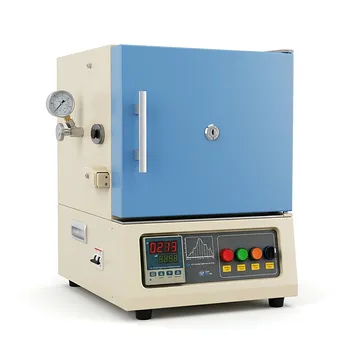
1200C Hybrid Muffle and Tube Furnace for Material Research with Dual Atmosphere Control Quartz Tubes
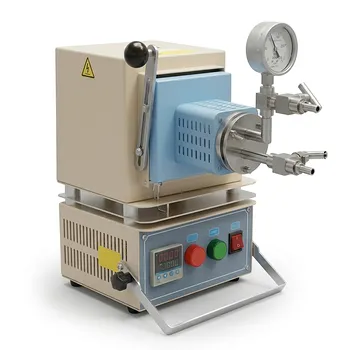
Compact Hybrid Muffle and Tube Furnace for 1000C Controlled Atmosphere Laboratory Material Sintering

Compact Vertical Split Quartz Tube Furnace with Stainless Steel Vacuum Flanges for Rapid Thermal Quenching and Controlled Atmosphere Material Processing
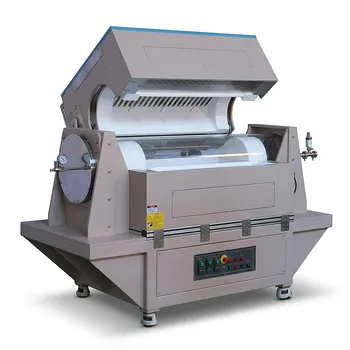
Three Zone Tube Furnace with 11 Inch or 15 Inch Quartz Tube and Hinged Flanges for Vacuum Atmosphere Heat Treatment
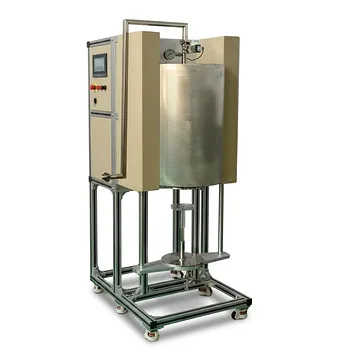
1200°C Atmosphere Controlled Automatic Bottom Loading Furnace with 6 Inch Quartz Tube
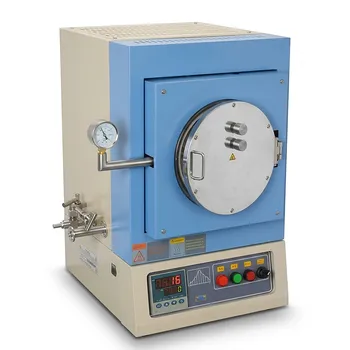
1100°C High Temperature Quartz Chamber Furnace 8 Inch OD with 7.6 Liter Capacity and Vacuum Atmosphere Capability
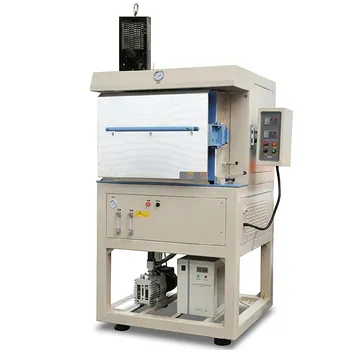
1200C Hydrogen Atmosphere Box Furnace with 5 Heated Sides and 64L Chamber
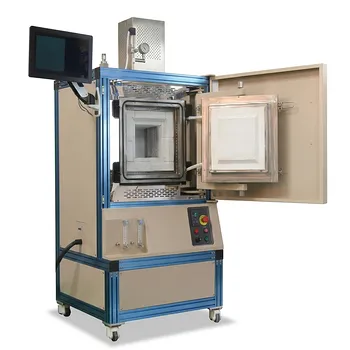
High Temperature Hydrogen Atmosphere Box Furnace 1650C Max Reducing Environment Material Synthesis System 8x8x8 Chamber
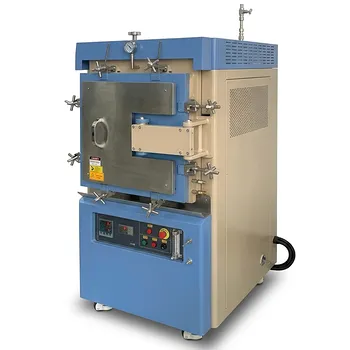
Atmosphere Controlled Muffle Furnace 1700C Maximum Temperature 80L High Capacity Vacuum Inert Gas Box Furnace

High Temperature 1700C Vertical Tube Furnace for Powder Spherification and Material Sintering

High Temperature 1700C Six Zone Split Tube Furnace with Alumina Tube and Water Cooled Flanges
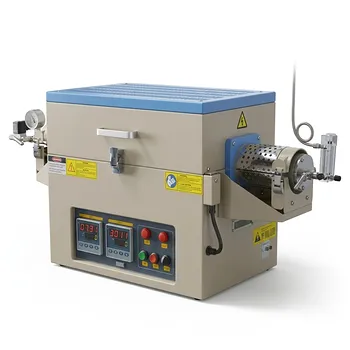
1100C Dual Zone Hydrogen Gas Tube Furnace with Quartz Tube and Integrated H2 Leak Detection System

High Temperature 1700C Tube Furnace with High Vacuum Turbomolecular Pump System and Multi Channel Mass Flow Controller Gas Mixer

1800C High Temperature Compact Vacuum Tube Furnace with 60mm OD Alumina Tube and Kanthal MoSi2 Heating Elements
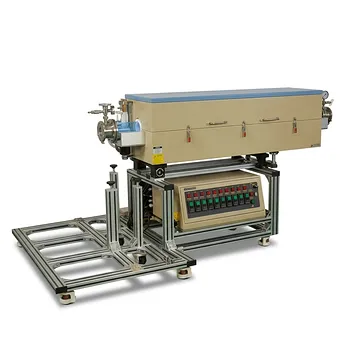
Ten Zone Multi Orientation Laboratory Tube Furnace for 1200C High Temperature Gradient Thermal Processing
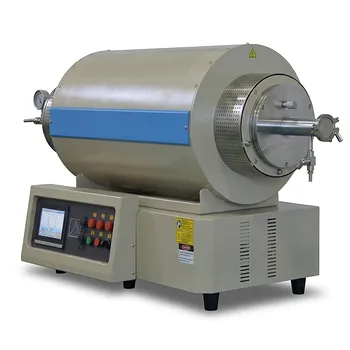
1200C Max Three Zone Tube Furnace 6 Inch OD Max with Tube and Flange

High Temperature 1700C Benchtop Tube Furnace with 5 Inch Heating Zone High Purity Alumina Tube and Vacuum Sealing Flanges
