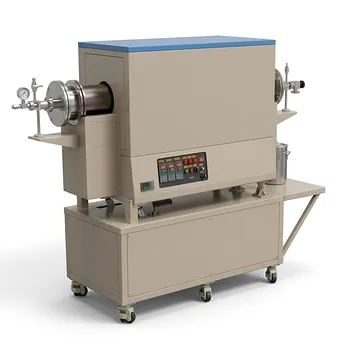
What function does an industrial-grade vertical tube furnace serve in tin smelting? Essential Simulation Benefits
Updated 3 months ago
Industrial-grade vertical tube furnaces serve as high-precision reaction chambers designed to replicate the extreme thermal and chemical conditions of industrial tin smelting. By providing a stable isothermal environment up to 1300°C and enabling instantaneous quenching, these furnaces allow researchers to "freeze" and analyze the complex phase transitions that occur during tin concentrate smelting and slag reduction.
The core function of a vertical tube furnace in metallurgy is to provide a strictly controlled environment that simulates industrial reduction kinetics. Its unique vertical geometry allows for the suspension of samples and rapid quenching, which is essential for preserving high-temperature mineral structures for post-experiment analysis.
Creating Stable Isothermal Environments
High-precision temperature control is the foundation of metallurgical simulation.
Maintaining Constant Thermal Zones
Tin smelting requires precise temperatures, often around 1300°C, to ensure the material remains in a molten state. The furnace uses advanced control systems and heating elements, such as silicon carbide, to maintain a stable "constant temperature thermal zone."
Simulating Industrial Temperature Profiles
Researchers can program specific heating curves to mimic the transition from homogenization phases to separation phases. This allows for the study of how temperature gradients influence the speed and efficiency of the tin reduction process.
The Strategic Importance of Vertical Configuration
The vertical design is not merely a matter of space; it is a functional requirement for high-accuracy metallurgical testing.
Sample Suspension and Positioning
The vertical orientation facilitates the use of suspension devices to hang samples directly in the center of the thermal zone. This ensures that the tin concentrate or slag is heated uniformly from all sides, eliminating the uneven heating often found in horizontal layouts.
Instantaneous Drop Quenching
A critical feature of these furnaces is the mechanical release device located at the bottom of the tube. This allows for "drop quenching," where a sample is released instantly into a cooling medium like water to freeze the high-temperature phase equilibrium state.
Preserving Microscopic Structures
Without rapid quenching, the microscopic structures and chemical phases present at 1300°C would alter as the sample cools slowly. Quenching preserves these states, allowing for accurate microscopic analysis of how tin moves from concentrate to metal or slag.
Atmospheric Control and Chemical Reduction
Simulating the "smelting" part of the process requires more than just heat; it requires a specific chemical atmosphere.
Introducing Reducing Gas Mixtures
The furnace allows for the precise introduction of gas combinations, such as Ar, CO, and CO2. By controlling these mixtures, researchers can simulate the reducing atmosphere found inside industrial furnaces, facilitating the directional transformation of minerals.
Inert Environment Protection
To prevent unwanted oxidation, the system can be flushed with high-purity argon. This creates an inert environment that protects the sample, ensuring that the observed reduction reactions are solely the result of the intended reducing agents.
Understanding the Trade-offs
While highly effective, using a vertical tube furnace involves specific operational challenges and limitations.
Material Limitations
The high-purity alumina tubes used in these furnaces are sensitive to thermal shock. Rapidly changing temperatures or contact with certain corrosive slags can lead to tube failure, requiring careful management of heating and cooling rates.
Sample Size Constraints
Due to the narrow diameter of the tube, these furnaces are limited to small-scale laboratory samples. While this is ideal for kinetic studies, it may not perfectly capture the complex fluid dynamics or "mass effects" present in large-scale industrial smelting vessels.
Complexity of Sealing
Maintaining a gas-tight environment while utilizing a mechanical release device at the bottom is technically demanding. Any leak in the bottom seal can contaminate the atmosphere, potentially skewing the results of the reduction experiment.
How to Apply This to Your Project
To get the most out of a vertical tube furnace for tin smelting research, your approach should vary based on your primary objective.
- If your primary focus is phase equilibrium analysis: Prioritize the use of the mechanical release device for water quenching to ensure high-temperature structures are preserved without alteration.
- If your primary focus is reduction kinetics: Focus on the precision of the gas mixing system to accurately vary CO/CO2 ratios and observe the reaction rates at specific isothermal steps.
- If your primary focus is slag cleaning or metal recovery: Use the suspended sample holder to observe how valuable metals like tin separate into the matte or alloy phase under different slag chemistries.
By leveraging the unique vertical geometry and quenching capabilities of this equipment, you can bridge the gap between laboratory theory and industrial smelting reality.
Summary Table:
| Feature | Mechanism | Research Benefit |
|---|---|---|
| Temperature Control | Up to 1300°C Isothermal | Mimics industrial smelting thermal zones |
| Vertical Layout | Sample Suspension | Ensures uniform heating of tin concentrate |
| Drop Quenching | Bottom Mechanical Release | Preserves high-temp microscopic structures |
| Gas Control | Ar/CO/CO2 Atmosphere | Simulates chemical reduction kinetics |
Elevate Your Metallurgical Research with THERMUNITS
As a leading manufacturer of high-temperature laboratory equipment for material science and industrial R&D, THERMUNITS provides the precision tools required for advanced smelting simulations. Our comprehensive range of thermal processing solutions—including Vertical Tube, Muffle, Vacuum, Atmosphere, Rotary, and Hot Press furnaces, as well as CVD/PECVD systems and VIM furnaces—is designed to deliver the accuracy your research demands.
Whether you are analyzing phase equilibrium or optimizing reduction kinetics, our equipment ensures stable environments and reliable data. Contact our technical experts today to discuss how our specialized furnaces can enhance your laboratory's heat treatment capabilities.
References
- Afif Nur Iksan, Taufiq Hidayat. Thermodynamic Simulation and Laboratory-Scale Experiments of Tin Smelting at Al<sub>2</sub>O<sub>3</sub> Saturation. DOI: 10.1021/acsomega.4c07621
Mentioned Products
- High Temperature 1700C Vertical Tube Furnace for Powder Spherification and Material Sintering
- High Temperature 1100C Compact Top Loading Vertical Vacuum Tube Furnace for High Vacuum Noble Metal Melting and Material Research
- Compact Vertical Split Quartz Tube Furnace with Stainless Steel Vacuum Flanges for Rapid Thermal Quenching and Controlled Atmosphere Material Processing
- Split Vertical Tube Furnace with 1200C Quartz Tube and Stainless Steel Vacuum Flanges for Rapid Thermal Processing
- High Temperature 1700C Vertical Split Tube Furnace for Material Quenching and Single Crystal Growth
People Also Ask
- What role does a high-temperature vertical tube furnace play in simulating high-carbon ferromanganese slag formation?
- What functions does a vertical high-temperature tube furnace perform? Master Industrial Sintering & R&D Simulation
- What is the primary function of a high-temperature tube furnace in Cu1-N-C synthesis? Precision Thermal Control.
- High-Temp Tube Furnace Role in Converting Microbial Proteins to Iron Single-Atom Sites: Expert Synthesis Guide
- What impact does the heating rate of a tube furnace have on biochar microstructure? Optimize Your Material R&D.

Tech Team · ThermUnits
Last updated on Jun 03, 2026
Related Products

High Temperature 1700C Vertical Tube Furnace for Powder Spherification and Material Sintering
High Temperature 1100C Compact Top Loading Vertical Vacuum Tube Furnace for High Vacuum Noble Metal Melting and Material Research

Compact Vertical Split Quartz Tube Furnace with Stainless Steel Vacuum Flanges for Rapid Thermal Quenching and Controlled Atmosphere Material Processing
Split Vertical Tube Furnace with 1200C Quartz Tube and Stainless Steel Vacuum Flanges for Rapid Thermal Processing
High Temperature 1700C Vertical Split Tube Furnace for Material Quenching and Single Crystal Growth
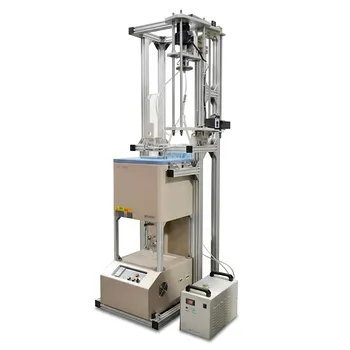
500C Vacuum Vertical Tube Furnace 84mm OD Sample Rotation Lifting System

Vertical 1700C Vacuum and Atmosphere Tube Furnace with 80mm Alumina Tube
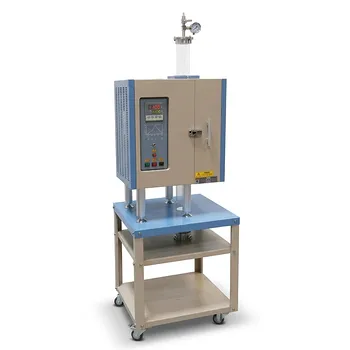
1100°C Split Vertical Tube Furnace with 80mm Quartz Tube and Stainless Steel Vacuum Flanges
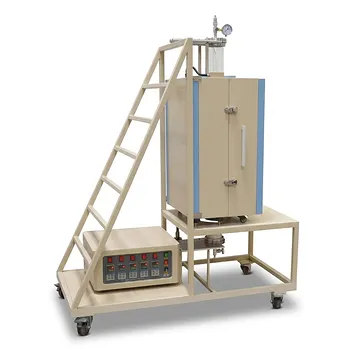
Five Zone Split Vertical Tube Furnace 1200C Max with 4 Inch Quartz Tube and Stainless Steel Vacuum Flanges

1200°C 5 Inch Vertical Quartz Tube Furnace with Stainless Steel Vacuum Flanges
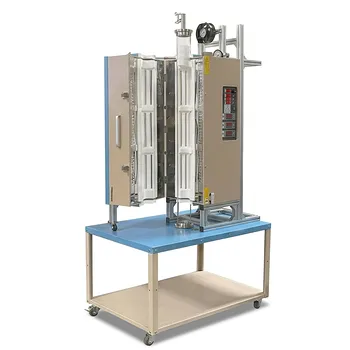
1200C Three Zone Split Vertical Tube Furnace 4 Inch Quartz Tube Stainless Steel Vacuum Flanges

Compact High Temperature 1600C Tube Furnace with 50mm Alumina Tube and Vacuum Flanges for Material Sintering
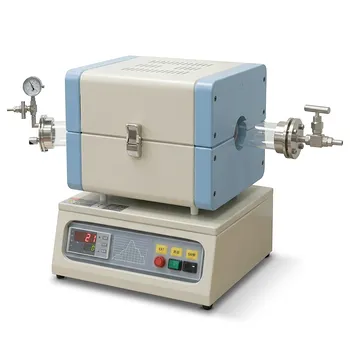
1200C Tube Furnace with Internal Magnetic Sample Sliding for Direct Vaporizing Deposition and Rapid Thermal Processing
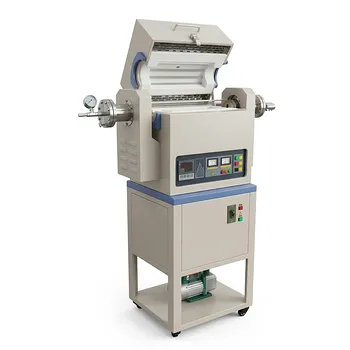
High Temperature Rotary Tilt Tubular Furnaces for Advanced Powder Sintering and Material Processing
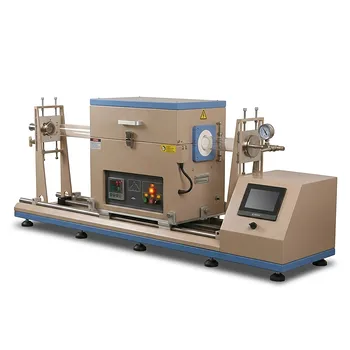
1200C Sliding Tube Furnace for Rapid Thermal Processing and CVD Graphene Growth with 100mm OD Capacity
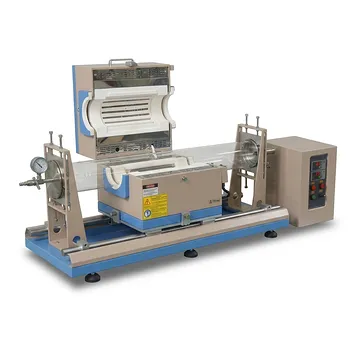
1200C High Temperature 5 Inch Sliding Tube Furnace for Rapid Thermal Processing RTP and Wafer Annealing
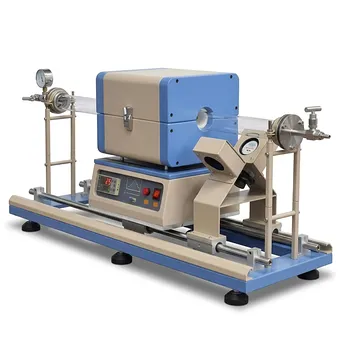
Automated Sliding Tube Furnace for Fast Heating and Cooling 2 Inch OD 1100C Max
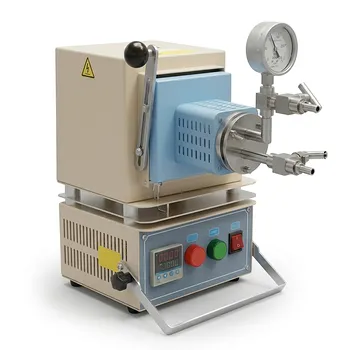
Compact Hybrid Muffle and Tube Furnace for 1000C Controlled Atmosphere Laboratory Material Sintering

1100C Tube Furnace with Vacuum Flange and Programmable Temperature Controller for Material Science and Industrial Heat Treatment