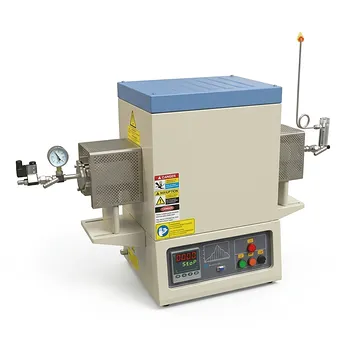
What is the horizontal tube furnace's role in CVT crystal growth? Precision Thermal Control for Doped Crystals
Updated 3 months ago
The horizontal tube furnace serves as the thermodynamic engine for the growth of manganese-doped single crystals. Its primary function is to establish and maintain a precise, stable temperature gradient between independent heating zones—typically ranging from 540°C at the source to 520°C at the growth zone. This thermal difference creates the necessary driving force to transport gas-phase components across a reaction vessel, allowing them to condense and crystallize into high-quality solid structures.
Core Takeaway: A horizontal tube furnace enables Chemical Vapor Transport (CVT) by providing a controlled thermal field that facilitates the migration of gaseous intermediates from a high-temperature source to a lower-temperature deposition zone, ensuring the structural integrity and size of the resulting single crystals.
The Mechanics of Temperature Gradient Control
Establishing the Thermal Driving Force
The furnace divides its length into distinct heating zones to create a stable temperature differential. By maintaining the source zone at a higher temperature (e.g., 540°C) than the growth zone (e.g., 520°C), the furnace initiates the sublimation of precursor materials. This gradient is the fundamental physical "pump" that moves material through the gas phase.
Independent Multi-Zone Regulation
Advanced horizontal furnaces utilize independent control systems for each heating element. This allows researchers to fine-tune the "slope" of the temperature gradient with extreme precision. Such granularity is essential for manganese-doped crystals, where even minor fluctuations can disrupt the doping process or introduce structural defects.
Creating a Sealed Reaction Environment
The furnace housing supports a sealed quartz ampoule, which isolates the chemical reaction from the external atmosphere. This high-aspect-ratio design ensures that the axial temperature gradient remains uniform across the reaction tube. The stability of this environment is what allows for the slow, steady crystallization required for large-size crystals.
Facilitating Gas-Phase Transport and Crystallization
Precursor Sublimation and Interaction
In the high-temperature zone, solid source materials react with a transport agent (such as iodine) to form gaseous intermediates. The furnace provides the thermal energy required for these chemical reactions to occur consistently. Without this sustained high-temperature environment, the precursors would remain in a solid state, halting the growth process.
Migration and Deposition Kinetics
As the gaseous intermediates migrate toward the cooler end of the tube, they reach a state of supersaturation. The lower temperature in the growth zone triggers the release of the transport agent and the subsequent precipitation of the crystal. The furnace’s ability to maintain a constant "cool" temperature at this end determines the crystallization kinetics, or how slowly and perfectly the atoms arrange themselves.
Ensuring Doping Uniformity
For manganese-doped crystals, the furnace must maintain a homogenous thermal field within each specific zone. This ensures that the manganese dopants are incorporated into the host crystal lattice at a consistent rate. Precise thermal management prevents "dopant clustering," where the manganese atoms aggregate rather than dispersing evenly throughout the crystal.
Understanding the Trade-offs
Thermal Inertia and Response Times
Horizontal tube furnaces often have significant thermal inertia, meaning they do not change temperatures instantly. While this contributes to stability, it makes rapid adjustments difficult during a growth cycle. If a process requires quick temperature cycling, the furnace's insulation and mass can become a limitation.
Gradient Uniformity vs. Throughput
Maintaining a perfect linear gradient is easier in a low-throughput environment with a single ampoule. As you increase the number of samples or the diameter of the tube, maintaining a uniform radial temperature becomes significantly more challenging. This can lead to variations in crystal quality between the center and the edges of the reaction zone.
How to Apply This to Your Project
When selecting or configuring a horizontal tube furnace for CVT growth, your specific crystal requirements should dictate your technical priorities.
- If your primary focus is Crystal Purity: Invest in a furnace with high-precision PID controllers to minimize temperature oscillations, as stability is the greatest predictor of lattice perfection.
- If your primary focus is Large-Size Crystals: Prioritize a multi-zone furnace (three or more zones) to create a more extended, linear temperature gradient that supports slow, sustained growth over long periods.
- If your primary focus is Doping Concentration: Ensure the furnace has a high aspect ratio to provide a clear separation between the sublimation and deposition zones, preventing premature condensation of dopants.
By masterfully controlling the thermal landscape, the horizontal tube furnace transforms a complex chemical reaction into a predictable and repeatable manufacturing process for advanced single crystals.
Summary Table:
| Feature | Core Function in CVT | Impact on Crystal Quality |
|---|---|---|
| Temperature Gradient | Creates thermodynamic driving force | Determines growth rate and structural integrity |
| Multi-Zone Control | Regulates source vs. deposition zones | Ensures precise doping levels and lattice perfection |
| Sealed Environment | Isolates reaction in quartz ampoules | Prevents contamination and supports slow crystallization |
| Thermal Stability | Maintains homogenous heat fields | Prevents dopant clustering and structural defects |
Elevate Your Material Research with THERMUNITS
As a leading manufacturer of high-temperature laboratory equipment, THERMUNITS provides the precision thermal landscapes required for advanced material science and industrial R&D. Our expert-engineered solutions—including Tube, Muffle, Vacuum, Atmosphere, and Rotary furnaces, as well as CVD/PECVD and Hot Press systems—ensure the extreme stability and gradient control necessary for high-purity crystal growth.
Whether you are working on manganese-doped single crystals or complex heat treatments, our comprehensive range of thermal elements and laboratory furnaces is designed to meet your most demanding specifications.
Ready to optimize your thermal processing? Contact THERMUNITS Today for a Professional Consultation
References
- Tiema Qian, Ni Ni. Single crystal growth, chemical defects, magnetic and transport properties of antiferromagnetic topological insulators <mml:math xmlns:mml="http://www.w3.org/1998/Math/MathML"><mml:mrow><mml:msub><mml:mrow><mml:mo>(</mml:mo><mml:msub><mml:mi>Ge</mml:mi><mml:mrow><mml:mn>1</mml:mn><mml:mo>−</mml:mo><mml:mi>δ</mml:mi><mml:mo>−</mml:mo><mml:mi>x</mml:mi></mml:mrow></mml:msub><mml:msub><mml:mi>Mn</mml:mi><mml:mi>x</mml:mi></mml:msub><mml:mo>)</mml:mo></mml:mrow><mml:mn>2</mml:mn></mml:msub><mml:msub><mml:mi>Bi</mml:mi><mml:mn>2</mml:mn></mml:msub><mml:msub><mml:mi>Te</mml:mi><mml:mn>5</mml:mn></mml:msub></mml:mrow></mml:math> <mml:math xmlns:mml="http://www.w3.org/1998/Math/MathML"><mml:mrow><mml:mo>(</mml:mo><mml:mi>x</mml:mi><mml:mo>≤</mml:mo><mml:mn>0.47</mml:mn></mml:mrow><mml:mo>,</mml:mo><mml:mo> </mml:mo><mml:mrow><mml:mn>0.11</mml:mn><mml:mo>≤</mml:mo><mml:mi>δ</mml:mi><mml:mo>≤</mml:mo><mml:mn>0.20</mml:mn><mml:mo>)</mml:mo></mml:mrow></mml:math>. DOI: 10.1103/physrevmaterials.8.084203
Mentioned Products
- Multi Position Tube Furnace 1100C for Laboratory Material Research and Advanced Industrial Thermal Processing
- 1200°C 10-Zone Split Tube Furnace with Horizontal and Vertical Mounting for Multi-Zone Thermal Gradients and Large Diameter Material Processing
- Ten Zone Multi Orientation Laboratory Tube Furnace for 1200C High Temperature Gradient Thermal Processing
- Split Vertical Tube Furnace with 1200C Quartz Tube and Stainless Steel Vacuum Flanges for Rapid Thermal Processing
- High Temperature 1700C Vertical Tube Furnace for Powder Spherification and Material Sintering
People Also Ask
- Why use a tube furnace for oxygen annealing LaCrO3/LaMnO3? Optimize Phase Transition & Magnetic Performance.
- What key role does a laboratory high-temperature tube furnace play in the production of carbon nanofibers? Guide
- How is a laboratory high-temperature tube furnace utilized to research the products of aluminothermic reduction? Advanced Metallurgical Solutions
- What is the role of a laboratory tube furnace in the carbonization process of porous carbon foam (PCF)? Master 3D Synthesis
- What role does a laboratory tube furnace play in the pyrolysis and carbonization of biomass? Optimize Thermal Research.

Tech Team · ThermUnits
Last updated on Jun 03, 2026
Related Products
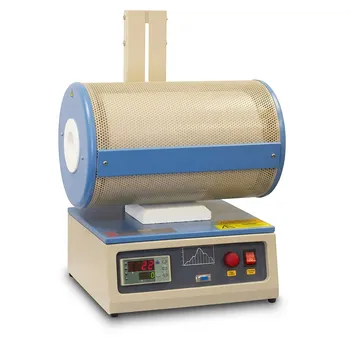
Multi Position Tube Furnace 1100C for Laboratory Material Research and Advanced Industrial Thermal Processing
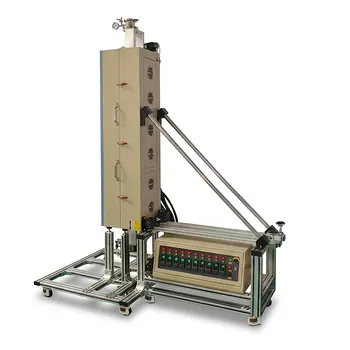
1200°C 10-Zone Split Tube Furnace with Horizontal and Vertical Mounting for Multi-Zone Thermal Gradients and Large Diameter Material Processing
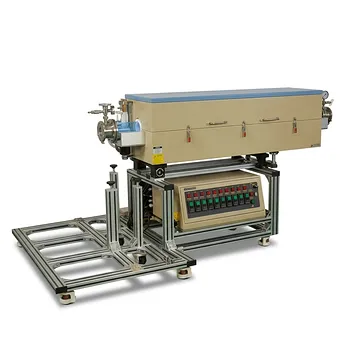
Ten Zone Multi Orientation Laboratory Tube Furnace for 1200C High Temperature Gradient Thermal Processing
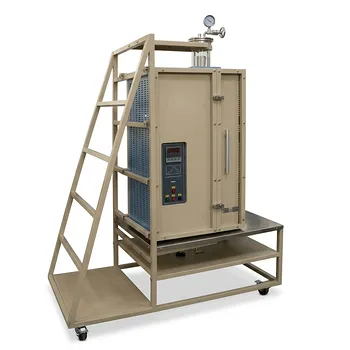
Split Vertical Tube Furnace with 1200C Quartz Tube and Stainless Steel Vacuum Flanges for Rapid Thermal Processing

High Temperature 1700C Vertical Tube Furnace for Powder Spherification and Material Sintering

Vertical 1700C Vacuum and Atmosphere Tube Furnace with 80mm Alumina Tube
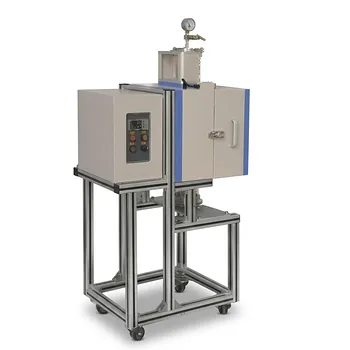
1200°C 5 Inch Vertical Quartz Tube Furnace with Stainless Steel Vacuum Flanges
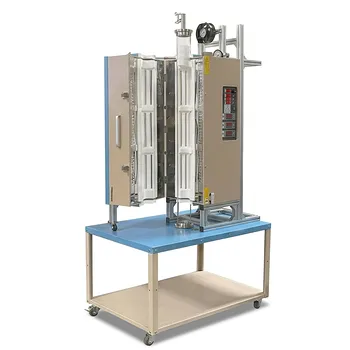
1200C Three Zone Split Vertical Tube Furnace 4 Inch Quartz Tube Stainless Steel Vacuum Flanges
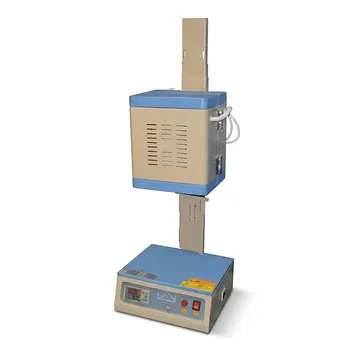
High Temperature Vertical Split Tube Furnace with PID Temperature Controller for 1 and 2 Inch Processing Tubes
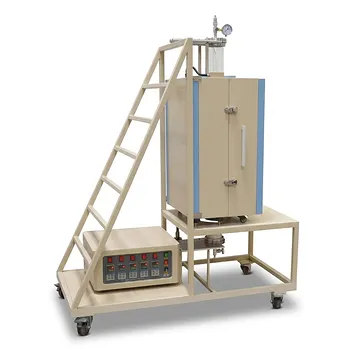
Five Zone Split Vertical Tube Furnace 1200C Max with 4 Inch Quartz Tube and Stainless Steel Vacuum Flanges
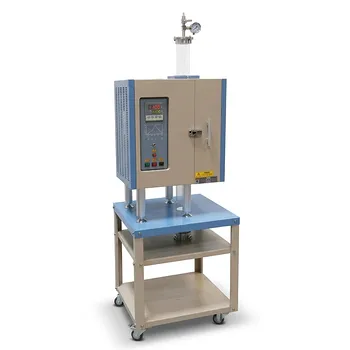
1100°C Split Vertical Tube Furnace with 80mm Quartz Tube and Stainless Steel Vacuum Flanges

Compact Vertical Split Quartz Tube Furnace with Stainless Steel Vacuum Flanges for Rapid Thermal Quenching and Controlled Atmosphere Material Processing

High Temperature 1700C Six Zone Split Tube Furnace with Alumina Tube and Water Cooled Flanges
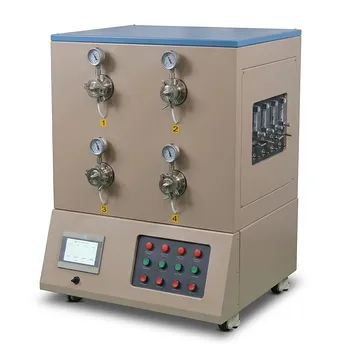
High Throughput 1200C Four Channel Tube Furnace with 3 Inch Quartz Tubes for Multi Zone Annealing and Material Research
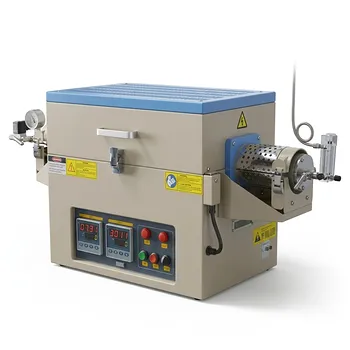
1100C Dual Zone Hydrogen Gas Tube Furnace with Quartz Tube and Integrated H2 Leak Detection System
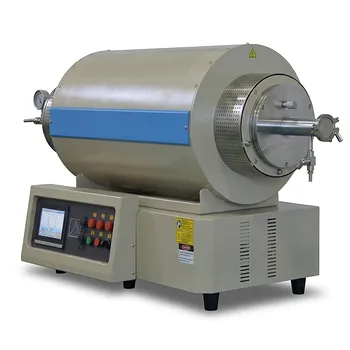
1200C Max Three Zone Tube Furnace 6 Inch OD Max with Tube and Flange
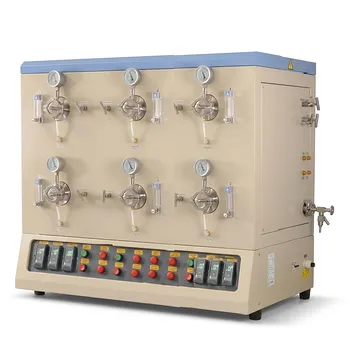
1200C High Throughput Multi Channel Tube Furnace with 50mm Quartz Tubes for Annealing and Material Phase Diagram Research
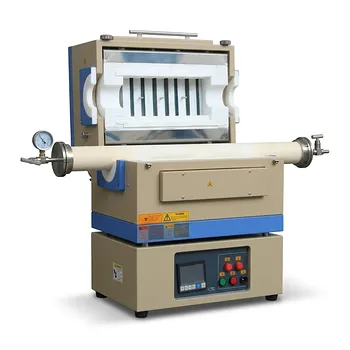
1500C Eight Zone Split Tube Furnace for Thermal Gradient Processing and Advanced Material Research
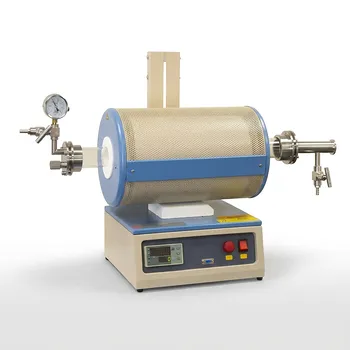
1100C Tube Furnace with Vacuum Flange and Programmable Temperature Controller for Material Science and Industrial Heat Treatment