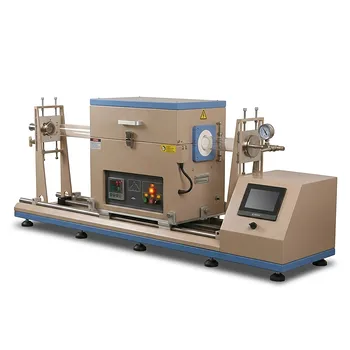
What is the core function of tube furnace pyrolysis for Co-Ni catalysts? Achieve High-Performance Active Sites
Updated 3 months ago
The high-temperature pyrolysis process in a tube furnace is the transformative stage where Zeolitic Imidazolate Framework (ZIF) precursors are converted into stable, high-performance catalysts. This process specifically facilitates the carbonization of organic ligands into a nitrogen-doped graphitic carbon framework while simultaneously inducing the carbothermal reduction and evaporation of Zinc (Zn) to anchor isolated bimetallic (Co–Ni) active sites.
Core Takeaway: High-temperature pyrolysis (typically at 1100°C) serves as the "architectural" phase of synthesis, leveraging the evaporation of volatile components like Zinc to prevent metal clumping and ensure the formation of highly dispersed, isolated Co–Ni active sites within a conductive carbon lattice.
Structural Transformation of the Precursor
Carbonization of ZIF Frameworks
The tube furnace provides a sustained high-temperature environment that triggers the pyrolytic carbonization of organic ligands. This step transforms the complex ZIF structure into a robust nitrogen-doped graphitic carbon skeleton.
Formation of the Porous Lattice
As the organic components decompose, they form an amorphous or graphitic framework characterized by high conductivity. This porous structure is essential for ensuring that active sites are accessible to reactants during catalytic reactions.
The Role of Metal Site Engineering
Carbothermal Reduction and Zn Evaporation
A critical function of heating to 1100°C—well above the 907°C boiling point of Zinc—is the deliberate evaporation of Zn atoms. As Zn exits the lattice, it leaves behind atomic-scale voids and prevents the Co and Ni atoms from migrating and aggregating into large, inactive clusters.
Anchoring Bimetallic Active Sites
The removal of Zn facilitates the stable anchoring of cobalt and nickel into the nitrogen-doped lattice. This results in the creation of single-atom or dual-atom active sites (Co–Nx and Ni–Nx), which are the primary drivers of the catalyst's high efficiency.
Environmental and Thermal Control
Precision Thermal Regulation
The ability of a tube furnace to maintain a constant high-temperature environment and a specific heating rate (e.g., 3-5°C/min) ensures uniform reaction kinetics. This precision is vital for achieving a homogeneous distribution of bimetallic sites across the entire carbon substrate.
Maintaining an Anaerobic Atmosphere
Tube furnaces allow for a controlled nitrogen or argon protective atmosphere, which is essential for preventing the oxidation of active metal sites. By maintaining an anaerobic environment, the furnace ensures the generation of high-purity catalysts without unwanted metal oxide byproducts.
Understanding the Trade-offs
Temperature Sensitivity vs. Site Density
While higher temperatures (like 1100°C) are necessary for Zn evaporation and graphitization, excessive heat can lead to the sintering of metal atoms. If the temperature is not precisely controlled, the desired single-atom dispersion may collapse into larger nanoparticles, significantly reducing the surface area of the active sites.
Energy Intensity and Precursor Yield
The pyrolysis process is energy-intensive and results in significant mass loss as organic ligands and volatile metals are driven off. Balancing the catalytic activity of the final product against the yield and energy costs of the high-temperature treatment is a primary challenge in scaling this synthesis.
Strategic Implementation for Catalyst Synthesis
The choice of pyrolysis parameters depends heavily on the intended application of the (Co–Ni) catalyst.
- If your primary focus is Maximum Site Isolation: Utilize temperatures above 1000°C to ensure complete Zinc evaporation, which is the key to maintaining single-atom or dual-atom dispersion.
- If your primary focus is High Framework Conductivity: Prioritize longer dwell times at peak temperature to enhance the degree of graphitization within the nitrogen-doped carbon support.
- If your primary focus is Structural Integrity: Implement a slow, controlled heating rate (e.g., 3°C/min) to prevent the rapid evolution of gases from collapsing the delicate pore structure of the ZIF precursor.
By mastering the thermal field and atmosphere of the tube furnace, researchers can precisely tune the atomic environment of bimetallic catalysts for superior performance.
Summary Table:
| Process Step | Core Function | Impact on Catalyst |
|---|---|---|
| Carbonization | Decomposes organic ligands | Creates N-doped graphitic carbon framework |
| Zn Evaporation | Removes Zn at >907°C | Prevents metal clumping; anchors isolated sites |
| Thermal Control | Regulates reaction kinetics | Ensures homogeneous active site distribution |
| Inert Atmosphere | Prevents site oxidation | Guarantees high-purity bimetallic active sites |
Elevate Your Catalyst Research with THERMUNITS
Precision thermal processing is the architectural foundation of high-performance catalyst synthesis. THERMUNITS provides state-of-the-art Tube Furnaces, CVD/PECVD systems, and Atmosphere Furnaces designed to deliver the exact temperature stability and anaerobic environments required for 1100°C pyrolysis.
As a leading manufacturer of high-temperature laboratory equipment, we empower material scientists with:
- Uniform Heating: Prevent metal sintering with precise PID temperature control.
- Atmosphere Integrity: Reliable gas delivery for stable nitrogen or argon environments.
- Comprehensive Solutions: From Muffle and Vacuum furnaces to Rotary kilns and Hot Press systems.
Ready to optimize your bimetallic (Co–Ni) catalyst yields? Contact THERMUNITS Today to find the perfect thermal solution for your industrial R&D needs.
References
- Jianping Chen, Wei‐Ning Wang. Highly efficient CO<sub>2</sub> electrochemical reduction on dual metal (Co–Ni)–nitrogen sites. DOI: 10.1039/d3ta05654f
Mentioned Products
- Vertical 1700C Vacuum and Atmosphere Tube Furnace with 80mm Alumina Tube
- Compact High Temperature 1600C Tube Furnace with 50mm Alumina Tube and Vacuum Flanges for Material Sintering
- 900°C Max Rotary Tube Furnace with 8 Inch 310S Alloy Tube and Optional Multi Zone Heating for Industrial Material Calcination
- Split Vertical Tube Furnace with 1200C Quartz Tube and Stainless Steel Vacuum Flanges for Rapid Thermal Processing
- High Temperature 1700C Tube Furnace with High Vacuum Turbomolecular Pump System and Multi Channel Mass Flow Controller Gas Mixer
People Also Ask
- How is an industrial-grade vertical tube furnace utilized in smelting leaching residues? Enhance Metal Recovery Efficiency
- What is the function of a laboratory-grade vertical tube furnace in fast pyrolysis? Optimize Composite Research.
- How does a vertical tube furnace facilitate thermoelectric alloy melting? Precision synthesis for material homogeneity.
- Why is a thermocouple sensor indispensable for monitoring the vertical tube furnace during gallium oxide nanowire production? Optimize VLS Growth
- What are the advantages of using a vertical tube furnace for crucible experiments simulating steel-slag interactions?

Tech Team · ThermUnits
Last updated on Jun 02, 2026
Related Products

Vertical 1700C Vacuum and Atmosphere Tube Furnace with 80mm Alumina Tube

Compact High Temperature 1600C Tube Furnace with 50mm Alumina Tube and Vacuum Flanges for Material Sintering
900°C Max Rotary Tube Furnace with 8 Inch 310S Alloy Tube and Optional Multi Zone Heating for Industrial Material Calcination
Split Vertical Tube Furnace with 1200C Quartz Tube and Stainless Steel Vacuum Flanges for Rapid Thermal Processing

High Temperature 1700C Tube Furnace with High Vacuum Turbomolecular Pump System and Multi Channel Mass Flow Controller Gas Mixer
1100C Tube Furnace with Vacuum Flange and Programmable Temperature Controller for Material Science and Industrial Heat Treatment
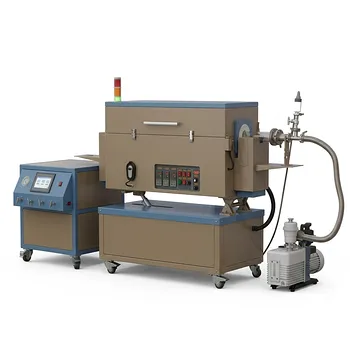
5 Inch Three Zone Rotary Tube Furnace with Integrated Gas Delivery System and 1200C Capability for Advanced Material CVD Processing
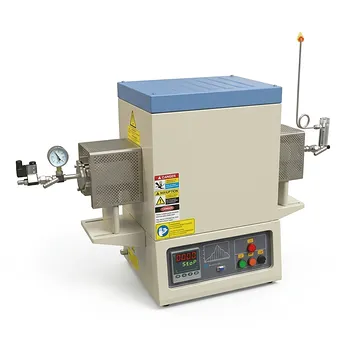
1700C Hydrogen Gas Tube Furnace with 60mm Alumina Process Tube and Integrated Hydrogen Safety Detector
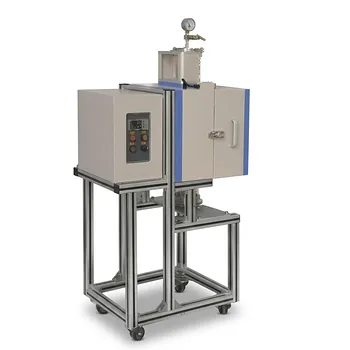
1200°C 5 Inch Vertical Quartz Tube Furnace with Stainless Steel Vacuum Flanges

High Temperature 1700C Six Zone Split Tube Furnace with Alumina Tube and Water Cooled Flanges

Compact Vertical Split Quartz Tube Furnace with Stainless Steel Vacuum Flanges for Rapid Thermal Quenching and Controlled Atmosphere Material Processing

High Temperature 1700C Benchtop Tube Furnace with 5 Inch Heating Zone High Purity Alumina Tube and Vacuum Sealing Flanges
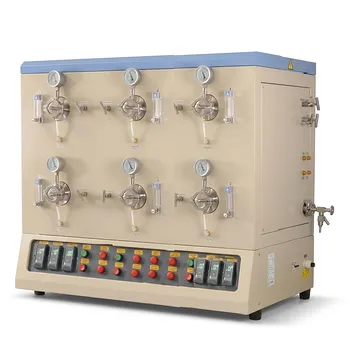
1200C High Throughput Multi Channel Tube Furnace with 50mm Quartz Tubes for Annealing and Material Phase Diagram Research
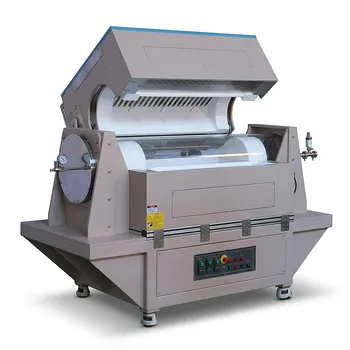
Three Zone Tube Furnace with 11 Inch or 15 Inch Quartz Tube and Hinged Flanges for Vacuum Atmosphere Heat Treatment

1800C High Temperature Compact Vacuum Tube Furnace with 60mm OD Alumina Tube and Kanthal MoSi2 Heating Elements

High Temperature 1700C Vertical Tube Furnace for Powder Spherification and Material Sintering
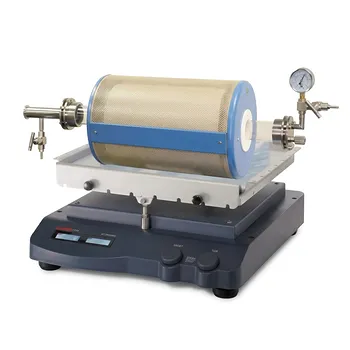
High Temperature Rocking Tube Furnace with Quartz Tube and Vacuum Flange for Materials Synthesis

High Temperature Automated 5 Inch Tube Furnace for Autonomous Material Research and Advanced Laboratory R&D
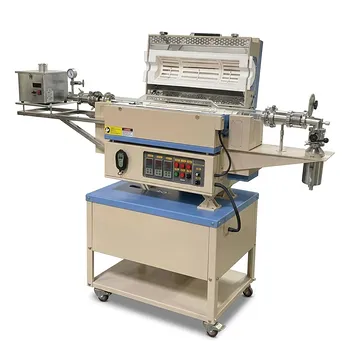
5 Inch Rotary Tube Furnace with Automatic Feeding and Receiving System 1200C Three Zone CVD Powder Processing