What is the function of a horizontal tube furnace in topotactic reduction? Achieving Precision ABO2 Phase Purity.
Updated 3 months ago
The horizontal tube furnace acts as a precision thermal reactor that provides the stable, low-temperature environment—typically around 260°C—required for the selective removal of oxygen ions. By maintaining a highly uniform temperature field, it facilitates the topotactic transition of perovskite nickelates from a 3D ABO3 structure to a 2D ABO2 infinite-layer structure without compromising the crystal lattice.
Core Takeaway: The horizontal tube furnace is the critical tool for managing the delicate thermodynamics of topotactic reduction. It enables the precise activation of reducing agents like calcium hydride to strip oxygen from the nickelate lattice while preserving the material's epitaxial integrity.
The Role of Thermal Precision in Topotactic Reactions
Maintaining Low-Temperature Stability
Unlike standard sintering, the reduction of nickelates requires a relatively low temperature of approximately 260°C maintained over several hours. The horizontal tube furnace provides the thermal stability necessary to prevent temperature spikes that could lead to the total decomposition of the thin film.
Facilitating Selective Oxygen Migration
The furnace’s uniform heating allows for selective migration, where oxygen anions are removed from specific lattice sites. This precision ensures that the primary crystal framework remains intact while the internal stoichiometry is fundamentally altered.
Environment Control and Chemical Activation
Activation of Reducing Agents
In many processes, the nickelate sample is sealed in a vacuum tube with calcium hydride (CaH2). The furnace provides the exact thermal energy needed to decompose the CaH2, releasing highly active reducing agents into the sealed environment.
Creating a Low Oxygen Partial Pressure
By providing a controlled, sealed reaction space, the furnace helps maintain an extremely low oxygen partial pressure. This environment is the driving force that encourages oxygen ions to leave the nickelate lattice, facilitating the transition to the infinite-layer phase.
Preservation of the Epitaxial Structure
The horizontal design ensures a consistent temperature gradient across the substrate. This uniformity is vital for ensuring that the thin film transforms evenly across its entire surface area, preventing cracks or phase separation in the epitaxial layer.
Understanding the Trade-offs and Challenges
The Risk of Thermal Inhomogeneity
Even minor fluctuations in the furnace’s temperature field can lead to incomplete reduction or "dead zones" on the film. If one end of the tube is slightly cooler, the phase transition may not reach completion, resulting in a mixed-phase sample.
Over-Reduction and Lattice Collapse
If the furnace temperature exceeds the narrow window required for the ABO2 phase, the material may undergo over-reduction. This leads to the total collapse of the perovskite-derived structure into metallic nickel or other unintended oxides.
Precursor Management
The rate of vaporization for reducing agents is highly sensitive to the furnace's heat profile. Inconsistent heating can cause an uncontrolled release of hydrogen or calcium vapors, which may physically damage the delicate thin-film surface.
How to Apply This to Your Process
Making the Right Choice for Your Goal
To achieve a high-quality topotactic reduction, the furnace must be calibrated for long-term isothermal performance.
- If your primary focus is Phase Purity: Use a furnace with multi-zone heating to ensure an absolute uniform temperature across the entire length of the reaction tube.
- If your primary focus is Large-Area Scalability: Ensure the transport rate of reducing agents is balanced by managing the furnace's internal gas flow or vacuum levels.
- If your primary focus is Lattice Integrity: Implement a slow, step-wise cooling profile within the furnace to avoid thermal shock after the reduction is complete.
Precise thermal management is the bridge between a standard perovskite and the highly sought-after infinite-layer nickelate phase.
Summary Table:
| Key Feature | Role in Topotactic Reduction | Critical Requirement |
|---|---|---|
| Thermal Stability | Prevents decomposition of thin films | Precise control at ~260°C |
| Selective Migration | Facilitates oxygen removal from lattice sites | Uniform heating field |
| Chemical Activation | Decomposes reducing agents like CaH2 | Controlled heat profile |
| Environment Control | Maintains low oxygen partial pressure | Sealed, vacuum-capable tube |
| Phase Integrity | Ensures even transition across substrate | Minimal temperature gradients |
Elevate Your Material Research with THERMUNITS Precision
Achieving the delicate infinite-layer ABO2 phase requires the absolute thermal stability and uniform gradients found in THERMUNITS equipment. As a leading manufacturer of high-temperature laboratory solutions for material science and industrial R&D, we empower researchers to push the boundaries of topotactic reduction.
Our comprehensive product lineup includes:
- Tube, Vacuum, and Atmosphere Furnaces tailored for precise chemical vapor and reduction processes.
- CVD/PECVD Systems for advanced thin-film engineering.
- Muffle, Rotary, and Hot Press Furnaces for diverse heat treatment applications.
- Specialized Solutions including Dental Furnaces, VIM systems, and high-performance Thermal Elements.
Ensure your crystal lattice integrity with equipment designed for precision. Contact our technical experts today to find the perfect thermal solution for your lab.
References
- Araceli Gutiérrez‐Llorente, Lucía Iglesias. Toward Reliable Synthesis of Superconducting Infinite Layer Nickelate Thin Films by Topochemical Reduction. DOI: 10.1002/advs.202309092
Mentioned Products
- Multi Position Tube Furnace 1100C for Laboratory Material Research and Advanced Industrial Thermal Processing
- 1200°C 10-Zone Split Tube Furnace with Horizontal and Vertical Mounting for Multi-Zone Thermal Gradients and Large Diameter Material Processing
- Ten Zone Multi Orientation Laboratory Tube Furnace for 1200C High Temperature Gradient Thermal Processing
- Split Vertical Tube Furnace with 1200C Quartz Tube and Stainless Steel Vacuum Flanges for Rapid Thermal Processing
- High Temperature 1700C Vertical Tube Furnace for Powder Spherification and Material Sintering
People Also Ask
- Why use a tube furnace for oxygen annealing LaCrO3/LaMnO3? Optimize Phase Transition & Magnetic Performance.
- What key role does a laboratory high-temperature tube furnace play in the production of carbon nanofibers? Guide
- How is a laboratory high-temperature tube furnace utilized to research the products of aluminothermic reduction? Advanced Metallurgical Solutions
- What is the role of a laboratory tube furnace in the carbonization process of porous carbon foam (PCF)? Master 3D Synthesis
- What role does a laboratory tube furnace play in the pyrolysis and carbonization of biomass? Optimize Thermal Research.

Tech Team · ThermUnits
Last updated on Jun 03, 2026
Related Products
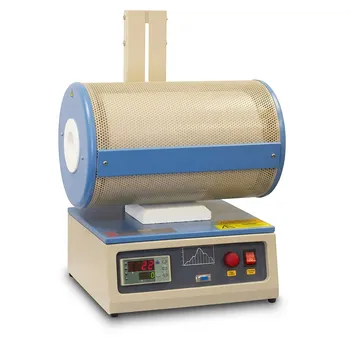
Multi Position Tube Furnace 1100C for Laboratory Material Research and Advanced Industrial Thermal Processing
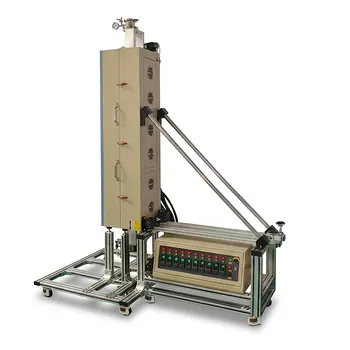
1200°C 10-Zone Split Tube Furnace with Horizontal and Vertical Mounting for Multi-Zone Thermal Gradients and Large Diameter Material Processing
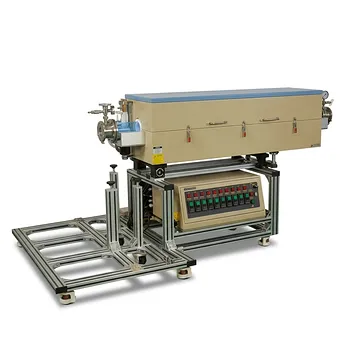
Ten Zone Multi Orientation Laboratory Tube Furnace for 1200C High Temperature Gradient Thermal Processing
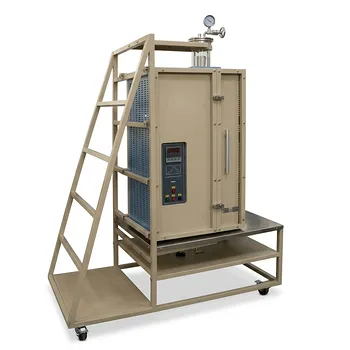
Split Vertical Tube Furnace with 1200C Quartz Tube and Stainless Steel Vacuum Flanges for Rapid Thermal Processing

High Temperature 1700C Vertical Tube Furnace for Powder Spherification and Material Sintering

Vertical 1700C Vacuum and Atmosphere Tube Furnace with 80mm Alumina Tube

1200°C 5 Inch Vertical Quartz Tube Furnace with Stainless Steel Vacuum Flanges
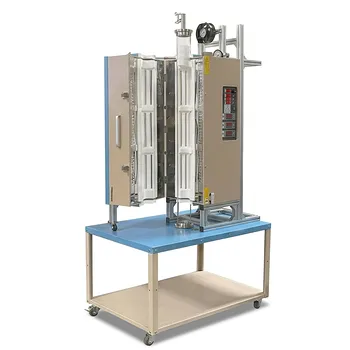
1200C Three Zone Split Vertical Tube Furnace 4 Inch Quartz Tube Stainless Steel Vacuum Flanges
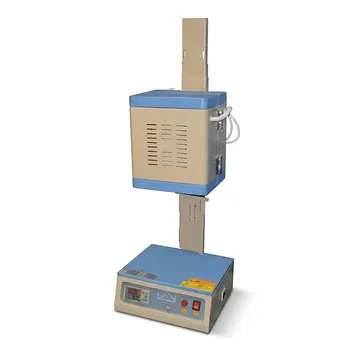
High Temperature Vertical Split Tube Furnace with PID Temperature Controller for 1 and 2 Inch Processing Tubes
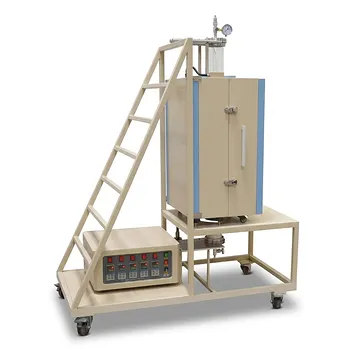
Five Zone Split Vertical Tube Furnace 1200C Max with 4 Inch Quartz Tube and Stainless Steel Vacuum Flanges
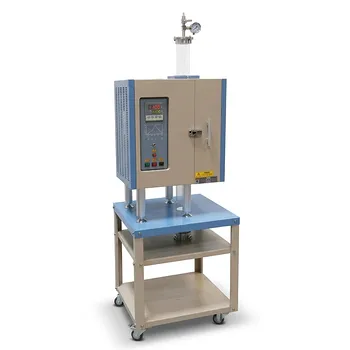
1100°C Split Vertical Tube Furnace with 80mm Quartz Tube and Stainless Steel Vacuum Flanges

Compact Vertical Split Quartz Tube Furnace with Stainless Steel Vacuum Flanges for Rapid Thermal Quenching and Controlled Atmosphere Material Processing

High Temperature 1700C Six Zone Split Tube Furnace with Alumina Tube and Water Cooled Flanges
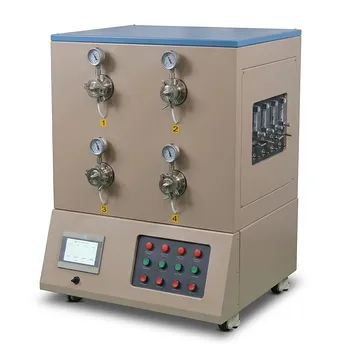
High Throughput 1200C Four Channel Tube Furnace with 3 Inch Quartz Tubes for Multi Zone Annealing and Material Research
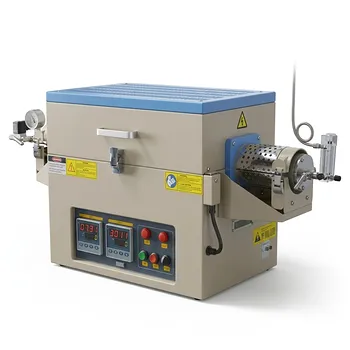
1100C Dual Zone Hydrogen Gas Tube Furnace with Quartz Tube and Integrated H2 Leak Detection System
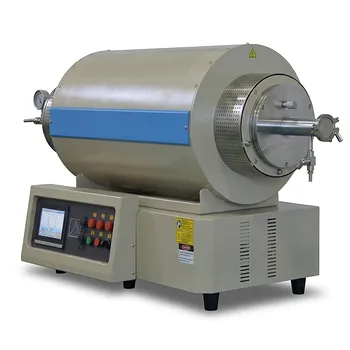
1200C Max Three Zone Tube Furnace 6 Inch OD Max with Tube and Flange

1200C High Throughput Multi Channel Tube Furnace with 50mm Quartz Tubes for Annealing and Material Phase Diagram Research
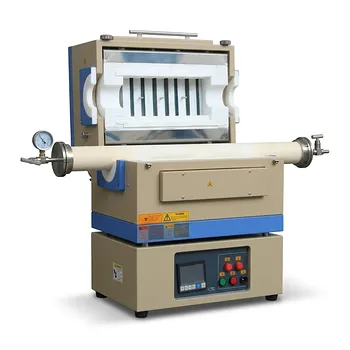
1500C Eight Zone Split Tube Furnace for Thermal Gradient Processing and Advanced Material Research

1100C Tube Furnace with Vacuum Flange and Programmable Temperature Controller for Material Science and Industrial Heat Treatment
