What is the role of a vertical tube furnace in steel wire heat transfer experiments? Expert precision for quenching.
Updated 3 months ago
In experiments designed to determine the heat transfer coefficient of steel wire, the vertical tube furnace serves as the critical pre-heating stage, elevating the wire to its austenitizing temperature (typically 850°C to 1000°C). Its specific vertical orientation is vital because it enables a direct, automated alignment with cooling media, ensuring the heated sample is transferred quickly and smoothly to simulate industrial dynamic processes.
The vertical tube furnace provides a stable thermal environment to uniformize the wire's temperature and uses its vertical geometry to facilitate a rapid, seamless transition into a quenching medium, which is essential for the accurate calculation of heat transfer coefficients.
Achieving Precise Thermal States for Quenching
Reaching the Austenitizing Temperature
The furnace's primary role is to elevate the steel wire to a specific austenitizing range, usually between 850°C and 1000°C. This ensures the metallurgical structure is fully transformed and ready for the cooling phase of the experiment.
Establishing a Stable Thermal Field
Vertical furnaces are designed to maintain a constant temperature zone within the tube. This stability ensures that the entire length of the wire reaches a uniform temperature, preventing thermal gradients that would introduce errors into the heat transfer coefficient data.
Protecting Surface Integrity
By utilizing a sealed reaction space, the furnace can be integrated with nitrogen flushing or inert gas systems. This prevents the formation of oxide scales on the wire surface, which would otherwise act as an insulating layer and provide an inaccurate reading of the cooling rate.
The Role of Vertical Alignment in Experimental Accuracy
Seamless Integration with Immersion Systems
The vertical configuration allows the furnace to be positioned directly above the immersion structure. This gravity-aligned setup enables an automated system to drop the wire into the cooling medium without the mechanical friction or delays associated with horizontal transfer.
Simulating Industrial Dynamic Processes
The speed of the vertical transfer is essential for replicating the high-speed conditions of an industrial production line. Minimizing the time between the furnace and the quench tank ensures that the heat transfer coefficient measured is specific to the cooling medium rather than ambient air.
Precise Positioning within the Hot Zone
The vertical arrangement allows for the precise positioning of samples within the furnace's thermal center. This ensures that the wire begins its descent from a known, perfectly controlled thermal state, which is a prerequisite for reliable kinetic modeling.
Understanding Technical Constraints and Trade-offs
Limitations of Sample Geometry
The length of the steel wire is strictly limited by the size of the furnace's uniform hot zone. If the wire extends beyond this zone, the ends will be cooler than the center, leading to inconsistent heat transfer results across the sample.
Complexity of Mechanical Synchronization
Achieving the "quick and smooth" transfer required for accurate data involves complex automated triggering. Any mechanical jitter or delay during the drop can cause the wire to swing or vibrate, leading to irregular flow patterns in the cooling medium and skewed data.
Atmosphere Maintenance
While the vertical tube is excellent for heating, maintaining a sealed atmosphere during the transfer to the quenching medium is difficult. Oxygen ingress at the bottom of the furnace can occur during the drop, potentially affecting the wire's surface chemistry just before immersion.
Optimizing Your Experimental Setup
- If your primary focus is industrial replication: Integrate the furnace with an automated vertical immersion structure to minimize the transition time between heating and quenching.
- If your primary focus is data precision: Use a furnace with a certified constant temperature zone and integrated gas lines to ensure the wire surface remains free of oxidation.
- If your primary focus is extreme metallurgical conditions: Select a high-temperature vertical furnace capable of exceeding 1600°C to study specialized alloy-slag interactions.
The vertical tube furnace is the indispensable foundation for these experiments, providing the thermal precision and mechanical alignment necessary to turn raw quenching data into a definitive heat transfer coefficient.
Summary Table:
| Feature | Role in Experiment | Key Benefit |
|---|---|---|
| Austenitizing Heat | Elevates wire to 850°C - 1000°C | Prepares metallurgical structure for quenching |
| Vertical Alignment | Direct gravity-drop into media | Minimizes transfer time and mechanical friction |
| Stable Hot Zone | Maintains uniform thermal field | Prevents thermal gradients for accurate data |
| Sealed Environment | Nitrogen/Inert gas flushing | Prevents oxide scale and maintains surface integrity |
Advance Your Material Science Research with THERMUNITS
As a leading manufacturer of high-performance laboratory equipment, THERMUNITS provides the thermal precision necessary for advanced industrial R&D and material science. Our vertical tube furnaces are specifically engineered to provide the stable thermal fields and seamless mechanical integration required for calculating precise heat transfer coefficients.
Our Comprehensive Thermal Solutions Include:
- Furnaces: Muffle, Vacuum, Atmosphere, Tube, Rotary, and Hot Press models.
- Advanced Systems: CVD/PECVD systems, Dental Furnaces, and Electric Rotary Kilns.
- Specialized Equipment: Vacuum Induction Melting (VIM) and high-quality Thermal Elements.
Ready to optimize your heat treatment process? Contact our experts today to discover how THERMUNITS can bring superior accuracy and efficiency to your laboratory.
References
- Jan Hof, Christian Wuppermann. Experimental Determination of the Heat Transfer Coefficient of Wire Samples in an Industrial Lead Bath. DOI: 10.3390/app142311300
Mentioned Products
- High Temperature 1700C Vertical Tube Furnace for Powder Spherification and Material Sintering
- Vertical 1700C Vacuum and Atmosphere Tube Furnace with 80mm Alumina Tube
- 500C Vacuum Vertical Tube Furnace 84mm OD Sample Rotation Lifting System
- 1100°C Split Vertical Tube Furnace with 80mm Quartz Tube and Stainless Steel Vacuum Flanges
- Split Vertical Tube Furnace with 1200C Quartz Tube and Stainless Steel Vacuum Flanges for Rapid Thermal Processing
People Also Ask
- What role does a high-temperature vertical tube furnace play in simulating high-carbon ferromanganese slag formation?
- What functions does a vertical high-temperature tube furnace perform? Master Industrial Sintering & R&D Simulation
- What is the primary function of a high-temperature tube furnace in Cu1-N-C synthesis? Precision Thermal Control.
- High-Temp Tube Furnace Role in Converting Microbial Proteins to Iron Single-Atom Sites: Expert Synthesis Guide
- What impact does the heating rate of a tube furnace have on biochar microstructure? Optimize Your Material R&D.

Tech Team · ThermUnits
Last updated on Jun 03, 2026
Related Products

High Temperature 1700C Vertical Tube Furnace for Powder Spherification and Material Sintering

Vertical 1700C Vacuum and Atmosphere Tube Furnace with 80mm Alumina Tube
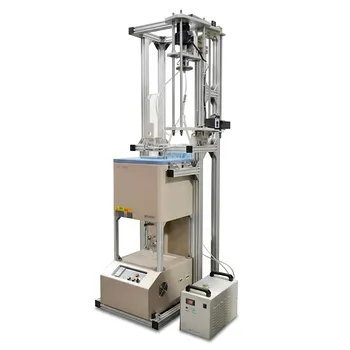
500C Vacuum Vertical Tube Furnace 84mm OD Sample Rotation Lifting System
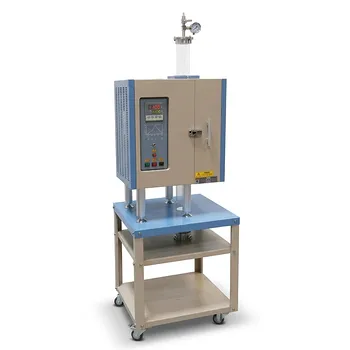
1100°C Split Vertical Tube Furnace with 80mm Quartz Tube and Stainless Steel Vacuum Flanges
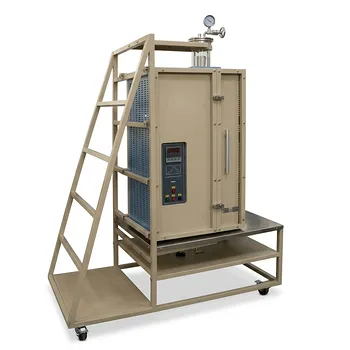
Split Vertical Tube Furnace with 1200C Quartz Tube and Stainless Steel Vacuum Flanges for Rapid Thermal Processing

Compact Vertical Split Quartz Tube Furnace with Stainless Steel Vacuum Flanges for Rapid Thermal Quenching and Controlled Atmosphere Material Processing
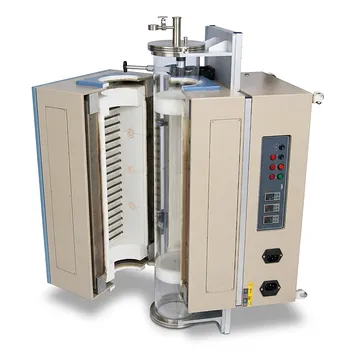
Large Vertical Three Zone Tube Furnace with 8 Inch or 11 Inch Quartz Tube and High Vacuum Flanges 1200C
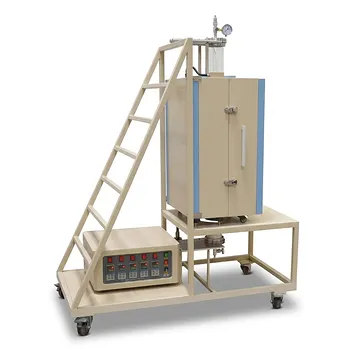
Five Zone Split Vertical Tube Furnace 1200C Max with 4 Inch Quartz Tube and Stainless Steel Vacuum Flanges
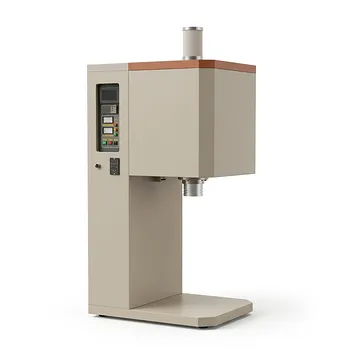
Vertical Openable Tube Furnace 0-1700c High Temperature Laboratory System for CVD and Vacuum Heat Treatment
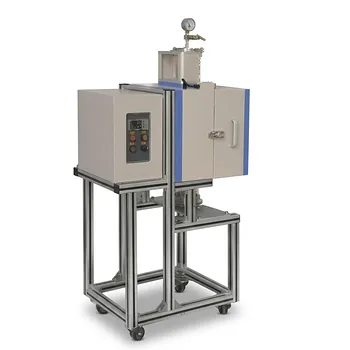
1200°C 5 Inch Vertical Quartz Tube Furnace with Stainless Steel Vacuum Flanges
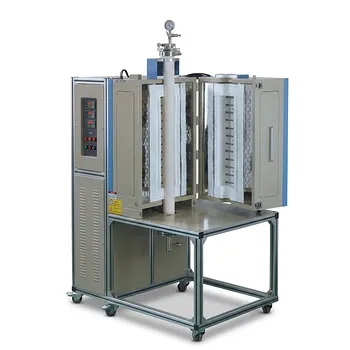
Three Zone Heating Split Vertical Tube Furnace 1700 High Temperature Vacuum Atmosphere Thermal Process System
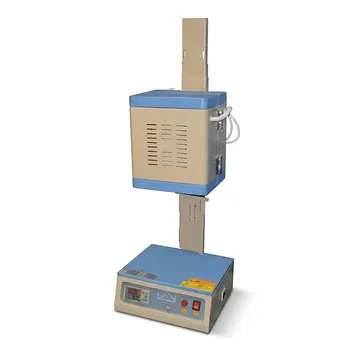
High Temperature Vertical Split Tube Furnace with PID Temperature Controller for 1 and 2 Inch Processing Tubes
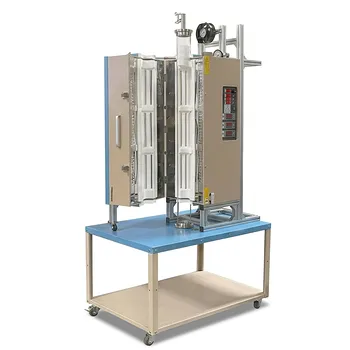
1200C Three Zone Split Vertical Tube Furnace 4 Inch Quartz Tube Stainless Steel Vacuum Flanges
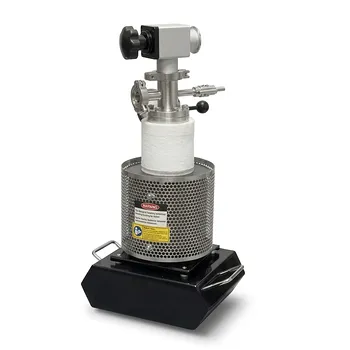
High Temperature 1100C Compact Top Loading Vertical Vacuum Tube Furnace for High Vacuum Noble Metal Melting and Material Research
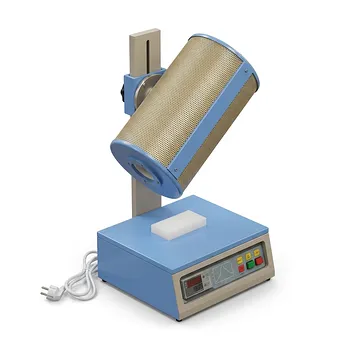
1100°C Vertical Laboratory Furnace for DIY Tubular Reactors with PID Temperature Controller
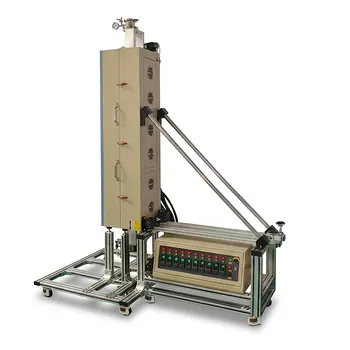
1200°C 10-Zone Split Tube Furnace with Horizontal and Vertical Mounting for Multi-Zone Thermal Gradients and Large Diameter Material Processing
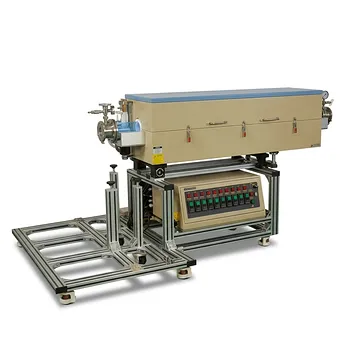
Ten Zone Multi Orientation Laboratory Tube Furnace for 1200C High Temperature Gradient Thermal Processing

High Temperature 1700C Six Zone Split Tube Furnace with Alumina Tube and Water Cooled Flanges

1100C Tube Furnace with Vacuum Flange and Programmable Temperature Controller for Material Science and Industrial Heat Treatment
