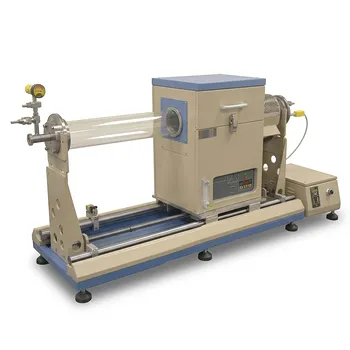
What is the function of a programmed temperature tube furnace in the synthesis of Niobium Pentoxide (Nb2O5) nanogrids?
Updated 3 months ago
In the synthesis of Niobium Pentoxide ($Nb_2O_5$) nanogrids, the programmed temperature tube furnace serves as the critical reactor for thermal decomposition, oxidation, and crystallization. It provides a strictly controlled environment—typically heating to 550°C in an air atmosphere—to remove sacrificial templates and transform precursor materials into stable, high-surface-area nanostructures.
The furnace acts as a precision thermal controller that regulates the chemical transformation of niobium precursors. By balancing heating rates and hold times, it ensures the complete removal of template agents while driving the crystalline growth necessary for stable nanogrid morphology.
The Role of Precise Thermal Curve Control
Managing the Temperature Ramp Rate
The furnace is programmed with a specific ramp rate, such as 2.5°C per minute, to ensure gradual heating. This slow increase is vital to prevent the rapid volatilization of precursors, which could otherwise collapse the delicate nanogrid architecture.
Maintaining Constant Temperature Zones
Holding the furnace at a steady 550°C for 4 hours provides the thermal energy required for phase transformation. This duration allows niobium species to organize into a crystalline lattice, ensuring the resulting material is chemically stable and uniform.
Regulating Transport Kinetics
By controlling the temperature gradient within the ceramic tube, the furnace manages the kinetics of gas-phase components. This level of control is what allows researchers to dictate the final thickness and crystalline quality of the $Nb_2O_5$ nanostructures.
Facilitating Chemical and Structural Transformation
Thermal Decomposition of Templates
The synthesis often utilizes template agents like melamine to shape the nanogrid. The programmed furnace provides the oxidative environment necessary to thermally decompose and remove these templates, leaving behind a porous "grid" structure.
Oxidation in an Air Atmosphere
Unlike vacuum or inert gas processes, $Nb_2O_5$ synthesis requires an air atmosphere within the tube. The furnace facilitates the reaction between oxygen and the niobium precursor, ensuring the material is fully oxidized into its pentoxide form.
Inducing Crystalline Growth
The high-temperature environment facilitates the transition from amorphous precursors to crystalline niobium species. This process is what yields the characteristic white $Nb_2O_5$ powder and ensures the material possesses a high specific surface area.
Understanding the Trade-offs
Ramp Rate vs. Structural Integrity
If the heating rate is too aggressive, the rapid escape of gases from decomposing templates can shatter the nanogrid framework. Conversely, an excessively slow ramp rate increases energy consumption and may lead to unwanted grain coarsening.
Temperature Precision vs. Phase Purity
Deviating from the target temperature can result in incomplete oxidation or the formation of alternative niobium oxide phases. Precise thermal field control is necessary to avoid "cold spots" in the furnace tube that lead to non-uniform batches.
Atmosphere Sensitivity
While $Nb_2O_5$ requires an air atmosphere, other niobium treatments might require a vacuum or nitrogen to prevent over-oxidation. Choosing the wrong atmospheric setting in the tube furnace will fundamentally change the chemical identity of the final product.
How to Optimize Furnace Parameters for Your Project
The success of your synthesis depends on aligning the furnace program with your desired material characteristics.
- If your primary focus is maximizing specific surface area: Use a strictly controlled, slower ramp rate and a moderate hold temperature to prevent the sintering of nanogrid pores.
- If your primary focus is high crystallinity: Ensure the furnace maintains a stable, high-temperature hold for the full duration to allow for complete lattice organization.
- If your primary focus is phase purity: Utilize a multi-zone furnace to ensure extreme temperature uniformity across the entire length of the precursor boat.
The programmed temperature tube furnace is the definitive tool for transforming chemical precursors into high-performance $Nb_2O_5$ nanogrids through precise environmental and thermal regulation.
Summary Table:
| Furnace Parameter | Functional Role in Synthesis | Impact on Nb2O5 Nanogrids |
|---|---|---|
| Ramp Rate | Gradual heating (2.5°C/min) | Prevents framework collapse during volatilization |
| Hold Temp | Steady 550°C thermal energy | Drives phase transformation and crystalline growth |
| Atmosphere | Oxidative Air environment | Ensures full conversion from precursor to pentoxide |
| Template Control | Thermal decomposition | Removes sacrificial agents (melamine) to create pores |
Achieve Unmatched Synthesis Precision with THERMUNITS
THERMUNITS is a leading manufacturer of high-temperature laboratory equipment for material science and industrial R&D. We provide specialized thermal solutions—including Tube, Vacuum, Atmosphere, and CVD/PECVD furnaces—designed to handle the rigorous demands of nanomaterial synthesis like Niobium Pentoxide nanogrids. Our equipment ensures precise ramp control and atmospheric stability to maximize your project's specific surface area and phase purity.
Contact THERMUNITS today to discuss your heat treatment requirements and discover how our advanced furnace systems can accelerate your research!
References
- Zhijun Li, Yu Wang. Solvent-free selective hydrogenation of nitroaromatics to azoxy compounds over Co single atoms decorated on Nb2O5 nanomeshes. DOI: 10.1038/s41467-024-47402-5
Mentioned Products
- 1100C Tube Furnace with Vacuum Flange and Programmable Temperature Controller for Material Science and Industrial Heat Treatment
- High Temperature 1700C Vertical Tube Furnace for Powder Spherification and Material Sintering
- 1100C High Pressure Rocking Tube Furnace with 2 Inch Super Alloy Processing Tube for Material Synthesis
- 1500C Three Zone Vertical Pyrolysis Furnace for Nanoparticle Synthesis and Advanced Oxide Coating
- 1250C Compact Split Tube Furnace with 8 Inch Heating Zone and Programmable Controller
People Also Ask
- What are the advantages of 1100°C tube furnaces for ORR catalysts? Boost Conductivity and Structural Stability.
- What role does a tube furnace play in PS template removal? Ensure ZnO/SiO2 Structural Integrity & High Performance.
- What core functions does a high-temperature vacuum tube furnace provide? Optimize np-CuSn Sintering & Joint Integrity
- What is the role of a high-temperature tube furnace in the calcination process of ZnO/In2O3 nanocomposites?
- What impact does the heating rate of a tube furnace have on biochar microstructure? Optimize Your Material R&D.

Tech Team · ThermUnits
Last updated on Jun 02, 2026
Related Products

1100C Tube Furnace with Vacuum Flange and Programmable Temperature Controller for Material Science and Industrial Heat Treatment

High Temperature 1700C Vertical Tube Furnace for Powder Spherification and Material Sintering
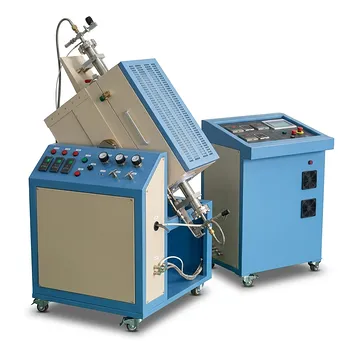
1100C High Pressure Rocking Tube Furnace with 2 Inch Super Alloy Processing Tube for Material Synthesis
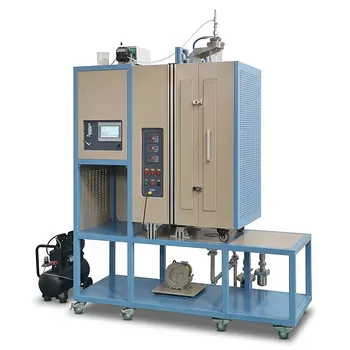
1500C Three Zone Vertical Pyrolysis Furnace for Nanoparticle Synthesis and Advanced Oxide Coating
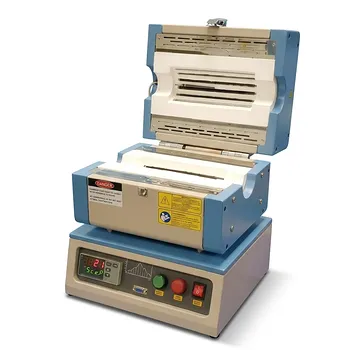
1250C Compact Split Tube Furnace with 8 Inch Heating Zone and Programmable Controller
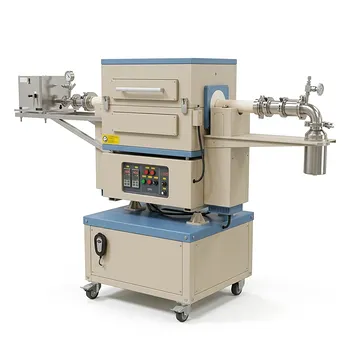
1500C Max Dual Zone Rotary Tube Furnace with 60 mm OD Alumina Tube for High Temperature Material Synthesis
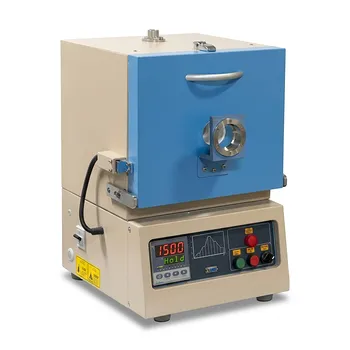
1500C Hybrid Muffle Tube Furnace 1.7L Box with 2 Inch Mullite Tube and Programmable PID Controller

Compact High Temperature 1600C Tube Furnace with 50mm Alumina Tube and Vacuum Flanges for Material Sintering

High Temperature Tube Furnace 1500C with Sliding Flanges and 50mm OD for Rapid Thermal Processing Fast Heating and Cooling
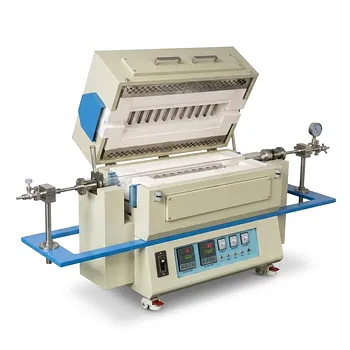
High Temperature Dual Zone Rotating Tube Furnace 1500C Silicon Carbide Heating for Advanced Material Synthesis

High Temperature Automated 5 Inch Tube Furnace for Autonomous Material Research and Advanced Laboratory R&D
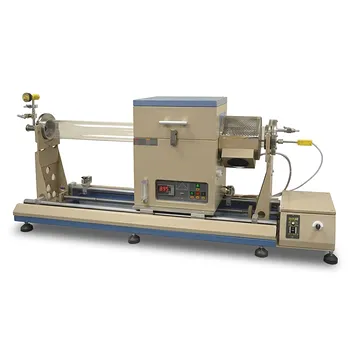
900 ºC Max Sliding RTP Tube Furnace with Rapid IR Heating and 4 Inch OD Quartz Tube
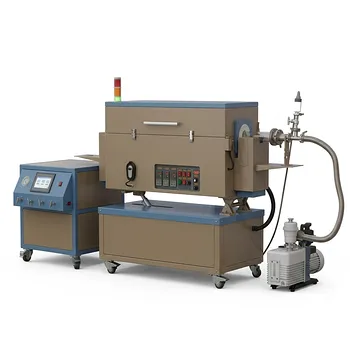
5 Inch Three Zone Rotary Tube Furnace with Integrated Gas Delivery System and 1200C Capability for Advanced Material CVD Processing

High Temperature 1700C Tube Furnace with High Vacuum Turbomolecular Pump System and Multi Channel Mass Flow Controller Gas Mixer
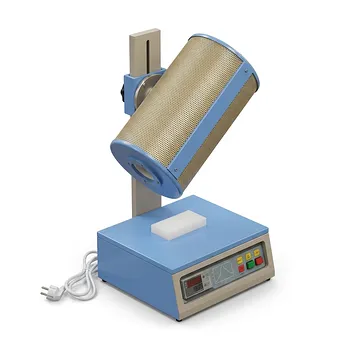
1100°C Vertical Laboratory Furnace for DIY Tubular Reactors with PID Temperature Controller
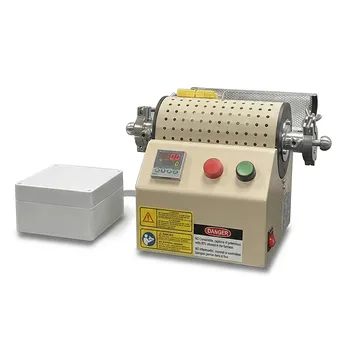
1000C Mini Tube Furnace with 20mm Quartz Tube and Vacuum Flanges for Material Science Research and Controlled Atmosphere Small Sample Processing
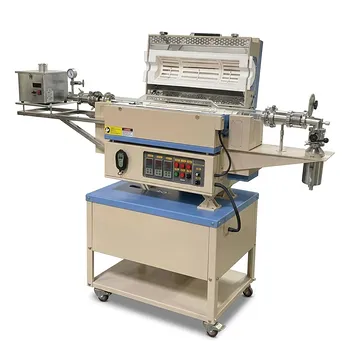
5 Inch Rotary Tube Furnace with Automatic Feeding and Receiving System 1200C Three Zone CVD Powder Processing
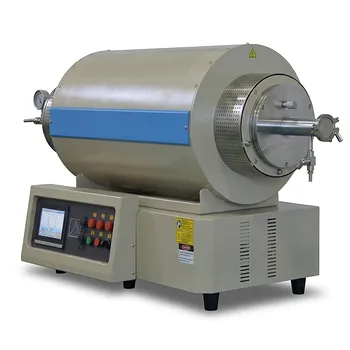
1200C Max Three Zone Tube Furnace 6 Inch OD Max with Tube and Flange

1800C High Temperature Compact Vacuum Tube Furnace with 60mm OD Alumina Tube and Kanthal MoSi2 Heating Elements