What is the function of an Atmosphere Tube Furnace in SiCW pre-treatment? Ensure High-Purity Silicon Recovery
Updated 3 months ago
The Atmosphere Tube Furnace serves as the primary decontamination stage in the recovery of Silicon Cutting Waste (SiCW). Its fundamental role is to provide a stable, high-temperature environment—typically maintained at 600 °C—under the protection of inert gases like argon. This thermal process is designed to decompose and strip away the high volume of organic surfactants and oils that coat the waste silicon during the cutting process.
Core Takeaway: By precisely controlling the thermal and gas environment, an atmosphere tube furnace removes organic impurities from Silicon Cutting Waste without allowing the silicon to oxidize, ensuring the chemical purity required for high-grade material recycling.
Thermal Decomposition of Organic Surfactants
Eliminating Volatile Contaminants
Silicon cutting waste is heavily contaminated with organic cooling fluids and surfactants used during the industrial sawing process. The tube furnace subjects this waste to temperatures around 600 °C, which is sufficient to break the chemical bonds of these organic molecules. Once decomposed, these contaminants are converted into volatile gases and evacuated from the furnace.
Protecting the Raw Material for Downstream Processing
The removal of these organics is not merely for cleanliness; it is a prerequisite for subsequent purification steps. By eliminating the carbon-based "shell" surrounding the silicon particles, the furnace ensures that later chemical purification and mechanical grinding processes can interact directly with the silicon surface. This prevents the formation of unwanted carbides or surface barriers that would hinder material recovery.
The Role of Controlled Inert Atmospheres
Preventing Material Oxidation
Silicon is highly reactive with oxygen at elevated temperatures. The atmosphere tube furnace uses high-sealing tubes and precise flow control to maintain an inert argon shield, which displaces all oxygen. This environment allows the organics to burn off while preventing the silicon itself from oxidizing into silica ($SiO_2$), which would degrade the quality of the final product.
Ensuring Uniform Thermal Fields
Advanced material recovery requires high temperature field uniformity to ensure that every particle of the SiCW batch reaches the target temperature. The design of the tube furnace provides a consistent thermal environment, which prevents "cold spots" where organic residues might survive. This leads to a highly repeatable process, ensuring that the chemical composition of the pre-treated waste remains stable across different batches.
Advanced Control and Efficiency
Multi-Stage Programmable Heating
The ability to program specific temperature ramps is essential for handling complex waste streams. By controlling the rate of heating, operators can manage the outgassing of organics to prevent pressure spikes within the furnace tube. This multi-stage control ensures that the decomposition happens at a steady, manageable rate, protecting the integrity of the equipment and the purity of the silicon.
Efficient Removal of Byproduct Gases
The enclosed, controlled flow system of the furnace effectively eliminates byproduct gases generated during decomposition. By continuously flushing the tube with inert gas, the furnace prevents impurity re-contamination, where vaporized organics might otherwise settle back onto the cooling material. This constant evacuation is critical for producing a raw material with controllable grain sizes and high surface purity.
Understanding the Trade-offs
Thermal Energy vs. Material Integrity
While higher temperatures can remove organic contaminants more quickly, exceeding the necessary threshold (around 600 °C for most surfactants) can lead to sintering or unwanted phase changes in the silicon. Finding the "sweet spot" is critical; too low, and the organics remain; too high, and the silicon morphology is compromised.
Gas Consumption and Sealing Risks
Operating under high-purity argon or nitrogen increases the cost of the recycling process. Furthermore, the effectiveness of the pre-treatment is entirely dependent on the integrity of the furnace seals. Any leak that introduces atmospheric oxygen during the 600 °C cycle will result in surface oxidation, effectively ruining the batch for high-performance electronic applications.
Applying This to Your Material Recovery Goal
How to Apply This to Your Project
To achieve the best results when pre-treating Silicon Cutting Waste, your approach should be dictated by your specific purity requirements.
- If your primary focus is Maximum Chemical Purity: Prioritize the use of high-purity argon and a multi-stage heating profile to ensure every trace of organic surfactant is evacuated before reaching peak temperature.
- If your primary focus is Process Scalability: Focus on optimizing the gas flow rates and furnace load density to maximize the volume of SiCW treated per cycle without creating stagnant gas pockets.
- If your primary focus is Cost Reduction: Evaluate the use of nitrogen as a secondary inert gas option if the specific downstream application can tolerate trace nitridation of the silicon surface.
Properly executed atmosphere furnace pre-treatment transforms industrial waste into a high-value precursor for the next generation of silicon-based technologies.
Summary Table:
| Key Feature | Requirement/Parameter | Benefit for SiCW Recovery |
|---|---|---|
| Processing Temp | Typically 600 °C | Complete decomposition of organic surfactants |
| Inert Atmosphere | Argon or Nitrogen Shield | Prevents silicon oxidation ($SiO_2$ formation) |
| Thermal Uniformity | Precise Field Control | Ensures stable chemical composition across batches |
| Gas Management | Multi-stage Programmable | Efficient evacuation of volatile organic contaminants |
| Safety/Purity | High-Sealing Vacuum Tubes | Prevents atmospheric leaks and impurity re-contamination |
Optimize Your Material Recovery with THERMUNITS
Achieving the chemical purity required for high-grade silicon recycling demands precision and reliability. THERMUNITS is a leading manufacturer of high-temperature laboratory equipment, providing the advanced thermal processing solutions essential for material science and industrial R&D.
Our comprehensive range of equipment includes:
- Atmosphere and Vacuum Tube Furnaces for precise SiCW pre-treatment.
- Muffle, Rotary, and Hot Press Furnaces for diverse heat treatment needs.
- CVD/PECVD Systems and Vacuum Induction Melting (VIM) Furnaces.
- Specialized Dental Furnaces and high-quality Thermal Elements.
Whether you are scaling up industrial recycling or conducting sensitive laboratory research, our equipment ensures uniform heating and contamination-free environments.
Ready to enhance your lab's efficiency and material purity?
Contact our technical experts today to find the perfect furnace solution for your application!
References
- Lanxiang Huang, Qiang Jiang. Low-cost silicon cutting waste reused as a high-power-density silicon-based anode. DOI: 10.1039/d4ra06203e
Mentioned Products
- Three Zone Tube Furnace with 11 Inch or 15 Inch Quartz Tube and Hinged Flanges for Vacuum Atmosphere Heat Treatment
- Compact Hybrid Muffle and Tube Furnace for 1000C Controlled Atmosphere Laboratory Material Sintering
- Compact Vertical Split Quartz Tube Furnace with Stainless Steel Vacuum Flanges for Rapid Thermal Quenching and Controlled Atmosphere Material Processing
- Vertical 1700C Vacuum and Atmosphere Tube Furnace with 80mm Alumina Tube
- 1650C High Temperature Atmosphere Controlled Box Furnace with 65L Chamber for Advanced Material Sintering and Industrial Heat Treatment
People Also Ask
- What is the primary function of a three-zone tube furnace in the synthesis process of corn-derived carbon nanotubes?
- What role does an industrial-grade three-zone tube furnace play in VOx@VACNT synthesis? Precision Phase-State Control
- What advantages does a three-zone tube furnace offer for nanoparticle synthesis? Unlock Superior Thermal Precision.
- Why Use a Three-Zone vs. Single-Zone Furnace for Fe-Ni-Cu Diffusion? Key Benefits for Lab Accuracy
- What role does a 3-zone tube furnace play in CCO ceramic conductivity testing? Ensure Isothermal Precision.

Tech Team · ThermUnits
Last updated on Jun 02, 2026
Related Products

Three Zone Tube Furnace with 11 Inch or 15 Inch Quartz Tube and Hinged Flanges for Vacuum Atmosphere Heat Treatment
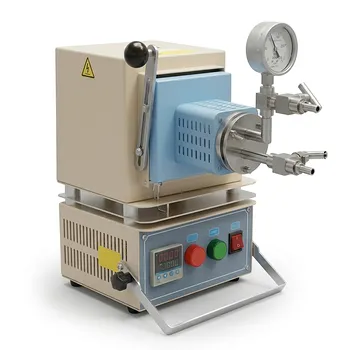
Compact Hybrid Muffle and Tube Furnace for 1000C Controlled Atmosphere Laboratory Material Sintering

Compact Vertical Split Quartz Tube Furnace with Stainless Steel Vacuum Flanges for Rapid Thermal Quenching and Controlled Atmosphere Material Processing

Vertical 1700C Vacuum and Atmosphere Tube Furnace with 80mm Alumina Tube
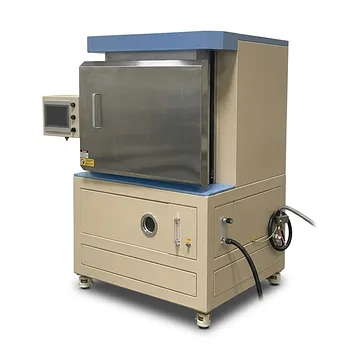
1650C High Temperature Atmosphere Controlled Box Furnace with 65L Chamber for Advanced Material Sintering and Industrial Heat Treatment
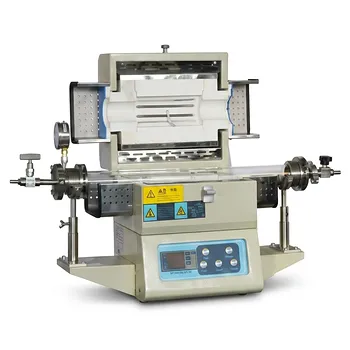
High Temperature 1200C Split Tube Furnace for CVD Research and Vacuum Atmosphere Heat Treatment
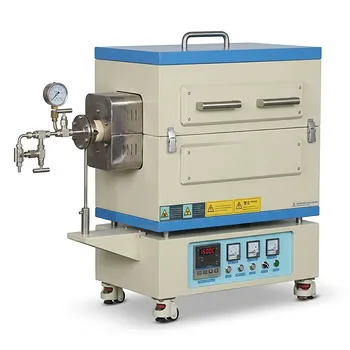
High Temperature Split Tube Furnace 1500C for Material Research Vacuum and Atmosphere Thermal Processing
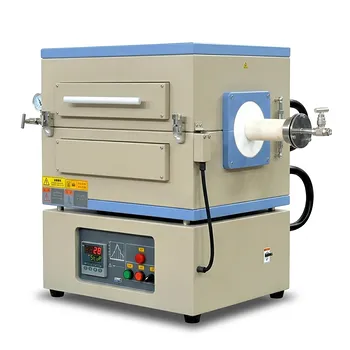
1500°C Split Tube Furnace with Alumina Tube and Vacuum Sealing Flanges for Material Research
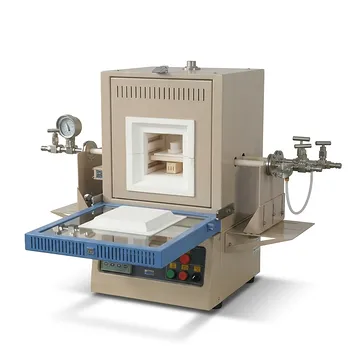
1700C Compact Hybrid Furnace with Dual Layer Box Sintering and Controlled Atmosphere Alumina Tubes

High Temperature 1700C Vertical Tube Furnace for Powder Spherification and Material Sintering

Compact High Temperature 1600C Tube Furnace with 50mm Alumina Tube and Vacuum Flanges for Material Sintering
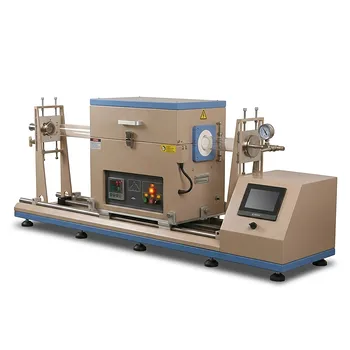
1200C Sliding Tube Furnace for Rapid Thermal Processing and CVD Graphene Growth with 100mm OD Capacity
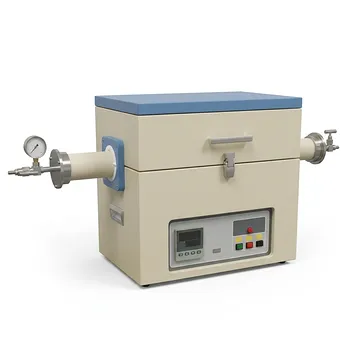
1250C Split Tube Furnace with 3 Inch Mullite Tube and Vacuum Sealing Flanges for Precision Thermal Processing

1800C High Temperature Compact Vacuum Tube Furnace with 60mm OD Alumina Tube and Kanthal MoSi2 Heating Elements

High Temperature Automated 5 Inch Tube Furnace for Autonomous Material Research and Advanced Laboratory R&D
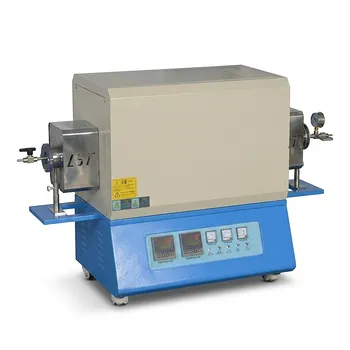
High Temperature Dual Zone Vacuum Tube Furnace for Material Research and CVD Processing
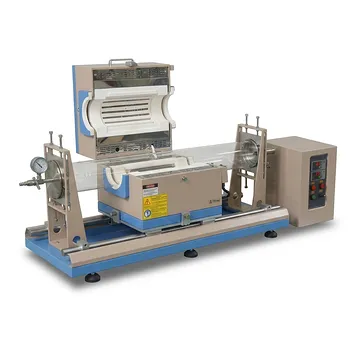
1200C High Temperature 5 Inch Sliding Tube Furnace for Rapid Thermal Processing RTP and Wafer Annealing
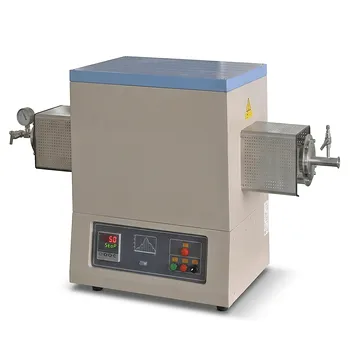
High Temperature 1700C Tube Furnace with 4 Inch OD Alumina Tube and Vacuum Sealing Flanges

5 Inch Three Zone Rotary Tube Furnace with Integrated Gas Delivery System and 1200C Capability for Advanced Material CVD Processing
