How does a tube furnace influence RR1000 superalloy oxidation? Optimize Protective Spinel & Chromia Layering
Updated 3 months ago
The precise control of heating rates within a laboratory tube furnace directly dictates the chemical stoichiometry of the oxide scale formed on RR1000 nickel-based superalloys. By regulating thermal transients, these furnaces allow researchers to switch between the formation of a complex $\text{NiCr}_2\text{O}_4$ spinel layer and a standard $\text{Cr}_2\text{O}_3$ (chromia) layer. This level of control is fundamental in determining the material's ability to resist environmental degradation in high-stress applications.
The laboratory tube furnace serves as a kinetic regulator, where the specific rate of temperature increase—not just the final temperature—determines the thermodynamic path of surface oxidation. This capability enables the engineering of protective layers that are essential for the long-term structural integrity of the alloy.
Kinetic Control of Oxide Stoichiometry
The primary influence of a tube furnace is its ability to manage heating rates, which serves as the "program" for the surface's chemical evolution.
The Formation of $\text{NiCr}_2\text{O}_4$ Spinel
When the furnace is programmed with a slow, controlled heating rate (such as 5 °C/min), it facilitates the growth of a continuous $\text{NiCr}_2\text{O}_4$ spinel layer. This specific chemical structure is highly protective and adheres well to the underlying superalloy.
Rapid Thermal Loading and Chromia
Conversely, if the furnace applies rapid thermal loading—exceeding 100 °C/min—the chemical path shifts. The surface chemistry tends to favor the formation of a standard $\text{Cr}_2\text{O}_3$ layer, which may offer different protective properties compared to the spinel structure.
Atmospheric Protection and Surface Integrity
Beyond temperature alone, the tube furnace influences composition by providing a hermetically sealed environment for atmospheric control.
Prevention of Uncontrolled Oxidation
Tube furnaces are frequently used for the soaking and preheating of samples under the protection of inert gases like argon. This ensures that the alloy does not undergo uncontrolled oxidation or decarburization before the formal experiment begins.
Ensuring Chemical Consistency
By utilizing high-purity atmospheres, the furnace prevents the enrichment of unwanted residual elements. This ensures that the chemical signals captured during subsequent testing represent the intrinsic properties of the RR1000 alloy rather than surface contamination.
Understanding the Trade-offs
While precise control is a benefit, researchers must balance the desired chemical outcome against the limitations of thermal processing.
Protective Quality vs. Processing Time
Slow heating rates produce superior, continuous spinel layers that enhance durability in corrosive environments. However, this significantly increases processing time compared to rapid thermal loading.
Risk of Surface Depletion
Prolonged exposure to high temperatures (such as 1200°C for solution treatments) in a tube furnace can lead to the dissolution of strengthening phases. While this is necessary for achieving a uniform matrix, it requires strict inert gas shielding to avoid surface chemistry drift.
Applying Furnace Control to Your Objectives
To achieve specific material properties, your furnace parameters should be aligned with your desired chemical outcome.
- If your primary focus is maximum corrosion resistance: Utilize a slow heating rate (e.g., 5 °C/min) to induce a continuous and protective NiCr2O4 spinel layer.
- If your primary focus is establishing a baseline chromia scale: Opt for rapid thermal loading at rates exceeding 100 °C/min to bypass complex spinel formation.
- If your primary focus is scientific integrity during testing: Use a high-purity argon atmosphere during the preheating and soaking phases to prevent premature oxidation.
The laboratory tube furnace is not merely a heat source, but a precision instrument that defines the chemical interface between a superalloy and its environment.
Summary Table:
| Parameter | Heating Rate/Condition | Chemical Outcome | Primary Benefit |
|---|---|---|---|
| Slow Heating | 5 °C/min | $\text{NiCr}_2\text{O}_4$ Spinel | High adherence & superior corrosion resistance |
| Rapid Heating | >100 °C/min | $\text{Cr}_2\text{O}_3$ Chromia | Baseline protective scale formation |
| Atmosphere Control | Inert Gas (Argon) | Pure Surface Chemistry | Prevents contamination & uncontrolled oxidation |
| Soaking/Preheating | High-Purity Seal | Consistent Matrix | Eliminates surface chemistry drift and depletion |
Elevate Your Material Research with THERMUNITS Precision Furnaces
Achieving the exact chemical stoichiometry for RR1000 superalloys requires more than just heat—it requires the absolute kinetic and atmospheric control found in THERMUNITS laboratory equipment.
As a leading manufacturer of high-temperature solutions for material science and industrial R&D, we offer a comprehensive range of equipment tailored for advanced heat treatment, including:
- Tube and Atmosphere Furnaces for precise oxide layer engineering.
- Vacuum and Vacuum Induction Melting (VIM) Furnaces for high-purity processing.
- CVD/PECVD Systems and Rotary Kilns for specialized material synthesis.
- Muffle, Dental, and Hot Press Furnaces for diverse laboratory requirements.
Whether you need to induce protective spinel layers or maintain a pristine inert environment, THERMUNITS provides the reliability your research demands.
Ready to optimize your thermal processing? Contact our experts today for a customized solution!
References
- Simon Gray, M.P. Taylor. Comparison of Performance of NiCr2O4 and Cr2O3 Formed on the Ni-Based Superalloy RR1000 Under Corrosive Conditions. DOI: 10.1007/s11085-024-10256-9
Mentioned Products
- High Temperature Tube Furnace 1500C with Sliding Flanges and 50mm OD for Rapid Thermal Processing Fast Heating and Cooling
- Vertical 1700C Vacuum and Atmosphere Tube Furnace with 80mm Alumina Tube
- 1100C Tube Furnace with Vacuum Flange and Programmable Temperature Controller for Material Science and Industrial Heat Treatment
- Compact High Temperature 1600C Tube Furnace with 50mm Alumina Tube and Vacuum Flanges for Material Sintering
- 900°C Max Rotary Tube Furnace with 8 Inch 310S Alloy Tube and Optional Multi Zone Heating for Industrial Material Calcination
People Also Ask
- How are high-temperature tube furnaces utilized to repair etching damage? Precision Lattice Restoration Solutions
- What core conditions does a high-temperature tube furnace provide for rGO aerogels? Mastering Precision Synthesis.
- What role does a high-temperature tube furnace play in CVD synthesis of silicon nanowires? Master VLS Growth Precision.
- How does precision tube furnace control influence CoFe nanoparticle formation? Master Your Bimetallic Synthesis.
- What role does a high-temperature tube furnace play in the sulfidation heat treatment of CoS@C/MXene nanocomposites? Guide

Tech Team · ThermUnits
Last updated on Jun 02, 2026
Related Products

High Temperature Tube Furnace 1500C with Sliding Flanges and 50mm OD for Rapid Thermal Processing Fast Heating and Cooling

Vertical 1700C Vacuum and Atmosphere Tube Furnace with 80mm Alumina Tube

1100C Tube Furnace with Vacuum Flange and Programmable Temperature Controller for Material Science and Industrial Heat Treatment

Compact High Temperature 1600C Tube Furnace with 50mm Alumina Tube and Vacuum Flanges for Material Sintering
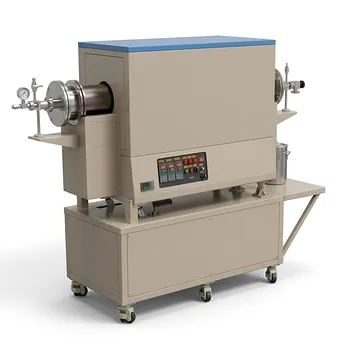
900°C Max Rotary Tube Furnace with 8 Inch 310S Alloy Tube and Optional Multi Zone Heating for Industrial Material Calcination

1700C Hydrogen Gas Tube Furnace with 60mm Alumina Process Tube and Integrated Hydrogen Safety Detector

High Temperature 1700C Tube Furnace with High Vacuum Turbomolecular Pump System and Multi Channel Mass Flow Controller Gas Mixer

5 Inch Three Zone Rotary Tube Furnace with Integrated Gas Delivery System and 1200C Capability for Advanced Material CVD Processing

1200C High Throughput Multi Channel Tube Furnace with 50mm Quartz Tubes for Annealing and Material Phase Diagram Research

Three Zone Tube Furnace with 11 Inch or 15 Inch Quartz Tube and Hinged Flanges for Vacuum Atmosphere Heat Treatment
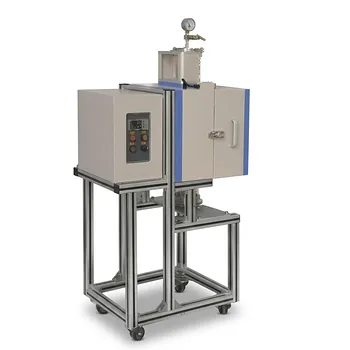
1200°C 5 Inch Vertical Quartz Tube Furnace with Stainless Steel Vacuum Flanges
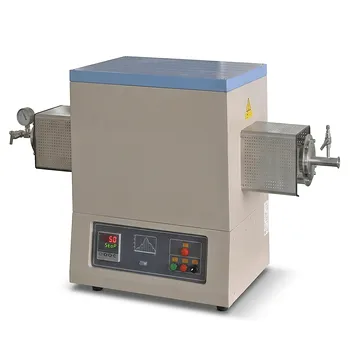
High Temperature 1700C Tube Furnace with 4 Inch OD Alumina Tube and Vacuum Sealing Flanges

High Temperature 1700C Six Zone Split Tube Furnace with Alumina Tube and Water Cooled Flanges

High Temperature 1700C Benchtop Tube Furnace with 5 Inch Heating Zone High Purity Alumina Tube and Vacuum Sealing Flanges

1800C High Temperature Compact Vacuum Tube Furnace with 60mm OD Alumina Tube and Kanthal MoSi2 Heating Elements

Compact Vertical Split Quartz Tube Furnace with Stainless Steel Vacuum Flanges for Rapid Thermal Quenching and Controlled Atmosphere Material Processing
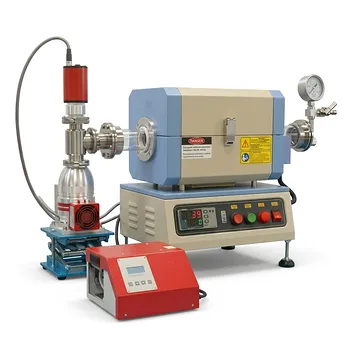
High Vacuum Compact Tube Furnace 1200C with Integrated Turbo Pump System and 8 Inch Heating Zone
High Throughput 1200C Four Channel Tube Furnace with 3 Inch Quartz Tubes for Multi Zone Annealing and Material Research

High Temperature Automated 5 Inch Tube Furnace for Autonomous Material Research and Advanced Laboratory R&D
