800°C Argon Tube Furnace Treatment for Ni/NiO Heterostructures: Enhancing Conductivity and Electrochemical Performance
Updated 3 months ago
High-temperature heat treatment at 800°C under an argon atmosphere serves as the critical phase for converting precursors into metallic nickel (Ni) to establish high-conductivity electron transport channels. This thermal process ensures that the resulting Ni/NiO heterostructure possesses a highly conductive core, which is essential for facilitating fast kinetic support during high-rate discharge processes in electrochemical applications.
The core function of this treatment is the controlled reduction or stabilization of nickel species into a metallic state while using an inert argon shield to prevent unwanted oxidation. This creates a synergistic heterostructure where the metallic nickel enhances electronic conductivity and the nickel oxide provides the necessary electrochemical activity.
Achieving Precise Chemical Transformation
Conversion to Metallic Nickel
The primary role of the tube furnace at high temperatures is to provide the energy required to transform chemical precursors into metallic nickel (Ni). This metallic phase acts as the backbone of the heterostructure, providing the necessary pathways for electron flow that precursors or pure oxides lack.
Prevention of Surface Oxidation
Operating under an argon (Ar) atmosphere is vital because it displaces oxygen within the furnace. This inert environment ensures that the nickel does not prematurely oxidize into bulk NiO, allowing for the precise maintenance of the Ni/NiO interface required for the heterostructure's performance.
Facilitating Thermal Diffusion
At 800°C, the furnace promotes thermal diffusion, which helps eliminate compositional segregation and microscopic stresses within the material. This results in a more uniform and stable microstructure, ensuring that the nickel species are consistently distributed across the substrate or matrix.
Enhancing Electrochemical Performance
Building Conductive Transport Channels
By generating a metallic nickel core on the surface of substrates like carbon fibers, the treatment significantly boosts the overall electronic conductivity. These "channels" allow electrons to move rapidly through the electrode, which is a prerequisite for high-performance energy storage.
Supporting High-Rate Discharge Kinetics
The structural integration of Ni and NiO facilitated by this heat treatment provides the fast kinetic support needed for high-rate discharge. Without the 800°C thermal step, the material would lack the conductivity required to handle rapid electron transfer, leading to poor efficiency under load.
Anchoring Nickel within the Matrix
High-temperature treatment helps effectively anchor the nickel species within a carbon or support matrix. This prevents the active materials from detaching or aggregating during electrochemical cycling, which directly extends the operational life of the composite electrode.
Understanding the Trade-offs
Temperature Sensitivity and Phase Balance
While 800°C is effective for nickel conversion, excessive heat can lead to the unwanted grain growth of nickel particles, which reduces the active surface area. Finding the balance between sufficient temperature for conductivity and low enough temperature to maintain a high surface area is a constant challenge.
Atmosphere Purity Requirements
The success of the argon atmosphere depends entirely on the purity of the gas and the seal of the tube furnace. Even trace amounts of oxygen leakage at 800°C can result in the formation of a thick oxide layer that could insulate the conductive nickel core, hindering performance.
Energy Consumption vs. Material Quality
Maintaining a stable 800°C environment for extended periods (often up to 8 hours) requires significant energy input. Engineers must weigh the performance gains of a highly crystalline Ni/NiO heterostructure against the increased production costs associated with long-dwell high-temperature processing.
How to Apply This to Your Project
Recommendations for Material Synthesis
The specific parameters of your furnace treatment should align with your ultimate performance goals for the Ni/NiO material.
- If your primary focus is Maximum Conductivity: Ensure the argon flow is consistent and consider a slightly higher temperature or longer dwell time to maximize the metallic Ni phase conversion.
- If your primary focus is High Surface Area: Optimize the 800°C dwell time to be as short as possible to prevent the sintering and agglomeration of nickel nanoparticles.
- If your primary focus is Structural Longevity: Focus on the cooling rate after the 800°C treatment to minimize internal microscopic stresses that could lead to material cracking.
The 800°C argon treatment is the definitive step that transforms a non-conductive precursor into a high-performance, kinetically efficient Ni/NiO heterostructure.
Summary Table:
| Process Parameter | Core Function | Impact on Ni/NiO Performance |
|---|---|---|
| 800°C Temperature | Thermal conversion of precursors | Creates metallic Ni conductive channels |
| Argon (Ar) Shield | Prevents unwanted surface oxidation | Maintains precise Ni/NiO heterojunctions |
| Thermal Diffusion | Eliminates compositional segregation | Ensures uniform stable microstructure |
| Atmosphere Purity | Controlled inert environment | Supports high-rate discharge kinetics |
Elevate Your Material Research with THERMUNITS Precision
Achieving high-performance Ni/NiO heterostructures requires absolute control over thermal parameters and atmosphere purity. THERMUNITS is a leading manufacturer of high-temperature laboratory equipment, specializing in solutions for material science and industrial R&D.
Whether you are synthesizing advanced electrodes or exploring new composites, our comprehensive range of equipment—including Tube Furnaces, Vacuum and Atmosphere Furnaces, CVD/PECVD systems, Rotary Kilns, and Vacuum Induction Melting (VIM) furnaces—is engineered to provide the stability and precision your project demands.
Why choose THERMUNITS?
- Unmatched Temperature Uniformity: Essential for consistent chemical transformations.
- Advanced Atmosphere Control: High-purity shielding to protect sensitive materials at 800°C and beyond.
- Expert Engineering: Customized solutions from dental and muffle furnaces to industrial-scale hot press systems.
Ready to optimize your heat treatment process? Contact our technical experts today to find the ideal thermal solution for your laboratory.
References
- Longwei Li, Xiong Pu. Core‐shell Ni/NiO heterostructures as catalytic cathodes enabling high‐performance zinc bromine flow batteries. DOI: 10.1002/cnl2.119
Mentioned Products
- Vertical 1700C Vacuum and Atmosphere Tube Furnace with 80mm Alumina Tube
- Compact High Temperature 1600C Tube Furnace with 50mm Alumina Tube and Vacuum Flanges for Material Sintering
- 900°C Max Rotary Tube Furnace with 8 Inch 310S Alloy Tube and Optional Multi Zone Heating for Industrial Material Calcination
- Split Vertical Tube Furnace with 1200C Quartz Tube and Stainless Steel Vacuum Flanges for Rapid Thermal Processing
- High Temperature 1700C Tube Furnace with High Vacuum Turbomolecular Pump System and Multi Channel Mass Flow Controller Gas Mixer
People Also Ask
- How is an industrial-grade vertical tube furnace utilized in smelting leaching residues? Enhance Metal Recovery Efficiency
- What is the function of a laboratory-grade vertical tube furnace in fast pyrolysis? Optimize Composite Research.
- How does a vertical tube furnace facilitate thermoelectric alloy melting? Precision synthesis for material homogeneity.
- Why is a thermocouple sensor indispensable for monitoring the vertical tube furnace during gallium oxide nanowire production? Optimize VLS Growth
- What are the advantages of using a vertical tube furnace for crucible experiments simulating steel-slag interactions?

Tech Team · ThermUnits
Last updated on Jun 03, 2026
Related Products

Vertical 1700C Vacuum and Atmosphere Tube Furnace with 80mm Alumina Tube

Compact High Temperature 1600C Tube Furnace with 50mm Alumina Tube and Vacuum Flanges for Material Sintering
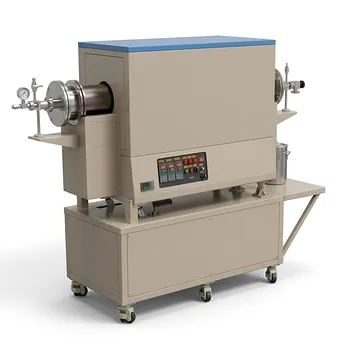
900°C Max Rotary Tube Furnace with 8 Inch 310S Alloy Tube and Optional Multi Zone Heating for Industrial Material Calcination
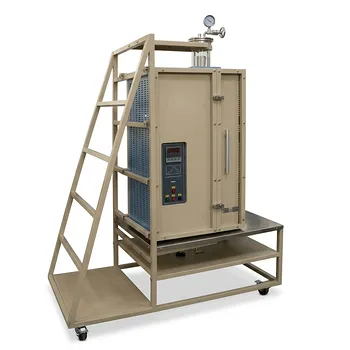
Split Vertical Tube Furnace with 1200C Quartz Tube and Stainless Steel Vacuum Flanges for Rapid Thermal Processing

High Temperature 1700C Tube Furnace with High Vacuum Turbomolecular Pump System and Multi Channel Mass Flow Controller Gas Mixer
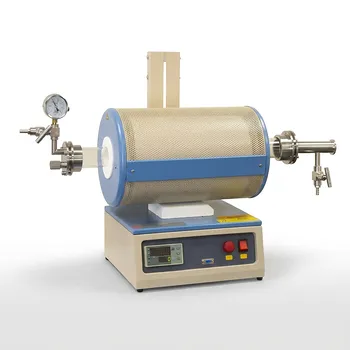
1100C Tube Furnace with Vacuum Flange and Programmable Temperature Controller for Material Science and Industrial Heat Treatment
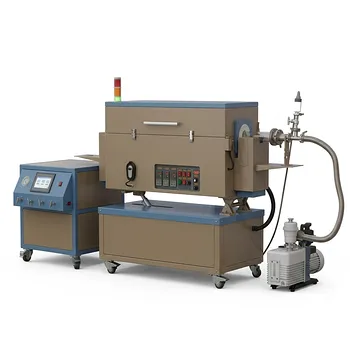
5 Inch Three Zone Rotary Tube Furnace with Integrated Gas Delivery System and 1200C Capability for Advanced Material CVD Processing
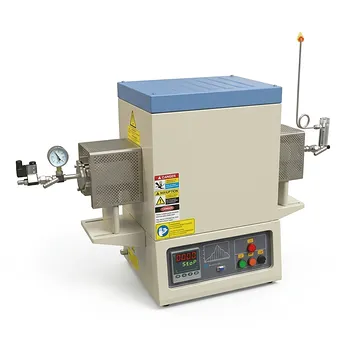
1700C Hydrogen Gas Tube Furnace with 60mm Alumina Process Tube and Integrated Hydrogen Safety Detector

1200°C 5 Inch Vertical Quartz Tube Furnace with Stainless Steel Vacuum Flanges

High Temperature 1700C Six Zone Split Tube Furnace with Alumina Tube and Water Cooled Flanges

Compact Vertical Split Quartz Tube Furnace with Stainless Steel Vacuum Flanges for Rapid Thermal Quenching and Controlled Atmosphere Material Processing

High Temperature 1700C Benchtop Tube Furnace with 5 Inch Heating Zone High Purity Alumina Tube and Vacuum Sealing Flanges
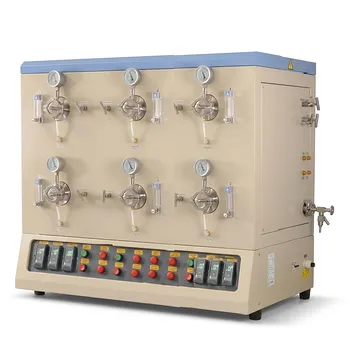
1200C High Throughput Multi Channel Tube Furnace with 50mm Quartz Tubes for Annealing and Material Phase Diagram Research
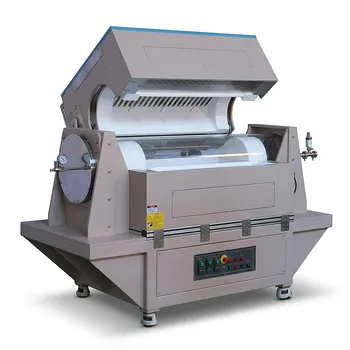
Three Zone Tube Furnace with 11 Inch or 15 Inch Quartz Tube and Hinged Flanges for Vacuum Atmosphere Heat Treatment

1800C High Temperature Compact Vacuum Tube Furnace with 60mm OD Alumina Tube and Kanthal MoSi2 Heating Elements

High Temperature 1700C Vertical Tube Furnace for Powder Spherification and Material Sintering
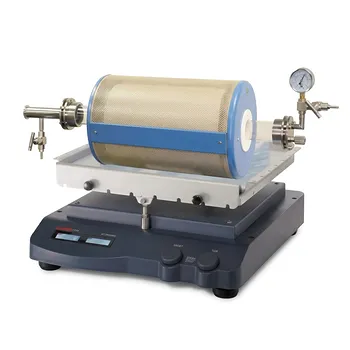
High Temperature Rocking Tube Furnace with Quartz Tube and Vacuum Flange for Materials Synthesis

High Temperature Automated 5 Inch Tube Furnace for Autonomous Material Research and Advanced Laboratory R&D
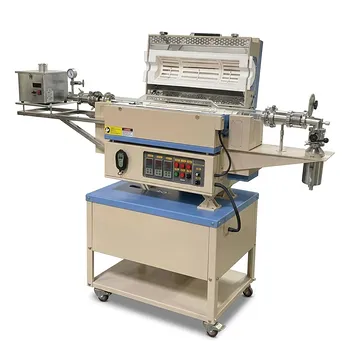
5 Inch Rotary Tube Furnace with Automatic Feeding and Receiving System 1200C Three Zone CVD Powder Processing