What is the importance of atmosphere control in a high-temperature tube furnace during the phosphidation of catalysts?
Updated 3 months ago
Atmosphere control is the critical safeguard against unwanted chemical oxidation and the primary driver for achieving phase-pure phosphide catalysts. In a high-temperature tube furnace, this system replaces reactive air with high-purity inert gases to ensure that phosphorus vapor—often generated from sodium hypophosphite—reacts exclusively with precursors to form active phases like iron phosphide (FeP). Without this control, temperatures as low as 450°C would cause metal sources and carbon substrates to oxidize, rendering the catalyst ineffective.
Precise atmosphere control creates a stable, non-reactive environment that protects the chemical and structural integrity of catalyst precursors. By excluding oxygen and regulating gas-phase reactions, it enables the synthesis of highly active, uniformly distributed phosphide phases that are otherwise impossible to produce.
Preventing Unwanted Chemical Transformations
Eliminating Oxygen Interference
The primary role of atmosphere control is to displace oxygen using high-purity Argon (Ar) or Nitrogen (N2). This prevents metal precursors from converting into unwanted oxides during the heating process.
By establishing a neutral or reducing environment, the furnace ensures that the electronic properties of the metal center are dictated by the synthesis design rather than external chemical corrosion.
Ensuring Phase-Pure Phosphidation
During the decomposition of phosphorus sources, atmosphere control maintains the necessary conditions for a complete gas-phase reaction. This allows phosphorus vapor to react fully with metal precursors.
The result is the generation of high-purity active phases, such as FeP or NiCoFePx, which are essential for efficient catalytic performance.
Preserving Structural and Atomic Integrity
Protecting Carbon Substrates and Pore Structures
Many modern catalysts use microbial-derived or synthetic carbon substrates that are highly sensitive to oxygen at high temperatures. Atmosphere control prevents the combustion of these substrates, preserving their intricate pore structures.
This protection ensures the final catalyst maintains a high surface area, which is vital for maximizing the accessibility of active sites.
Controlling Particle Size and Sintering
Precise gas environments prevent trace metal atoms from oxidizing and aggregating into large, inactive particles. This is critical for synthesizing single-atom catalysts where metals must remain uniformly anchored.
A controlled atmosphere also inhibits sintering or agglomeration, ensuring that active particles remain small and highly distributed across the support material.
Facilitating Gas-Phase Anion Exchange
The Role of Inert Carrier Gases
Inert gases do more than just protect the sample; they act as carriers for the phosphine gas generated during the reaction. A continuous, controlled flow ensures that the phosphorus reaches the precursor surfaces consistently.
This flow is essential for achieving a uniform solid-gas interface reaction, which creates the lattice defects necessary for advanced catalytic applications.
Inducing Specific Metal-Support Interactions
By utilizing specific gas mixtures, such as Ar/H2, researchers can induce precise transitions from crystalline oxides to nanocrystalline phosphides. This level of control allows for the embedding of active phases within amorphous matrices, optimizing the catalyst’s long-term durability.
Understanding the Trade-offs
Gas Flow Rate vs. Reaction Kinetics
While a high flow rate is excellent for clearing oxygen, it can also sweep away phosphorus vapor too quickly. This may lead to incomplete phosphidation if the vapor does not have sufficient residence time to react with the precursors.
Complexity of Multi-Stage Heating
Implementing segmented temperature control under different atmospheres (e.g., switching from synthetic air to argon) adds significant complexity to the workflow. However, this complexity is often necessary to first form a uniform oxide and then convert it into a high-activity phosphide.
How to Apply Atmosphere Control to Your Project
Recommendations for Success
To achieve the best results in catalyst phosphidation, your approach should be tailored to your specific material goals.
- If your primary focus is single-atom catalyst stability: Use a high-flow Argon purge before heating to ensure a zero-oxygen environment that prevents atomic aggregation.
- If your primary focus is preserving porous carbon supports: Maintain a strictly inert Nitrogen or Argon atmosphere throughout the entire heating and cooling cycle to prevent substrate degradation.
- If your primary focus is achieving uniform gas-phase exchange: Carefully calibrate your carrier gas flow rate to ensure phosphorus vapor is distributed evenly without being exhausted prematurely.
Mastering the furnace atmosphere transforms the phosphidation process from a simple heat treatment into a precision chemical engineering tool for catalyst design.
Summary Table:
| Key Role | Technical Mechanism | Impact on Catalyst Performance |
|---|---|---|
| Oxidation Prevention | Argon/Nitrogen displacement of O2 | Protects chemical & electronic properties |
| Phase Purity | Regulated gas-phase reactions | Ensures formation of active FeP/NiCoFe phases |
| Structural Support | Protecting carbon substrates | Preserves high surface area and pore structures |
| Particle Uniformity | Sintering/aggregation inhibition | Maintains distributed single-atom active sites |
| Reaction Kinetics | Carrier gas flow management | Facilitates uniform gas-solid interface exchange |
Achieve Superior Catalyst Phosphidation with THERMUNITS
Precise atmosphere control is the difference between a high-activity catalyst and a failed experiment. THERMUNITS is a leading manufacturer of high-temperature laboratory equipment for material science and industrial R&D. We offer a comprehensive range of thermal processing solutions, including Atmosphere and Tube furnaces specifically engineered for the rigorous gas-phase reactions required in catalyst synthesis.
Our equipment delivers the precision your research demands:
- Zero-Oxygen Reliability: Advanced gas systems to prevent oxidation and protect sensitive carbon substrates.
- Uniform Heating: Engineered for consistent gas-solid interface reactions like phosphidation.
- Comprehensive Range: From CVD/PECVD and Vacuum Induction Melting (VIM) to Muffle and Rotary furnaces, we have the tools to scale your innovation.
Elevate your lab’s efficiency—Contact us today for a custom thermal solution!
References
- Jianguo Zhong, Yuxin Wang. Nickel Foam-Supported FeP Encapsulated in N, P Co-Doped Carbon Matrix for Efficient Electrocatalytic Hydrogen Evolution. DOI: 10.3390/inorganics12110291
Mentioned Products
- High Temperature 1700C Vertical Tube Furnace for Powder Spherification and Material Sintering
- High Temperature 1200C Split Tube Furnace with Internal Travel Mechanism for HPCVD and Crystal Growth Research
- High Temperature Tube Furnace 1500C with Sliding Flanges and 50mm OD for Rapid Thermal Processing Fast Heating and Cooling
- Compact High Temperature 1600C Tube Furnace with 50mm Alumina Tube and Vacuum Flanges for Material Sintering
- High Temperature Three Zone Tube Furnace 1700C with Alumina Tube and Water Cooled Flanges
People Also Ask
- What role does a high-temperature vertical tube furnace play in simulating high-carbon ferromanganese slag formation?
- What functions does a vertical high-temperature tube furnace perform? Master Industrial Sintering & R&D Simulation
- What is the primary function of a high-temperature tube furnace in Cu1-N-C synthesis? Precision Thermal Control.
- High-Temp Tube Furnace Role in Converting Microbial Proteins to Iron Single-Atom Sites: Expert Synthesis Guide
- What impact does the heating rate of a tube furnace have on biochar microstructure? Optimize Your Material R&D.

Tech Team · ThermUnits
Last updated on Jun 03, 2026
Related Products

High Temperature 1700C Vertical Tube Furnace for Powder Spherification and Material Sintering
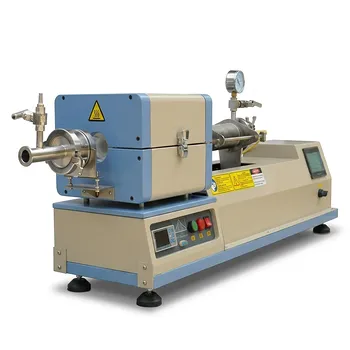
High Temperature 1200C Split Tube Furnace with Internal Travel Mechanism for HPCVD and Crystal Growth Research
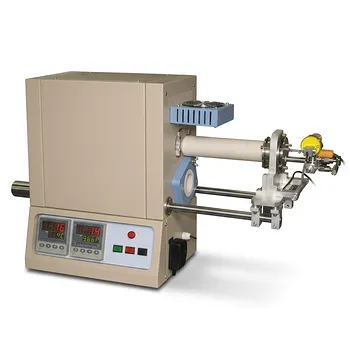
High Temperature Tube Furnace 1500C with Sliding Flanges and 50mm OD for Rapid Thermal Processing Fast Heating and Cooling

Compact High Temperature 1600C Tube Furnace with 50mm Alumina Tube and Vacuum Flanges for Material Sintering
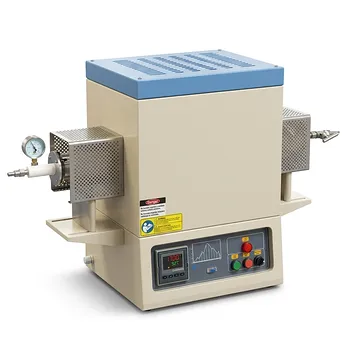
High Temperature Three Zone Tube Furnace 1700C with Alumina Tube and Water Cooled Flanges
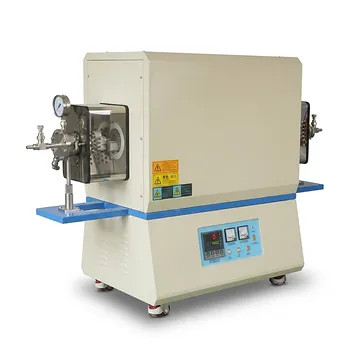
High Temperature 1800C Atmosphere Tube Furnace for CVD Research and Vacuum Sintering Precision Heat Treatment

1800C High Temperature Compact Vacuum Tube Furnace with 60mm OD Alumina Tube and Kanthal MoSi2 Heating Elements

High Temperature 1700C Tube Furnace with High Vacuum Turbomolecular Pump System and Multi Channel Mass Flow Controller Gas Mixer
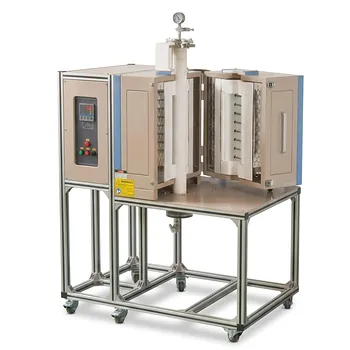
High Temperature 1700C Vertical Split Tube Furnace for Material Quenching and Single Crystal Growth
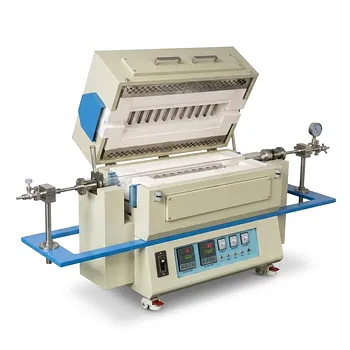
High Temperature Dual Zone Rotating Tube Furnace 1500C Silicon Carbide Heating for Advanced Material Synthesis

High Temperature 1700C Benchtop Tube Furnace with 5 Inch Heating Zone High Purity Alumina Tube and Vacuum Sealing Flanges

1750°C High Temperature Benchtop Vacuum Atmosphere Tube Furnace with Kanthal Super 1800 Heating Elements and 60mm Alumina Processing Tube

High Temperature Automated 5 Inch Tube Furnace for Autonomous Material Research and Advanced Laboratory R&D
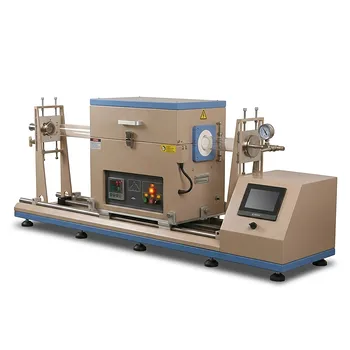
1200C Sliding Tube Furnace for Rapid Thermal Processing and CVD Graphene Growth with 100mm OD Capacity
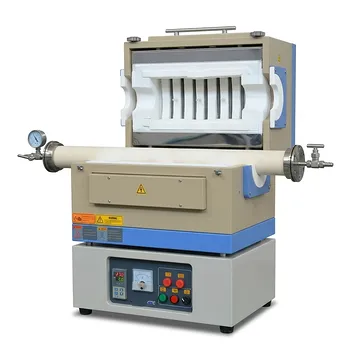
High Temperature 1600C Split Tube Furnace Vacuum Flanges Valves Optional 60mm 80mm Alumina Tube
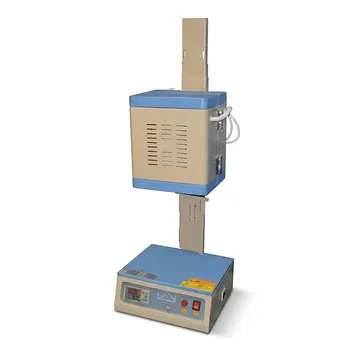
High Temperature Vertical Split Tube Furnace with PID Temperature Controller for 1 and 2 Inch Processing Tubes
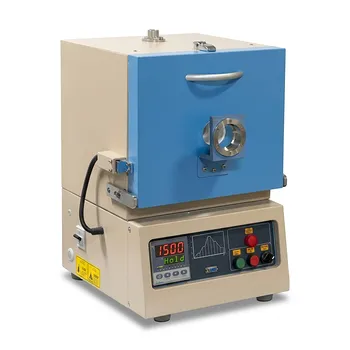
1500C Hybrid Muffle Tube Furnace 1.7L Box with 2 Inch Mullite Tube and Programmable PID Controller
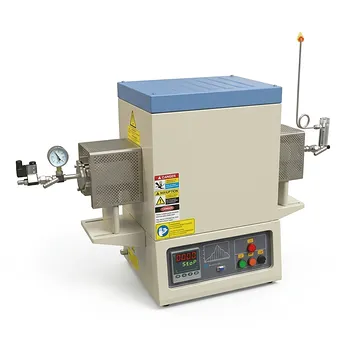
1700C Hydrogen Gas Tube Furnace with 60mm Alumina Process Tube and Integrated Hydrogen Safety Detector
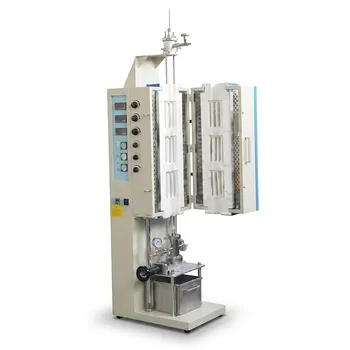
High Temperature Dual Zone Tube Furnace for Material Science Research and Professional Thermal Processing
