What is the importance of maintaining a heating rate of 5 °C per minute during the calcination of Bi-MOF in a tube furnace?
Updated 3 months ago
Maintaining a controlled heating rate of 5 °C per minute is the critical factor in ensuring the structural and chemical integrity of Bi-MOF during thermal decomposition. This specific rate facilitates a steady, non-violent release of decomposition gases and a gradual structural transformation. By avoiding thermal shock, the process preserves the precursor’s unique rod-like morphology and ensures that bismuth nanoparticles are distributed uniformly within the resulting nitrogen-doped carbon framework.
A heating rate of 5 °C/min acts as a balancing point that prevents structural collapse and grain coarsening. It ensures that the transition from a metal-organic framework to a functional nanocomposite occurs through an orderly chemical pathway.
Ensuring Gas Evolution and Structural Stability
Controlled Decomposition Kinetics
At a rate of 5 °C per minute, the organic ligands within the Bi-MOF decompose and escape as gases at a manageable pace. This smooth gas release prevents the internal pressure buildup that typically leads to the "violent cracking" of the material’s skeleton.
Prevention of Thermal Stress
Rapid heating often induces significant internal stress and structural distortion due to uneven temperature gradients within the tube furnace. A moderate rate allows for uniform heat distribution, ensuring the material expands and contracts predictably without fracturing.
Maintaining the Pore Network
Steady heating is essential for the orderly development of internal functional groups and pore structures. By avoiding instantaneous high temperatures, the furnace optimizes the density of the surface functional groups rather than causing the pore walls to collapse.
Preserving Morphology and Nanoparticle Distribution
Retention of Rod-like Morphology
The original rod-like morphology of the Bi-MOF precursor is highly sensitive to the kinetics of calcination. A 5 °C/min rate provides the stability required to transform the framework into a carbon matrix without losing its distinct physical shape.
Prevention of Grain Coarsening
When heating is too rapid or uncontrolled, bismuth atoms tend to migrate and aggregate into large clusters. The 5 °C/min rate facilitates a fine, uniform distribution of bismuth nanoparticles, which is vital for the material’s eventual performance in applications like catalysis or energy storage.
Framework Carbonization
This specific heating rate ensures the nitrogen-doped carbon framework develops its physicochemical stability. It allows the carbonaceous species to arrange themselves into a robust matrix that effectively "anchors" the metallic nanoparticles in place.
Understanding the Trade-offs
The Risk of High Heating Rates
If the heating rate exceeds the optimal 5 °C/min, the rapid escape of organic components can lead to structural collapse. This results in a loss of surface area and the destruction of the precise micro-architecture required for high-performance materials.
The Impact of Excessively Slow Heating
While lower rates (such as 2 °C/min) can further reduce stress, they may lead to unnecessary grain growth or changes in the thermal cracking pathways. Furthermore, excessively slow rates increase energy consumption and processing time without necessarily providing additional benefits for this specific Bi-MOF precursor.
Thermal Gradient Challenges
In a tube furnace, the material closest to the heating elements can react faster than the core. A 5 °C/min rate is slow enough to minimize this gradient, ensuring that the entire sample undergoes decomposition simultaneously and results in a homogenous final product.
How to Apply This to Your Synthesis
To achieve the best results when calcining metal-organic frameworks, consider your specific structural goals:
- If your primary focus is preserving fragile microstructures: Adhere strictly to the 5 °C/min rate or lower to prevent the "fiber skeleton cracking" caused by gas-induced pressure.
- If your primary focus is maximizing catalytic surface area: Ensure the heating rate is slow enough to prevent bismuth grain coarsening, keeping nanoparticles small and active.
- If your primary focus is structural yield and stability: Use the programmed temperature control of the furnace to ensure a steady rise, which dictates the final density and stability of the nitrogen-doped carbon.
Precise thermal control transforms a simple heating process into a sophisticated tool for engineering materials at the atomic level.
Summary Table:
| Feature | Effect of 5 °C/min Heating Rate |
|---|---|
| Gas Evolution | Facilitates steady release; prevents internal pressure buildup and cracking. |
| Morphology | Preserves the unique rod-like structure and precursor integrity. |
| Nanoparticles | Prevents bismuth grain coarsening; ensures fine, uniform distribution. |
| Pore Structure | Optimizes density of surface functional groups and prevents wall collapse. |
| Thermal Stress | Minimizes internal gradients and distortion through uniform heat distribution. |
Advance Your Material Science Research with THERMUNITS
Precision is the key to successful Bi-MOF calcination and advanced material synthesis. THERMUNITS is a leading manufacturer of high-temperature laboratory equipment, providing the sophisticated thermal control required for industrial R&D. Our equipment is designed to minimize thermal gradients and deliver the exact heating rates your protocols demand.
We offer a comprehensive range of thermal processing solutions, including:
- Tube Furnaces and Rotary Kilns for precise calcination and synthesis.
- CVD/PECVD Systems and Vacuum/Atmosphere Furnaces for controlled environments.
- Muffle, Hot Press, and Dental Furnaces.
- Vacuum Induction Melting Furnaces (VIM) and high-quality Thermal Elements.
Optimize your heat treatment outcomes today. Contact our technical experts to discover how THERMUNITS can enhance your laboratory's efficiency and material performance.
References
- Tianyi Zhang, Guicun Li. KF-Containing Interphase Formation Enables Better Potassium Ion Storage Capability. DOI: 10.3390/molecules29132996
Mentioned Products
- Vertical 1700C Vacuum and Atmosphere Tube Furnace with 80mm Alumina Tube
- Compact High Temperature 1600C Tube Furnace with 50mm Alumina Tube and Vacuum Flanges for Material Sintering
- 900°C Max Rotary Tube Furnace with 8 Inch 310S Alloy Tube and Optional Multi Zone Heating for Industrial Material Calcination
- Split Vertical Tube Furnace with 1200C Quartz Tube and Stainless Steel Vacuum Flanges for Rapid Thermal Processing
- High Temperature 1700C Tube Furnace with High Vacuum Turbomolecular Pump System and Multi Channel Mass Flow Controller Gas Mixer
People Also Ask
- How is an industrial-grade vertical tube furnace utilized in smelting leaching residues? Enhance Metal Recovery Efficiency
- What is the function of a laboratory-grade vertical tube furnace in fast pyrolysis? Optimize Composite Research.
- How does a vertical tube furnace facilitate thermoelectric alloy melting? Precision synthesis for material homogeneity.
- Why is a thermocouple sensor indispensable for monitoring the vertical tube furnace during gallium oxide nanowire production? Optimize VLS Growth
- What are the advantages of using a vertical tube furnace for crucible experiments simulating steel-slag interactions?

Tech Team · ThermUnits
Last updated on Jun 03, 2026
Related Products

Vertical 1700C Vacuum and Atmosphere Tube Furnace with 80mm Alumina Tube

Compact High Temperature 1600C Tube Furnace with 50mm Alumina Tube and Vacuum Flanges for Material Sintering
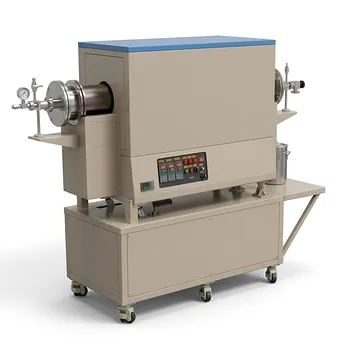
900°C Max Rotary Tube Furnace with 8 Inch 310S Alloy Tube and Optional Multi Zone Heating for Industrial Material Calcination
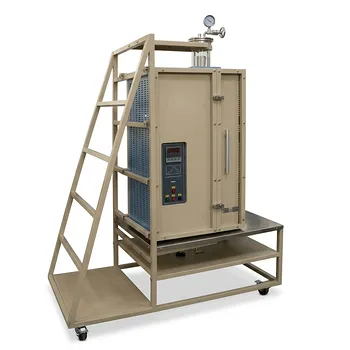
Split Vertical Tube Furnace with 1200C Quartz Tube and Stainless Steel Vacuum Flanges for Rapid Thermal Processing

High Temperature 1700C Tube Furnace with High Vacuum Turbomolecular Pump System and Multi Channel Mass Flow Controller Gas Mixer

1100C Tube Furnace with Vacuum Flange and Programmable Temperature Controller for Material Science and Industrial Heat Treatment
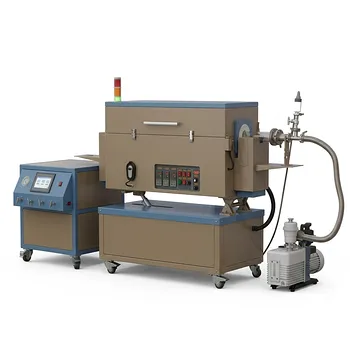
5 Inch Three Zone Rotary Tube Furnace with Integrated Gas Delivery System and 1200C Capability for Advanced Material CVD Processing
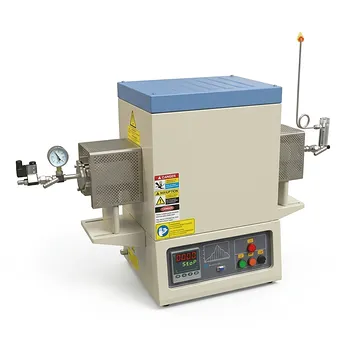
1700C Hydrogen Gas Tube Furnace with 60mm Alumina Process Tube and Integrated Hydrogen Safety Detector
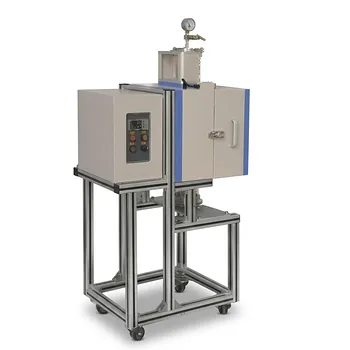
1200°C 5 Inch Vertical Quartz Tube Furnace with Stainless Steel Vacuum Flanges

High Temperature 1700C Six Zone Split Tube Furnace with Alumina Tube and Water Cooled Flanges

Compact Vertical Split Quartz Tube Furnace with Stainless Steel Vacuum Flanges for Rapid Thermal Quenching and Controlled Atmosphere Material Processing

High Temperature 1700C Benchtop Tube Furnace with 5 Inch Heating Zone High Purity Alumina Tube and Vacuum Sealing Flanges
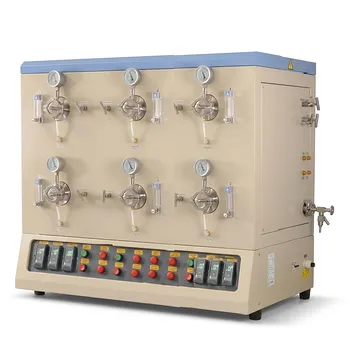
1200C High Throughput Multi Channel Tube Furnace with 50mm Quartz Tubes for Annealing and Material Phase Diagram Research

1800C High Temperature Compact Vacuum Tube Furnace with 60mm OD Alumina Tube and Kanthal MoSi2 Heating Elements
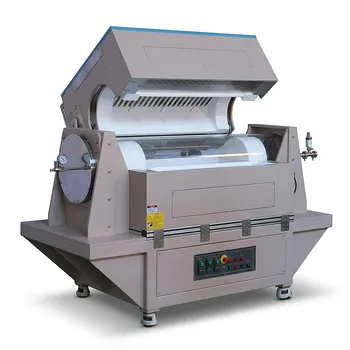
Three Zone Tube Furnace with 11 Inch or 15 Inch Quartz Tube and Hinged Flanges for Vacuum Atmosphere Heat Treatment

High Temperature 1700C Vertical Tube Furnace for Powder Spherification and Material Sintering
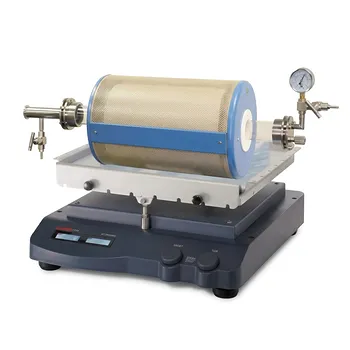
High Temperature Rocking Tube Furnace with Quartz Tube and Vacuum Flange for Materials Synthesis

High Temperature Automated 5 Inch Tube Furnace for Autonomous Material Research and Advanced Laboratory R&D
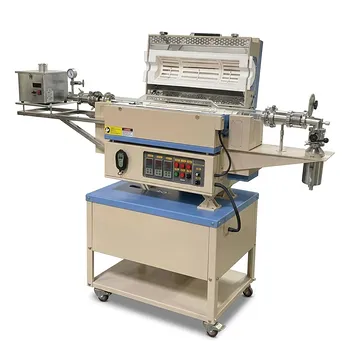
5 Inch Rotary Tube Furnace with Automatic Feeding and Receiving System 1200C Three Zone CVD Powder Processing