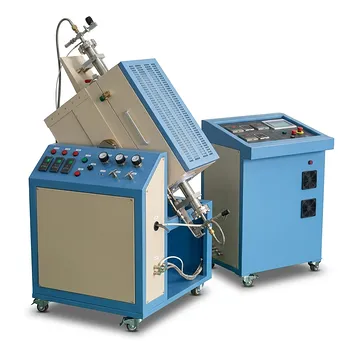
What is the necessity of an argon atmosphere for Na2Ni3S4 crystal heating? Ensure Material Purity and Integrity
Updated 3 months ago
Maintaining an inert argon atmosphere is mandatory for Na2Ni3S4 synthesis because it creates a controlled environment that excludes oxygen and moisture during high-temperature reactions. This prevents the rapid oxidation of the nickel and sulfur precursors, as well as the final crystal, which is the only way to ensure the material retains its intended chemical composition and unique topological physical properties.
The necessity of an argon gas supply system lies in its ability to isolate reactive chemical species from environmental contaminants. By replacing air with a stable, noble gas, researchers can ensure that high-temperature thermal energy facilitates the intended crystal growth rather than destructive oxidation or chemical degradation.
The Critical Role of Oxygen Exclusion in Na2Ni3S4 Synthesis
Protecting Reactive Precursors
Nickel powder and sulfur powder are highly susceptible to oxidation when exposed to heat and oxygen. The argon system continuously flushes the tube furnace to remove air, ensuring these raw materials react with each other as intended rather than forming unwanted oxides.
Preservation of Topological Properties
The unique physical behavior of Na2Ni3S4 depends entirely on its precise atomic arrangement. If oxygen is introduced into the lattice during heating, it disrupts the topological structure, rendering the resulting material useless for advanced physical applications.
Maintaining Surface Integrity
At high temperatures, the surfaces of crystals can undergo "ablation" or surface reactions if the atmosphere is not strictly controlled. A continuous flow of high-purity argon ensures that the Na2Ni3S4 crystals form with high structural integrity and clean surfaces.
The Broader Necessity of Inert Environments
Ensuring Chemical Stoichiometry
Stoichiometry refers to the exact ratio of elements within a compound. In systems like Na2Ni3S4 or Nb3Sn, even minor oxidation can shift this ratio, leading to the formation of impurity phases that degrade the material's performance.
Preventing Environmental Degradation
Many materials, such as nitrate salts or specialized films, are hygroscopic, meaning they absorb moisture from the air. An ultra-pure argon atmosphere acts as a shield against both moisture and oxygen, preventing performance fluctuations and ensuring chemical uniformity across the entire sample.
Stability at Extreme Temperatures
As temperatures reach levels like 900 °C, the reactivity of metals and semiconductors increases exponentially. The argon supply provides a chemically "dead" zone, allowing for 48-hour constant-temperature reactions without the risk of the material breaking down or reacting with the furnace environment.
Understanding the Trade-offs and Risks
Complexity of System Maintenance
While an argon system is necessary, it introduces mechanical complexity. Any leak in the gas lines or a drop in gas purity can introduce trace oxygen, which may still lead to "secondary oxidation" or the introduction of microscopic impurity particles.
Cost and Resource Consumption
Continuous-flow argon systems require a significant volume of gas over long reaction periods. However, this cost is unavoidable, as the alternative—a failed synthesis due to atmospheric contamination—results in the total loss of expensive precursor materials and research time.
How to Apply This to Your Project
If you are managing high-temperature crystal growth or material synthesis, your atmospheric strategy should align with your specific material requirements:
- If your primary focus is phase purity: You must utilize a continuous-flow argon system to ensure that no trace oxygen can enter the reaction chamber during the heating and cooling cycles.
- If your primary focus is maintaining physical properties: Ensure your argon is of "ultra-high purity" grade to prevent the introduction of sub-microscopic impurities that could disrupt topological or superconducting states.
- If your primary focus is chemical uniformity: Use a sealed or positive-pressure argon environment to prevent moisture absorption and ensure a consistent reaction throughout the entire 48-hour period.
The precision of your final material is directly proportional to the stability of the inert environment you maintain during its birth.
Summary Table:
| Function | Impact on Na2Ni3S4 Synthesis | Key Benefit |
|---|---|---|
| Oxygen Exclusion | Prevents oxidation of Ni and S precursors | High Phase Purity |
| Stoichiometry Control | Maintains precise atomic ratios of elements | Chemical Uniformity |
| Structural Protection | Preserves the unique topological lattice | Advanced Physical Properties |
| Surface Preservation | Prevents high-temp ablation and reactions | Structural Integrity |
Elevate your material synthesis with THERMUNITS' advanced thermal solutions. As a leading manufacturer of high-temperature laboratory equipment, we specialize in Atmosphere, Tube, and Vacuum furnaces, as well as CVD/PECVD systems tailored for material science and industrial R&D. Our equipment ensures the precise inert environments required for complex Na2Ni3S4 crystal growth and high-purity heat treatments. Contact our experts today to optimize your laboratory's efficiency and material performance!
References
- Junyao 君耀 Ye 叶, Shuang 爽 Jia 贾. Layered kagome compound Na<sub>2</sub>Ni<sub>3</sub>S<sub>4</sub> with topological flat band. DOI: 10.1088/1674-1056/ad3431
Mentioned Products
- Roller Table Atmosphere Furnace 1500C High Temperature Battery Material Sintering System 112L Capacity
- High Temperature Oxygen and Inert Atmosphere Controlled Furnace 8 Liter 1700C Sintering System for Advanced Materials RD
- High Temperature Hydrogen Atmosphere Box Furnace 1650C Max Reducing Environment Material Synthesis System 8x8x8 Chamber
- 1700C Compact Hybrid Furnace with Dual Layer Box Sintering and Controlled Atmosphere Alumina Tubes
- 1200C Hydrogen Atmosphere Box Furnace with 5 Heated Sides and 64L Chamber
People Also Ask
- How does a high-temperature sintering furnace environment enhance NdFeB magnets? Achieve 98%+ density with precision.
- How does the temperature control precision of a high-temperature sintering furnace affect Na1+xLa1-xZr2O6-δ ceramics?
- How are electric heating elements designed to operate within carburizing atmospheres? Top Design Strategies Revealed
- How does a high-temperature sintering furnace contribute to the interfacial strengthening of SS316L and zirconia?
- Why is a high-temperature sintering furnace required for the preparation of Li(Nb,Ta)O3 precursors? Essential Insights

Tech Team · ThermUnits
Last updated on Jun 02, 2026
Related Products
Roller Table Atmosphere Furnace 1500C High Temperature Battery Material Sintering System 112L Capacity
High Temperature Oxygen and Inert Atmosphere Controlled Furnace 8 Liter 1700C Sintering System for Advanced Materials RD
High Temperature Hydrogen Atmosphere Box Furnace 1650C Max Reducing Environment Material Synthesis System 8x8x8 Chamber
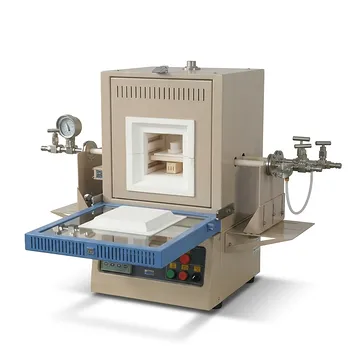
1700C Compact Hybrid Furnace with Dual Layer Box Sintering and Controlled Atmosphere Alumina Tubes
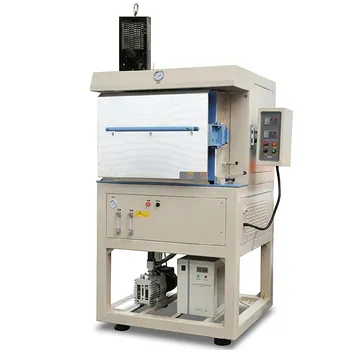
1200C Hydrogen Atmosphere Box Furnace with 5 Heated Sides and 64L Chamber
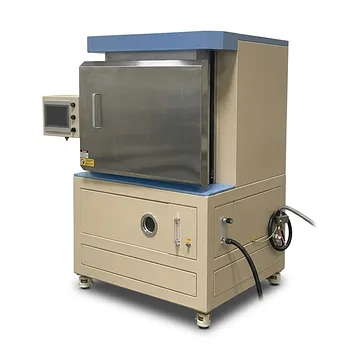
1650C High Temperature Atmosphere Controlled Box Furnace with 65L Chamber for Advanced Material Sintering and Industrial Heat Treatment
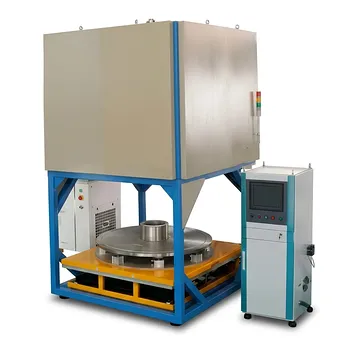
1400C Bottom Loaded Inert Gas Atmosphere Box Furnace with 125L Capacity and Precision Hydraulic Lift
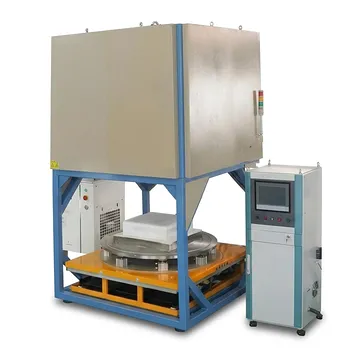
Bottom Loaded Inert Gas Atmosphere Box Furnace 1400C Maximum Temperature 125L High Capacity Laboratory Heat Treatment System

Vertical 1700C Vacuum and Atmosphere Tube Furnace with 80mm Alumina Tube
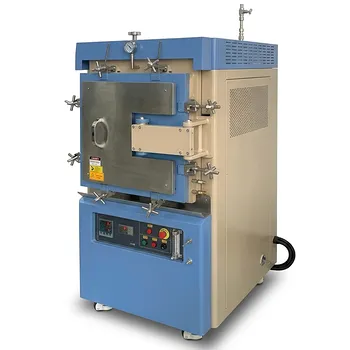
Atmosphere Controlled Muffle Furnace 1700C Maximum Temperature 80L High Capacity Vacuum Inert Gas Box Furnace
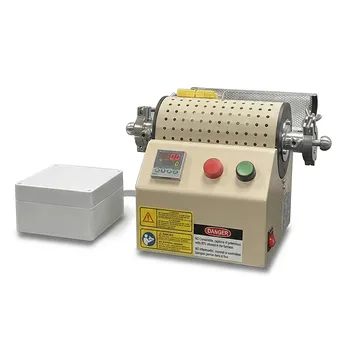
1000C Mini Tube Furnace with 20mm Quartz Tube and Vacuum Flanges for Material Science Research and Controlled Atmosphere Small Sample Processing
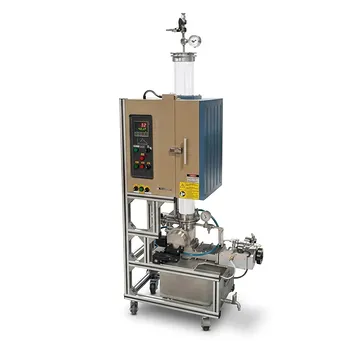
1200C High Temperature Atmosphere Controlled Vertical Quenching Tube Furnace with 4 Inch Quartz Tube
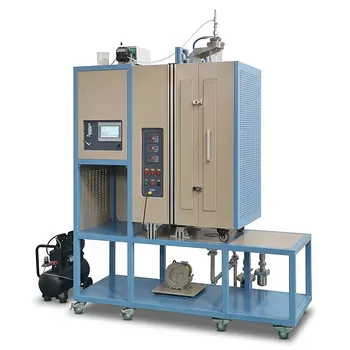
1500C Three Zone Vertical Pyrolysis Furnace for Nanoparticle Synthesis and Advanced Oxide Coating
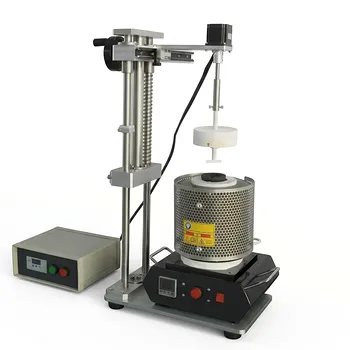
1100C Crucible Melting Furnace with Stirring Function for Glovebox and Air Sensitive Alloy Research
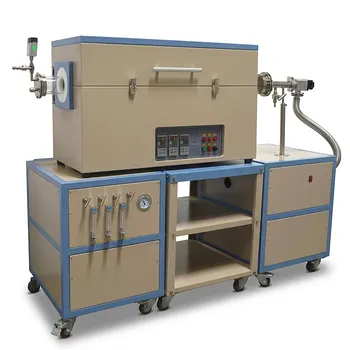
Three Zone Quartz Tube Furnace with 3 Channel Gas Mixer Vacuum Pump and Anti Corrosive Vacuum Gauge
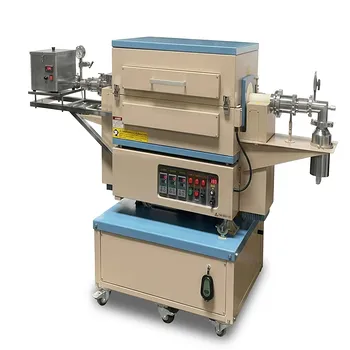
1500C 3-Zone Rotary Tube Furnace 60mm with Automatic Powder Feeding and Receiving System for Continuous Material Synthesis
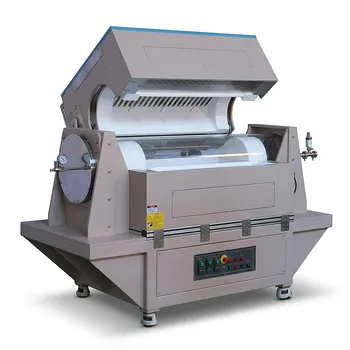
Three Zone Tube Furnace with 11 Inch or 15 Inch Quartz Tube and Hinged Flanges for Vacuum Atmosphere Heat Treatment

High Temperature 1700C Vertical Tube Furnace for Powder Spherification and Material Sintering
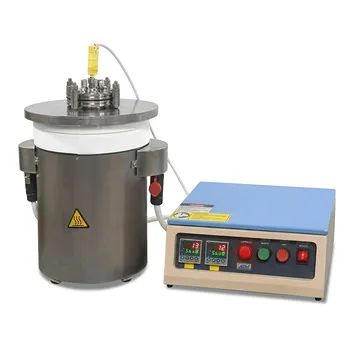
600°C Vertical Crucible Furnace with SS316 Alloy Reactor and 6 Port Vacuum Flange