What is the necessity of introducing a high-purity argon atmosphere in a tube furnace? Preserve Material Integrity
Updated 3 months ago
The use of a high-purity argon atmosphere is a critical safeguard in high-temperature material processing. Its primary necessity lies in its ability to displace reactive atmospheric gases, such as oxygen and nitrogen, which would otherwise cause uncontrolled chemical reactions. By establishing a strictly inert environment, argon ensures that the physical and chemical changes occurring within the tube furnace are the result of intended thermal processes rather than environmental contamination.
Core Takeaway: argon serves as a protective shield that preserves the chemical identity and mechanical integrity of materials during annealing. It prevents unintended oxidation, maintains precise stoichiometry, and ensures that microstructural evolution is driven by internal thermodynamics rather than surface-level chemical reactions.
Preventing Uncontrolled Oxidation and Contamination
Suppression of Secondary Oxidation
In materials like titanium or titanium dioxide (TiO2) coatings, high temperatures can trigger uncontrolled secondary oxidation. An argon atmosphere isolates the substrate, ensuring that the oxide layer thickness remains precisely controlled. This is vital for maintaining the intended micro-morphology and the specific biological or chemical performance of the coating.
Protection of Highly Reactive Metals
Elements such as niobium (Nb), titanium (Ti), and aluminum (Al) exhibit extreme chemical activity at elevated temperatures. Without argon, these metals react readily with oxygen and nitrogen, forming brittle oxide films or nitrides. Argon protection ensures that phase equilibrium data reflects the intrinsic properties of the material rather than surface-level impurities.
Preservation of Transition Metals
Transition metals like molybdenum and tungsten are susceptible to deep oxidation when heated. Introducing a continuous flow of high-purity argon displaces the oxygen within the tube, preventing these metals from degrading. This allows for stable processing under defined stoichiometric conditions, which is necessary for tuning electronic structures.
Maintaining Structural and Mechanical Integrity
Protecting Metallic Nature and Ductility
When sintering active metals like aluminum, the presence of even trace oxygen can form brittle oxide films. These films compromise the structural integrity of the final product. By maintaining an inert medium, argon ensures the material retains its metallic nature, resulting in expected mechanical strength and ductility.
Preventing Carbon Loss and Decarburization
During the pyrolysis of precursors (like sodium citrate) or the annealing of high-carbon steel, oxygen exposure leads to oxidative combustion or decarburization. Argon protects the carbon framework, ensuring the stability of carbon shell structures or preventing the loss of surface carbon in steel. This is essential for maintaining the conductivity and hardness of the final sample.
Stability of Reduced Metal Alloys
In the production of catalysts involving cobalt-iron or other alloys, it is critical to prevent the reduced metal components from contacting oxygen. An argon atmosphere ensures the stability of the metal valence states. This protection allows for the formation of high-crystallinity phases without the interference of unwanted metal oxides.
Understanding the Trade-offs and Limitations
Gas Purity and Detection
The "high-purity" aspect of argon is non-negotiable because even parts-per-million (ppm) levels of oxygen or moisture can cause surface discoloration or thin-film oxidation. For highly sensitive alloys, standard-grade argon may be insufficient, requiring additional gas purification stages or the use of oxygen getters within the furnace tube.
Flow Rate and Thermal Uniformity
While argon protects the material, the flow rate must be carefully managed. A flow that is too low may fail to fully displace oxygen or permit back-diffusion from the furnace outlets. Conversely, an excessively high flow rate can disrupt the thermal field uniformity, creating temperature gradients across the sample that lead to inconsistent annealing results.
Cost and Complexity
Compared to nitrogen or vacuum environments, high-purity argon can be more expensive and logistically demanding. While nitrogen is often used as a cheaper inert gas, it cannot be used with elements like titanium or niobium, as they will react to form nitrides at high temperatures. Users must weigh the cost of argon against the specific chemical sensitivities of their samples.
Applying Argon Protection to Your Process
How to Choose the Right Strategy for Your Goal
- If your primary focus is biocompatible coatings: Use a stable argon flow to ensure the micro-morphology of oxide layers remains consistent for biological performance.
- If your primary focus is mechanical ductility: Prioritize high-purity argon to prevent the formation of brittle oxide layers on the surface of reactive metals like aluminum or magnesium.
- If your primary focus is electronic or catalytic properties: Ensure the argon atmosphere is strictly maintained to preserve specific metal valence states and precise doping levels.
- If your primary focus is carbon-based nanomaterials: Utilize the tube furnace’s argon flow to prevent the oxidative loss of precursors during high-temperature pyrolysis.
The integrity of your material's phase, structure, and chemistry depends entirely on the stability of the environment you create within the furnace.
Summary Table:
| Key Function | Material Benefits | Risk Without Argon Protection |
|---|---|---|
| Oxygen Displacement | Prevents oxidation & decarburization | Surface scaling, loss of ductility |
| Inert Shielding | Protects reactive metals (Ti, Nb, Al, Mg) | Formation of brittle nitrides/oxides |
| Phase Control | Maintains precise metal valence states | Chemical impurity & phase instability |
| Structural Integrity | Preserves carbon frameworks & stoichiometry | Surface degradation & mechanical failure |
Elevate Your Material Research with THERMUNITS Precision
Achieve uncompromising results in your annealing and sintering processes with THERMUNITS. As a leading manufacturer of high-temperature laboratory equipment, we specialize in providing advanced thermal solutions tailored for material science and industrial R&D. Our Atmosphere and Tube Furnaces are specifically engineered to maintain the high-purity environments—like argon or vacuum—necessary for protecting the chemical and mechanical integrity of your advanced materials.
From Muffle, Vacuum, and Rotary Furnaces to complex CVD/PECVD systems, Hot Press furnaces, and Vacuum Induction Melting (VIM) units, we provide the tools researchers need to push the boundaries of technology. Whether you are working on biocompatible coatings, reactive alloys, or carbon nanomaterials, our equipment ensures precise temperature control and atmospheric stability.
Ready to optimize your thermal processing? Contact our expert team today to discuss your specific requirements and find the perfect heat treatment solution for your laboratory.
References
- Tsanka Dikova, Neli Mintcheva. Morphology and Structure of TiO2 Nanotube/Carbon Nanostructure Coatings on Titanium Surfaces for Potential Biomedical Application. DOI: 10.3390/ma17061290
Mentioned Products
- Vertical 1700C Vacuum and Atmosphere Tube Furnace with 80mm Alumina Tube
- Compact High Temperature 1600C Tube Furnace with 50mm Alumina Tube and Vacuum Flanges for Material Sintering
- 900°C Max Rotary Tube Furnace with 8 Inch 310S Alloy Tube and Optional Multi Zone Heating for Industrial Material Calcination
- Split Vertical Tube Furnace with 1200C Quartz Tube and Stainless Steel Vacuum Flanges for Rapid Thermal Processing
- High Temperature 1700C Tube Furnace with High Vacuum Turbomolecular Pump System and Multi Channel Mass Flow Controller Gas Mixer
People Also Ask
- How is an industrial-grade vertical tube furnace utilized in smelting leaching residues? Enhance Metal Recovery Efficiency
- What is the function of a laboratory-grade vertical tube furnace in fast pyrolysis? Optimize Composite Research.
- How does a vertical tube furnace facilitate thermoelectric alloy melting? Precision synthesis for material homogeneity.
- Why is a thermocouple sensor indispensable for monitoring the vertical tube furnace during gallium oxide nanowire production? Optimize VLS Growth
- What are the advantages of using a vertical tube furnace for crucible experiments simulating steel-slag interactions?

Tech Team · ThermUnits
Last updated on Jun 03, 2026
Related Products

Vertical 1700C Vacuum and Atmosphere Tube Furnace with 80mm Alumina Tube

Compact High Temperature 1600C Tube Furnace with 50mm Alumina Tube and Vacuum Flanges for Material Sintering
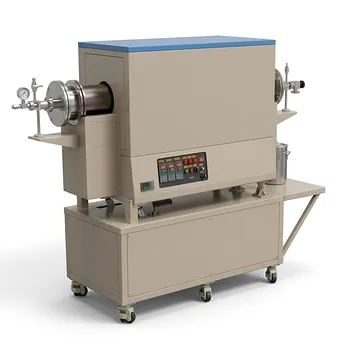
900°C Max Rotary Tube Furnace with 8 Inch 310S Alloy Tube and Optional Multi Zone Heating for Industrial Material Calcination
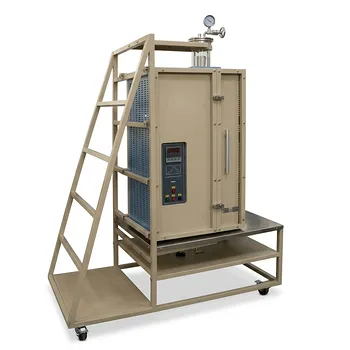
Split Vertical Tube Furnace with 1200C Quartz Tube and Stainless Steel Vacuum Flanges for Rapid Thermal Processing

High Temperature 1700C Tube Furnace with High Vacuum Turbomolecular Pump System and Multi Channel Mass Flow Controller Gas Mixer

1100C Tube Furnace with Vacuum Flange and Programmable Temperature Controller for Material Science and Industrial Heat Treatment

5 Inch Three Zone Rotary Tube Furnace with Integrated Gas Delivery System and 1200C Capability for Advanced Material CVD Processing

1200°C 5 Inch Vertical Quartz Tube Furnace with Stainless Steel Vacuum Flanges

1700C Hydrogen Gas Tube Furnace with 60mm Alumina Process Tube and Integrated Hydrogen Safety Detector

High Temperature 1700C Six Zone Split Tube Furnace with Alumina Tube and Water Cooled Flanges

Compact Vertical Split Quartz Tube Furnace with Stainless Steel Vacuum Flanges for Rapid Thermal Quenching and Controlled Atmosphere Material Processing

High Temperature 1700C Benchtop Tube Furnace with 5 Inch Heating Zone High Purity Alumina Tube and Vacuum Sealing Flanges
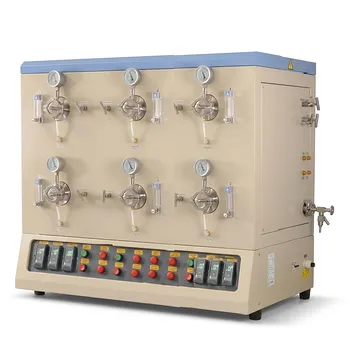
1200C High Throughput Multi Channel Tube Furnace with 50mm Quartz Tubes for Annealing and Material Phase Diagram Research

1800C High Temperature Compact Vacuum Tube Furnace with 60mm OD Alumina Tube and Kanthal MoSi2 Heating Elements

Three Zone Tube Furnace with 11 Inch or 15 Inch Quartz Tube and Hinged Flanges for Vacuum Atmosphere Heat Treatment

High Temperature 1700C Vertical Tube Furnace for Powder Spherification and Material Sintering
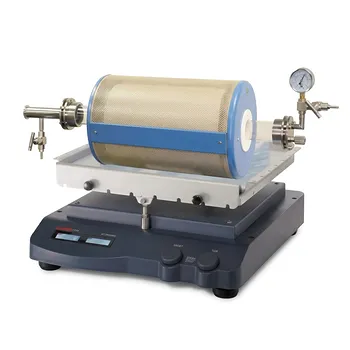
High Temperature Rocking Tube Furnace with Quartz Tube and Vacuum Flange for Materials Synthesis

High Temperature Automated 5 Inch Tube Furnace for Autonomous Material Research and Advanced Laboratory R&D
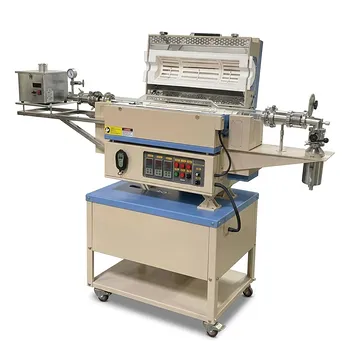
5 Inch Rotary Tube Furnace with Automatic Feeding and Receiving System 1200C Three Zone CVD Powder Processing