Why Is Pre-treatment Necessary in High-Temp Calcination for Perovskites? | Ensure Phase Purity & Structural Integrity
Updated 3 months ago
Pre-treatment in a high-temperature furnace is the critical stage where raw precursors are chemically purified and transformed into a stable crystalline structure. This process, often conducted at temperatures around 1000°C, is necessary to remove volatile impurities like carbon dioxide and moisture while initiating the solid-phase reactions required to form the initial perovskite phase. Without this step, the final material would suffer from stoichiometric imbalances, impurity phases, and mechanical failure such as cracking during sintering.
Core Takeaway: Pre-treatment (calcination) serves as a chemical and structural stabilizer. It ensures phase purity by purging volatiles and prevents physical defects by managing material shrinkage before the final densification process.
Ensuring Chemical Purity and Stoichiometric Accuracy
Removal of Volatile Contaminants
Raw materials, particularly rare-earth oxides like Nd₂O₃, are highly prone to absorbing moisture and carbon dioxide from the atmosphere. A high-temperature pre-treatment (often between 1000°C and 1100°C) is essential to drive off these bicarbonates and residual moisture. If these volatiles remain, they can interfere with the chemical reaction and introduce unwanted voids in the material.
Maintaining Precise Stoichiometry
Achieving the correct A/B site stoichiometry is vital for the performance of perovskite materials. By completely decomposing carbonates and removing organic residues through calcination, researchers ensure that the actual mass of the precursors matches the intended chemical formula. This precision prevents the formation of impurity phases that could degrade the material's electrochemical or physical properties.
Elimination of Organic Residues
In many synthesis routes, solvent residues and organic components are present in the powder precursors. A sustained heat treatment in a muffle furnace, typically around 950°C for several hours, ensures these organics are completely oxidized. This step is a prerequisite for achieving a single-phase ABO₃ structure free from carbon-based interference.
Facilitating Phase Formation and Structural Integrity
Initiating Solid-State Reactions
The high-temperature environment of a furnace provides the thermal energy necessary to induce solid-phase reactions among metal salt precursors. This initial calcination begins the transformation of raw powders into a highly crystalline perovskite structure (such as the tetragonal or cubic Pm3m space group). This phase-forming step acts as a foundation for the subsequent sintering stage.
Reducing Volume Shrinkage and Cracking
During the final sintering process, materials undergo significant densification. If the initial perovskite phase is not established during pre-treatment, the volume change during the final heat treatment can be too extreme. Pre-treatment effectively "pre-shrinks" the material, drastically reducing the risk of cracking and structural failure in the finished product.
Morphology and Lattice Development
Specific furnace environments, such as tube furnaces with controlled heating rates, allow for the development of unique particle morphologies, including hollow nanospheres or porous structures. High-precision treatment at temperatures up to 1400°C ensures full crystal lattice development. This creates the stable atomic arrangement required for effective electrochemical activity and long-term durability.
Understanding the Trade-offs and Challenges
Thermal Energy vs. Particle Coarsening
While high temperatures are necessary for phase purity, excessive heat during pre-treatment can lead to unwanted particle growth or "necking." This reduces the specific surface area of the powder, which can be detrimental if the goal is to maintain a nanomorphology for applications like catalysis.
Atmospheric Sensitivity
Certain materials, such as high-entropy perovskite nitrides, are extremely sensitive to oxygen at high temperatures. In these cases, pre-treatment must be conducted in a high vacuum or protective nitrogen atmosphere. Failure to regulate the environment can lead to the oxidation of metallic components like manganese, destroying the material's intended properties.
How to Apply Pre-treatment to Your Synthesis Goal
Recommendations for Material Success
- If your primary focus is Rare-Earth Perovskites: Prioritize a high-temperature "bake-out" (e.g., 1100°C) of your precursor oxides to ensure all absorbed CO₂ and H₂O are removed before weighing.
- If your primary focus is Nanostructured Catalysts: Use a lower-temperature calcination (600°C–900°C) in a tube furnace with precise ramp rates to preserve porosity and surface area.
- If your primary focus is Structural Ceramics: Ensure a robust initial calcination at 1000°C to minimize volume shrinkage and prevent catastrophic cracking during final sintering at higher temperatures.
- If your primary focus is Oxygen-Sensitive Nitrides: Utilize a vacuum or inert gas furnace to maintain nitrogen stoichiometry and prevent unwanted oxidation.
Properly executed pre-treatment is the bridge between a collection of raw chemicals and a high-performance, phase-pure perovskite crystal.
Summary Table:
| Key Stage | Primary Function | Temperature Range | Benefit Provided |
|---|---|---|---|
| Purification | Removal of volatiles (CO2, H2O) | 1000°C - 1100°C | Ensures chemical purity & mass accuracy |
| Phase Formation | Initiates solid-state reactions | 950°C - 1000°C | Establishes stable ABO₃ crystal structure |
| Structural Prep | Volume pre-shrinkage | Material specific | Prevents cracking and failure during sintering |
| Environment Control | Atmospheric protection | Vacuum/Inert Gas | Prevents oxidation of sensitive metal components |
Elevate Your Material Research with THERMUNITS Precision Furnaces
Achieving phase-pure perovskite crystals requires exact thermal control and uncompromising reliability. THERMUNITS is a leading manufacturer of professional high-temperature laboratory equipment specifically designed for material science and industrial R&D.
Whether you require Muffle or Tube furnaces for air calcination, or Vacuum and Atmosphere furnaces for oxygen-sensitive materials, our solutions—including CVD/PECVD systems and Rotary kilns—ensure your pre-treatment and sintering stages are flawless.
Maximize your lab's efficiency and ensure structural integrity in every sample. Contact our technical experts today to find the ideal thermal processing solution for your research goals!
References
- Mojan Omidvar, Yang Hao. Accelerated discovery of perovskite solid solutions through automated materials synthesis and characterization. DOI: 10.1038/s41467-024-50884-y
Mentioned Products
- High Temperature 1700C Vertical Tube Furnace for Powder Spherification and Material Sintering
- High Temperature Vertical Crucible Furnace with 22L Heating Chamber and 1200C Maximum Temperature
- 1200°C Five Side Heating Atmosphere Controlled Muffle Furnace 64 Liter High Uniformity Box Furnace for Material Synthesis
- 1100C High Temperature Vacuum Crucible Furnace with Quartz Chamber for Thermal Processing and Sintering
- High Temperature 1000C Vacuum Furnace with 8 Inch ID Chamber for Material Sintering and Research Annealing
People Also Ask
- What role does a high-temperature vertical tube furnace play in simulating high-carbon ferromanganese slag formation?
- What functions does a vertical high-temperature tube furnace perform? Master Industrial Sintering & R&D Simulation
- What is the primary function of a high-temperature tube furnace in Cu1-N-C synthesis? Precision Thermal Control.
- High-Temp Tube Furnace Role in Converting Microbial Proteins to Iron Single-Atom Sites: Expert Synthesis Guide
- What impact does the heating rate of a tube furnace have on biochar microstructure? Optimize Your Material R&D.

Tech Team · ThermUnits
Last updated on Jun 02, 2026
Related Products

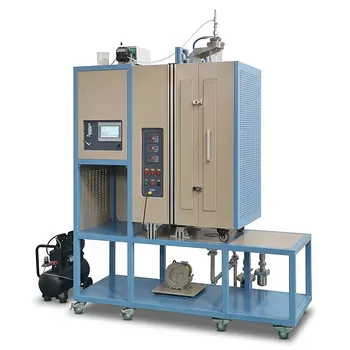
High Temperature 1700C Vertical Tube Furnace for Powder Spherification and Material Sintering
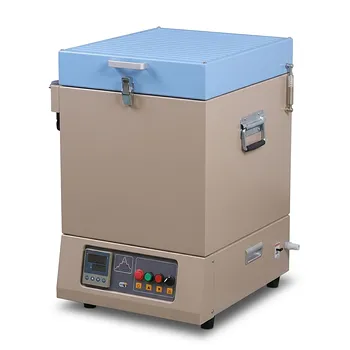
High Temperature Vertical Crucible Furnace with 22L Heating Chamber and 1200C Maximum Temperature
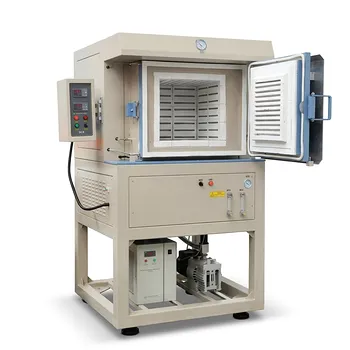
1200°C Five Side Heating Atmosphere Controlled Muffle Furnace 64 Liter High Uniformity Box Furnace for Material Synthesis
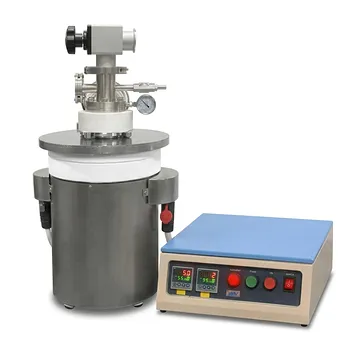
1100C High Temperature Vacuum Crucible Furnace with Quartz Chamber for Thermal Processing and Sintering
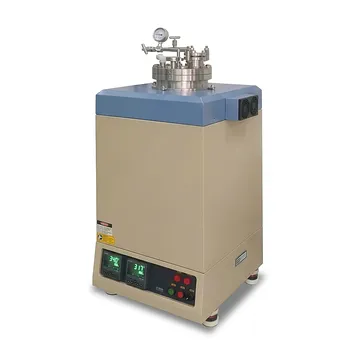
High Temperature 1000C Vacuum Furnace with 8 Inch ID Chamber for Material Sintering and Research Annealing
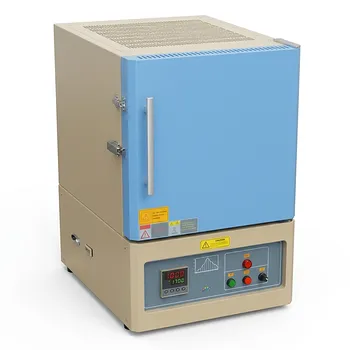
Large Bench Top 1700C High Temperature Muffle Furnace with 19L Chamber for Advanced Material Sintering and Annealing
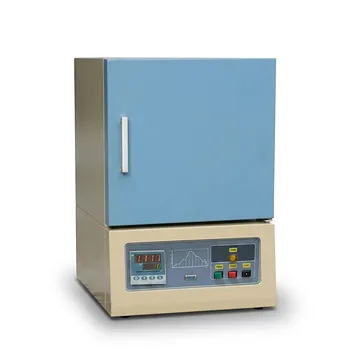
Ultra High Temperature Bench Top Muffle Furnace 1750C Sintering System with Kanthal Super Heating Elements and Precision Digital Control

High Temperature Tube Furnace 1500C with Sliding Flanges and 50mm OD for Rapid Thermal Processing Fast Heating and Cooling
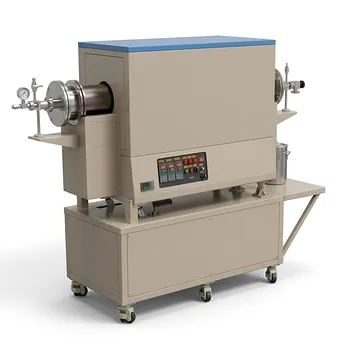
900°C Max Rotary Tube Furnace with 8 Inch 310S Alloy Tube and Optional Multi Zone Heating for Industrial Material Calcination
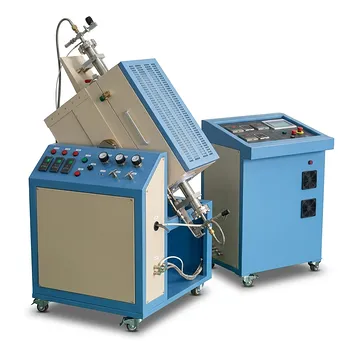
1100C High Pressure Rocking Tube Furnace with 2 Inch Super Alloy Processing Tube for Material Synthesis
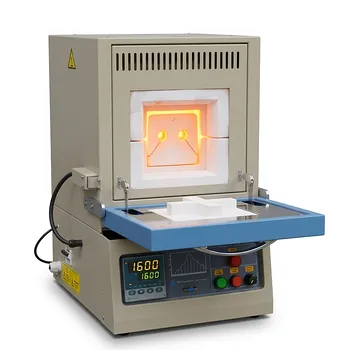
High Temperature Compact Muffle Furnace 1700 C with 30 Segment Programmable Controller and 1.7L Cubic Chamber
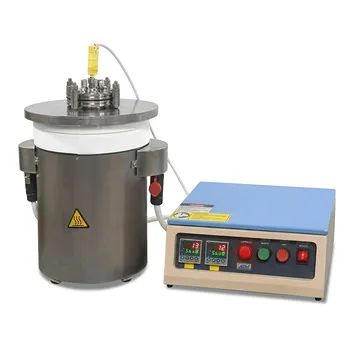
600°C Vertical Crucible Furnace with SS316 Alloy Reactor and 6 Port Vacuum Flange
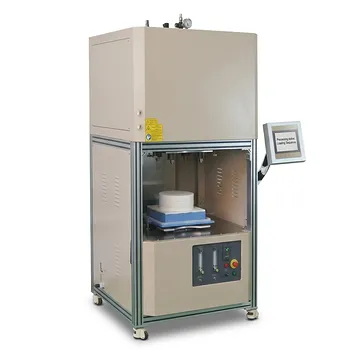
High Temperature Vertical Atmosphere Controlled Furnace with Automatic Bottom Loading and 1700°C Capacity for Advanced Material Research

High Temperature 1700C Tube Furnace with High Vacuum Turbomolecular Pump System and Multi Channel Mass Flow Controller Gas Mixer
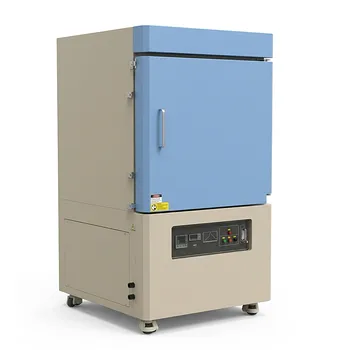
Industrial Large Box Furnace 1700C 216L High Temp Muffle Sintering System
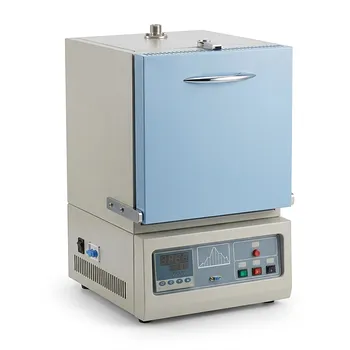
1750C Compact Muffle Furnace 1.7L Ultra High Temperature Laboratory Sintering System for Advanced Ceramics and Material Science Research
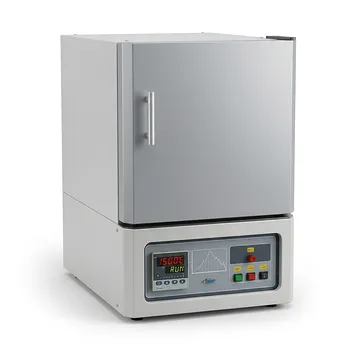
High Temperature 1500C Benchtop Muffle Furnace 3.6L Alumina Fiber Chamber Programmable Controller Sintering Annealing Carbonization Thermal Processing System
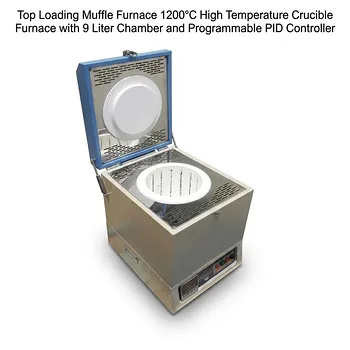
Top Loading Muffle Furnace 1200°C High Temperature Crucible Furnace with 9 Liter Chamber and Programmable PID Controller
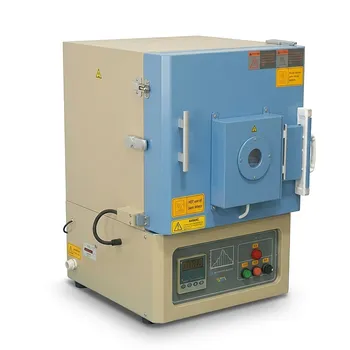
High Temperature Benchtop Muffle Furnace 1500C with 3.6L Chamber and Quartz Observation Window