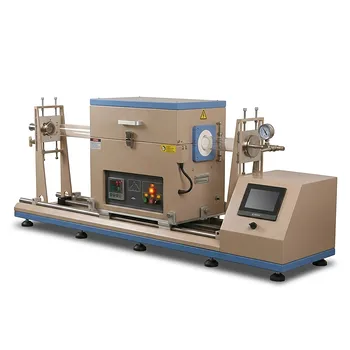
What is the primary function and application of a tube furnace? Master Precise Thermal Control for Material Science
Updated 5 months ago
The tube furnace is a specialized electric heating instrument designed to provide an exceptionally uniform thermal environment within a sealed, cylindrical chamber. It serves as the primary reactor for material processing that requires precise temperature profiles, controlled atmospheres, and total isolation from external contaminants. In both laboratory and industrial settings, it is the standard tool for high-temperature tasks ranging from chemical vapor deposition (CVD) to the complex thermal treatment of advanced ceramics and catalysts.
A tube furnace functions as a precision-controlled reaction vessel, utilizing its cylindrical geometry to ensure radial temperature uniformity. Its ability to maintain specific gas atmospheres and programmable thermal cycles makes it indispensable for synthesizing high-purity materials and simulating industrial-scale thermal processes.
The Mechanics of Precise Thermal Control
Radial Uniformity and the Work Tube
The core of the furnace is a removable work tube—often made of quartz or alumina—where the sample is placed. The cylindrical design ensures that heat is radiated evenly from the heating elements toward the center, providing superior radial temperature uniformity compared to box furnaces.
Resistance Heating and Insulation
Modern tube furnaces utilize electric resistance heating elements embedded in a high-performance thermally insulating matrix. This construction allows the furnace to reach temperatures typically up to 1350°C (or higher in specialized models) while maintaining high energy efficiency and external safety.
Feedback Loops and Multi-Zone Management
Temperature regulation is managed via thermocouple feedback, which monitors the internal environment in real-time. Advanced units feature multi-zone control, allowing different sections of the tube to be held at different temperatures to create specific thermal gradients for processes like chemical vapor transport.
Critical Applications in Research and Industry
Chemical Synthesis and Vapor Deposition
Tube furnaces are the hardware foundation for producing nanomaterials and thin films. In Chemical Vapor Deposition (CVD), the furnace provides the high-precision thermal environment necessary for precursors to undergo chemical transformations and deposit onto substrates with specific crystalline structures.
Atmosphere Simulation and Pyrolysis
Researchers use tube furnaces to simulate industrial-scale environments, such as biomass torrefaction or coal combustion. By introducing specific gas mixtures like high-purity nitrogen or oxygen, the furnace can accurately model how materials react at 1100°C, allowing for the precise analysis of generated flue gases.
Metallurgical Sintering and Annealing
In metallurgy, vertical or horizontal tube furnaces allow for the precise control of heating curves during the sintering of ores. This facilitates the introduction of mixed reducing gases (such as Ar-CO2-CO) to evaluate how low-carbon processes affect the microstructure and reduction performance of the metal.
Catalyst Activation and Pre-treatment
Tube furnaces are critical for activating electronic metal-support interactions (EMSI) in catalysts. By providing a high-temperature reduction environment under a hydrogen-argon atmosphere, the furnace reduces oxides into metallic nanoparticles, creating the active centers required for reactions like CO2 hydrogenation.
Understanding the Trade-offs
Sample Geometry Constraints
The primary limitation of a tube furnace is the physical dimension of the work tube. Because the sample must fit within a narrow cylindrical space, these furnaces are generally unsuitable for large, bulky items or high-volume batch processing of oversized components.
Work Tube Material Sensitivity
The choice of tube material (e.g., quartz, alumina, or metallic alloys) involves significant trade-offs regarding chemical compatibility and maximum temperature. For example, while quartz offers excellent thermal shock resistance and visibility, it cannot be used at the ultra-high temperatures that alumina can sustain.
Thermal Inertia and Ramping Rates
While the insulating matrix ensures excellent temperature stability, it also creates thermal inertia. This means that while "soaking" (holding a constant temperature) is highly accurate, very rapid cooling or heating cycles may be limited compared to rapid thermal processing (RTP) systems.
Making the Right Choice for Your Goal
To select the appropriate configuration, you must align the furnace capabilities with your specific processing requirements:
- If your primary focus is synthesizing high-purity nanomaterials: Prioritize a model with high-vacuum seals and precise mass flow controllers for atmosphere management.
- If your primary focus is simulating industrial combustion or flue gas analysis: Select a furnace with a sealed downstream gas collection port and multi-zone programmable heating profiles.
- If your primary focus is metallurgical sintering or reduction: Opt for a vertical furnace configuration that allows for gas flow optimization and high-temperature limits (up to 1350°C).
- If your primary focus is general laboratory heat treatment: A standard single-zone horizontal tube furnace provides the most cost-effective balance of uniformity and ease of use.
The tube furnace remains a definitive tool for those who require a marriage of extreme temperature, atmospheric purity, and predictable thermal behavior.
Summary Table:
| Feature | Advantage | Primary Applications |
|---|---|---|
| Radial Uniformity | Even heat distribution from the center | Sintering, Annealing |
| Controlled Atmosphere | Isolation from external contaminants | CVD, Pyrolysis, Catalyst Prep |
| Multi-Zone Control | Creates specific thermal gradients | Chemical Vapor Transport |
| Programmable Cycles | Precise, repeatable heating profiles | Industrial R&D, Synthesis |
Optimize Your Thermal Processing with THERMUNITS
As a leading manufacturer of high-temperature laboratory equipment, THERMUNITS empowers material science and industrial R&D with precision-engineered solutions. Whether you need a standard Tube Furnace, advanced CVD/PECVD systems, or specialized Vacuum Induction Melting (VIM) units, our equipment is designed to meet the most rigorous thermal profiles and atmospheric requirements.
Our comprehensive range includes:
- Muffle, Vacuum, and Atmosphere Furnaces
- Tube, Rotary, and Hot Press Furnaces
- CVD/PECVD and Dental Furnaces
- Electric Rotary Kilns and High-Quality Thermal Elements
Ready to elevate your lab's performance? Contact our experts today to find the perfect heat treatment solution tailored to your specific research or production goals.
Mentioned Products
- Vertical 1700C Vacuum and Atmosphere Tube Furnace with 80mm Alumina Tube
- Compact High Temperature 1600C Tube Furnace with 50mm Alumina Tube and Vacuum Flanges for Material Sintering
- 900°C Max Rotary Tube Furnace with 8 Inch 310S Alloy Tube and Optional Multi Zone Heating for Industrial Material Calcination
- Split Vertical Tube Furnace with 1200C Quartz Tube and Stainless Steel Vacuum Flanges for Rapid Thermal Processing
- High Temperature 1700C Tube Furnace with High Vacuum Turbomolecular Pump System and Multi Channel Mass Flow Controller Gas Mixer
People Also Ask
- How is an industrial-grade vertical tube furnace utilized in smelting leaching residues? Enhance Metal Recovery Efficiency
- What is the function of a laboratory-grade vertical tube furnace in fast pyrolysis? Optimize Composite Research.
- How does a vertical tube furnace facilitate thermoelectric alloy melting? Precision synthesis for material homogeneity.
- Why is a thermocouple sensor indispensable for monitoring the vertical tube furnace during gallium oxide nanowire production? Optimize VLS Growth
- What are the advantages of using a vertical tube furnace for crucible experiments simulating steel-slag interactions?

Tech Team · ThermUnits
Last updated on Apr 14, 2026
Related Products

Vertical 1700C Vacuum and Atmosphere Tube Furnace with 80mm Alumina Tube

Compact High Temperature 1600C Tube Furnace with 50mm Alumina Tube and Vacuum Flanges for Material Sintering
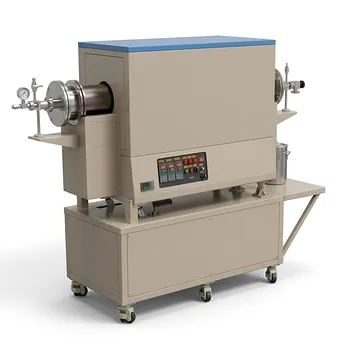
900°C Max Rotary Tube Furnace with 8 Inch 310S Alloy Tube and Optional Multi Zone Heating for Industrial Material Calcination
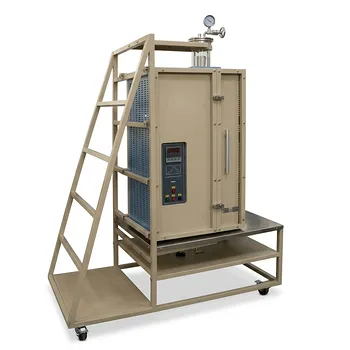
Split Vertical Tube Furnace with 1200C Quartz Tube and Stainless Steel Vacuum Flanges for Rapid Thermal Processing

High Temperature 1700C Tube Furnace with High Vacuum Turbomolecular Pump System and Multi Channel Mass Flow Controller Gas Mixer
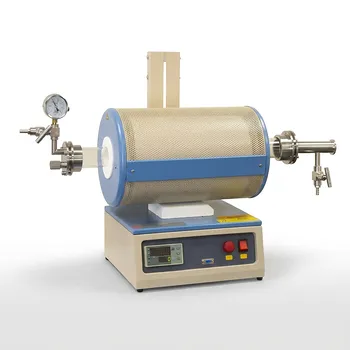
1100C Tube Furnace with Vacuum Flange and Programmable Temperature Controller for Material Science and Industrial Heat Treatment
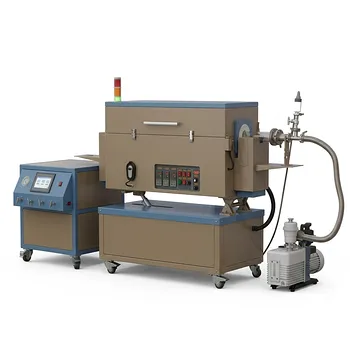
5 Inch Three Zone Rotary Tube Furnace with Integrated Gas Delivery System and 1200C Capability for Advanced Material CVD Processing
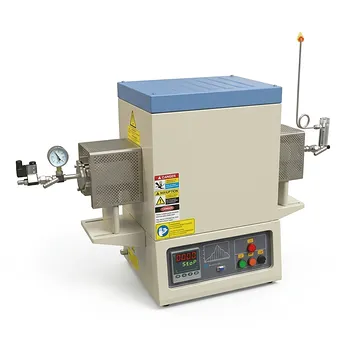
1700C Hydrogen Gas Tube Furnace with 60mm Alumina Process Tube and Integrated Hydrogen Safety Detector
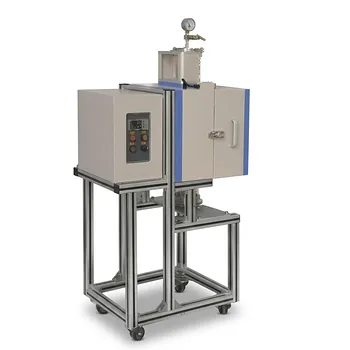
1200°C 5 Inch Vertical Quartz Tube Furnace with Stainless Steel Vacuum Flanges
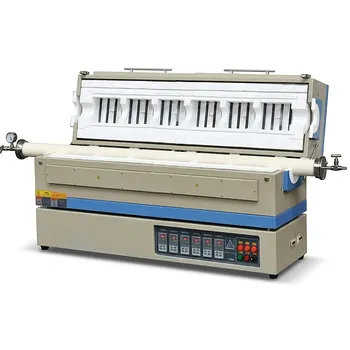
High Temperature 1700C Six Zone Split Tube Furnace with Alumina Tube and Water Cooled Flanges
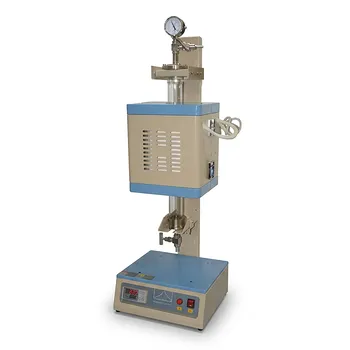
Compact Vertical Split Quartz Tube Furnace with Stainless Steel Vacuum Flanges for Rapid Thermal Quenching and Controlled Atmosphere Material Processing

High Temperature 1700C Benchtop Tube Furnace with 5 Inch Heating Zone High Purity Alumina Tube and Vacuum Sealing Flanges
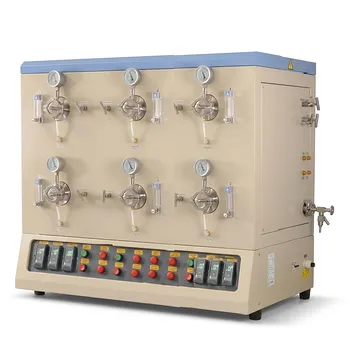
1200C High Throughput Multi Channel Tube Furnace with 50mm Quartz Tubes for Annealing and Material Phase Diagram Research
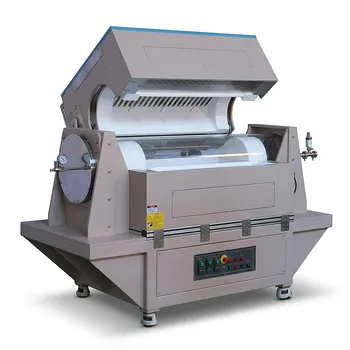
Three Zone Tube Furnace with 11 Inch or 15 Inch Quartz Tube and Hinged Flanges for Vacuum Atmosphere Heat Treatment

1800C High Temperature Compact Vacuum Tube Furnace with 60mm OD Alumina Tube and Kanthal MoSi2 Heating Elements

High Temperature 1700C Vertical Tube Furnace for Powder Spherification and Material Sintering
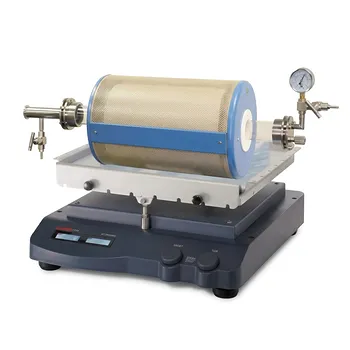
High Temperature Rocking Tube Furnace with Quartz Tube and Vacuum Flange for Materials Synthesis

High Temperature Automated 5 Inch Tube Furnace for Autonomous Material Research and Advanced Laboratory R&D
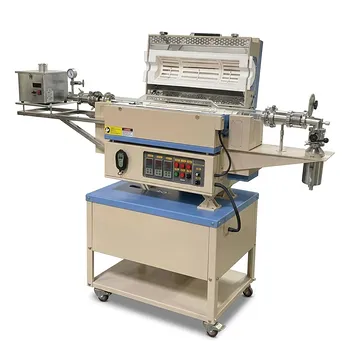
5 Inch Rotary Tube Furnace with Automatic Feeding and Receiving System 1200C Three Zone CVD Powder Processing