What is the primary function of a horizontal tube furnace in the CVD of ZnO? Essential Guide to Precision Synthesis.
Updated 3 months ago
The horizontal tube furnace serves as the foundational thermal architecture for Zinc Oxide (ZnO) synthesis. Its primary function is to provide a precisely controlled high-temperature environment that facilitates the thermal evaporation of zinc precursors in a central zone while establishing specific temperature gradients downstream. These gradients are critical for driving the directional deposition and crystallization of nanostructures via carrier gases.
Core Takeaway: The horizontal tube furnace acts as both a reactor and a transport engine; it provides the energy required for precursor vaporization and creates the necessary thermal decline to allow gas-phase materials to recrystallize into nanostructures on a substrate.
Creating the Thermal Environment for Precursor Transformation
Facilitating Thermal Evaporation and Carbothermal Reduction
The furnace provides a stable high-temperature zone, often reaching between 800°C and 1200°C, at its center. This heat is essential for the carbothermal reduction process, where zinc oxide and graphite powders react to produce the zinc vapor necessary for growth.
Establishing Essential Temperature Gradients
By its horizontal design, the furnace naturally creates a temperature decline from the center toward the ends of the tube. This gradient is the "driving force" that determines where and how the zinc vapor will transition back into a solid state on the substrate.
Supporting Multi-Zone Independent Control
In advanced setups, multi-zone furnaces allow researchers to independently set temperatures for evaporation and deposition. This level of control ensures that precursor transport remains saturated without prematurely depleting the source material.
Driving the Mechanisms of Nanostructure Growth
Enabling the Vapor-Liquid-Solid (VLS) Mechanism
The furnace maintains the precise thermal window required for gold-catalyzed substrates to form liquid alloy droplets. These droplets act as nucleation sites where zinc vapor is absorbed and then precipitated as high-quality single-crystal nanowires.
Regulating Gas-Phase Transport and Laminar Flow
Beyond simple heating, the furnace environment ensures stable, often laminar, airflow when coupled with gas control systems. This consistency is vital for the uniform transport of precursors, preventing turbulence that could disrupt the morphology of the growing nanostructures.
Controlling Crystal Quality and Morphology
The precision of the furnace’s temperature field directly dictates the final thickness, length, and crystallinity of the ZnO structures. Stable thermal fields prevent defects and ensure that the nanostructures grow with high structural integrity.
Understanding the Trade-offs and Limitations
Single-Zone vs. Multi-Zone Constraints
A single-zone furnace is simpler but relies entirely on the natural thermal gradient of the tube, which limits the distance between the source and the substrate. This can lead to less flexibility in controlling the supersaturation levels required for specific nanostructure shapes.
Thermal Lag and Accuracy
Standard horizontal furnaces may experience a "thermal lag" where the internal quartz tube temperature differs slightly from the thermocouple reading. For sensitive ZnO growth, even a 5°C deviation can shift the growth from nanowires to unwanted bulk film.
Contamination and Tube Maintenance
Because the furnace is a closed thermal system, cross-contamination from previous runs (like residual carbon or zinc) can occur. Frequent cleaning or dedicated quartz liners are necessary to maintain the high purity required for semiconductor-grade ZnO.
How to Apply This to Your Project
When selecting or operating a horizontal tube furnace for CVD synthesis, your approach should change based on your specific material requirements:
- If your primary focus is high-yield nanowire growth: Utilize a gold catalyst on your substrate and prioritize a furnace with a long, stable heating zone to ensure consistent precursor supply via the VLS mechanism.
- If your primary focus is morphological control (e.g., nanobelts or combs): Choose a multi-zone furnace to create steep, independent temperature gradients that allow you to fine-tune the supersaturation levels at the deposition site.
- If your primary focus is ultra-long nanostructures: Ensure your furnace supports precise laminar flow and high-precision temperature stability (±1°C) to maintain steady growth conditions over several hours.
By mastering the thermal gradient within the horizontal tube furnace, you transform a simple heating element into a precision tool for molecular-level manufacturing.
Summary Table:
| Key Function | Role in CVD Process | Impact on Nanostructure |
|---|---|---|
| Thermal Evaporation | Vaporizes zinc precursors (800°C-1200°C) | Ensures a steady supply of gas-phase material. |
| Temperature Gradient | Creates a thermal decline from center to ends | Acts as the driving force for directional crystallization. |
| VLS Mechanism Support | Maintains the precise thermal window for catalysts | Enables growth of high-quality single-crystal nanowires. |
| Laminar Flow Control | Regulates gas-phase transport via carrier gases | Ensures uniform morphology and prevents structural defects. |
| Multi-Zone Control | Independently manages evaporation and deposition | Allows fine-tuning of supersaturation and growth rates. |
Elevate Your Nanomaterial Research with THERMUNITS
Are you looking to achieve superior precision in your CVD/PECVD processes? THERMUNITS is a leading manufacturer of high-temperature laboratory equipment dedicated to supporting material science and industrial R&D. We offer a comprehensive suite of thermal processing solutions designed to meet the rigorous demands of ZnO nanostructure synthesis and beyond.
Our product range includes:
- Tube Furnaces (Single and Multi-zone for precise gradients)
- CVD and PECVD Systems for advanced thin-film deposition
- Vacuum & Atmosphere Furnaces
- Muffle, Rotary, and Hot Press Furnaces
- Vacuum Induction Melting (VIM) & Electric Rotary Kilns
- Dental Furnaces and High-Quality Thermal Elements
Whether you are scaling up industrial R&D or conducting fundamental laboratory heat treatments, our equipment provides the thermal stability and laminar flow control essential for your success.
Contact our expert team today to find the perfect furnace for your application!
References
- The‐Long Phan, Dang Ngoc Toan. Various CVD-grown ZnO nanostructures for nanodevices and interdisciplinary applications. DOI: 10.3762/bjnano.15.112
Mentioned Products
- Multi Position Tube Furnace 1100C for Laboratory Material Research and Advanced Industrial Thermal Processing
- 1200°C 10-Zone Split Tube Furnace with Horizontal and Vertical Mounting for Multi-Zone Thermal Gradients and Large Diameter Material Processing
- Ten Zone Multi Orientation Laboratory Tube Furnace for 1200C High Temperature Gradient Thermal Processing
- Vertical 1700C Vacuum and Atmosphere Tube Furnace with 80mm Alumina Tube
- Split Vertical Tube Furnace with 1200C Quartz Tube and Stainless Steel Vacuum Flanges for Rapid Thermal Processing
People Also Ask
- Why use a tube furnace for oxygen annealing LaCrO3/LaMnO3? Optimize Phase Transition & Magnetic Performance.
- What key role does a laboratory high-temperature tube furnace play in the production of carbon nanofibers? Guide
- How is a laboratory high-temperature tube furnace utilized to research the products of aluminothermic reduction? Advanced Metallurgical Solutions
- What is the role of a laboratory tube furnace in the carbonization process of porous carbon foam (PCF)? Master 3D Synthesis
- What role does a laboratory tube furnace play in the pyrolysis and carbonization of biomass? Optimize Thermal Research.

Tech Team · ThermUnits
Last updated on Jun 03, 2026
Related Products
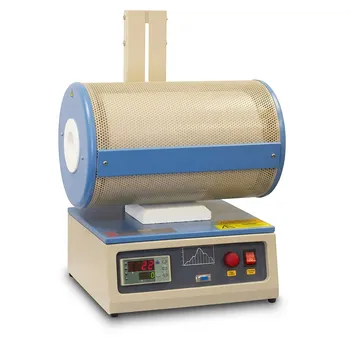
Multi Position Tube Furnace 1100C for Laboratory Material Research and Advanced Industrial Thermal Processing
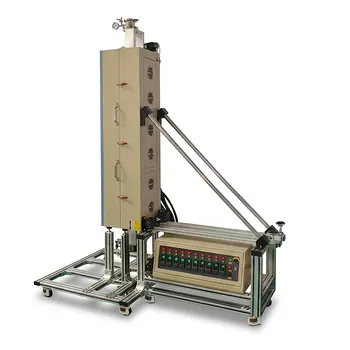
1200°C 10-Zone Split Tube Furnace with Horizontal and Vertical Mounting for Multi-Zone Thermal Gradients and Large Diameter Material Processing
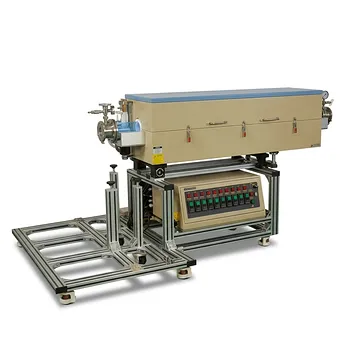
Ten Zone Multi Orientation Laboratory Tube Furnace for 1200C High Temperature Gradient Thermal Processing

Vertical 1700C Vacuum and Atmosphere Tube Furnace with 80mm Alumina Tube
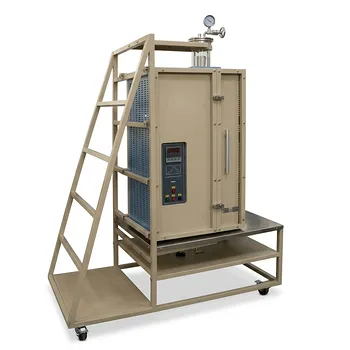
Split Vertical Tube Furnace with 1200C Quartz Tube and Stainless Steel Vacuum Flanges for Rapid Thermal Processing

High Temperature 1700C Vertical Tube Furnace for Powder Spherification and Material Sintering

1200°C 5 Inch Vertical Quartz Tube Furnace with Stainless Steel Vacuum Flanges
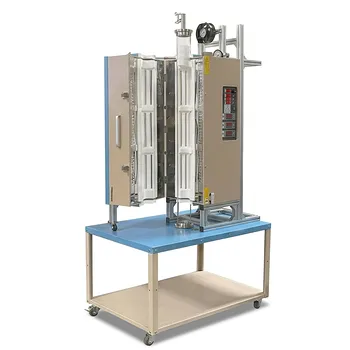
1200C Three Zone Split Vertical Tube Furnace 4 Inch Quartz Tube Stainless Steel Vacuum Flanges
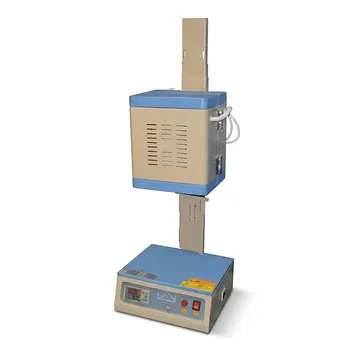
High Temperature Vertical Split Tube Furnace with PID Temperature Controller for 1 and 2 Inch Processing Tubes
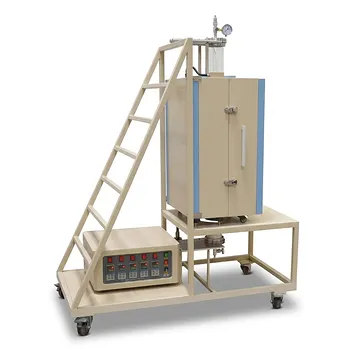
Five Zone Split Vertical Tube Furnace 1200C Max with 4 Inch Quartz Tube and Stainless Steel Vacuum Flanges
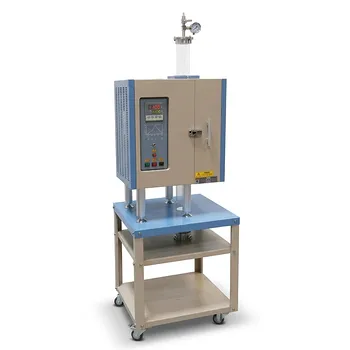
1100°C Split Vertical Tube Furnace with 80mm Quartz Tube and Stainless Steel Vacuum Flanges

Compact Vertical Split Quartz Tube Furnace with Stainless Steel Vacuum Flanges for Rapid Thermal Quenching and Controlled Atmosphere Material Processing

High Temperature 1700C Six Zone Split Tube Furnace with Alumina Tube and Water Cooled Flanges
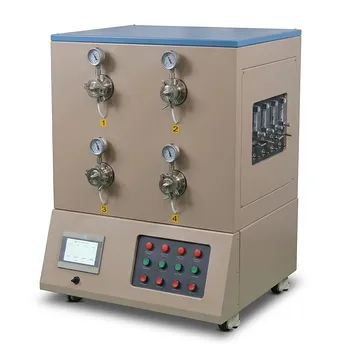
High Throughput 1200C Four Channel Tube Furnace with 3 Inch Quartz Tubes for Multi Zone Annealing and Material Research
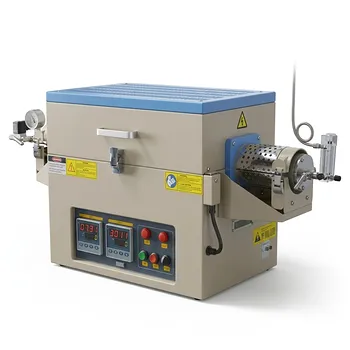
1100C Dual Zone Hydrogen Gas Tube Furnace with Quartz Tube and Integrated H2 Leak Detection System
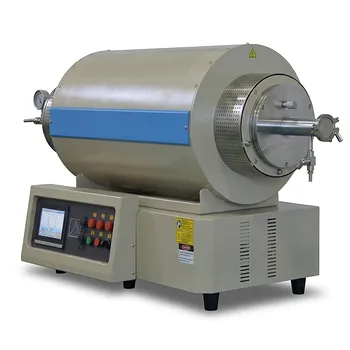
1200C Max Three Zone Tube Furnace 6 Inch OD Max with Tube and Flange

1200C High Throughput Multi Channel Tube Furnace with 50mm Quartz Tubes for Annealing and Material Phase Diagram Research
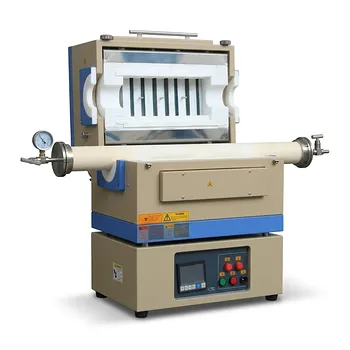
1500C Eight Zone Split Tube Furnace for Thermal Gradient Processing and Advanced Material Research

1100C Tube Furnace with Vacuum Flange and Programmable Temperature Controller for Material Science and Industrial Heat Treatment
