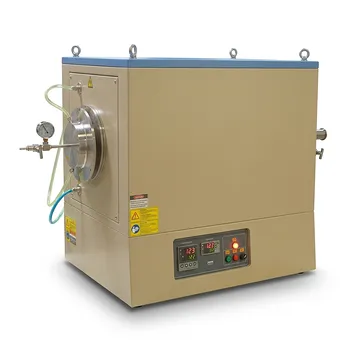
What is the primary function of an Industrial Tube Furnace during NdFeB recycling? Key to Rare Earth Recovery
Updated 3 months ago
The primary function of an industrial tube furnace during the pretreatment of NdFeB magnet recycling is the thermal demagnetization of crushed magnet powder. By maintaining a precisely controlled environment—typically at temperatures around 750 °C—the furnace eliminates the magnetic field of the scrap material. This step is a critical prerequisite that allows for efficient acid leaching and the subsequent chemical recovery of rare earth elements.
Core Takeaway: Industrial tube furnaces serve as the foundational thermal processing unit in recycling; by heating material beyond its Curie point, they neutralize magnetic forces to enable the chemical dissolution required to extract valuable rare earth metals.
The Role of Thermal Processing in Recycling
Neutralizing Magnetic Cohesion
The most immediate challenge in recycling NdFeB (Neodymium-Iron-Boron) magnets is their powerful remanent magnetism. This force causes crushed particles to clump together, making them difficult to handle and resistant to uniform chemical exposure.
The tube furnace applies consistent heat to reach the Curie temperature, at which the material loses its permanent magnetic properties. This transition transforms the scrap into a neutralized powder that can be easily processed in downstream industrial equipment.
Preparing for Acid Leaching
Demagnetization is not merely for physical handling; it is essential for chemical reactivity. Once the magnetic structure is disrupted at 750 °C, the rare earth elements within the alloy become more accessible.
This structural preparation ensures that the subsequent acid leaching and chemical dissolution stages can effectively release neodymium and dysprosium from the metallic matrix. Without this pretreatment, the efficiency of the extraction process drops significantly.
The Technical Advantages of the Tube Furnace
Precision and Uniformity
In NdFeB recycling, temperature overshoots or undershoots can lead to incomplete demagnetization or unwanted phase changes. The cylindrical geometry of a tube furnace provides highly uniform radial heating.
This uniformity ensures that every gram of the crushed powder reaches the required temperature simultaneously. Such precision is vital for maintaining a consistent feed for the chemical recycling plant.
Atmospheric Control and Contamination Shielding
Industrial tube furnaces are designed to isolate the sample from external contaminants. In many recycling workflows, it is necessary to control the internal atmosphere—sometimes using a vacuum or inert gas—to prevent the premature oxidation of the rare earth elements.
Protecting the purity of the scrap during the heating phase ensures that the final recovered oxides or metals meet the high-purity standards required for manufacturing new magnets.
Understanding the Trade-offs and Pitfalls
Energy Intensity vs. Recovery Yield
Operating a tube furnace at 750 °C requires significant energy input, which adds to the operational cost of recycling. However, bypassing this step or using lower temperatures often results in lower recovery yields of rare earth elements, which are far more valuable than the energy saved.
Risk of Sintering During Pretreatment
If the temperature is not strictly monitored, the crushed powder may begin to sinter (bond together) rather than remain a loose powder. This creates a secondary problem where the material must be re-crushed before leaching, increasing labor costs and the risk of equipment wear.
How to Apply These Insights to Your Project
Making the Right Choice for Your Goal
Efficiency in rare earth recovery depends on how you integrate thermal pretreatment into your broader recycling flow.
- If your primary focus is maximizing recovery purity: Use a high-vacuum tube furnace to prevent any oxidation of the Nd-rich phase during the 750 °C demagnetization cycle.
- If your primary focus is high-throughput processing: Prioritize a furnace with rapid cooling capabilities to decrease cycle times between demagnetization and leaching.
- If your primary focus is cost-effective scrap handling: Ensure the furnace is calibrated specifically to the Curie point of your specific NdFeB grade to avoid unnecessary energy expenditure.
By mastering the thermal pretreatment stage, you ensure that the complex magnetic structure of NdFeB scrap becomes a viable "urban mine" for high-value materials.
Summary Table:
| Process Stage | Key Parameter | Primary Function | Core Benefit |
|---|---|---|---|
| Pretreatment | ~750 °C (Curie Point) | Thermal Demagnetization | Eliminates magnetic clumping for easier handling |
| Chemical Prep | Controlled Atmosphere | Surface Activation | Increases acid leaching efficiency and reactivity |
| Purity Shielding | Vacuum/Inert Gas | Oxidation Prevention | Protects Neodymium and Dysprosium from contamination |
| Process Sync | Radial Heating | Uniform Temperature | Ensures consistent feed for downstream chemical recovery |
Maximize Your Rare Earth Recovery Yields with THERMUNITS
At THERMUNITS, we understand that precision is the backbone of successful material science and industrial R&D. As a leading manufacturer of high-temperature laboratory equipment, we provide the specialized tools you need to master the complex stages of NdFeB magnet recycling and beyond.
Whether you require an Industrial Tube Furnace for uniform thermal demagnetization, a Vacuum Induction Melting Furnace (VIM) for high-purity casting, or advanced CVD/PECVD systems, our solutions are designed for reliability and performance. Our comprehensive range includes:
- Furnaces: Muffle, Vacuum, Atmosphere, Tube, Rotary, and Hot Press.
- Specialized Units: Dental Furnaces, Electric Rotary Kilns, and high-performance Thermal Elements.
Take the next step in your R&D journey. Contact THERMUNITS today to discuss your specific heat treatment requirements and discover how our expertise can enhance your laboratory's efficiency and extraction purity.
References
- Sandeep Bose, Parisa A. Ariya. Neodymium recovery from NdFeB magnets: a sustainable, instantaneous, and cost-effective method. DOI: 10.1039/d3gc03756h
Mentioned Products
- Continuous Feeding Rotary Tube Furnace for Industrial Powder Heat Treatment and Material Research
- 900°C Max Rotary Tube Furnace with 8 Inch 310S Alloy Tube and Optional Multi Zone Heating for Industrial Material Calcination
- 1100C Tube Furnace with Vacuum Flange and Programmable Temperature Controller for Material Science and Industrial Heat Treatment
- Laboratory Tilting Rotary Tubular Furnaces for Material Science and Industrial Heat Treatment
- Compact High Temperature 1600C Tube Furnace with 50mm Alumina Tube and Vacuum Flanges for Material Sintering
People Also Ask
- How does a rotary tube furnace improve the processing of granular materials? Enhance Uniformity and Reaction Kinetics
- Why use a rotary tube furnace for FACS carbonization? Ensure uniform morphology and prevent sphere agglomeration.
- In what ways do rotary tube furnaces enhance chemical and specialty mineral processing? Drive Precision and Uniformity.
- Why is the precise optimization of residence time essential in the catalyst calcination process? Maximize Your Yields.
- What are the primary types of industrial rotary furnaces and functions? Expert Guide to Rotary Kiln & Hearth Systems

Tech Team · ThermUnits
Last updated on Jun 02, 2026
Related Products
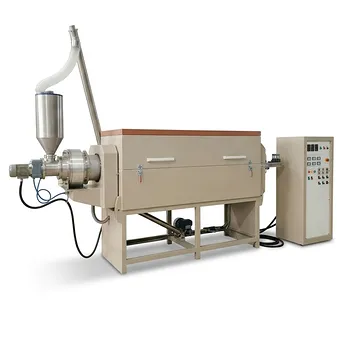
Continuous Feeding Rotary Tube Furnace for Industrial Powder Heat Treatment and Material Research
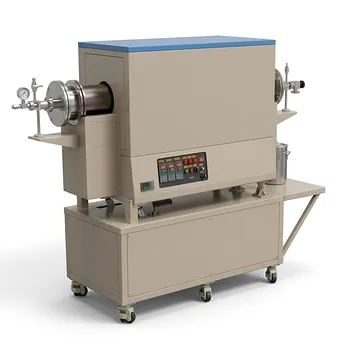
900°C Max Rotary Tube Furnace with 8 Inch 310S Alloy Tube and Optional Multi Zone Heating for Industrial Material Calcination

1100C Tube Furnace with Vacuum Flange and Programmable Temperature Controller for Material Science and Industrial Heat Treatment
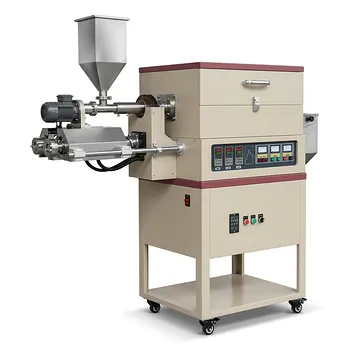
Laboratory Tilting Rotary Tubular Furnaces for Material Science and Industrial Heat Treatment

Compact High Temperature 1600C Tube Furnace with 50mm Alumina Tube and Vacuum Flanges for Material Sintering

High Temperature 1700C Tube Furnace with High Vacuum Turbomolecular Pump System and Multi Channel Mass Flow Controller Gas Mixer

Vertical 1700C Vacuum and Atmosphere Tube Furnace with 80mm Alumina Tube

High Temperature 1700C Vertical Tube Furnace for Powder Spherification and Material Sintering

Compact Vertical Split Quartz Tube Furnace with Stainless Steel Vacuum Flanges for Rapid Thermal Quenching and Controlled Atmosphere Material Processing

High Temperature 1700C Six Zone Split Tube Furnace with Alumina Tube and Water Cooled Flanges

1800C High Temperature Compact Vacuum Tube Furnace with 60mm OD Alumina Tube and Kanthal MoSi2 Heating Elements

1200°C 5 Inch Vertical Quartz Tube Furnace with Stainless Steel Vacuum Flanges

High Temperature 1700C Benchtop Tube Furnace with 5 Inch Heating Zone High Purity Alumina Tube and Vacuum Sealing Flanges

5 Inch Three Zone Rotary Tube Furnace with Integrated Gas Delivery System and 1200C Capability for Advanced Material CVD Processing

High Temperature Automated 5 Inch Tube Furnace for Autonomous Material Research and Advanced Laboratory R&D

1700C Hydrogen Gas Tube Furnace with 60mm Alumina Process Tube and Integrated Hydrogen Safety Detector
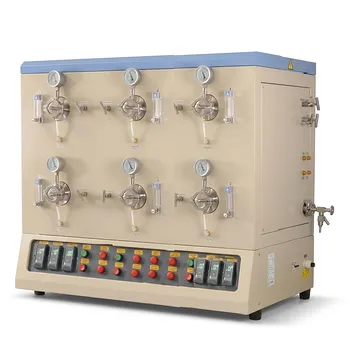
1200C High Throughput Multi Channel Tube Furnace with 50mm Quartz Tubes for Annealing and Material Phase Diagram Research
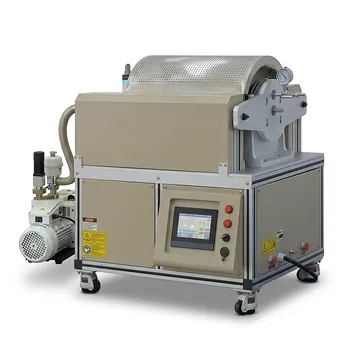
Automated 1200 C Tube Furnace for AI Material Research with 6 Inch OD and Sliding Flange
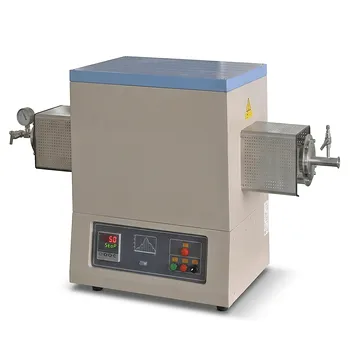
High Temperature 1700C Tube Furnace with 4 Inch OD Alumina Tube and Vacuum Sealing Flanges