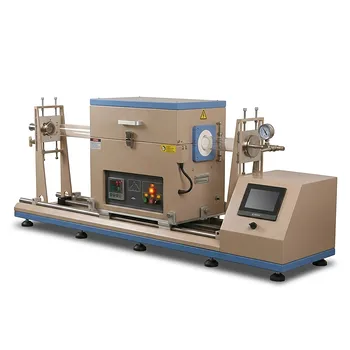
What is the primary objective of tube furnace annealing in Ge:ZnO thin film R&D? Optimize Conductivity & Performance
Updated 3 months ago
The primary objective of tube furnace annealing in the research and development of Germanium-doped Zinc Oxide (Ge:ZnO) thin films is to optimize electrical conductivity and carrier concentration by precisely adjusting the film's crystallinity and regulating its oxygen vacancy levels. Through controlled thermal treatment in specific atmospheres, researchers can transform the film's microstructure into a more stable and efficient semiconductor.
Core Takeaway: Tube furnace annealing serves as a critical tuning mechanism that uses thermal energy to rearrange atoms, eliminate structural defects, and control the density of oxygen vacancies—which act as essential electron donors—to achieve specific photoelectric properties.
Optimizing Structural Integrity and Crystallinity
Facilitating Atomic Rearrangement
Annealing provides the necessary thermal energy for atoms within the Ge:ZnO film to diffuse and move into their ideal lattice positions. This process encourages the formation of a stable crystalline phase, typically the hexagonal wurtzite structure inherent to Zinc Oxide.
Reducing Internal Stress and Defects
Films produced via methods like magnetron sputtering often harbor significant internal stresses and structural dislocations. High-temperature treatment relaxes these stresses and reduces dislocation density, which directly improves the overall durability and quality of the thin film.
Promoting Grain Growth
Controlled heating in a tube furnace facilitates the growth of larger grains within the film. Larger grain sizes reduce the number of grain boundaries, which are often sites for charge carrier scattering, thereby enhancing the material's efficiency in transporting electrons.
Regulating Electronic Properties and Charge Carriers
Managing Oxygen Vacancies as Electron Donors
In Ge:ZnO, oxygen vacancies are not merely defects; they serve as primary electron donors that increase conductivity. The tube furnace allows researchers to use specific atmospheres, such as dry air or nitrogen, to increase or decrease these vacancies to reach a target carrier concentration.
Enhancing Dopant Incorporation
Annealing promotes the effective substitution of Germanium (Ge) atoms into the Zinc (Zn) lattice sites. This successful incorporation is vital for the doping process to work, as Ge ions must be properly situated within the crystal structure to contribute to the material’s electronic performance.
Improving Carrier Mobility
By eliminating "defect charges" and clearing the path for electron flow, the annealing process significantly increases carrier mobility. This results in faster response times for devices like photodetectors and higher efficiency for solar cell applications.
Understanding the Trade-offs and Pitfalls
Atmosphere Sensitivity
The choice of gas in the tube furnace (e.g., oxygen-rich vs. inert nitrogen) can radically change the outcome. An overly oxidizing atmosphere may "heal" too many oxygen vacancies, inadvertently leading to a significant drop in electrical conductivity.
Thermal Budget Constraints
While higher temperatures generally improve crystallinity, exceeding a certain thermal threshold can damage the substrate or cause the film to peel. Furthermore, excessive heat can lead to unwanted secondary phase formations that degrade the film's optical transparency.
Precision Timing
Insufficient annealing time may leave organic impurities or precursors behind, while excessive time can cause grain overgrowth that might increase surface roughness. Finding the "sweet spot"—such as the common 300°C to 500°C range—is essential for reproducible R&D results.
How to Apply Annealing to Your Research Goals
When designing an annealing protocol for Ge:ZnO or similar doped thin films, your primary objective determines your furnace settings.
- If your primary focus is Maximum Electrical Conductivity: Prioritize higher temperatures and potentially reducing or inert atmospheres to maximize oxygen vacancies and carrier mobility.
- If your primary focus is High Optical Transparency: Use an oxygen-rich atmosphere at moderate temperatures to ensure a highly ordered crystal structure with minimal light-absorbing defects.
- If your primary focus is Structural Stability on Plastic/Flexible Substrates: Utilize lower-temperature annealing for longer durations to achieve crystallization without reaching the glass transition temperature of the substrate.
By mastering the variables of temperature, duration, and atmosphere within a tube furnace, researchers can transform a raw thin film into a high-performance electronic component.
Summary Table:
| Feature | R&D Objective | Impact on Ge:ZnO Thin Films |
|---|---|---|
| Structural | Atomic Rearrangement | Form stable hexagonal wurtzite structure; reduce internal stress. |
| Electronic | Oxygen Vacancy Control | Adjust vacancy levels to act as primary electron donors. |
| Morphology | Grain Growth promotion | Minimize grain boundaries to reduce charge carrier scattering. |
| Doping | Dopant Incorporation | Ensure effective substitution of Germanium (Ge) into Zinc (Zn) sites. |
| Atmosphere | Gas Regulation | Use N2 or O2 to tune conductivity vs. optical transparency. |
Elevate Your Material Science Research with THERMUNITS
Precise thermal processing is critical for achieving the exact photoelectric properties required in Ge:ZnO thin film development. THERMUNITS is a leading manufacturer of high-temperature laboratory equipment, providing the precision and stability needed for advanced material science and industrial R&D.
Our comprehensive range of thermal solutions includes:
- High-Precision Furnaces: Tube, Muffle, Vacuum, Atmosphere, Rotary, and Hot Press furnaces.
- Advanced Systems: CVD/PECVD systems, Vacuum Induction Melting (VIM) furnaces, and Electric Rotary Kilns.
- Specialized Equipment: Dental Furnaces, Thermal Elements, and custom heat treatment solutions.
Whether you are aiming for maximum electrical conductivity or high optical transparency, our equipment ensures uniform heating and atmosphere control for reproducible results. Contact our technical experts today to find the perfect thermal processing solution for your laboratory’s needs!
References
- Rafał Knura, Robert P. Socha. Evaluation of the Electronic Properties of Atomic Layer Deposition-Grown Ge-Doped Zinc Oxide Thin Films at Elevated Temperatures. DOI: 10.3390/electronics13030554
Mentioned Products
- Vertical 1700C Vacuum and Atmosphere Tube Furnace with 80mm Alumina Tube
- Compact High Temperature 1600C Tube Furnace with 50mm Alumina Tube and Vacuum Flanges for Material Sintering
- 900°C Max Rotary Tube Furnace with 8 Inch 310S Alloy Tube and Optional Multi Zone Heating for Industrial Material Calcination
- Split Vertical Tube Furnace with 1200C Quartz Tube and Stainless Steel Vacuum Flanges for Rapid Thermal Processing
- High Temperature 1700C Tube Furnace with High Vacuum Turbomolecular Pump System and Multi Channel Mass Flow Controller Gas Mixer
People Also Ask
- How is an industrial-grade vertical tube furnace utilized in smelting leaching residues? Enhance Metal Recovery Efficiency
- What is the function of a laboratory-grade vertical tube furnace in fast pyrolysis? Optimize Composite Research.
- How does a vertical tube furnace facilitate thermoelectric alloy melting? Precision synthesis for material homogeneity.
- Why is a thermocouple sensor indispensable for monitoring the vertical tube furnace during gallium oxide nanowire production? Optimize VLS Growth
- What are the advantages of using a vertical tube furnace for crucible experiments simulating steel-slag interactions?

Tech Team · ThermUnits
Last updated on Jun 02, 2026
Related Products

Vertical 1700C Vacuum and Atmosphere Tube Furnace with 80mm Alumina Tube

Compact High Temperature 1600C Tube Furnace with 50mm Alumina Tube and Vacuum Flanges for Material Sintering
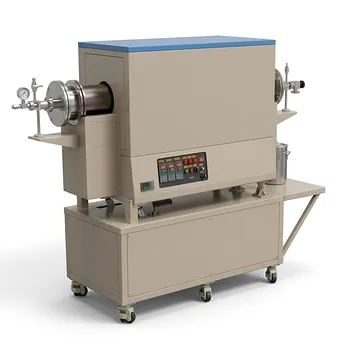
900°C Max Rotary Tube Furnace with 8 Inch 310S Alloy Tube and Optional Multi Zone Heating for Industrial Material Calcination
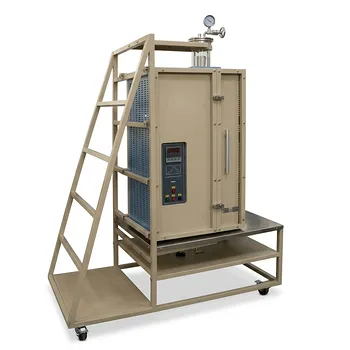
Split Vertical Tube Furnace with 1200C Quartz Tube and Stainless Steel Vacuum Flanges for Rapid Thermal Processing

High Temperature 1700C Tube Furnace with High Vacuum Turbomolecular Pump System and Multi Channel Mass Flow Controller Gas Mixer

1100C Tube Furnace with Vacuum Flange and Programmable Temperature Controller for Material Science and Industrial Heat Treatment
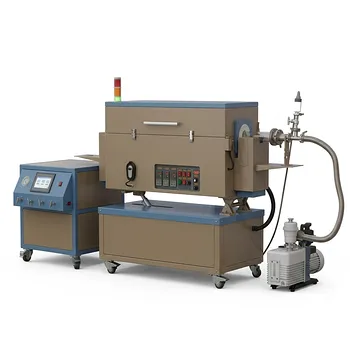
5 Inch Three Zone Rotary Tube Furnace with Integrated Gas Delivery System and 1200C Capability for Advanced Material CVD Processing

1700C Hydrogen Gas Tube Furnace with 60mm Alumina Process Tube and Integrated Hydrogen Safety Detector

1200°C 5 Inch Vertical Quartz Tube Furnace with Stainless Steel Vacuum Flanges

High Temperature 1700C Six Zone Split Tube Furnace with Alumina Tube and Water Cooled Flanges

Compact Vertical Split Quartz Tube Furnace with Stainless Steel Vacuum Flanges for Rapid Thermal Quenching and Controlled Atmosphere Material Processing

High Temperature 1700C Benchtop Tube Furnace with 5 Inch Heating Zone High Purity Alumina Tube and Vacuum Sealing Flanges

1200C High Throughput Multi Channel Tube Furnace with 50mm Quartz Tubes for Annealing and Material Phase Diagram Research
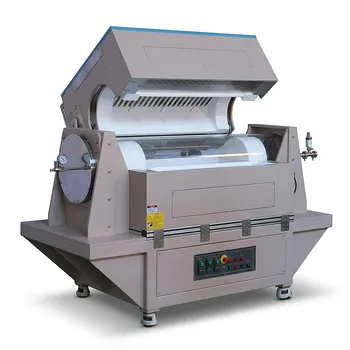
Three Zone Tube Furnace with 11 Inch or 15 Inch Quartz Tube and Hinged Flanges for Vacuum Atmosphere Heat Treatment

1800C High Temperature Compact Vacuum Tube Furnace with 60mm OD Alumina Tube and Kanthal MoSi2 Heating Elements

High Temperature 1700C Vertical Tube Furnace for Powder Spherification and Material Sintering
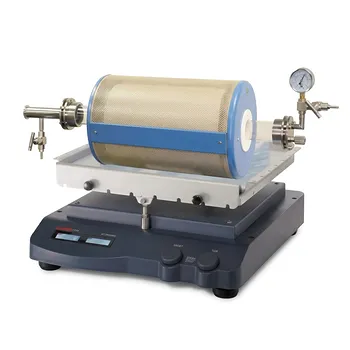
High Temperature Rocking Tube Furnace with Quartz Tube and Vacuum Flange for Materials Synthesis

High Temperature Automated 5 Inch Tube Furnace for Autonomous Material Research and Advanced Laboratory R&D
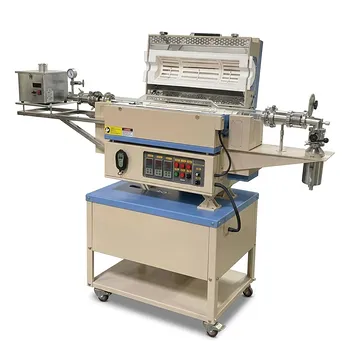
5 Inch Rotary Tube Furnace with Automatic Feeding and Receiving System 1200C Three Zone CVD Powder Processing