What is the primary role of a horizontal tube furnace in CVD synthesis of Fe1+yTe nanosheets? Precision Thermal Control
Updated 5 months ago
The primary role of a horizontal tube furnace in the CVD synthesis of $Fe_{1+y}Te$ nanosheets is to provide a precisely controlled thermal field and a stable temperature gradient. This equipment acts as the central reaction environment, enabling the sequential volatilization of precursors like Tellurium (Te) powder and Iron(II) chloride ($FeCl_2$) situated in distinct temperature zones. By regulating these thermal zones, the furnace ensures the gaseous precursors are transported and reacted on the substrate surface for high-quality epitaxial growth.
The horizontal tube furnace serves as the core heat treatment engine, transforming solid precursors into reactive vapors through a governed temperature gradient. It is the critical hardware component that dictates the crystal quality, thickness, and morphology of the resulting two-dimensional nanosheets.
Precision Thermal Gradient Control
Differential Precursor Volatilization
The furnace allows for the independent heating of different raw materials, specifically Te powder and $FeCl_2$. These materials possess different vapor pressures and requires specific temperatures to sublimate or melt into a gaseous state.
Spatial Separation of Reaction Zones
By establishing a stable temperature gradient along the horizontal quartz tube, the furnace creates distinct "workstations" for the process. This separation ensures that precursors do not react prematurely before reaching the target substrate.
Controlled Vapor Transport
The thermal energy provided by the furnace works in tandem with a carrier gas to move precursor vapors. This movement is essential for directing the concentrated gaseous atoms toward the substrate where the chemical vapor deposition actually occurs.
Reactor Dynamics and Material Quality
Providing Activation Energy
The furnace provides the high-temperature environment necessary to break chemical bonds in the precursors. This thermal energy is the catalyst for the chemical reaction and subsequent crystallization of $Fe_{1+y}Te$ on the substrate surface.
Ensuring Epitaxial Consistency
The uniformity of the thermal field within the furnace directly influences the thickness consistency of the nanosheets. A stable heat environment allows for molecular-level control over how atoms arrange themselves into a two-dimensional lattice.
Maintaining Atmospheric Integrity
The sealed nature of the horizontal tube allows for a controlled atmospheric environment. This is vital for preventing oxidation and ensuring that only the intended precursor gases participate in the synthesis of the nanosheets.
Understanding the Trade-offs
Temperature Sensitivity
Precise control is a double-edged sword; even minor fluctuations in the furnace temperature can lead to inconsistent stoichiometry. If the gradient is too steep, precursors may deposit as unwanted bulk crystals rather than thin nanosheets.
Precursor Depletion and Saturation
Maintaining the balance of vapor concentration is difficult over long durations. Overheating the source zone can lead to an over-saturation of vapors, causing non-uniform growth or excessive thickness that ruins the two-dimensional properties.
System Scalability Limits
Horizontal tube furnaces are often limited by the size of the quartz tube. While they provide excellent control for research-grade nanosheets, scaling the process for large-area industrial production presents significant engineering challenges regarding heat uniformity.
How to Apply This to Your Synthesis Goals
To achieve the best results in $Fe_{1+y}Te$ synthesis, you must align your furnace parameters with your specific material requirements.
- If your primary focus is high crystal purity: Prioritize the stability of the temperature gradient to ensure a slow, controlled reaction rate on the substrate.
- If your primary focus is controlling nanosheet thickness: Focus on the precise regulation of the carrier gas flow rate in conjunction with the source zone temperature to manage vapor density.
- If your primary focus is maximizing yield: Optimize the spatial positioning of multiple substrates within the uniform "sweet spot" of the furnace's thermal field.
The horizontal tube furnace is the indispensable foundation for achieving the molecular precision required for high-performance two-dimensional material synthesis.
Summary Table:
| Core Function | Impact on Nanosheet Synthesis | Key Controlled Parameter |
|---|---|---|
| Thermal Gradient | Enables sequential precursor volatilization (Te & $FeCl_2$) | Temperature Profile ($^\circ$C) |
| Activation Energy | Breaks chemical bonds to catalyze crystallization | Heating Rate / Set-point |
| Vapor Transport | Directs gaseous precursors to the deposition substrate | Carrier Gas Flow (sccm) |
| Atmosphere Control | Prevents oxidation and ensures high material purity | Vacuum Level / Gas Purity |
| Thermal Uniformity | Dictates epitaxial consistency and sheet thickness | Work Zone Stability |
Elevate Your Material Research with THERMUNITS Precision
As a leading manufacturer of high-temperature laboratory equipment, THERMUNITS empowers material science and industrial R&D with advanced thermal processing solutions. Whether you are synthesizing $Fe_{1+y}Te$ nanosheets or exploring next-gen 2D materials, our specialized Tube Furnaces, CVD/PECVD systems, and Atmosphere Furnaces provide the stable temperature gradients and atmospheric integrity essential for high-performance results.
Our comprehensive range includes:
- Muffle, Vacuum, and Tube Furnaces for precise heat treatment.
- Rotary and Hot Press Furnaces for advanced material processing.
- CVD/PECVD & Vacuum Induction Melting (VIM) systems for superior thin-film and alloy growth.
- Thermal Elements and Dental Furnaces tailored for specialized laboratory needs.
Ready to optimize your synthesis process and achieve molecular-level precision?
Contact our experts today to find your custom solution
References
- Lu Lv, Yanfeng Gao. High Quality Fe<sub>1+y</sub>Te Synthesized by Chemical Vapor Deposition with Conspicuous Vortex Flow. DOI: 10.1002/adfm.202401748
Mentioned Products
- Multi Position Tube Furnace 1100C for Laboratory Material Research and Advanced Industrial Thermal Processing
- 1200°C 10-Zone Split Tube Furnace with Horizontal and Vertical Mounting for Multi-Zone Thermal Gradients and Large Diameter Material Processing
- Ten Zone Multi Orientation Laboratory Tube Furnace for 1200C High Temperature Gradient Thermal Processing
- Split Vertical Tube Furnace with 1200C Quartz Tube and Stainless Steel Vacuum Flanges for Rapid Thermal Processing
- High Temperature 1700C Vertical Tube Furnace for Powder Spherification and Material Sintering
People Also Ask
- Why use a tube furnace for oxygen annealing LaCrO3/LaMnO3? Optimize Phase Transition & Magnetic Performance.
- What key role does a laboratory high-temperature tube furnace play in the production of carbon nanofibers? Guide
- How is a laboratory high-temperature tube furnace utilized to research the products of aluminothermic reduction? Advanced Metallurgical Solutions
- What is the role of a laboratory tube furnace in the carbonization process of porous carbon foam (PCF)? Master 3D Synthesis
- What role does a laboratory tube furnace play in the pyrolysis and carbonization of biomass? Optimize Thermal Research.

Tech Team · ThermUnits
Last updated on Apr 14, 2026
Related Products
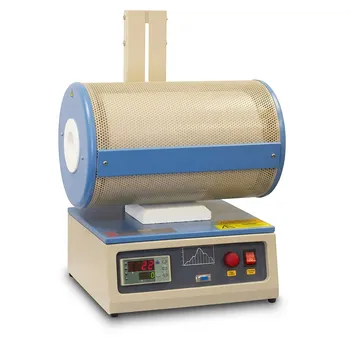
Multi Position Tube Furnace 1100C for Laboratory Material Research and Advanced Industrial Thermal Processing
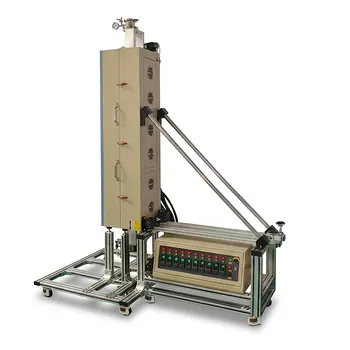
1200°C 10-Zone Split Tube Furnace with Horizontal and Vertical Mounting for Multi-Zone Thermal Gradients and Large Diameter Material Processing
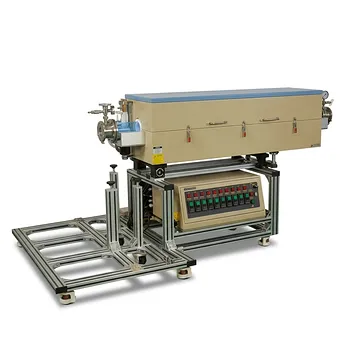
Ten Zone Multi Orientation Laboratory Tube Furnace for 1200C High Temperature Gradient Thermal Processing
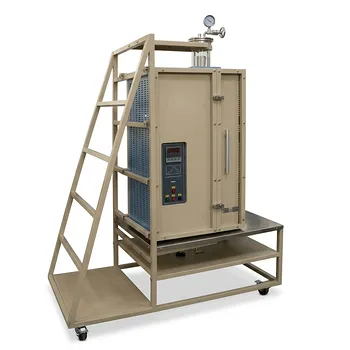
Split Vertical Tube Furnace with 1200C Quartz Tube and Stainless Steel Vacuum Flanges for Rapid Thermal Processing

High Temperature 1700C Vertical Tube Furnace for Powder Spherification and Material Sintering

Vertical 1700C Vacuum and Atmosphere Tube Furnace with 80mm Alumina Tube

1200°C 5 Inch Vertical Quartz Tube Furnace with Stainless Steel Vacuum Flanges
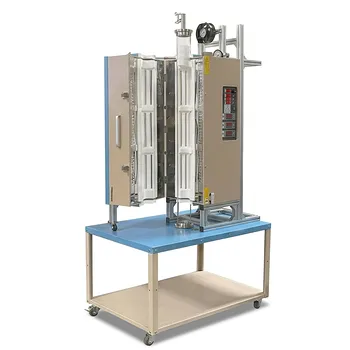
1200C Three Zone Split Vertical Tube Furnace 4 Inch Quartz Tube Stainless Steel Vacuum Flanges
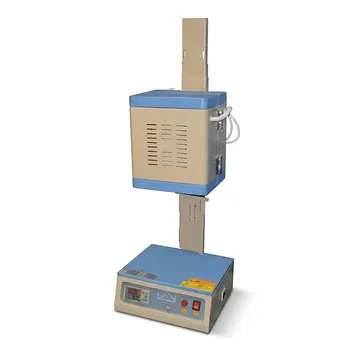
High Temperature Vertical Split Tube Furnace with PID Temperature Controller for 1 and 2 Inch Processing Tubes
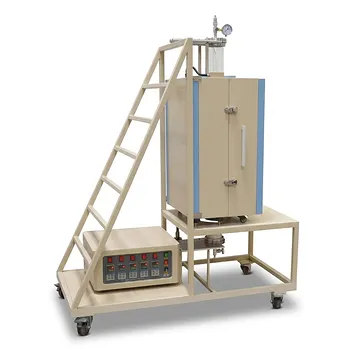
Five Zone Split Vertical Tube Furnace 1200C Max with 4 Inch Quartz Tube and Stainless Steel Vacuum Flanges
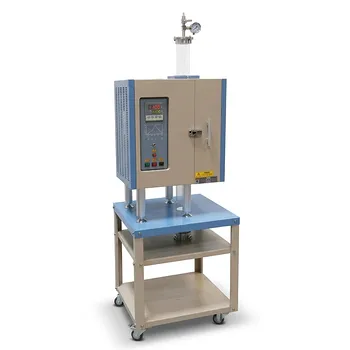
1100°C Split Vertical Tube Furnace with 80mm Quartz Tube and Stainless Steel Vacuum Flanges

Compact Vertical Split Quartz Tube Furnace with Stainless Steel Vacuum Flanges for Rapid Thermal Quenching and Controlled Atmosphere Material Processing

High Temperature 1700C Six Zone Split Tube Furnace with Alumina Tube and Water Cooled Flanges
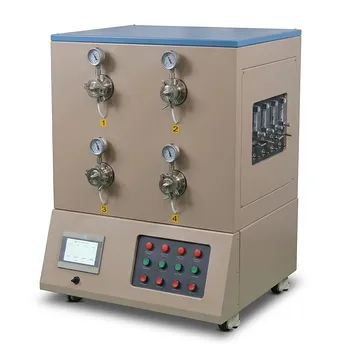
High Throughput 1200C Four Channel Tube Furnace with 3 Inch Quartz Tubes for Multi Zone Annealing and Material Research
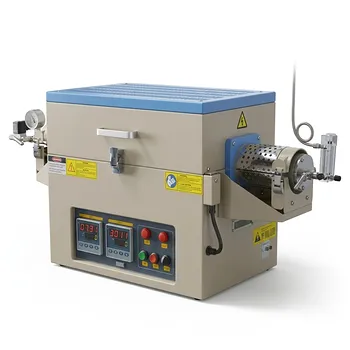
1100C Dual Zone Hydrogen Gas Tube Furnace with Quartz Tube and Integrated H2 Leak Detection System
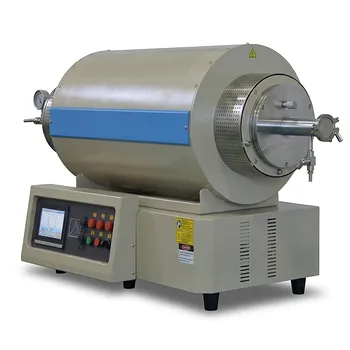
1200C Max Three Zone Tube Furnace 6 Inch OD Max with Tube and Flange
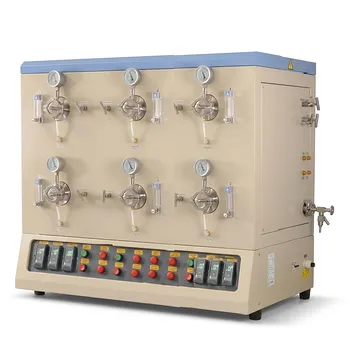
1200C High Throughput Multi Channel Tube Furnace with 50mm Quartz Tubes for Annealing and Material Phase Diagram Research
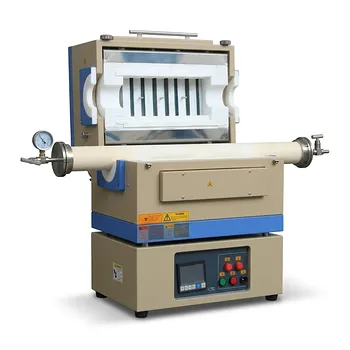
1500C Eight Zone Split Tube Furnace for Thermal Gradient Processing and Advanced Material Research

1100C Tube Furnace with Vacuum Flange and Programmable Temperature Controller for Material Science and Industrial Heat Treatment
