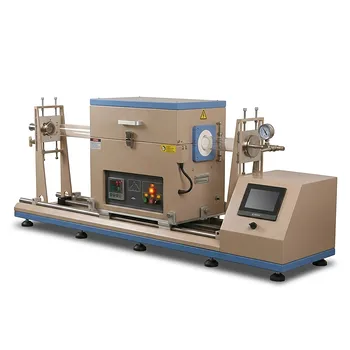
What is the primary role of a Tube Furnace in P3N5 preparation? Master High-Purity Phosphorus Nitrogen Synthesis.
Updated 3 months ago
The primary role of a tube furnace in synthesizing $P_3N_5$ is to facilitate the ammonolysis reaction through precise thermal control and atmospheric containment. It provides a sealed environment where phosphorus precursors can react with a continuous flow of ammonia gas ($NH_3$) at high temperatures, typically around 850 °C. This setup ensures that the raw materials undergo a complete chemical transformation into high-purity, semi-crystalline phosphorus nitrogen powder.
A tube furnace acts as a specialized high-temperature reactor that stabilizes the thermal field and gas concentration required for nitridation. By isolating the reaction from the ambient atmosphere and maintaining uniform heat, it ensures the phase purity and specific crystalline structure of the resulting phosphorus nitrogen compounds.
Facilitating the Ammonolysis Reaction
Creating a Controlled Chemical Environment
The synthesis of $P_3N_5$ requires an ammonolysis reaction, which is the chemical interaction between a phosphorus source and ammonia gas. The tube furnace provides a sealed reaction chamber (usually a quartz or ceramic tube) that allows $NH_3$ to flow over the reactants without leaking or being contaminated by oxygen.
Maintaining High-Temperature Stability
Phosphorus nitrogen precursors typically require sustained temperatures, such as 850 °C, to initiate and complete the transformation. The tube furnace provides a stable thermal field distribution, which prevents cold spots that could lead to incomplete reactions or unwanted intermediate products.
Enabling Continuous Gas Flow
A critical part of the process is the constant introduction of reducing or reactive gases. The furnace design allows for precise flow rate control of ammonia, ensuring that the sulfur or other components in the raw materials are effectively replaced by nitrogen atoms.
Ensuring Product Purity and Morphology
Achieving Phase Purity
The uniformity of heat within the furnace tube is essential for the phase purity of the $P_3N_5$ powder. Inconsistent temperatures across the quartz boat can result in a mixture of different phosphorus-nitrogen phases, which compromises the material's effectiveness for subsequent applications.
Controlling Crystalline Structure
The ability to program specific temperature curves allows researchers to dictate the crystallinity and morphology of the precursor. Precise cooling and heating rates in the tube furnace ensure that the $P_3N_5$ transitions from raw sulfides into the desired semi-crystalline state.
Preventing Material Contamination
Because the reaction takes place inside a sealed tube, the risk of environmental contamination—such as oxidation from air or moisture—is virtually eliminated. This is vital for preparing high-quality starting materials for further processes like ammonothermal synthesis.
Understanding the Trade-offs
Equipment Limitations and Scalability
While tube furnaces offer exceptional control, they are primarily batch-processing tools with limited volume. Increasing production requires larger tubes, which can struggle with maintaining the same level of thermal uniformity found in smaller, lab-scale units.
Material Degradation and Maintenance
Subjecting quartz tubes to constant ammonia flow at 850 °C can lead to material fatigue or chemical etching over time. Frequent inspection of the seals and the tube integrity is necessary to prevent hazardous gas leaks and ensure the safety of the laboratory environment.
Precise Parameter Sensitivity
The success of $P_3N_5$ synthesis is highly sensitive to the gas flow rate and ramp speed. Even minor deviations in the furnace's programmed temperature profile can result in a product with a different oxidation state or lower surface area than intended.
How to Optimize Your Synthesis Goal
Recommendations for Material Preparation
- If your primary focus is phase purity: Prioritize a furnace with a long "constant temperature zone" to ensure the entire quartz boat experiences identical thermal conditions.
- If your primary focus is specific morphology: Utilize a programmable controller to set precise ramp rates, allowing for the slow nucleation and growth of the $P_3N_5$ crystals.
- If your primary focus is high-throughput: Consider a multi-zone tube furnace that allows for larger boats or multiple reaction zones to be processed simultaneously without sacrificing temperature control.
The tube furnace is the indispensable foundation for phosphorus nitrogen synthesis, transforming raw chemical precursors into precise, high-purity powders through the mastery of heat and atmosphere.
Summary Table:
| Feature | Primary Function | Synthesis Benefit |
|---|---|---|
| Sealed Reaction Tube | Atmospheric isolation | Prevents oxidation and ensures chemical purity |
| Stable Thermal Field | Uniform 850°C heating | Guarantees complete chemical transformation |
| Precise Gas Control | Regulated NH3 flow | Facilitates efficient nitridation/ammonolysis |
| Programmable Logic | Controlled ramp rates | Dictates specific crystallinity and morphology |
Elevate Your Material Research with THERMUNITS
As a leading manufacturer of high-temperature laboratory equipment, THERMUNITS provides the precision and reliability required for advanced material science and industrial R&D. Our specialized Tube Furnaces, alongside our extensive range of Vacuum, Atmosphere, and CVD/PECVD systems, are engineered to deliver the exact thermal stability and gas control needed for complex processes like $P_3N_5$ synthesis.
Why Choose THERMUNITS?
- Precision Engineering: Achieve uniform heating and strict atmospheric containment for high-purity results.
- Comprehensive Solutions: From Muffle and Rotary kilns to Hot Press and Vacuum Induction Melting (VIM) furnaces.
- R&D Excellence: Tailored thermal processing solutions for laboratory and industrial heat treatment.
Maximize your synthesis purity and research efficiency today. Contact our technical team for a custom solution and discover how our advanced thermal elements and furnaces can optimize your laboratory workflows!
References
- Sebastian J. Ambach, Wolfgang Schnick. Mixed Tin Valence in the Tin(II/IV)‐Nitridophosphate Sn<sub>3</sub>P<sub>8</sub>N<sub>16</sub>. DOI: 10.1002/chem.202401428
Mentioned Products
- Vertical 1700C Vacuum and Atmosphere Tube Furnace with 80mm Alumina Tube
- Compact High Temperature 1600C Tube Furnace with 50mm Alumina Tube and Vacuum Flanges for Material Sintering
- 900°C Max Rotary Tube Furnace with 8 Inch 310S Alloy Tube and Optional Multi Zone Heating for Industrial Material Calcination
- Split Vertical Tube Furnace with 1200C Quartz Tube and Stainless Steel Vacuum Flanges for Rapid Thermal Processing
- High Temperature 1700C Tube Furnace with High Vacuum Turbomolecular Pump System and Multi Channel Mass Flow Controller Gas Mixer
People Also Ask
- How is an industrial-grade vertical tube furnace utilized in smelting leaching residues? Enhance Metal Recovery Efficiency
- What is the function of a laboratory-grade vertical tube furnace in fast pyrolysis? Optimize Composite Research.
- How does a vertical tube furnace facilitate thermoelectric alloy melting? Precision synthesis for material homogeneity.
- Why is a thermocouple sensor indispensable for monitoring the vertical tube furnace during gallium oxide nanowire production? Optimize VLS Growth
- What are the advantages of using a vertical tube furnace for crucible experiments simulating steel-slag interactions?

Tech Team · ThermUnits
Last updated on Jun 03, 2026
Related Products
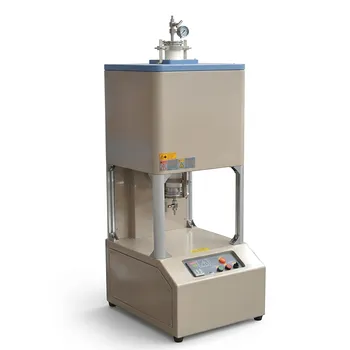
Vertical 1700C Vacuum and Atmosphere Tube Furnace with 80mm Alumina Tube

Compact High Temperature 1600C Tube Furnace with 50mm Alumina Tube and Vacuum Flanges for Material Sintering
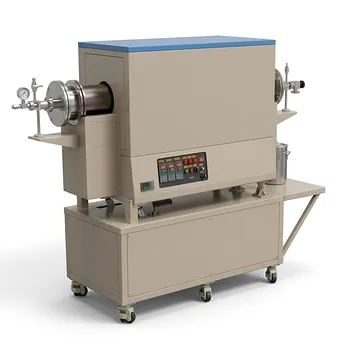
900°C Max Rotary Tube Furnace with 8 Inch 310S Alloy Tube and Optional Multi Zone Heating for Industrial Material Calcination
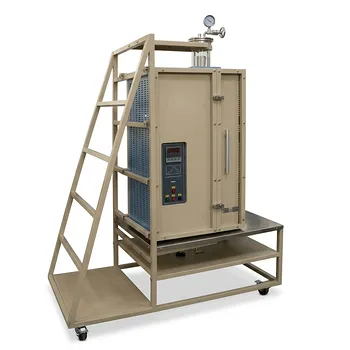
Split Vertical Tube Furnace with 1200C Quartz Tube and Stainless Steel Vacuum Flanges for Rapid Thermal Processing

High Temperature 1700C Tube Furnace with High Vacuum Turbomolecular Pump System and Multi Channel Mass Flow Controller Gas Mixer
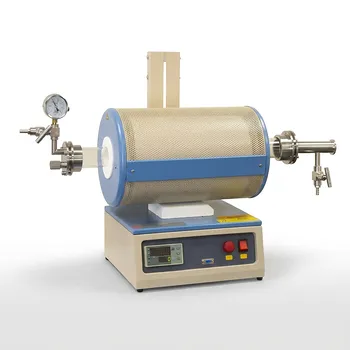
1100C Tube Furnace with Vacuum Flange and Programmable Temperature Controller for Material Science and Industrial Heat Treatment
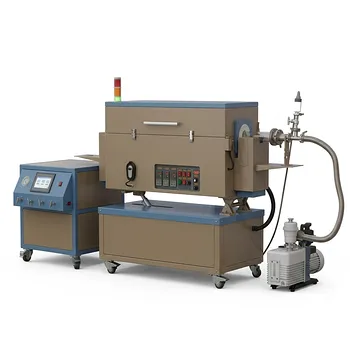
5 Inch Three Zone Rotary Tube Furnace with Integrated Gas Delivery System and 1200C Capability for Advanced Material CVD Processing
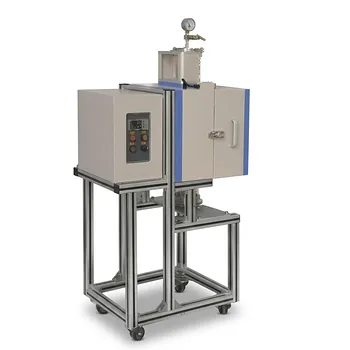
1200°C 5 Inch Vertical Quartz Tube Furnace with Stainless Steel Vacuum Flanges
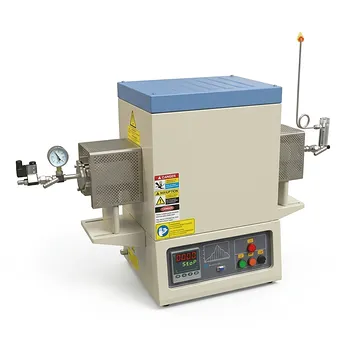
1700C Hydrogen Gas Tube Furnace with 60mm Alumina Process Tube and Integrated Hydrogen Safety Detector
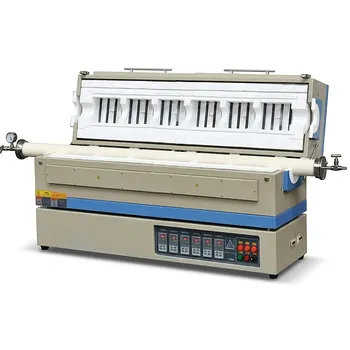
High Temperature 1700C Six Zone Split Tube Furnace with Alumina Tube and Water Cooled Flanges
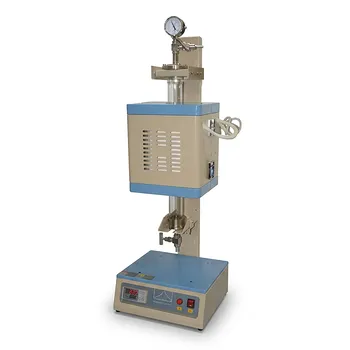
Compact Vertical Split Quartz Tube Furnace with Stainless Steel Vacuum Flanges for Rapid Thermal Quenching and Controlled Atmosphere Material Processing
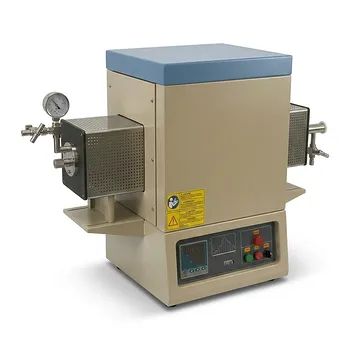
High Temperature 1700C Benchtop Tube Furnace with 5 Inch Heating Zone High Purity Alumina Tube and Vacuum Sealing Flanges
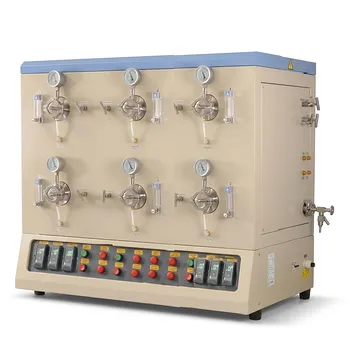
1200C High Throughput Multi Channel Tube Furnace with 50mm Quartz Tubes for Annealing and Material Phase Diagram Research
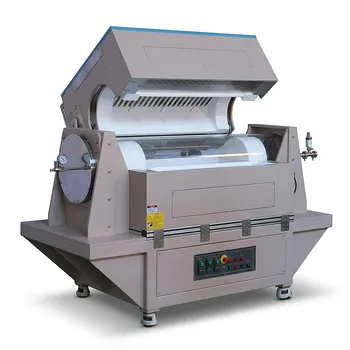
Three Zone Tube Furnace with 11 Inch or 15 Inch Quartz Tube and Hinged Flanges for Vacuum Atmosphere Heat Treatment

1800C High Temperature Compact Vacuum Tube Furnace with 60mm OD Alumina Tube and Kanthal MoSi2 Heating Elements

High Temperature 1700C Vertical Tube Furnace for Powder Spherification and Material Sintering
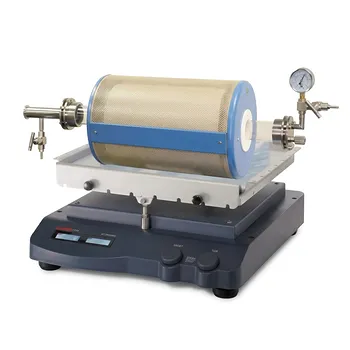
High Temperature Rocking Tube Furnace with Quartz Tube and Vacuum Flange for Materials Synthesis

High Temperature Automated 5 Inch Tube Furnace for Autonomous Material Research and Advanced Laboratory R&D
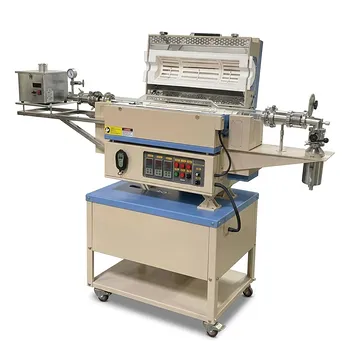
5 Inch Rotary Tube Furnace with Automatic Feeding and Receiving System 1200C Three Zone CVD Powder Processing