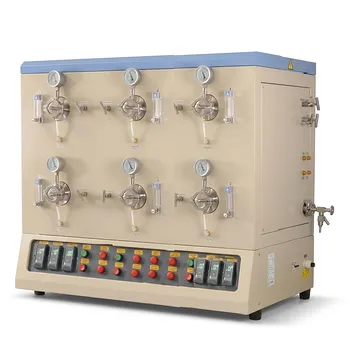
What is the principle behind using a reducing atmosphere tube furnace for FeNi alloy loading? Master Precision Reduction
Updated 3 months ago
The thermal treatment of FeNi alloys in a reducing atmosphere tube furnace is a process of controlled chemical transformation. By introducing a hydrogen-based gas mixture at temperatures between 400°C and 800°C, the furnace converts metal salt precursors into metallic nanoparticles. This environment facilitates the mutual diffusion of iron and nickel atoms, ensuring the formation of a stable alloy structure on a support material, such as carbon spheres.
Core Takeaway: The reducing atmosphere tube furnace provides the precise thermal and chemical energy required to strip oxygen from metal precursors and drive atomic-level mixing. This process is essential for controlling the final alloy’s crystallinity, particle size, and its bond strength with the underlying substrate.
The Mechanism of Chemical Reduction
Converting Precursors to Metallic States
The primary role of the furnace is to facilitate a reduction reaction using hydrogen (H2) as the active agent. As the temperature rises, the hydrogen gas reacts with the iron and nickel salt precursors, removing anions and leaving behind pure metallic atoms.
Preventing Re-oxidation
By maintaining a continuous flow of a hydrogen/argon (H2/Ar) mixture, the furnace creates an oxygen-free environment. This prevents the newly formed metallic FeNi nanoparticles from immediately reacting with ambient oxygen, which would otherwise revert them to inactive oxides.
Inducing Volume Contraction
The transition from a metal oxide or salt precursor to a dense metallic state often results in volume contraction. This physical change is critical for developing microporous structures within the material, which can increase the effective surface area for catalytic applications.
Atomic Diffusion and Alloy Formation
Facilitating Mutual Diffusion
At temperatures between 400°C and 800°C, iron and nickel atoms gain enough kinetic energy to migrate across the surface of the support material. This mutual diffusion allows the two distinct elements to intermix at the atomic level, forming a homogenous FeNi alloy rather than separate metallic clusters.
Controlling Particle Size Distribution
The furnace's precise temperature field ensures that the growth of nanoparticles remains regulated. By avoiding temperature spikes, the system prevents excessive sintering, which helps maintain a narrow particle size distribution and high surface energy.
Strengthening Substrate Coupling
The specific thermal environment determines the coupling strength between the FeNi nanoparticles and the carbon support. A well-regulated reduction process ensures that the alloy particles are securely anchored to the substrate, which is vital for the material’s durability during subsequent chemical reactions.
Understanding the Trade-offs
Temperature vs. Particle Growth
While higher temperatures accelerate the alloying process and improve crystallinity, they also increase the risk of particle agglomeration. If the temperature exceeds the optimal range, the nanoparticles may merge, significantly reducing the active surface area and catalytic efficiency.
Gas Composition and Safety
Using hydrogen as a reducing agent is highly effective but introduces safety risks due to its flammability. Furthermore, if the hydrogen concentration is too low, the reduction may be incomplete; if it is too high, it may lead to excessive reduction that alters the intended phase of the support material.
Processing Time and Homogeneity
Extended treatment times can help eliminate compositional segregation (the uneven distribution of Fe and Ni). However, excessively long exposure to high heat can lead to the degradation of the carbon support or the unwanted migration of particles away from active sites.
How to Apply This to Your Project
Tailoring the Process to Your Objectives
Success in FeNi alloy loading depends on aligning the furnace parameters with your specific material requirements.
- If your primary focus is maximum catalytic activity: Aim for the lower end of the temperature range (400-600°C) to maintain the smallest possible particle size and highest surface area.
- If your primary focus is structural stability and crystallinity: Utilize higher temperatures (700-800°C) to ensure complete atomic diffusion and a robust bond between the alloy and the substrate.
- If your primary focus is eliminating chemical segregation: Extend the duration of the thermal treatment at a stable temperature to allow for full homogenization of the iron and nickel atoms.
By precisely balancing the reducing chemistry and thermal energy, you transform simple metal precursors into high-performance FeNi alloy composites.
Summary Table:
| Process Stage | Mechanism Involved | Key Technical Benefit |
|---|---|---|
| Chemical Reduction | Hydrogen reaction with metal salts | Converts precursors to pure metallic nanoparticles |
| Atmosphere Control | H2/Ar gas flow (oxygen-free) | Prevents re-oxidation and ensures material purity |
| Thermal Diffusion | Atomic migration at 400°C - 800°C | Facilitates homogenous FeNi alloy formation |
| Size Regulation | Precise temperature field control | Prevents sintering and maintains high surface area |
| Substrate Bonding | Thermal coupling energy | Strengthens the bond between alloy and carbon support |
Elevate Your Material Research with THERMUNITS
Precision is the foundation of high-performance FeNi alloys. As a global leader in high-temperature laboratory equipment, THERMUNITS provides the advanced thermal processing solutions required for complex material science and industrial R&D.
Whether you need to optimize catalytic activity or ensure structural stability, our specialized equipment—including Reducing Atmosphere Tube Furnaces, Vacuum and CVD/PECVD Systems, and Rotary Kilns—offers the precise temperature and atmospheric control your project demands.
Our Value to You:
- Comprehensive Range: From Muffle and Tube furnaces to Hot Press and Vacuum Induction Melting (VIM) systems.
- Expert Engineering: Tailored solutions for dental, industrial, and laboratory heat treatment.
- Reliable Performance: Durable thermal elements and systems designed for rigorous R&D cycles.
Ready to refine your FeNi loading process? Contact us today to find the perfect furnace for your lab!
References
- Shengjie Lun, Hao Wang. FeNi decorated nitrogen-doped hollow carbon spheres as ultra-stable bifunctional oxygen electrocatalyst for rechargeable zinc–air battery with 2.7% decay after 300 hours cycling. DOI: 10.1039/d3ra08572d
Mentioned Products
- High Temperature Hydrogen Atmosphere Box Furnace 1650C Max Reducing Environment Material Synthesis System 8x8x8 Chamber
- Compact Vertical Split Quartz Tube Furnace with Stainless Steel Vacuum Flanges for Rapid Thermal Quenching and Controlled Atmosphere Material Processing
- 1000C Mini Tube Furnace with 20mm Quartz Tube and Vacuum Flanges for Material Science Research and Controlled Atmosphere Small Sample Processing
- Compact Hybrid Muffle and Tube Furnace for 1000C Controlled Atmosphere Laboratory Material Sintering
- Three Temperature Zone Rotating Tube Furnace for Material Sintering and Controlled Atmospheric Heat Treatment
People Also Ask
- What is the role of a high-temperature box furnace in the solid-state synthesis of Europium-doped M3MgSi2O8 phosphors?
- What is the role of a high-temperature box furnace in Na3MnZr(PO4)3 synthesis? Engineering High-Performance NASICON.
- What role does an industrial-grade high-temperature furnace play in C2F sintering? Achieve Pure Phase and High Strength
- Why is a high-temperature box furnace required for 1250°C ferrite calcination? Ensure Precise Phase Transformation.
- How does a high-temp box furnace aid rare-earth oxysulfide phosphor synthesis? Enhance Purity & Luminescence

Tech Team · ThermUnits
Last updated on Jun 02, 2026
Related Products
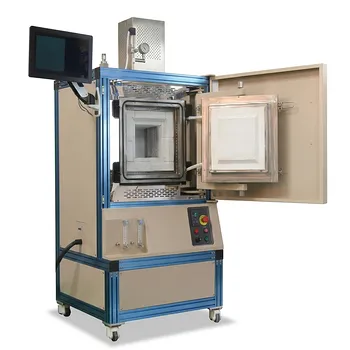
High Temperature Hydrogen Atmosphere Box Furnace 1650C Max Reducing Environment Material Synthesis System 8x8x8 Chamber
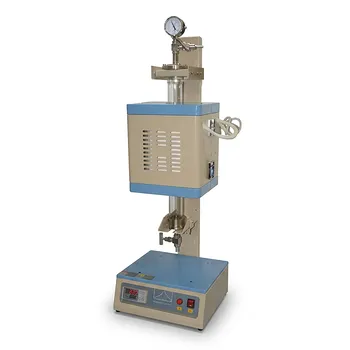
Compact Vertical Split Quartz Tube Furnace with Stainless Steel Vacuum Flanges for Rapid Thermal Quenching and Controlled Atmosphere Material Processing
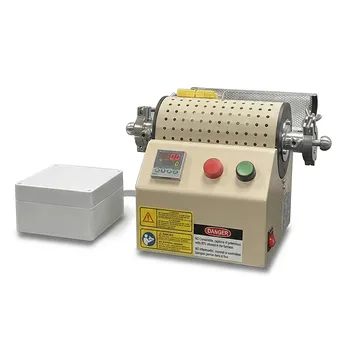
1000C Mini Tube Furnace with 20mm Quartz Tube and Vacuum Flanges for Material Science Research and Controlled Atmosphere Small Sample Processing
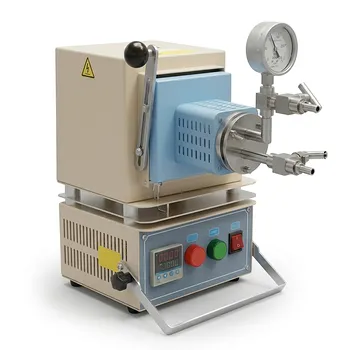
Compact Hybrid Muffle and Tube Furnace for 1000C Controlled Atmosphere Laboratory Material Sintering
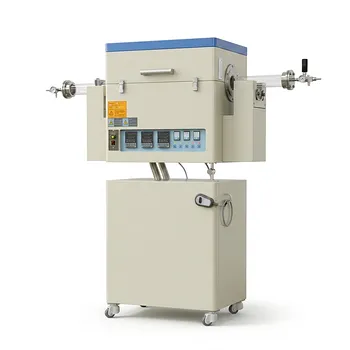
Three Temperature Zone Rotating Tube Furnace for Material Sintering and Controlled Atmospheric Heat Treatment
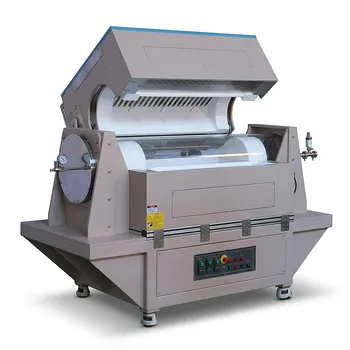
Three Zone Tube Furnace with 11 Inch or 15 Inch Quartz Tube and Hinged Flanges for Vacuum Atmosphere Heat Treatment
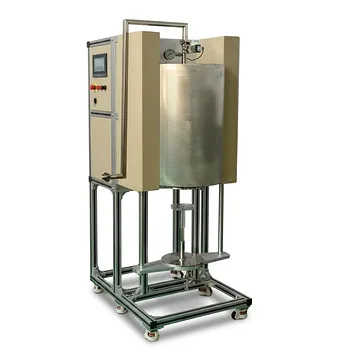
1200°C Atmosphere Controlled Automatic Bottom Loading Furnace with 6 Inch Quartz Tube

Vertical 1700C Vacuum and Atmosphere Tube Furnace with 80mm Alumina Tube

High Temperature 1700C Vertical Tube Furnace for Powder Spherification and Material Sintering
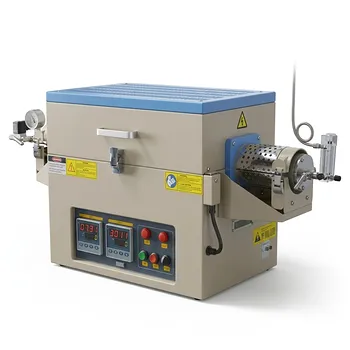
1100C Dual Zone Hydrogen Gas Tube Furnace with Quartz Tube and Integrated H2 Leak Detection System
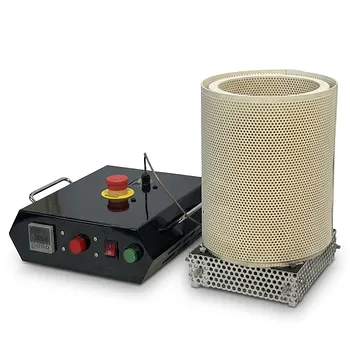
1250 C Compact Vertical Box Furnace for Glovebox Material Research Air Sensitive Samples
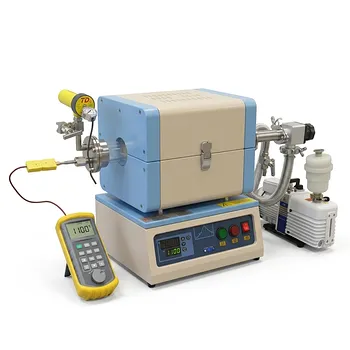
Compact Split Tube Furnace with Insertable Temperature Calibrator and Integrated Vacuum System

Compact High Temperature 1600C Tube Furnace with 50mm Alumina Tube and Vacuum Flanges for Material Sintering
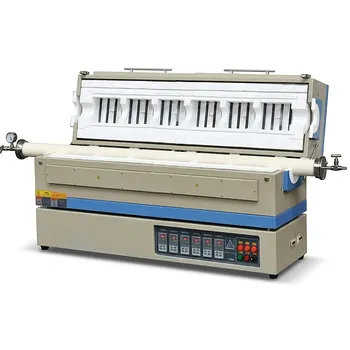
High Temperature 1700C Six Zone Split Tube Furnace with Alumina Tube and Water Cooled Flanges
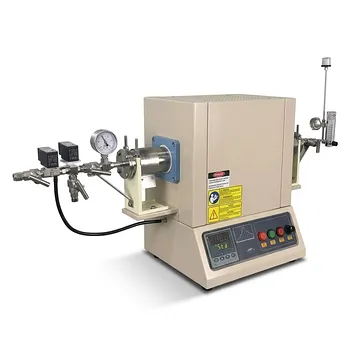
1500C Compact Hydrogen Gas Tube Furnace with 2 Inch Alumina Tube and Hydrogen Detector

1200°C 5 Inch Vertical Quartz Tube Furnace with Stainless Steel Vacuum Flanges
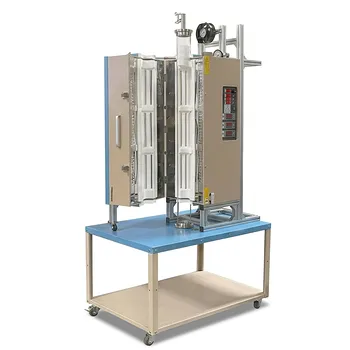
1200C Three Zone Split Vertical Tube Furnace 4 Inch Quartz Tube Stainless Steel Vacuum Flanges

1800C High Temperature Compact Vacuum Tube Furnace with 60mm OD Alumina Tube and Kanthal MoSi2 Heating Elements
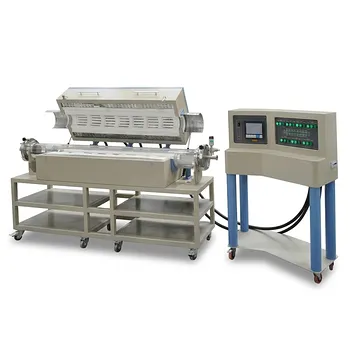
Seven Zone 1200C Split Tube Furnace with Precision Temperature Controller and Quick Flange Vacuum System