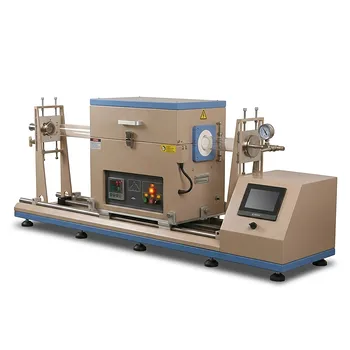
What is the purpose of H2/Ar mixed gas in tube furnace sintering? Ensure High-Purity Phase Stability in Alloys.
Updated 3 months ago
The introduction of $H_2/Ar$ mixed gas is a critical step to ensure chemical purity and phase stability during the sintering of high-entropy materials. This gas mixture creates a powerful reducing environment that inhibits the oxidation of transition metals like iron, cobalt, nickel, manganese, and chromium. By preventing the formation of multi-metal oxide impurities, the process ensures that metal ions are successfully reduced and co-dissolved into a uniform metallic high-entropy alloy.
Core Takeaway: The $H_2/Ar$ mixture serves a dual purpose: hydrogen acts as a chemical reducing agent to eliminate oxygen and reduce precursors, while argon provides an inert physical shield to prevent oxidation and maintain furnace pressure. This combination is essential for producing high-purity, phase-uniform metallic alloys.
Establishing a Reducing Environment for Transition Metals
Inhibition of Oxidation at High Temperatures
High-entropy materials often contain transition metals—such as Fe, Co, Ni, Mn, and Cr—that are highly susceptible to oxidation when heated. The hydrogen component of the gas mixture reacts with any residual oxygen or moisture, preventing these elements from forming unwanted oxide layers.
Promoting Metallic Co-dissolution
To form a true high-entropy alloy, the precursor ions must be reduced to their neutral metallic state simultaneously. The reducing atmosphere ensures that these ions co-dissolve into a single solid-solution phase rather than separating into distinct metal oxide impurities.
Maintaining Phase Purity
Without the $H_2/Ar$ environment, the resulting material would likely contain a mixture of metallic phases and brittle oxides. The mixed gas maintains the chemical stability of functional phases and ensures the final product meets the intended stoichiometric requirements.
The Role of Hydrogen in Surface Chemistry and Diffusion
Reduction of Residual Surface Oxides
Metal particles often have thin, native oxide layers on their surfaces that can act as barriers during sintering. Hydrogen effectively strips these oxide layers, allowing for direct metal-to-metal contact and improving the overall density of the sintered material.
Facilitating Atomic Diffusion and Alloying
By removing oxygen-containing functional groups and surface oxides, the gas mixture facilitates the diffusion of atoms across particle boundaries. This is particularly important for forming structurally uniform alloys, as seen in systems where palladium atoms must diffuse into copper layers.
Controlling Catalytic and Electrical Properties
In applications like lithium-ion batteries or catalysts, the hydrogen component ensures that materials like Reduced Graphene Oxide (RGO) or metallic catalysts maintain high electrical conductivity. It removes oxygen groups that would otherwise disrupt the electronic structure and decrease electrochemical activity.
The Physical Protective Functions of Argon
Providing an Inert Pressure Shield
Argon serves as a stable, inert matrix that prevents the ingress of atmospheric oxygen. It provides pressure protection within the tube furnace, ensuring that the internal environment remains controlled regardless of external fluctuations.
Acting as a Carrier Gas
In processes involving vapor transport, such as CVD sulfurization, argon acts as a carrier gas. It ensures that reactive vapors are delivered uniformly and stably to the sample surface, which is vital for the uniformity of the reaction.
Protecting Materials During the Cooling Phase
The protective atmosphere must be maintained even after the sintering is complete. As the material cools from high temperatures to room temperature, the $H_2/Ar$ mixture prevents surface degradation caused by trace moisture or residual oxygen in the furnace.
Understanding the Trade-offs and Challenges
Risk of Excessive Grain Growth
While high temperatures are necessary for sintering, prolonged exposure to a reducing atmosphere can lead to grain growth. If the grains grow too large, the material may lose its high-dispersion properties or catalytic surface area, potentially degrading performance.
Safety and Handling of Hydrogen
The use of hydrogen, even at concentrations like 5% or 10%, requires strict safety protocols. At high temperatures, the risk of leakage or combustion must be managed through precise gas flow control and high-precision tube furnace seals.
Potential for Over-reduction
In specific thermoelectric or semiconductor materials, maintaining a precise stoichiometry is vital. An overly aggressive reducing environment might reduce metal ions beyond the desired state, potentially altering the Seebeck coefficient or semiconductor characteristics of the material.
How to Apply This to Your Sintering Process
Selecting the Right Gas Strategy
- If your primary focus is Phase Purity: Use a 5% $H_2$ balance Ar mixture to ensure transition metals remain in a metallic state without forming oxide impurities.
- If your primary focus is Surface Activity: Utilize a higher concentration of hydrogen (up to 10%) at lower temperatures (around 200°C) to specifically target the reduction of surface oxides while minimizing grain growth.
- If your primary focus is Material Density: Ensure a steady flow of Argon to maintain constant pressure, which facilitates the elimination of pores and improves the diffusion of atoms facilitated by the hydrogen.
- If your primary focus is Electrical Conductivity: Maintain the $H_2/Ar$ flow throughout the entire cooling cycle to prevent the formation of resistive oxide films as the material stabilizes.
The strategic use of $H_2/Ar$ mixed gas transforms the tube furnace from a simple heating chamber into a precision chemical reactor, enabling the synthesis of complex, high-performance high-entropy alloys.
Summary Table:
| Component | Primary Function | Key Benefit for Sintering |
|---|---|---|
| Hydrogen (H₂) | Reducing Agent | Eliminates surface oxides & prevents metal oxidation (Fe, Co, Ni, Cr). |
| Argon (Ar) | Inert Shield | Maintains internal furnace pressure & prevents atmospheric oxygen ingress. |
| H₂/Ar Mixture | Reaction Control | Facilitates metallic co-dissolution and ensures uniform phase stability. |
Elevate Your Material Research with THERMUNITS
Precision atmospheric control is the key to successful high-entropy alloy synthesis. THERMUNITS is a leading manufacturer of high-temperature laboratory equipment for material science and industrial R&D. We offer a comprehensive range of thermal processing solutions, including Tube, Vacuum, Atmosphere, and Hot Press furnaces, as well as CVD/PECVD systems designed for strict gas environment management.
Whether you are working on metallic co-dissolution or complex chemical vapor deposition, our equipment provides the reliability and precision your research demands.
Ready to optimize your heat treatment process?
Contact us today to discuss your project requirements!
References
- Zhiyuan Wang, Jue Hu. Ultrasound-Assisted Synthesis of High-Entropy Materials for Enhanced Oxygen Evolution Electrocatalysis. DOI: 10.3390/met14040384
Mentioned Products
- Vertical 1700C Vacuum and Atmosphere Tube Furnace with 80mm Alumina Tube
- Compact High Temperature 1600C Tube Furnace with 50mm Alumina Tube and Vacuum Flanges for Material Sintering
- 900°C Max Rotary Tube Furnace with 8 Inch 310S Alloy Tube and Optional Multi Zone Heating for Industrial Material Calcination
- Split Vertical Tube Furnace with 1200C Quartz Tube and Stainless Steel Vacuum Flanges for Rapid Thermal Processing
- High Temperature 1700C Tube Furnace with High Vacuum Turbomolecular Pump System and Multi Channel Mass Flow Controller Gas Mixer
People Also Ask
- How is an industrial-grade vertical tube furnace utilized in smelting leaching residues? Enhance Metal Recovery Efficiency
- What is the function of a laboratory-grade vertical tube furnace in fast pyrolysis? Optimize Composite Research.
- How does a vertical tube furnace facilitate thermoelectric alloy melting? Precision synthesis for material homogeneity.
- Why is a thermocouple sensor indispensable for monitoring the vertical tube furnace during gallium oxide nanowire production? Optimize VLS Growth
- What are the advantages of using a vertical tube furnace for crucible experiments simulating steel-slag interactions?

Tech Team · ThermUnits
Last updated on Jun 03, 2026
Related Products
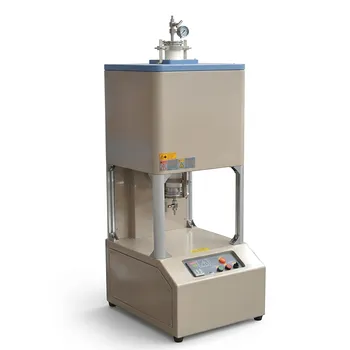
Vertical 1700C Vacuum and Atmosphere Tube Furnace with 80mm Alumina Tube

Compact High Temperature 1600C Tube Furnace with 50mm Alumina Tube and Vacuum Flanges for Material Sintering
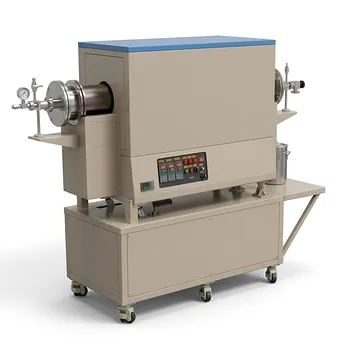
900°C Max Rotary Tube Furnace with 8 Inch 310S Alloy Tube and Optional Multi Zone Heating for Industrial Material Calcination
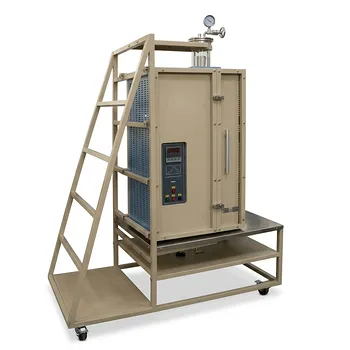
Split Vertical Tube Furnace with 1200C Quartz Tube and Stainless Steel Vacuum Flanges for Rapid Thermal Processing

High Temperature 1700C Tube Furnace with High Vacuum Turbomolecular Pump System and Multi Channel Mass Flow Controller Gas Mixer
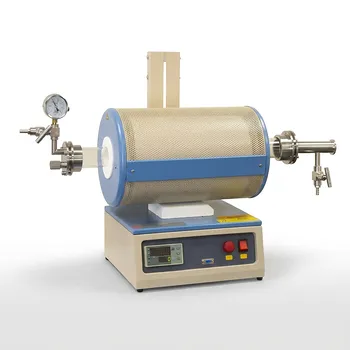
1100C Tube Furnace with Vacuum Flange and Programmable Temperature Controller for Material Science and Industrial Heat Treatment
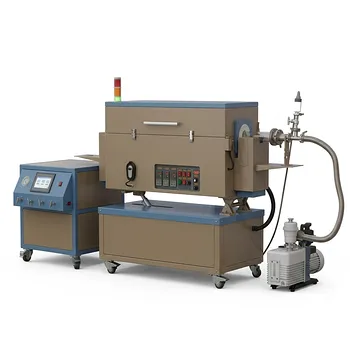
5 Inch Three Zone Rotary Tube Furnace with Integrated Gas Delivery System and 1200C Capability for Advanced Material CVD Processing
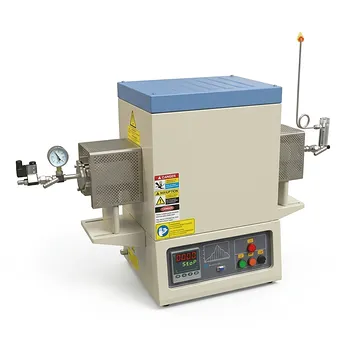
1700C Hydrogen Gas Tube Furnace with 60mm Alumina Process Tube and Integrated Hydrogen Safety Detector
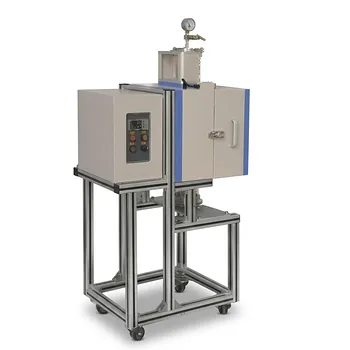
1200°C 5 Inch Vertical Quartz Tube Furnace with Stainless Steel Vacuum Flanges
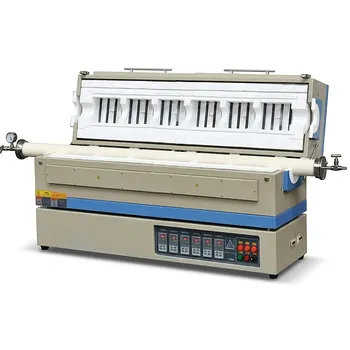
High Temperature 1700C Six Zone Split Tube Furnace with Alumina Tube and Water Cooled Flanges
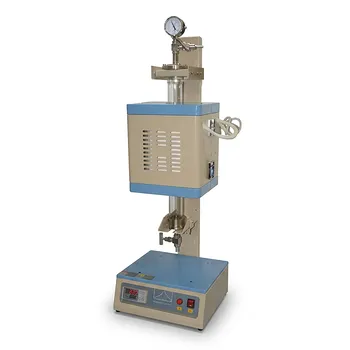
Compact Vertical Split Quartz Tube Furnace with Stainless Steel Vacuum Flanges for Rapid Thermal Quenching and Controlled Atmosphere Material Processing
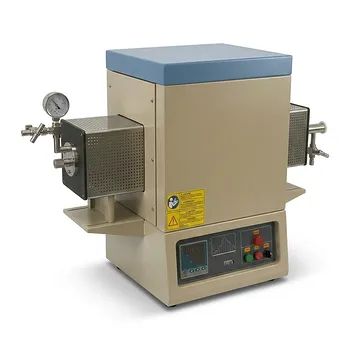
High Temperature 1700C Benchtop Tube Furnace with 5 Inch Heating Zone High Purity Alumina Tube and Vacuum Sealing Flanges
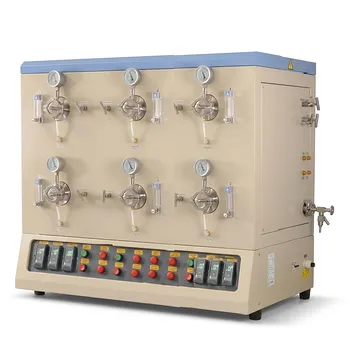
1200C High Throughput Multi Channel Tube Furnace with 50mm Quartz Tubes for Annealing and Material Phase Diagram Research
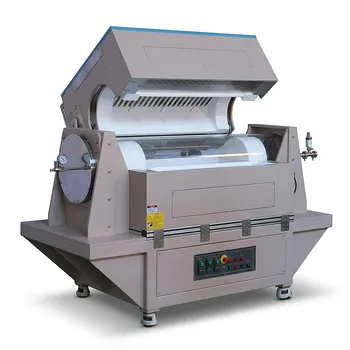
Three Zone Tube Furnace with 11 Inch or 15 Inch Quartz Tube and Hinged Flanges for Vacuum Atmosphere Heat Treatment

1800C High Temperature Compact Vacuum Tube Furnace with 60mm OD Alumina Tube and Kanthal MoSi2 Heating Elements

High Temperature 1700C Vertical Tube Furnace for Powder Spherification and Material Sintering
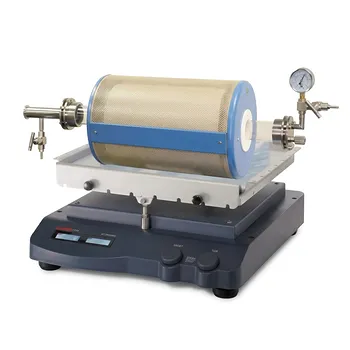
High Temperature Rocking Tube Furnace with Quartz Tube and Vacuum Flange for Materials Synthesis

High Temperature Automated 5 Inch Tube Furnace for Autonomous Material Research and Advanced Laboratory R&D
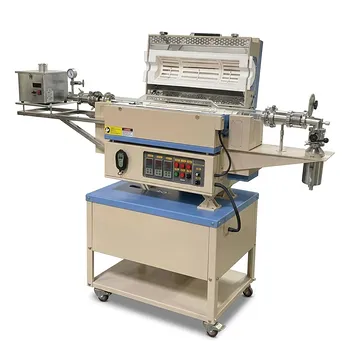
5 Inch Rotary Tube Furnace with Automatic Feeding and Receiving System 1200C Three Zone CVD Powder Processing