What is the purpose of introducing high-purity argon (Ar) during the tube furnace pyrolysis process? Ensure Pure Synthesis
Updated 3 months ago
High-purity argon is introduced to create a strictly inert, oxygen-free environment that prevents the oxidative degradation of materials at high temperatures. This ensures that the precursors undergo pyrolysis—a process of thermal decomposition in the absence of oxygen—rather than combustion, thereby preserving the structural integrity and chemical composition of the final product.
The use of argon shifts the furnace environment from a reactive state to a protective one. By displacing oxygen and moisture, it allows for the precise control of carbon frameworks, metal valence states, and the removal of volatile byproducts.
Ensuring Structural Stability through Inertia
Preventing Carbon Oxidation and Combustion
At high temperatures, carbon-based materials like biomass, carbon black, or carbon fibers react aggressively with oxygen. Introducing argon creates an anaerobic protective atmosphere that stops this oxidative loss.
Without this inert shield, the carbon framework would undergo "oxidative ablation," essentially burning away the material you intend to synthesize. This preservation is critical for maintaining the mechanical properties of the resulting substrate.
Protecting Nitrogen Fixation
In the synthesis of nitrogen-doped carbon, argon is vital for ensuring that nitrogen atoms are stably fixed within the carbon lattice. An inert environment prevents oxygen from competing for these bonding sites.
This stabilization ensures the final material maintains its intended chemical activity. By excluding reactive gases, the nitrogen remains anchored in the structure rather than being lost to secondary reactions.
Regulating Chemical and Metallic States
Controlling Metal Valence and Particle Size
When synthesizing catalysts, argon prevents the excessive oxidation of metallic components like copper, iron, or cobalt. This ensures that metals remain in their specific valence or metallic states required for catalytic performance.
Furthermore, the argon atmosphere prevents the formation of undesirable coarse oxide particles. This protection maintains the microscopic structure and ensures that metal nano-alloys are properly dispersed and anchored.
Managing Oxide Layer Growth
For substrates like titanium, an argon environment allows for the precise control of oxide layer thickness. It prevents uncontrolled secondary oxidation reactions with ambient air during the high-temperature annealing phase.
This precision is essential for maintaining the micro-morphology of coatings, such as TiO2 nanotubes. It ensures the material meets specific biological or electronic performance standards without the interference of impurities.
Facilitating Clean Pyrolysis Reactions
Purging Volatile Byproducts
A continuous flow of argon does more than just sit in the furnace; it acts as a carrier gas to timely remove volatile organic compounds (VOCs) generated during pyrolysis.
Removing these vapors prevents secondary deposition on the material's surface. This keeps the active sites of the composite material clean and exposed, which is vital for high-performance catalysts.
Enhancing Pore Network Development
By ensuring the material undergoes dehydration and deoxygenation rather than combustion, argon facilitates the formation of a highly developed pore network.
This is particularly important for biomass raw materials where the internal architecture is the primary goal. The inert atmosphere preserves the framework, allowing these microscopic pores to form and remain open.
Understanding the Trade-offs and Operational Risks
The Impact of Gas Purity
The "high-purity" aspect of the argon is non-negotiable for sensitive applications. Even trace amounts of moisture or oxygen in low-grade argon can cause unintended oxidation at temperatures above 600°C.
If purity is compromised, the material may suffer from "oxidative pitting," which degrades the surface area and conductivity of carbon substrates.
Flow Rate Sensitivity
While a continuous flow is necessary to purge volatiles, an excessively high flow rate can cause temperature fluctuations within the furnace tube. This can lead to uneven pyrolysis and inconsistent material quality.
Conversely, a flow rate that is too low may fail to displace oxygen entirely or allow volatiles to linger. This results in the clogging of active sites and a reduction in the material's chemical efficacy.
How to Apply This to Your Project
Understanding the specific role of argon allows you to optimize your synthesis parameters based on your desired output.
- If your primary focus is catalyst activity: Prioritize a continuous, steady argon flow to ensure volatile byproducts are removed and active metal sites remain unoxidized and exposed.
- If your primary focus is structural reinforcement: Focus on the "high-purity" grade of the gas to prevent any oxidative thinning of carbon fibers or frameworks, which would compromise mechanical strength.
- If your primary focus is precise surface chemistry: Ensure the furnace is thoroughly purged of moisture and oxygen before ramping up the temperature to prevent uncontrolled secondary oxidation.
By mastering the inert environment, you transform the tube furnace from a simple heater into a precision instrument for material design.
Summary Table:
| Key Role | Primary Benefit | Impact on Material |
|---|---|---|
| Inert Atmosphere | Prevents Oxidation & Combustion | Preserves carbon framework and mechanical strength |
| Nitrogen Fixation | Blocks Oxygen Competition | Ensures nitrogen atoms remain anchored in the lattice |
| Valence Control | Prevents Metal Oxidation | Maintains specific metallic states and catalytic activity |
| Volatile Purging | Removes VOCs/Byproducts | Keeps active sites clean and prevents secondary deposition |
| Pore Development | Facilitates Dehydration | Promotes highly developed and open microscopic pore networks |
Elevate Your Material Research with Precision Thermal Solutions
Achieving consistent, high-purity results in pyrolysis requires more than just heat—it requires a perfectly controlled environment. THERMUNITS is a leading manufacturer of high-temperature laboratory equipment dedicated to material science and industrial R&D.
We provide a comprehensive range of thermal processing solutions tailored for sensitive applications, including:
- Tube & Atmosphere Furnaces: Optimized for precise gas flow and inert environments.
- Vacuum & CVD/PECVD Systems: For advanced thin-film and carbon-based synthesis.
- Specialized Equipment: Muffle, Rotary, Hot Press, and Vacuum Induction Melting (VIM) furnaces.
Whether you are refining catalysts or developing advanced composites, our equipment ensures the atmospheric integrity your project demands. Contact our technical team today to find the ideal furnace solution for your laboratory and accelerate your R&D breakthroughs.
References
- Xin Pan, Qianqian Zhu. Nitrogen-Doped Porous Carbon Derived from Covalent Triazine Framework for Catalytic Oxidation of Benzyl Alcohol. DOI: 10.3390/nano14090744
Mentioned Products
- Vertical 1700C Vacuum and Atmosphere Tube Furnace with 80mm Alumina Tube
- Compact High Temperature 1600C Tube Furnace with 50mm Alumina Tube and Vacuum Flanges for Material Sintering
- 900°C Max Rotary Tube Furnace with 8 Inch 310S Alloy Tube and Optional Multi Zone Heating for Industrial Material Calcination
- Split Vertical Tube Furnace with 1200C Quartz Tube and Stainless Steel Vacuum Flanges for Rapid Thermal Processing
- High Temperature 1700C Tube Furnace with High Vacuum Turbomolecular Pump System and Multi Channel Mass Flow Controller Gas Mixer
People Also Ask
- How is an industrial-grade vertical tube furnace utilized in smelting leaching residues? Enhance Metal Recovery Efficiency
- What is the function of a laboratory-grade vertical tube furnace in fast pyrolysis? Optimize Composite Research.
- How does a vertical tube furnace facilitate thermoelectric alloy melting? Precision synthesis for material homogeneity.
- Why is a thermocouple sensor indispensable for monitoring the vertical tube furnace during gallium oxide nanowire production? Optimize VLS Growth
- What are the advantages of using a vertical tube furnace for crucible experiments simulating steel-slag interactions?

Tech Team · ThermUnits
Last updated on Jun 02, 2026
Related Products

Vertical 1700C Vacuum and Atmosphere Tube Furnace with 80mm Alumina Tube

Compact High Temperature 1600C Tube Furnace with 50mm Alumina Tube and Vacuum Flanges for Material Sintering
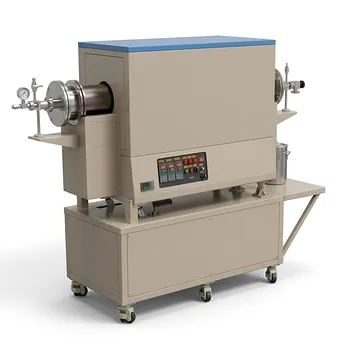
900°C Max Rotary Tube Furnace with 8 Inch 310S Alloy Tube and Optional Multi Zone Heating for Industrial Material Calcination
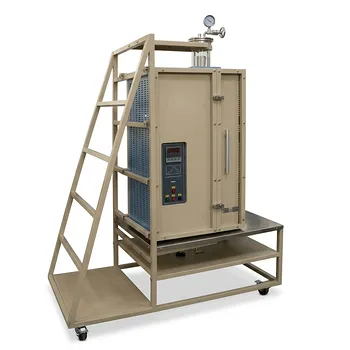
Split Vertical Tube Furnace with 1200C Quartz Tube and Stainless Steel Vacuum Flanges for Rapid Thermal Processing

High Temperature 1700C Tube Furnace with High Vacuum Turbomolecular Pump System and Multi Channel Mass Flow Controller Gas Mixer

1100C Tube Furnace with Vacuum Flange and Programmable Temperature Controller for Material Science and Industrial Heat Treatment
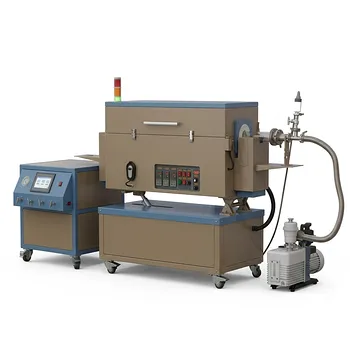
5 Inch Three Zone Rotary Tube Furnace with Integrated Gas Delivery System and 1200C Capability for Advanced Material CVD Processing
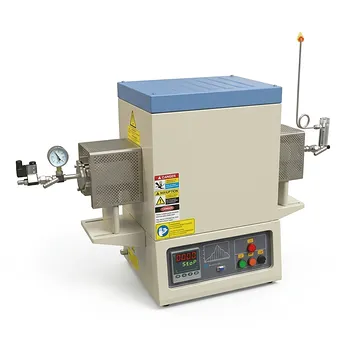
1700C Hydrogen Gas Tube Furnace with 60mm Alumina Process Tube and Integrated Hydrogen Safety Detector

1200°C 5 Inch Vertical Quartz Tube Furnace with Stainless Steel Vacuum Flanges

High Temperature 1700C Six Zone Split Tube Furnace with Alumina Tube and Water Cooled Flanges

Compact Vertical Split Quartz Tube Furnace with Stainless Steel Vacuum Flanges for Rapid Thermal Quenching and Controlled Atmosphere Material Processing

High Temperature 1700C Benchtop Tube Furnace with 5 Inch Heating Zone High Purity Alumina Tube and Vacuum Sealing Flanges
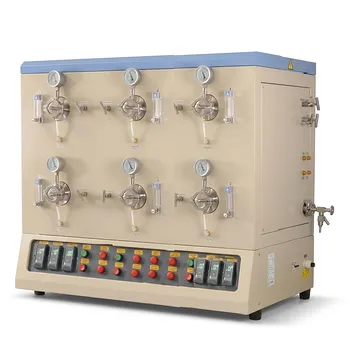
1200C High Throughput Multi Channel Tube Furnace with 50mm Quartz Tubes for Annealing and Material Phase Diagram Research
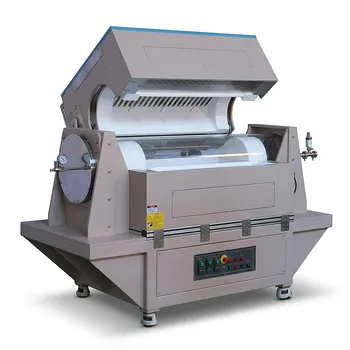
Three Zone Tube Furnace with 11 Inch or 15 Inch Quartz Tube and Hinged Flanges for Vacuum Atmosphere Heat Treatment

1800C High Temperature Compact Vacuum Tube Furnace with 60mm OD Alumina Tube and Kanthal MoSi2 Heating Elements

High Temperature 1700C Vertical Tube Furnace for Powder Spherification and Material Sintering
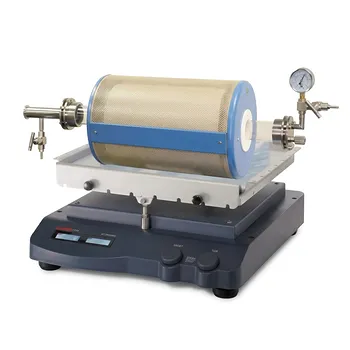
High Temperature Rocking Tube Furnace with Quartz Tube and Vacuum Flange for Materials Synthesis

High Temperature Automated 5 Inch Tube Furnace for Autonomous Material Research and Advanced Laboratory R&D
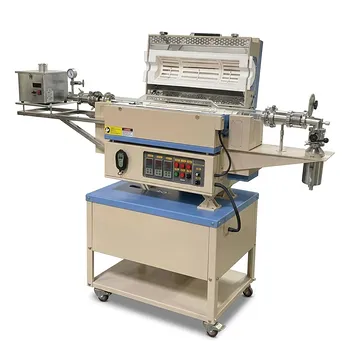
5 Inch Rotary Tube Furnace with Automatic Feeding and Receiving System 1200C Three Zone CVD Powder Processing