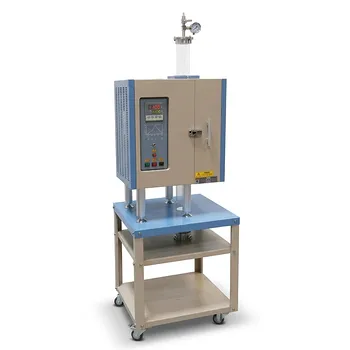
What is the purpose of high-purity nitrogen in carbonization? Protect Carbon Nanofibers and Optimize Thermal Yields
Updated 3 months ago
High-purity nitrogen acts as a critical shielding agent that isolates carbon nanofibers from reactive oxygen during high-temperature processing. By displacing air within the tube furnace, the nitrogen gas creates an inert atmosphere necessary for pyrolysis—the chemical decomposition of organic material by heat in the absence of oxygen. This process ensures that the fibers undergo structural transformation rather than simple combustion, preserving the delicate lattice defects and functional groups essential for advanced material performance.
Introducing high-purity nitrogen prevents the oxidative destruction of carbon nanofibers while enabling the precise retention of chemical properties like surface functional groups and lattice defects. This controlled environment is the fundamental requirement for transforming raw organic precursors into high-performance carbon structures with specific electromagnetic and structural characteristics.
Preventing Oxidative Loss and Combustion
Displacing Atmospheric Oxygen
At temperatures reaching 800 °C or higher, carbon nanofibers and their precursors will immediately combust if exposed to oxygen. High-purity nitrogen (typically 99.99%) is introduced to continuously flush the furnace chamber, ensuring the environment remains anaerobic.
Facilitating Pure Pyrolysis
By removing oxygen, the nitrogen flow shifts the thermal process from combustion to pyrolysis. This ensures that the organic matter is reconstructed into a carbon-rich framework rather than being reduced to ash or gaseous carbon dioxide.
Maximizing Carbon Yield
Atmosphere control is the primary factor in determining the final yield of the carbonization process. Without a strictly inert environment, "thermal erosion" occurs, where oxygen reacts with the carbon surface, thinning the fibers and significantly reducing the amount of usable material recovered.
Preserving Structural and Chemical Integrity
Protecting Nano-scale Architectures
Carbon nanofibers often feature delicate one-dimensional hollow tubes or two-dimensional nanosheet structures. The nitrogen atmosphere protects these fragile geometries from being destroyed by oxidative reactions, ensuring the structural integrity of the final nanomaterial.
Retaining Critical Lattice Defects
For applications like electromagnetic wave absorption, the presence of specific lattice defects and surface oxygen-containing functional groups is vital. Nitrogen allows these "imperfections" to survive the heat treatment, which enhances the polarization loss necessary for absorbing microwave radiation.
Safeguarding Metal Catalysts
Many synthesis methods utilize iron or other metal catalysts to grow the fibers. Nitrogen prevents the unintended oxidation of these catalysts, maintaining their metallic state and ensuring they continue to facilitate the growth and structure of the carbon nanofibers throughout the heating cycle.
Managing Reaction By-products and Porosity
Removing Volatile Impurities
As the material carbonizes, it releases gaseous by-products such as carbon monoxide and carbon dioxide. A steady flow of nitrogen flushes these volatiles out of the furnace, preventing them from undergoing secondary deposition back onto the fibers, which could clog pores or contaminate the surface.
Optimizing Pore Development
In cases where the fibers are being "activated" to increase surface area, an inert environment is required for the chemical activator to react cleanly with the carbon. This ensures the development of highly organized microporous and mesoporous structures that are essential for filtration or energy storage applications.
Understanding the Trade-offs
The Cost of Purity vs. Material Performance
While lower-grade nitrogen is cheaper, it often contains trace amounts of oxygen or moisture. Even minor impurities can lead to selective oxidation, which may alter the electrical conductivity or surface chemistry of the nanofibers in unpredictable ways.
Flow Rate Sensitivity
Maintaining the correct nitrogen flow rate is a delicate balance. A flow that is too slow may allow atmospheric air to diffuse back into the furnace, while a flow that is too fast can cause thermal gradients or physical displacement of the lightweight nanofibers within the tube.
Temperature Limitations
Nitrogen is generally inert, but at extreme temperatures (typically well above 1000 °C), it can potentially react with certain carbon-metal composites to form nitrides. For most standard carbonization at 800 °C, however, it remains the standard and most cost-effective protective gas.
Making the Right Choice for Your Goal
To ensure your carbonization process yields the desired material properties, consider your specific performance requirements:
- If your primary focus is Electromagnetic Interference (EMI) Shielding: Use high-purity nitrogen to preserve the surface oxygen groups and lattice defects that drive polarization loss.
- If your primary focus is Structural Reinforcement: Prioritize a consistent, high flow rate to prevent any oxidative thinning of the fibers, ensuring maximum tensile strength.
- If your primary focus is Energy Storage or Adsorption: Ensure the nitrogen flow is sufficient to remove all volatile by-products, preventing the "blind-off" of critical pore structures.
The precise control of the furnace atmosphere is not merely a safety measure, but a sophisticated tool for tuning the final properties of carbon nanomaterials.
Summary Table:
| Role of Nitrogen | Key Benefit | Impact on Nanofibers |
|---|---|---|
| Oxygen Displacement | Prevents Combustion | Ensures pyrolysis instead of ash formation |
| Structural Protection | Preserves Defects | Enhances electromagnetic and structural performance |
| Impurity Removal | Flushes Volatiles | Maintains surface purity and high porosity |
| Catalyst Shielding | Inhibits Oxidation | Keeps metal catalysts active for fiber growth |
Precision is paramount in high-temperature material science. THERMUNITS is a leading manufacturer of high-performance thermal equipment, providing the advanced Tube Furnaces, Atmosphere Furnaces, and CVD/PECVD systems required for high-purity carbonization.
Our solutions, including Muffle, Vacuum, Rotary, and Hot Press furnaces, are engineered to deliver the precise atmosphere control necessary to safeguard your delicate nano-structures. Whether you are developing materials for energy storage or EMI shielding, we provide the tools to optimize your R&D outcomes.
Contact our expert team today to find the ideal furnace for your laboratory or industrial heat treatment needs!
References
- Anran Li, Lei Qian. Ultralight Cellulose-Derived Carbon Nanofibers from Freeze-Drying Emulsion Towards Superior Microwave Absorption. DOI: 10.3390/inorganics12110272
Mentioned Products
- High Temperature Dual Zone Rotating Tube Furnace 1500C Silicon Carbide Heating for Advanced Material Synthesis
- 1000C Mini Tube Furnace with 20mm Quartz Tube and Vacuum Flanges for Material Science Research and Controlled Atmosphere Small Sample Processing
- 5 Inch Rotary Tube Furnace with Automatic Feeding and Receiving System 1200C Three Zone CVD Powder Processing
- 5 Inch Three Zone Rotary Tube Furnace with Integrated Gas Delivery System and 1200C Capability for Advanced Material CVD Processing
- High Temperature 1700C Vertical Tube Furnace for Powder Spherification and Material Sintering
People Also Ask
- What is the function of CVD furnaces in graphene prep? Enhancing Photodetector Charge Transport
- Why use CVD and a tube furnace for Pd3P0.95/NC catalyst phosphidation? Ensure high phase purity and performance.
- CVD Tube Furnace Advantages for Pd-P Catalyst Durability: Precision Control for 40,000+ Cycles
- How does a rotary tube furnace improve the processing of granular materials? Enhance Uniformity and Reaction Kinetics
- How does a Chemical Vapor Deposition (CVD) tube furnace facilitate synchronized nitridation? Precision Nano-Engineering.

Tech Team · ThermUnits
Last updated on Jun 02, 2026
Related Products
High Temperature Dual Zone Rotating Tube Furnace 1500C Silicon Carbide Heating for Advanced Material Synthesis
1000C Mini Tube Furnace with 20mm Quartz Tube and Vacuum Flanges for Material Science Research and Controlled Atmosphere Small Sample Processing
5 Inch Rotary Tube Furnace with Automatic Feeding and Receiving System 1200C Three Zone CVD Powder Processing
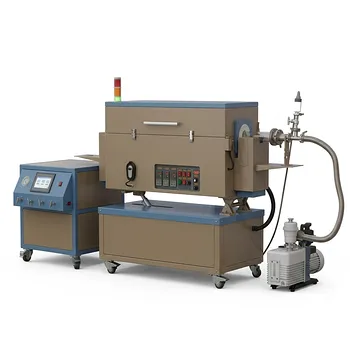
5 Inch Three Zone Rotary Tube Furnace with Integrated Gas Delivery System and 1200C Capability for Advanced Material CVD Processing

High Temperature 1700C Vertical Tube Furnace for Powder Spherification and Material Sintering
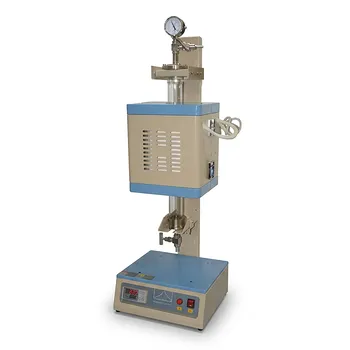
Compact Vertical Split Quartz Tube Furnace with Stainless Steel Vacuum Flanges for Rapid Thermal Quenching and Controlled Atmosphere Material Processing
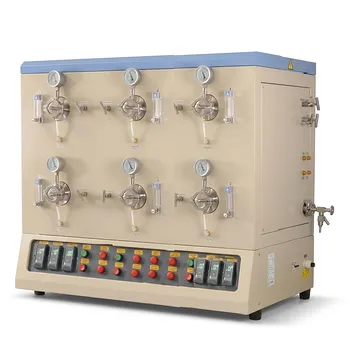
1200C High Throughput Multi Channel Tube Furnace with 50mm Quartz Tubes for Annealing and Material Phase Diagram Research

High Temperature Tube Furnace 1500C with Sliding Flanges and 50mm OD for Rapid Thermal Processing Fast Heating and Cooling
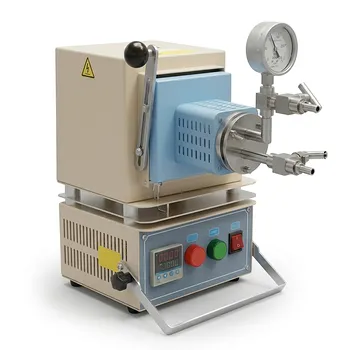
Compact Hybrid Muffle and Tube Furnace for 1000C Controlled Atmosphere Laboratory Material Sintering

Compact High Temperature 1600C Tube Furnace with 50mm Alumina Tube and Vacuum Flanges for Material Sintering

High Temperature 1700C Tube Furnace with High Vacuum Turbomolecular Pump System and Multi Channel Mass Flow Controller Gas Mixer

High Temperature 1700C Benchtop Tube Furnace with 5 Inch Heating Zone High Purity Alumina Tube and Vacuum Sealing Flanges

Vertical 1700C Vacuum and Atmosphere Tube Furnace with 80mm Alumina Tube
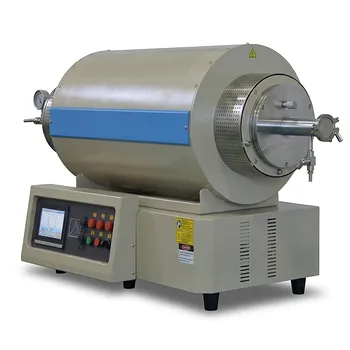
1200C Max Three Zone Tube Furnace 6 Inch OD Max with Tube and Flange
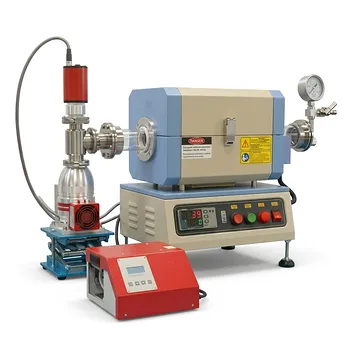
High Vacuum Compact Tube Furnace 1200C with Integrated Turbo Pump System and 8 Inch Heating Zone
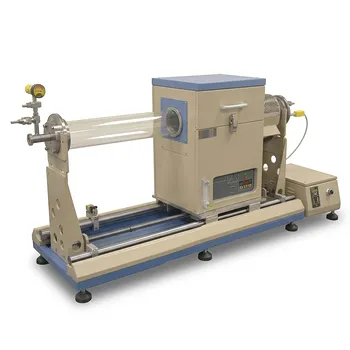
Rapid Thermal Processing Sliding Tube Furnace with 4 Inch OD Quartz Tube and 900C IR Heating
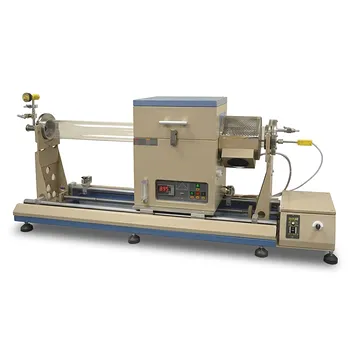
900 ºC Max Sliding RTP Tube Furnace with Rapid IR Heating and 4 Inch OD Quartz Tube
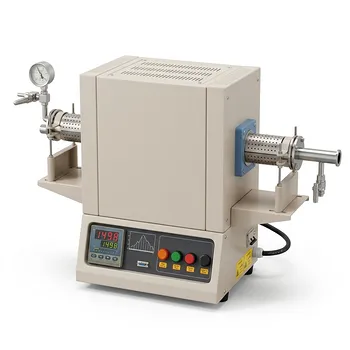
1500C High Temperature Compact Tube Furnace 2 Inch OD with Vacuum Flanges and Complete Accessories

High Temperature Automated 5 Inch Tube Furnace for Autonomous Material Research and Advanced Laboratory R&D