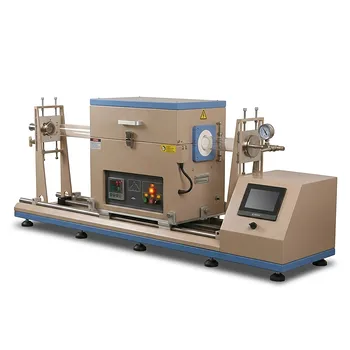
What is the purpose of in-situ H2 reduction on catalysts? Boost Activity and Stability with Precise Activation
Updated 3 months ago
The primary purpose of in-situ hydrogen ($H_2$) reduction is to activate catalysts by converting them from an inactive oxide state into a metallic state. This pre-treatment step, conducted in a tube furnace, ensures that metals like nickel and molybdenum are reduced to their zero-valent forms ($Ni^0$ and $Mo^0$). This transformation is essential for creating the active sites required for effective biogas conversion and long-term catalyst stability.
In-situ reduction transforms pre-calcined metal oxides into active metallic centers, a critical step that directly determines the initial activity, metal dispersion, and durability of the catalyst during biogas conversion.
The Chemical Necessity of Catalyst Activation
Converting Oxides to Active Metals
In their synthesized state, catalysts like NiMo/MgO exist as oxides (e.g., NiO and molybdates) which lack the electronic structure necessary to facilitate chemical reactions. The introduction of hydrogen at high temperatures (often up to 1000 °C) strips oxygen from the metal, leaving behind metallic particles that serve as the actual engines of the reaction.
Establishing Active Sites
The reduction process determines the quantity and distribution of the initial active sites. By performing this "in-situ" (in place), the catalyst is activated immediately before the biogas conversion begins, preventing the metallic surfaces from re-oxidizing or becoming contaminated by exposure to air.
Inducing Specific Reaction Mechanisms
For certain processes like methane cracking or graphene growth, only reduced metallic particles ($Fe^0$ or $Ni^0$) possess the ability to dissolve and reprecipitate carbon atoms. Without this specific metallic state, the catalyst cannot induce the nucleation required for high-performance biogas reforming.
The Strategic Role of the Tube Furnace
Precise Atmosphere and Temperature Control
A tube furnace provides a controlled, airtight environment necessary to maintain a stable flow of reducing gases, such as $H_2/N_2$ or $H_2/Ar$ mixtures. This prevents unwanted side reactions with ambient oxygen and ensures the chemical environment remains consistent throughout the activation phase.
Thermal Compensation and Consistency
High-precision tube furnaces utilize temperature compensation control to ensure the catalyst bed is heated uniformly. This consistency is vital for achieving a predictable degree of reduction across the entire catalyst volume, which directly impacts the reproducibility of the biogas experiments.
Tailoring Metal-Support Interactions
The programmable nature of tube furnaces allows researchers to adjust the metal-support interactions. By fine-tuning the reduction temperature, scientists can create synergistic bimetallic structures or generate oxygen vacancies, both of which can significantly enhance catalytic efficiency and carbon resistance.
Understanding the Trade-offs and Pitfalls
The Risk of Thermal Sintering
While high temperatures are necessary for reduction, excessive heat can lead to sintering, where small metal particles fuse together into larger clusters. This reduces the available surface area and decreases the overall number of active sites, potentially hampering the catalyst's effectiveness.
Balancing Reduction Time and Temperature
There is a delicate balance between achieving complete reduction and maintaining high metal dispersion. If the reduction temperature is too low, the catalyst remains partially inactive; if it is too high or the duration is too long, the growth of metal grains can lead to rapid deactivation during subsequent biogas conversion.
Atmospheric Sensitivity
The specific mixture of the reducing gas (e.g., 4% vs 10% $H_2$) must be carefully chosen based on the metal type. Using an incorrect concentration or an inconsistent flow rate can result in incomplete activation or the formation of undesirable phases, such as metal carbides, before the actual experiment begins.
Applying These Principles to Your Research
To achieve the best results in your biogas conversion experiments, your reduction strategy should be tailored to your specific catalyst composition and desired outcomes.
- If your primary focus is Maximum Initial Activity: Prioritize high-temperature reduction (e.g., 700°C - 1000°C) to ensure the complete conversion of oxides into metallic active centers.
- If your primary focus is Catalyst Longevity and Dispersion: Utilize a high-precision furnace at lower temperatures (e.g., 200°C - 550°C) to minimize grain growth and preserve a high surface area of active sites.
- If your primary focus is Carbon Resistance: Focus on adjusting the reduction parameters to optimize metal-support interactions and create synergistic bimetallic nanostructures.
By mastering the in-situ reduction process, you ensure your catalyst enters the reaction in its most potent and stable form.
Summary Table:
| Phase | Primary Goal | Critical Requirement |
|---|---|---|
| Activation | Convert inactive oxides to metallic state ($Ni^0$, $Mo^0$) | High-purity $H_2$ flow |
| Site Creation | Establish high dispersion of catalytic active sites | Immediate in-situ execution |
| Mechanism | Enable carbon dissolution and nucleation | Zero-valent metallic particles |
| Optimization | Manage metal-support interactions & oxygen vacancies | Precise thermal programming |
Elevate Your Research with THERMUNITS High-Precision Furnaces
Achieving the perfect metallic state in your catalysts requires the uncompromising precision of THERMUNITS thermal solutions. As a leading manufacturer of high-temperature laboratory equipment, we specialize in providing material science and industrial R&D teams with the tools needed for advanced heat treatment.
Our comprehensive range of Tube, Atmosphere, Vacuum, and CVD/PECVD systems is engineered to provide the airtight environments and uniform heating profiles essential for successful in-situ hydrogen reduction. Whether you are focusing on biogas reforming, carbon resistance, or graphene growth, THERMUNITS ensures your catalysts reach their maximum potential without the risk of thermal sintering.
Ready to optimize your lab’s efficiency? Contact our technical team today to discuss our custom furnace solutions, including Muffle, Rotary, and Hot Press furnaces, tailored to your specific research goals.
References
- Nonthicha Sae-tang, Sakhon Ratchahat. Simultaneous production of syngas and carbon nanotubes from CO2/CH4 mixture over high-performance NiMo/MgO catalyst. DOI: 10.1038/s41598-024-66938-6
Mentioned Products
- Vertical 1700C Vacuum and Atmosphere Tube Furnace with 80mm Alumina Tube
- Compact High Temperature 1600C Tube Furnace with 50mm Alumina Tube and Vacuum Flanges for Material Sintering
- 900°C Max Rotary Tube Furnace with 8 Inch 310S Alloy Tube and Optional Multi Zone Heating for Industrial Material Calcination
- Split Vertical Tube Furnace with 1200C Quartz Tube and Stainless Steel Vacuum Flanges for Rapid Thermal Processing
- High Temperature 1700C Tube Furnace with High Vacuum Turbomolecular Pump System and Multi Channel Mass Flow Controller Gas Mixer
People Also Ask
- How is an industrial-grade vertical tube furnace utilized in smelting leaching residues? Enhance Metal Recovery Efficiency
- What is the function of a laboratory-grade vertical tube furnace in fast pyrolysis? Optimize Composite Research.
- How does a vertical tube furnace facilitate thermoelectric alloy melting? Precision synthesis for material homogeneity.
- Why is a thermocouple sensor indispensable for monitoring the vertical tube furnace during gallium oxide nanowire production? Optimize VLS Growth
- What are the advantages of using a vertical tube furnace for crucible experiments simulating steel-slag interactions?

Tech Team · ThermUnits
Last updated on Jun 03, 2026
Related Products

Vertical 1700C Vacuum and Atmosphere Tube Furnace with 80mm Alumina Tube

Compact High Temperature 1600C Tube Furnace with 50mm Alumina Tube and Vacuum Flanges for Material Sintering
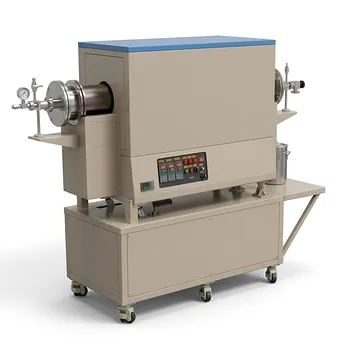
900°C Max Rotary Tube Furnace with 8 Inch 310S Alloy Tube and Optional Multi Zone Heating for Industrial Material Calcination
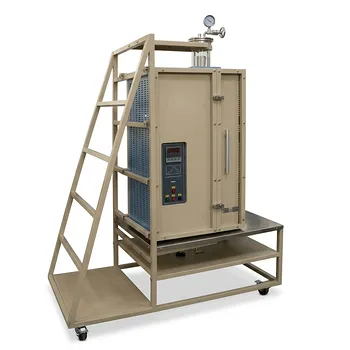
Split Vertical Tube Furnace with 1200C Quartz Tube and Stainless Steel Vacuum Flanges for Rapid Thermal Processing

High Temperature 1700C Tube Furnace with High Vacuum Turbomolecular Pump System and Multi Channel Mass Flow Controller Gas Mixer

1100C Tube Furnace with Vacuum Flange and Programmable Temperature Controller for Material Science and Industrial Heat Treatment
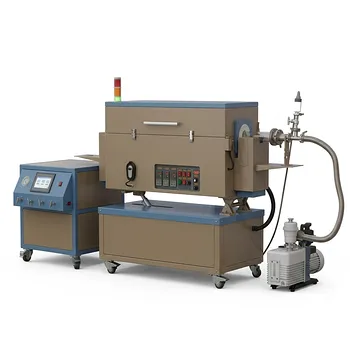
5 Inch Three Zone Rotary Tube Furnace with Integrated Gas Delivery System and 1200C Capability for Advanced Material CVD Processing

1200°C 5 Inch Vertical Quartz Tube Furnace with Stainless Steel Vacuum Flanges

1700C Hydrogen Gas Tube Furnace with 60mm Alumina Process Tube and Integrated Hydrogen Safety Detector

High Temperature 1700C Six Zone Split Tube Furnace with Alumina Tube and Water Cooled Flanges

Compact Vertical Split Quartz Tube Furnace with Stainless Steel Vacuum Flanges for Rapid Thermal Quenching and Controlled Atmosphere Material Processing

High Temperature 1700C Benchtop Tube Furnace with 5 Inch Heating Zone High Purity Alumina Tube and Vacuum Sealing Flanges
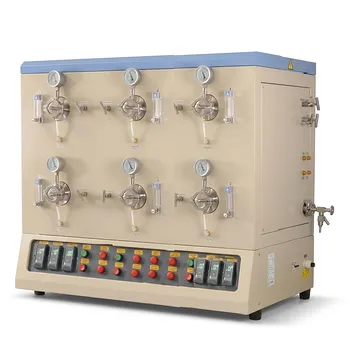
1200C High Throughput Multi Channel Tube Furnace with 50mm Quartz Tubes for Annealing and Material Phase Diagram Research

1800C High Temperature Compact Vacuum Tube Furnace with 60mm OD Alumina Tube and Kanthal MoSi2 Heating Elements
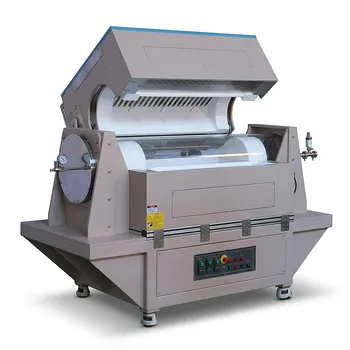
Three Zone Tube Furnace with 11 Inch or 15 Inch Quartz Tube and Hinged Flanges for Vacuum Atmosphere Heat Treatment

High Temperature 1700C Vertical Tube Furnace for Powder Spherification and Material Sintering
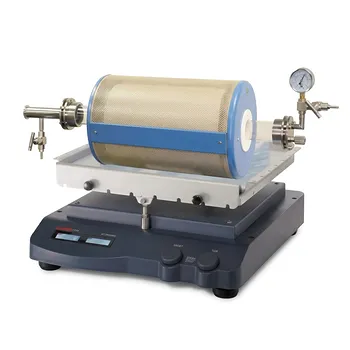
High Temperature Rocking Tube Furnace with Quartz Tube and Vacuum Flange for Materials Synthesis

High Temperature Automated 5 Inch Tube Furnace for Autonomous Material Research and Advanced Laboratory R&D
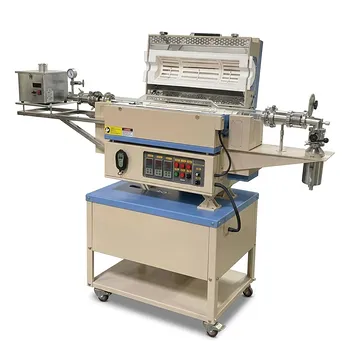
5 Inch Rotary Tube Furnace with Automatic Feeding and Receiving System 1200C Three Zone CVD Powder Processing