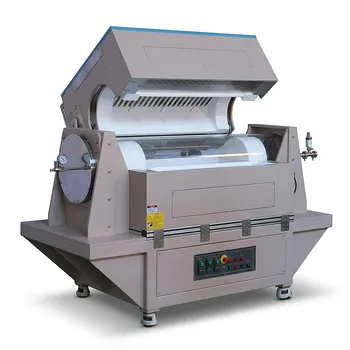
What is the purpose of using high-purity quartz vacuum sealing technology? Ensure Precise Slag-Metal Distribution
Updated 3 months ago
High-purity quartz vacuum sealing technology serves as a critical containment strategy to preserve the chemical integrity of experimental melts at high temperatures. By sealing a crucible within a quartz tube, researchers create a closed system that physically suppresses the evaporation of volatile elements like lead (Pb), zinc (Zn), and arsenic (As). This prevents significant composition shifts, ensuring that the final analysis reflects the intended experimental parameters rather than element loss.
Core Takeaway: This technology transforms an open furnace environment into a closed thermodynamic system, preventing the depletion of volatile components and allowing for the precise, self-contained regulation of oxygen partial pressure.
Maintaining Compositional Integrity in Volatile Systems
Suppressing Element Evaporation
Volatile elements such as lead, zinc, and arsenic possess high vapor pressures and tend to escape from melts as temperature increases. Vacuum sealing creates a physical barrier that traps these elements within the reaction zone. This containment is essential for slag-metal distribution studies where even minor losses can skew the partitioning data.
Eliminating Compositional Shifts
In an open system, the continuous loss of volatile species leads to a "drifting" composition throughout the experiment. By using high-purity quartz tubes, the system reaches a liquid-vapor equilibrium where evaporation ceases once the headspace is saturated. This ensures the chemical makeup of the slag and metal phases remains stable from the start of the soak until quenching.
Ensuring Microstructural Uniformity
Beyond preventing loss, the closed environment promotes compositional uniformity within the internal microstructure of the sample. This is particularly important when homogenization is required over several hours. The lack of element depletion at the surface ensures that the subsequent thermal processing performance of the material is not compromised.
Precision Thermodynamic Control without Gas Flow
Characterizing Effective Oxygen Partial Pressure
A major advantage of this method is the ability to accurately define the system’s oxygen partial pressure ($P_{O_2}$). When metal/oxide equilibrium pairs are sealed inside the tube, the chemistry of the phases themselves dictates the $P_{O_2}$. This internal regulation provides a level of precision that is often superior to external gas buffering.
Eliminating External Gas Dependencies
Traditional experiments often rely on a constant flow of CO/CO₂ or H₂/H₂O gas mixtures to control oxidation states. Vacuum sealing removes the need for external gas flow, eliminating risks associated with gas impurities or flow rate fluctuations. This simplifies the experimental setup while providing a cleaner, more controlled reaction environment.
Protection Against Surface Oxidation
The vacuum evacuation process removes oxygen and other impurity gases from the tube before sealing. This prevents surface oxidation of sensitive alloy ingots or reactive powders like tellurium and tungsten. By creating a low-pressure inert environment, the technology protects the material from reacting with the atmosphere during high-temperature exposure.
Understanding the Trade-offs and Limitations
Temperature and Pressure Constraints
While quartz is highly resistant to heat, it has a physical limit; it begins to soften as it approaches its softening point (typically around 1100°C to 1200°C). Furthermore, if the internal vapor pressure of the volatile elements becomes too high, the quartz tube may lose structural integrity or even explode. Researchers must carefully calculate expected internal pressures before heating.
Potential for Contamination
Although "high-purity" quartz is used, there is always a marginal risk of the quartz reacting with certain aggressive slag compositions. If the slag comes into direct contact with the quartz wall, it can lead to silica contamination or tube failure. This is why the primary sample is typically held in a secondary, non-reactive crucible (like alumina or magnesia) inside the quartz tube.
How to Apply This to Your Research
If you are designing an experiment involving high-temperature melts, your choice of containment should be driven by your specific chemical requirements:
- If your primary focus is preserving volatile element concentrations: Use vacuum-sealed quartz to create a saturated headspace that halts further evaporation of Pb, Zn, or As.
- If your primary focus is precise thermodynamic modeling: Rely on metal/oxide equilibrium pairs within the sealed tube to establish a stable, calculable oxygen partial pressure without external gas interference.
- If your primary focus is preventing oxidation of reactive powders: Ensure a high-vacuum evacuation (better than $10^{-3}$ Pa) before sealing the quartz to eliminate residual oxygen.
By leveraging high-purity quartz vacuum sealing, you ensure that your experimental results are a product of intended chemical interactions rather than environmental artifacts.
Summary Table:
| Feature | Function in Experiments | Research Benefit |
|---|---|---|
| Evaporation Suppression | Creates a closed thermodynamic system | Preserves concentration of volatile Pb, Zn, and As |
| Vacuum Evacuation | Removes residual oxygen (<10⁻³ Pa) | Prevents surface oxidation of reactive alloys |
| Internal $P_{O_2}$ Control | Uses metal/oxide equilibrium pairs | Eliminates the need for external gas flow buffering |
| Headspace Saturation | Reaches liquid-vapor equilibrium | Ensures compositional uniformity and zero chemical drift |
Elevate Your Material Science Research with THERMUNITS
Achieving precise experimental outcomes in volatile systems requires superior thermal control and reliable containment. THERMUNITS is a leading manufacturer of high-temperature laboratory equipment, providing the specialized tools needed for rigorous material science and industrial R&D.
Our comprehensive range of thermal processing solutions is engineered to meet the highest standards of stability and vacuum integrity. We offer:
- Advanced Furnaces: Muffle, Vacuum, Atmosphere, Tube, Rotary, and Hot Press furnaces.
- Specialized Systems: CVD/PECVD systems, Dental Furnaces, and Electric Rotary Kilns.
- High-Performance Melting: Vacuum Induction Melting (VIM) furnaces and precision Thermal Elements.
Why Choose THERMUNITS? We empower researchers to eliminate environmental variables, such as unwanted oxidation or element depletion, by providing equipment that guarantees uniform heat distribution and precise atmospheric control.
Ready to optimize your heat treatment processes? Contact our technical experts today to find the perfect furnace solution for your laboratory and ensure your research results are accurate, repeatable, and world-class.
References
- Georgii Khartcyzov, Evgueni Jak. Distribution of Pb, Zn, Fe, As, Sn, Sb, Bi, and Ni Between Oxide Liquid and Metal in the ‘CuO0.5’-CaO-AlO1.5 System in Equilibrium with Cu Metal at 1400 °C. DOI: 10.1007/s40831-024-00952-w
Mentioned Products
- 1100°C High Temperature Quartz Chamber Furnace 8 Inch OD with 7.6 Liter Capacity and Vacuum Atmosphere Capability
- High Temperature Cold Wall High Vacuum Chamber Furnace 1400C for Advanced Material Processing
- High Temperature 1200C Split Tube Furnace with Hinged Vacuum Flanges and 4 Inch Quartz Tube for Laboratory Research
- 1100C High Temperature Vacuum Crucible Furnace with Quartz Chamber for Thermal Processing and Sintering
- Vertical Vacuum Furnace 1100C High Temperature 8 Inch Quartz Chamber Water Cold Flange System
People Also Ask
- Why is a quartz tube furnace necessary for phosphorus-doped MoS2/GO preparation? Ensure Purity & Precise Synthesis
- Benefits of high-vacuum quartz tube furnaces with N2 for Co3O4 nanosheets: Purity and Structural Integrity.
- What conditions does a quartz tube furnace provide for AlxCoCrFeNi steam corrosion tests? Achieve Precise R&D Control.
- Why is high-temperature annealing in a quartz tube furnace done after HfO2 deposition? Unlock peak film performance.
- How does a quartz tube furnace prepare boron-diffused SE? Precision Thermal Control for High-Efficiency Solar Cells

Tech Team · ThermUnits
Last updated on Jun 03, 2026
Related Products
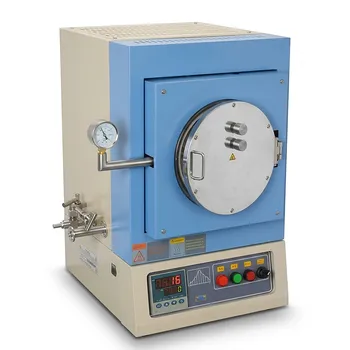
1100°C High Temperature Quartz Chamber Furnace 8 Inch OD with 7.6 Liter Capacity and Vacuum Atmosphere Capability
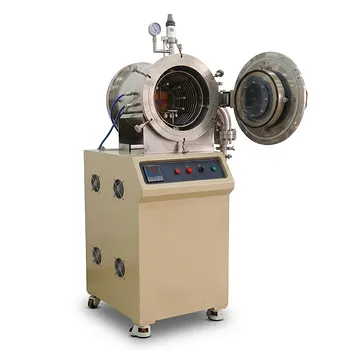
High Temperature Cold Wall High Vacuum Chamber Furnace 1400C for Advanced Material Processing
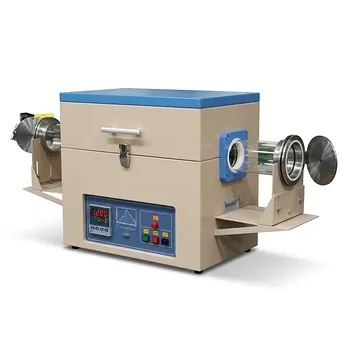
High Temperature 1200C Split Tube Furnace with Hinged Vacuum Flanges and 4 Inch Quartz Tube for Laboratory Research
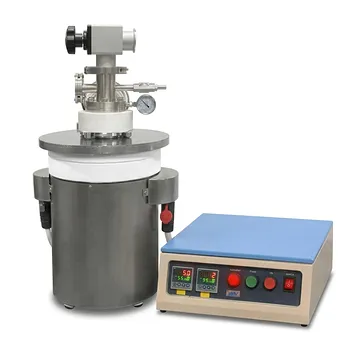
1100C High Temperature Vacuum Crucible Furnace with Quartz Chamber for Thermal Processing and Sintering
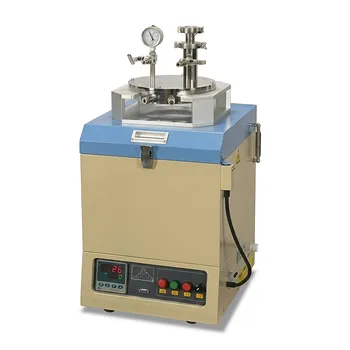
Vertical Vacuum Furnace 1100C High Temperature 8 Inch Quartz Chamber Water Cold Flange System
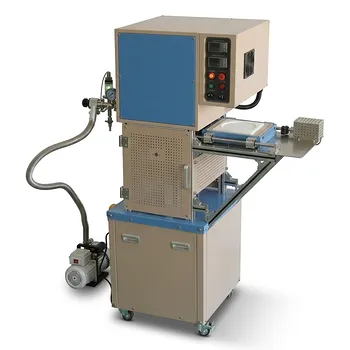
1200°C Bottom Loading Vacuum Furnace with Rapid Gas Cooling and 8.6 Inch Diameter Quartz Chamber

1200°C 5 Inch Vertical Quartz Tube Furnace with Stainless Steel Vacuum Flanges
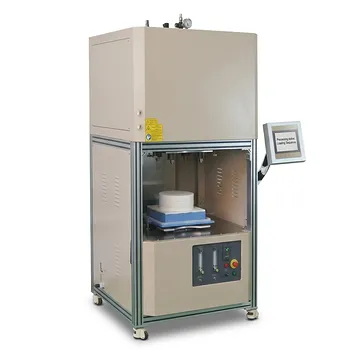
High Temperature Vertical Atmosphere Controlled Furnace with Automatic Bottom Loading and 1700°C Capacity for Advanced Material Research

Compact Vertical Split Quartz Tube Furnace with Stainless Steel Vacuum Flanges for Rapid Thermal Quenching and Controlled Atmosphere Material Processing
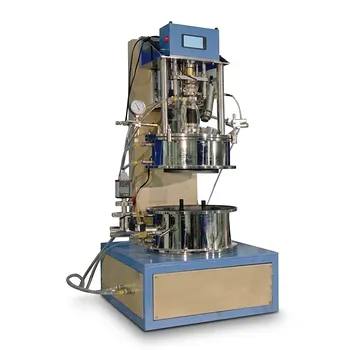
2500C High Vacuum Ultrafast Heating Pellet Press with Automated 8 Sample Loading System
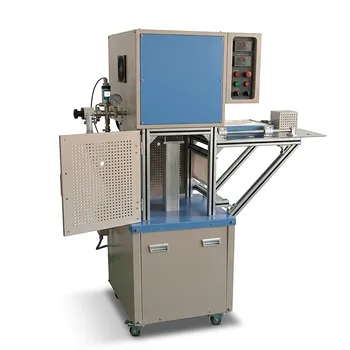
Bottom Loading Vacuum Furnace 1200C Rapid Cooling Atmosphere Control Quartz Chamber
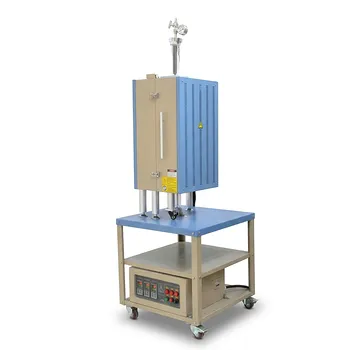
1200C Three Zone Vertical Tube Furnace with 2 Inch Quartz Tube and Vacuum Flanges