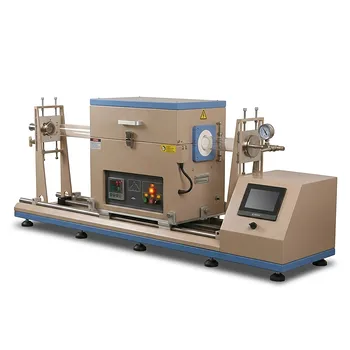
What is the role of a tube furnace during the annealing treatment of Ti-6Al-7Nb alloy? Optimize Surface Quality
Updated 3 months ago
The role of a tube furnace in the annealing of Ti-6Al-7Nb is to create a pristine, stress-free foundation for surface hardening. Specifically, it provides a controlled inert atmosphere at 700 °C that prevents oxidation, eliminates residual mechanical stresses, and ensures a uniform surface state. This preparation is mandatory for the subsequent development of a high-quality, consistent carburized layer.
The tube furnace acts as a precision reactor that stabilizes the alloy's state before chemical modification. By isolating the material from oxygen and heat-treating it uniformly, it removes the "mechanical memory" of the metal and prepares the surface for optimal carbon diffusion.
Establishing an Inert Environment for Surface Integrity
Prevention of High-Temperature Oxidation
At the 700 °C annealing temperature, titanium alloys are highly reactive with atmospheric oxygen. The tube furnace provides a highly sealed heating space that allows for the introduction of inert gases, such as argon or nitrogen, to displace oxygen. Without this protective environment, a brittle oxide scale would form, which would block the effective diffusion of carbon during the later carburizing stage.
Uniformity of the Temperature Field
Tube furnaces are characterized by a linear and stable thermal field within quartz or ceramic tubes. This ensures that the Ti-6Al-7Nb sample experiences the same temperature across its entire geometry. Uniform heating is critical to prevent localized microstructural variations that could lead to uneven hardness in the final carburized product.
Mechanical and Microstructural Stabilization
Elimination of Residual Stresses
Mechanical cutting and shaping of Ti-6Al-7Nb introduce significant internal stresses and work hardening. The annealing process within the tube furnace provides the thermal energy necessary to relax these stresses. Removing these "internal pressures" prevents the alloy from warping or cracking when subjected to the even higher temperatures often required for carburizing.
Ensuring a Uniform Initial Surface State
For a carburized layer to be effective, the starting surface must be chemically and physically homogenous. The tube furnace ensures that the surface state is standardized across the entire sample. This consistency allows for predictable carbon absorption rates, resulting in a carburized layer with uniform depth and wear resistance.
Understanding the Trade-offs of Tube Furnace Annealing
Atmosphere vs. Vacuum Limitations
While tube furnaces offer excellent atmosphere switching flexibility, they must be perfectly sealed to prevent trace oxygen ingress. If the seal is compromised, even small amounts of oxygen at 700 °C can lead to the formation of an alpha-case layer, a brittle oxygen-enriched zone that can compromise the fatigue life of the Ti-6Al-7Nb alloy.
Throughput and Sample Geometry
Tube furnaces are ideal for research and small-batch processing due to their precision. However, their linear geometry limits the size and shape of the components that can be treated. For large-scale industrial components, the tube furnace's spatial constraints may necessitate alternative heating solutions that might not offer the same degree of atmospheric control.
How to Optimize Your Annealing Process
Choosing the right parameters for your furnace run is essential for a successful carburizing outcome.
- If your primary focus is maximum surface hardness: Ensure the furnace is purged with high-purity argon for at least 30 minutes before heating to 700 °C to eliminate all trace oxygen.
- If your primary focus is dimensional stability: Prioritize a slow furnace cooling rate after the 700 °C soak to prevent the re-introduction of thermal stresses.
- If your primary focus is carburizing layer depth: Use the tube furnace to achieve a perfectly clean, "activated" surface state, which minimizes the incubation time for carbon diffusion in the next step.
A precisely controlled tube furnace annealing cycle is the most critical quality-control step in the transition from a raw Ti-6Al-7Nb component to a high-performance, wear-resistant medical or industrial tool.
Summary Table:
| Feature | Annealing Specification | Impact on Ti-6Al-7Nb Alloy |
|---|---|---|
| Temperature | 700 °C | Eliminates residual stresses and work hardening |
| Atmosphere | Inert (Argon/Nitrogen) | Prevents brittle oxide scale and alpha-case formation |
| Thermal Field | Linear & Stable | Ensures uniform surface state for even carbon diffusion |
| Primary Goal | Pre-Carburizing Prep | Creates a pristine foundation for high-hardness layers |
Elevate Your Material Research with THERMUNITS
At THERMUNITS, we understand that precision is the foundation of material science. As a leading manufacturer of high-temperature laboratory equipment for material science and industrial R&D, we provide the advanced thermal processing solutions required for complex workflows like Ti-6Al-7Nb alloy treatment.
Our comprehensive range includes:
- Precision Furnaces: Tube, Muffle, Vacuum, Atmosphere, and Dental Furnaces.
- Advanced Systems: CVD/PECVD systems, Hot Press furnaces, and Vacuum Induction Melting (VIM) units.
- Industrial Solutions: Electric rotary kilns, Rotary furnaces, and premium Thermal Elements.
Whether you are stabilizing alloys for medical implants or developing wear-resistant industrial tools, our equipment ensures uniform heating and superior atmosphere control.
Ready to optimize your heat treatment process? Contact our engineering experts today to discuss your specific requirements and discover how THERMUNITS can enhance your lab's performance.
References
- Mohamed A. Ismail, Jiakai Zhang. Carburization-induced surface modification of Ti-6Al-7Nb alloy and its characterization. DOI: 10.1016/j.jallcom.2024.175436
Mentioned Products
- Vertical 1700C Vacuum and Atmosphere Tube Furnace with 80mm Alumina Tube
- Compact High Temperature 1600C Tube Furnace with 50mm Alumina Tube and Vacuum Flanges for Material Sintering
- 900°C Max Rotary Tube Furnace with 8 Inch 310S Alloy Tube and Optional Multi Zone Heating for Industrial Material Calcination
- Split Vertical Tube Furnace with 1200C Quartz Tube and Stainless Steel Vacuum Flanges for Rapid Thermal Processing
- High Temperature 1700C Tube Furnace with High Vacuum Turbomolecular Pump System and Multi Channel Mass Flow Controller Gas Mixer
People Also Ask
- How is an industrial-grade vertical tube furnace utilized in smelting leaching residues? Enhance Metal Recovery Efficiency
- What is the function of a laboratory-grade vertical tube furnace in fast pyrolysis? Optimize Composite Research.
- How does a vertical tube furnace facilitate thermoelectric alloy melting? Precision synthesis for material homogeneity.
- Why is a thermocouple sensor indispensable for monitoring the vertical tube furnace during gallium oxide nanowire production? Optimize VLS Growth
- What are the advantages of a Vertical Tube Furnace for iron coke testing? | Achieve High-Precision CRI Analysis

Tech Team · ThermUnits
Last updated on Jun 02, 2026
Related Products

Vertical 1700C Vacuum and Atmosphere Tube Furnace with 80mm Alumina Tube

Compact High Temperature 1600C Tube Furnace with 50mm Alumina Tube and Vacuum Flanges for Material Sintering
900°C Max Rotary Tube Furnace with 8 Inch 310S Alloy Tube and Optional Multi Zone Heating for Industrial Material Calcination
Split Vertical Tube Furnace with 1200C Quartz Tube and Stainless Steel Vacuum Flanges for Rapid Thermal Processing

High Temperature 1700C Tube Furnace with High Vacuum Turbomolecular Pump System and Multi Channel Mass Flow Controller Gas Mixer

1100C Tube Furnace with Vacuum Flange and Programmable Temperature Controller for Material Science and Industrial Heat Treatment
5 Inch Three Zone Rotary Tube Furnace with Integrated Gas Delivery System and 1200C Capability for Advanced Material CVD Processing
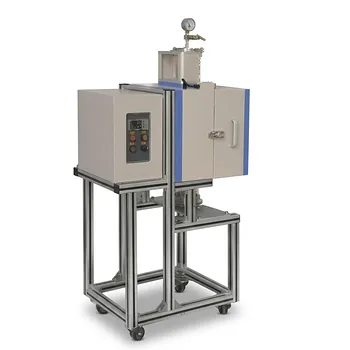
1200°C 5 Inch Vertical Quartz Tube Furnace with Stainless Steel Vacuum Flanges

High Temperature 1700C Six Zone Split Tube Furnace with Alumina Tube and Water Cooled Flanges
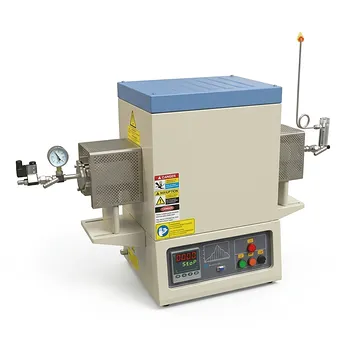
1700C Hydrogen Gas Tube Furnace with 60mm Alumina Process Tube and Integrated Hydrogen Safety Detector

Compact Vertical Split Quartz Tube Furnace with Stainless Steel Vacuum Flanges for Rapid Thermal Quenching and Controlled Atmosphere Material Processing

High Temperature 1700C Benchtop Tube Furnace with 5 Inch Heating Zone High Purity Alumina Tube and Vacuum Sealing Flanges

1200C High Throughput Multi Channel Tube Furnace with 50mm Quartz Tubes for Annealing and Material Phase Diagram Research

1800C High Temperature Compact Vacuum Tube Furnace with 60mm OD Alumina Tube and Kanthal MoSi2 Heating Elements
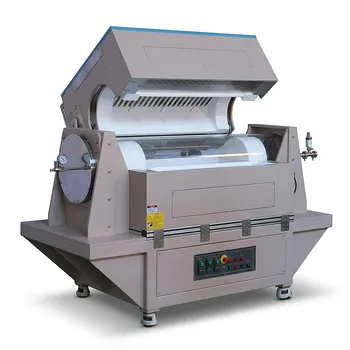
Three Zone Tube Furnace with 11 Inch or 15 Inch Quartz Tube and Hinged Flanges for Vacuum Atmosphere Heat Treatment

High Temperature 1700C Vertical Tube Furnace for Powder Spherification and Material Sintering
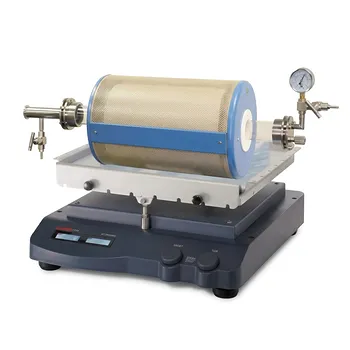
High Temperature Rocking Tube Furnace with Quartz Tube and Vacuum Flange for Materials Synthesis

High Temperature Automated 5 Inch Tube Furnace for Autonomous Material Research and Advanced Laboratory R&D
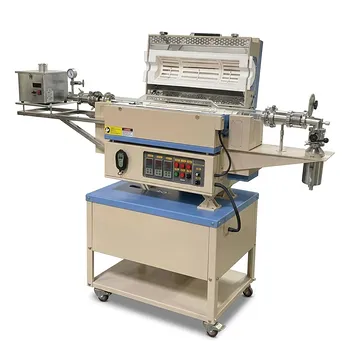
5 Inch Rotary Tube Furnace with Automatic Feeding and Receiving System 1200C Three Zone CVD Powder Processing