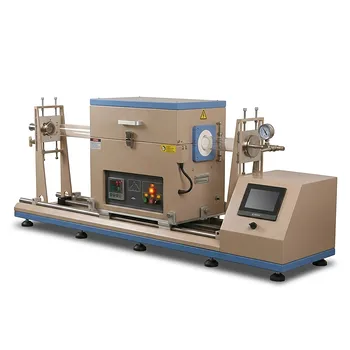
What is the role of a Tube Furnace in synthesizing hard carbon derived from waste biomass? Engineering High-Performance Anodes
Updated 5 months ago
In the synthesis of hard carbon from waste biomass, the tube furnace serves as the primary vessel for controlled thermal decomposition and structural engineering. It provides a precise, oxygen-free environment that facilitates the transition of organic precursors through pre-carbonization and high-temperature annealing. By strictly regulating temperature and atmospheric composition, the tube furnace determines the final carbon's porosity, graphitization degree, and capacity for sodium-ion storage.
Core Takeaway: The tube furnace is the critical instrument for converting disordered biomass into high-performance hard carbon, enabling the exact thermal and atmospheric conditions required to remove volatiles and reorganize the carbon skeleton.
Precise Atmospheric Control for Chemical Transformation
Establishing an Anaerobic Environment
Biomass materials like coffee grounds or coconut shells will combust if heated in the presence of oxygen. The tube furnace provides a sealed, anaerobic environment using inert gases like nitrogen or argon to ensure pyrolysis occurs instead of combustion.
Facilitating Phase-Specific Reactions
During the pre-carbonization stage (typically around 750 °C), the furnace allows for the introduction of specific gases such as carbon dioxide or fixed-bed exhaust. These gases interact with the biomass to facilitate the initial removal of organic volatiles and the formation of a preliminary carbon structure.
Deep Deoxygenation and Dehydrogenation
The furnace reaches temperatures necessary to break chemical bonds, facilitating dehydrogenation and deoxygenation. This process significantly increases the fixed carbon content while purging non-carbon components that would otherwise degrade the material's purity and performance.
Thermal Management and Structural Evolution
Multi-Stage Carbonization Cycles
A tube furnace allows researchers to execute complex, multi-stage heating profiles. The transition from low-temperature thermal degradation (around 400 °C) to high-temperature annealing (up to 1100 °C or 1600 °C) is managed through precise heating rates, such as 10 °C per minute.
Engineering Disordered Hard Carbon Structures
At temperatures exceeding 1000 °C, the furnace induces the reorganization of the carbon skeleton. This creates a disordered hard carbon structure characterized by wide graphene layer spacing, which is the "deep need" for hosting sodium ions in energy storage applications.
Precise Control of Porosity
The heating rate and holding time within the furnace directly determine the pore structure development. By managing the removal of volatile impurities, the furnace helps form the microporous networks and storage site density required for high-performance adsorption or battery anodes.
Understanding the Trade-offs
Thermal Uniformity vs. Throughput
Tube furnaces offer exceptional control over the internal environment, but they are typically limited to small-scale batch processing. While this is ideal for research and development, scaling these precise conditions to industrial volumes requires significant engineering shifts to maintain the same thermal uniformity.
Energy Consumption and Cooling Times
The high temperatures required for hard carbon synthesis (up to 1600 °C) result in high energy consumption. Additionally, the structural integrity of the tube requires slow cooling phases, which can extend the overall production cycle time and limit the speed of experimentation.
How to Apply This to Your Project
Recommendations for Material Synthesis
- If your primary focus is Sodium-Ion Battery Anodes: Prioritize a furnace capable of at least 1100 °C under argon to ensure the formation of wide graphene layer spacing.
- If your primary focus is Activated Carbon for Filtration: Focus on the furnace's ability to integrate activating agents and provide stable pyrolysis between 600 °C and 800 °C.
- If your primary focus is Standardizing Biochar: Use a horizontal tube furnace with precise heating rate controls (e.g., 10 °C/min) to ensure consistency in fixed carbon content across samples.
By mastering the thermal and atmospheric variables of the tube furnace, you can transform simple biomass waste into a high-value, engineered carbon material.
Summary Table:
| Synthesis Stage | Tube Furnace Function | Key Outcome for Hard Carbon |
|---|---|---|
| Pre-carbonization | Controlled gas flow (N2/Ar) | Removal of volatiles & initial carbon skeleton |
| Carbonization | High-temp thermal degradation | Deoxygenation & increased fixed carbon content |
| Annealing | Precise heating up to 1600°C | Optimized graphene spacing for sodium-ion storage |
| Atmospheric Control | Sealed anaerobic environment | Prevents combustion & enables chemical doping |
Elevate Your Material Research with THERMUNITS
Transform biomass waste into advanced energy materials with precision. THERMUNITS is a leading manufacturer of high-temperature laboratory equipment for material science and industrial R&D. Whether you are developing sodium-ion battery anodes or specialized biochar, our comprehensive range of thermal solutions—including Tube, Vacuum, Atmosphere, Rotary, and CVD/PECVD systems—ensures the exact atmospheric and thermal control your research demands.
Ready to achieve superior carbon structural engineering? Contact our technical experts today to find the perfect furnace for your laboratory.
References
- Sonya Harizanova, Mariya Kalapsazova. The Beneficial Impact of Mineral Content in Spent-Coffee-Ground-Derived Hard Carbon on Sodium-Ion Storage. DOI: 10.3390/ma17051016
Mentioned Products
- Vertical 1700C Vacuum and Atmosphere Tube Furnace with 80mm Alumina Tube
- Compact High Temperature 1600C Tube Furnace with 50mm Alumina Tube and Vacuum Flanges for Material Sintering
- 900°C Max Rotary Tube Furnace with 8 Inch 310S Alloy Tube and Optional Multi Zone Heating for Industrial Material Calcination
- Split Vertical Tube Furnace with 1200C Quartz Tube and Stainless Steel Vacuum Flanges for Rapid Thermal Processing
- High Temperature 1700C Tube Furnace with High Vacuum Turbomolecular Pump System and Multi Channel Mass Flow Controller Gas Mixer
People Also Ask
- How is an industrial-grade vertical tube furnace utilized in smelting leaching residues? Enhance Metal Recovery Efficiency
- What is the function of a laboratory-grade vertical tube furnace in fast pyrolysis? Optimize Composite Research.
- How does a vertical tube furnace facilitate thermoelectric alloy melting? Precision synthesis for material homogeneity.
- Why is a thermocouple sensor indispensable for monitoring the vertical tube furnace during gallium oxide nanowire production? Optimize VLS Growth
- What are the advantages of a Vertical Tube Furnace for iron coke testing? | Achieve High-Precision CRI Analysis

Tech Team · ThermUnits
Last updated on Apr 14, 2026
Related Products

Vertical 1700C Vacuum and Atmosphere Tube Furnace with 80mm Alumina Tube

Compact High Temperature 1600C Tube Furnace with 50mm Alumina Tube and Vacuum Flanges for Material Sintering
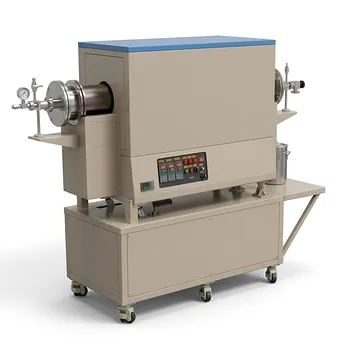
900°C Max Rotary Tube Furnace with 8 Inch 310S Alloy Tube and Optional Multi Zone Heating for Industrial Material Calcination
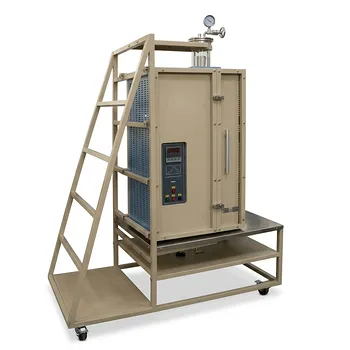
Split Vertical Tube Furnace with 1200C Quartz Tube and Stainless Steel Vacuum Flanges for Rapid Thermal Processing

High Temperature 1700C Tube Furnace with High Vacuum Turbomolecular Pump System and Multi Channel Mass Flow Controller Gas Mixer

1100C Tube Furnace with Vacuum Flange and Programmable Temperature Controller for Material Science and Industrial Heat Treatment
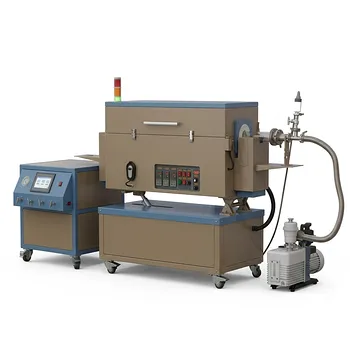
5 Inch Three Zone Rotary Tube Furnace with Integrated Gas Delivery System and 1200C Capability for Advanced Material CVD Processing

1200°C 5 Inch Vertical Quartz Tube Furnace with Stainless Steel Vacuum Flanges

High Temperature 1700C Six Zone Split Tube Furnace with Alumina Tube and Water Cooled Flanges
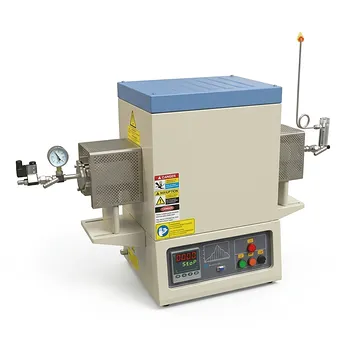
1700C Hydrogen Gas Tube Furnace with 60mm Alumina Process Tube and Integrated Hydrogen Safety Detector

Compact Vertical Split Quartz Tube Furnace with Stainless Steel Vacuum Flanges for Rapid Thermal Quenching and Controlled Atmosphere Material Processing

High Temperature 1700C Benchtop Tube Furnace with 5 Inch Heating Zone High Purity Alumina Tube and Vacuum Sealing Flanges
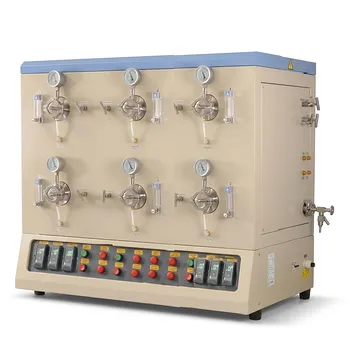
1200C High Throughput Multi Channel Tube Furnace with 50mm Quartz Tubes for Annealing and Material Phase Diagram Research

1800C High Temperature Compact Vacuum Tube Furnace with 60mm OD Alumina Tube and Kanthal MoSi2 Heating Elements

Three Zone Tube Furnace with 11 Inch or 15 Inch Quartz Tube and Hinged Flanges for Vacuum Atmosphere Heat Treatment

High Temperature 1700C Vertical Tube Furnace for Powder Spherification and Material Sintering
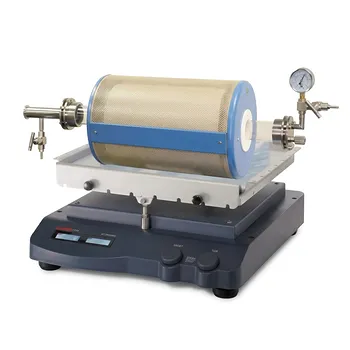
High Temperature Rocking Tube Furnace with Quartz Tube and Vacuum Flange for Materials Synthesis

High Temperature Automated 5 Inch Tube Furnace for Autonomous Material Research and Advanced Laboratory R&D
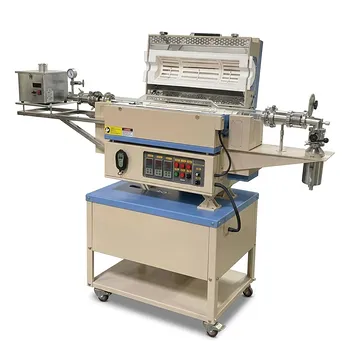
5 Inch Rotary Tube Furnace with Automatic Feeding and Receiving System 1200C Three Zone CVD Powder Processing