What is the role of a Tube Furnace in the preparation of Soft Carbon materials from organic precursors? Expert Guide
Updated 3 months ago
The preparation of soft carbon materials relies on the Tube Furnace to provide a precisely regulated environment for high-temperature thermal decomposition. Specifically, the furnace facilitates the carbonization of organic precursors—such as PTCDA or various biomass sources—under a strictly inert atmosphere at temperatures typically reaching 900 °C. This controlled environment ensures the development of specific microcrystalline structures and precise interlayer spacing required for efficient ion intercalation.
A tube furnace acts as a controlled chemical reactor that transforms organic precursors into structured carbon by balancing precise heating rates, sustained high temperatures, and an oxygen-free atmosphere. This technical precision is vital for defining the material's final graphitization degree and its suitability for electrochemical applications.
The Essential Mechanisms of the Tube Furnace
Atmospheric Control and Oxidation Prevention
The tube furnace creates a stable inert environment by introducing high-purity gases like nitrogen (N2) or argon (Ar). This oxygen-free shield is critical because it prevents the direct combustion of organic precursors at high temperatures.
By isolating the material from oxygen, the furnace allows for pyrolysis and aromatization reactions to occur. These chemical transitions transform raw organic matter into carbon skeletons without the loss of material to CO2 production.
Precision Thermal Programming
A defining feature of the tube furnace is the ability to maintain specific heating rates, such as 10 °C/min. Controlled ramping prevents thermal shock and ensures that volatile components are released gradually rather than explosively.
Furthermore, the furnace allows for constant temperature durations (soak times) at specific plateaus. These periods of sustained heat are necessary for the deep thermal decomposition of precursors like PTCDA to reach completion.
Structural Evolution of Soft Carbon
Thermal Decomposition and Impurity Removal
The tube furnace facilitates the removal of non-carbon components and volatile impurities through high-heat exposure. As precursors like biomass or glucose are heated, hydrogen and oxygen are driven off, increasing the elemental carbon content.
This process begins the formation of a preliminary microporous structure. The furnace provides the energy required to break complex organic bonds and reorganize the atoms into a more stable carbon framework.
Development of Microcrystalline Frameworks
At temperatures around 900 °C, the tube furnace enables the formation of precise interlayer spacing. This structural foundation is essential for the material’s future role in housing ions during battery charging and discharging.
The result is a microcrystalline structure with a specific degree of graphitization. The stability of the furnace’s temperature control ensures that these structures are uniform throughout the entire sample batch.
Understanding the Trade-offs
Heating Rate vs. Structural Integrity
While faster heating rates increase throughput, they can lead to the collapse of delicate microstructures. If volatiles escape too rapidly, the resulting soft carbon may lack the specific surface area or porosity required for high performance.
Conversely, extremely slow heating rates provide excellent structural control but significantly increase energy consumption and processing time. Finding the optimal balance is a key challenge in carbon synthesis.
Morphology Retention Challenges
Certain precursors, such as lignin, have low glass transition temperatures and may melt or collapse if heated too quickly. This requires a multi-stage heating profile, including a low-temperature stabilization phase (around 250 °C).
Failure to include these pre-carbonization steps in the tube furnace program can result in the loss of spherical morphology. This leads to a bulk material that is difficult to process into electrodes.
How to Apply This to Your Project
Recommendations for Material Synthesis
- If your primary focus is maximizing ion storage capacity: Target higher carbonization temperatures (near 900 °C) to ensure deep thermal decomposition and optimal interlayer spacing.
- If your primary focus is preserving precursor morphology: Incorporate a low-temperature oxidative stabilization step (200-300 °C) before proceeding to high-temperature carbonization.
- If your primary focus is high conductivity: Utilize an argon-hydrogen (Ar/H2) mixed atmosphere to facilitate complete dehydrogenation and a more ordered graphitic framework.
The tube furnace serves as the definitive tool for converting disordered organic matter into highly engineered soft carbon through the mastery of heat and atmosphere.
Summary Table:
| Furnace Function | Technical Mechanism | Impact on Soft Carbon |
|---|---|---|
| Atmospheric Control | Inert gas shielding (Ar/N2) | Prevents oxidation and enables pure pyrolysis |
| Thermal Programming | Controlled ramping (e.g., 10°C/min) | Prevents structural collapse; ensures uniform degassing |
| Soak Time Control | Sustained high heat (up to 900°C+) | Finalizes aromatization and microcrystalline spacing |
| Impurity Removal | High-temperature volatilization | Drives off H and O to increase elemental carbon purity |
Elevate Your Material Research with THERMUNITS
As a leading manufacturer of high-temperature laboratory equipment, THERMUNITS provides the technical precision required for advanced material science and industrial R&D. Our specialized thermal processing solutions are designed to give you total control over carbonization and graphitization processes, ensuring superior results for battery materials and beyond.
Our comprehensive product range includes:
- Tube Furnaces (Single/Multi-zone, Rotary, Vacuum)
- Muffle, Atmosphere, and Hot Press Furnaces
- CVD/PECVD Systems and Vacuum Induction Melting (VIM)
- Dental Furnaces, Electric Rotary Kilns, and Thermal Elements
Ready to optimize your synthesis workflow? Contact our experts today to find the perfect thermal solution for your lab and accelerate your material breakthroughs!
References
- Danni Du, Rutao Wang. Pre-lithiation carbon anodes mitigating potassium loss for high-performance potassium-ion energy storage devices. DOI: 10.1039/d4ta06451h
Mentioned Products
- High Temperature Dual Zone Rotating Tube Furnace 1500C Silicon Carbide Heating for Advanced Material Synthesis
- High Temperature 1700C Vertical Tube Furnace for Powder Spherification and Material Sintering
- Two Zone Rotary Tube Furnace for Powder CVD Coating and Core Shell Material Synthesis 1100C
- Automated 1200 C Tube Furnace for AI Material Research with 6 Inch OD and Sliding Flange
- 5 Inch Rotary Tube Furnace with Automatic Feeding and Receiving System 1200C Three Zone CVD Powder Processing
People Also Ask
- What is the function of CVD furnaces in graphene prep? Enhancing Photodetector Charge Transport
- Why use CVD and a tube furnace for Pd3P0.95/NC catalyst phosphidation? Ensure high phase purity and performance.
- CVD Tube Furnace Advantages for Pd-P Catalyst Durability: Precision Control for 40,000+ Cycles
- How does a rotary tube furnace improve the processing of granular materials? Enhance Uniformity and Reaction Kinetics
- How does a Chemical Vapor Deposition (CVD) tube furnace facilitate synchronized nitridation? Precision Nano-Engineering.

Tech Team · ThermUnits
Last updated on Jun 03, 2026
Related Products
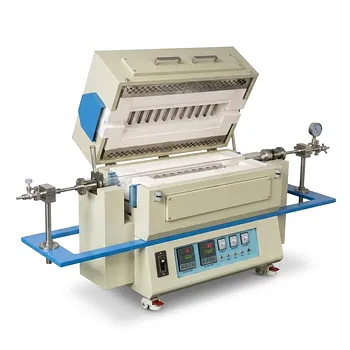
High Temperature Dual Zone Rotating Tube Furnace 1500C Silicon Carbide Heating for Advanced Material Synthesis

High Temperature 1700C Vertical Tube Furnace for Powder Spherification and Material Sintering
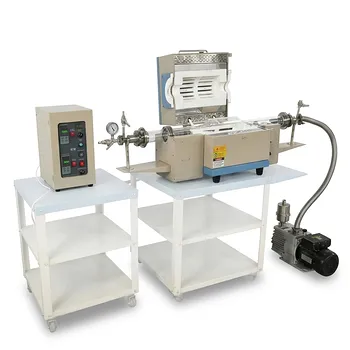
Two Zone Rotary Tube Furnace for Powder CVD Coating and Core Shell Material Synthesis 1100C
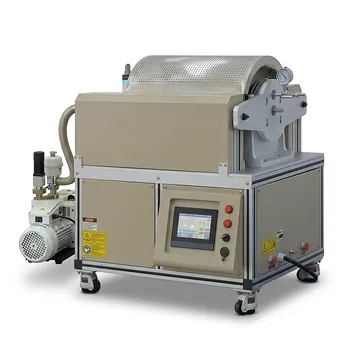
Automated 1200 C Tube Furnace for AI Material Research with 6 Inch OD and Sliding Flange
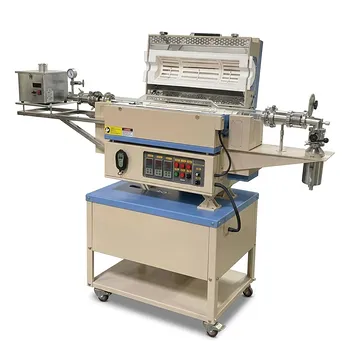
5 Inch Rotary Tube Furnace with Automatic Feeding and Receiving System 1200C Three Zone CVD Powder Processing

Compact Vertical Split Quartz Tube Furnace with Stainless Steel Vacuum Flanges for Rapid Thermal Quenching and Controlled Atmosphere Material Processing
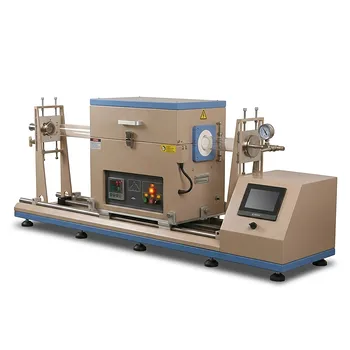
1200C Sliding Tube Furnace for Rapid Thermal Processing and CVD Graphene Growth with 100mm OD Capacity
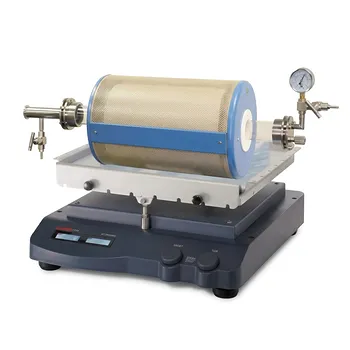
High Temperature Rocking Tube Furnace with Quartz Tube and Vacuum Flange for Materials Synthesis

Compact High Temperature 1600C Tube Furnace with 50mm Alumina Tube and Vacuum Flanges for Material Sintering

5 Inch Three Zone Rotary Tube Furnace with Integrated Gas Delivery System and 1200C Capability for Advanced Material CVD Processing
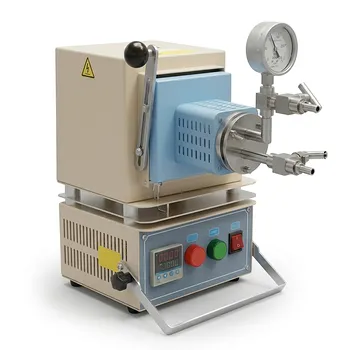
Compact Hybrid Muffle and Tube Furnace for 1000C Controlled Atmosphere Laboratory Material Sintering
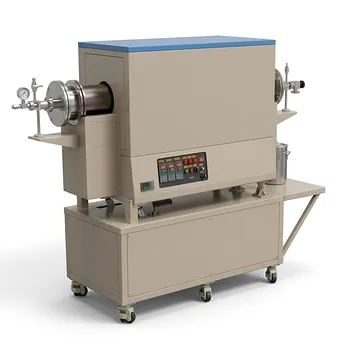
900°C Max Rotary Tube Furnace with 8 Inch 310S Alloy Tube and Optional Multi Zone Heating for Industrial Material Calcination
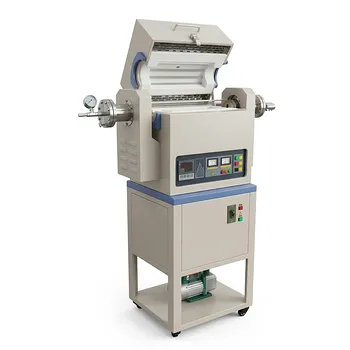
High Temperature Rotary Tilt Tubular Furnaces for Advanced Powder Sintering and Material Processing
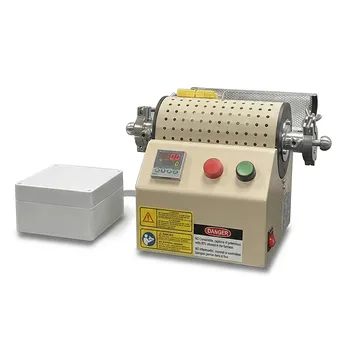
1000C Mini Tube Furnace with 20mm Quartz Tube and Vacuum Flanges for Material Science Research and Controlled Atmosphere Small Sample Processing
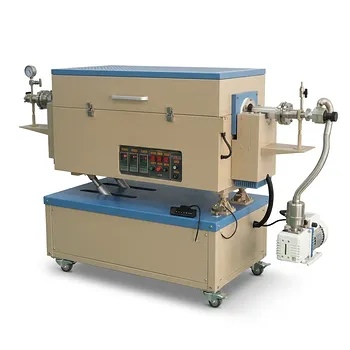
Three Zone Rotary Tube Furnace for High Temperature Powder Processing and Material Research
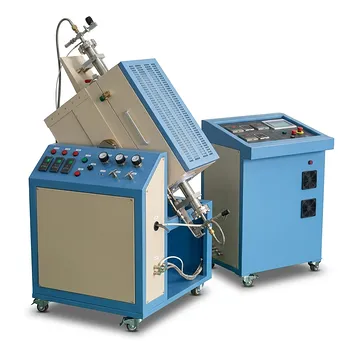
1100C High Pressure Rocking Tube Furnace with 2 Inch Super Alloy Processing Tube for Material Synthesis
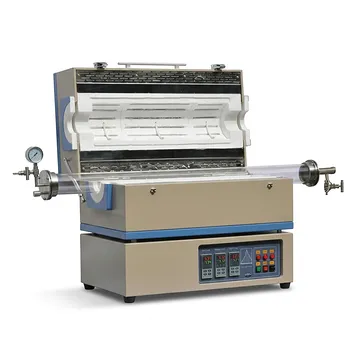
24 Inch Three Zone Split Tube Furnace with Optional Quartz Tube and Vacuum Flange System for High Temperature Material Synthesis

High Temperature Automated 5 Inch Tube Furnace for Autonomous Material Research and Advanced Laboratory R&D
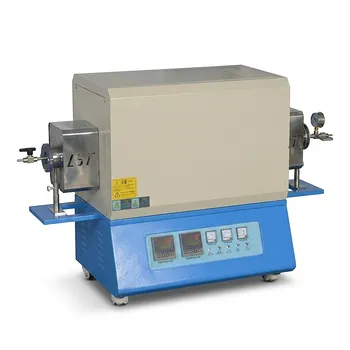
High Temperature Dual Zone Vacuum Tube Furnace for Material Research and CVD Processing
