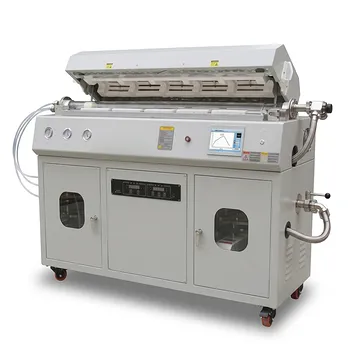
What role does a dual-temperature zone tube furnace play in the growth of MoS2 via CVD? Master Precise 2D Film Synthesis
Updated 3 months ago
The dual-temperature zone tube furnace serves as the foundational thermal reactor for Molybdenum Disulfide (MoS2) synthesis, providing independent control over precursor volatilization and substrate reaction. By establishing a precise axial temperature gradient, the furnace allows sulfur and molybdenum sources to be heated at their specific, disparate sublimation points while maintaining a stable high-temperature environment for film growth.
The dual-zone configuration is critical because it decouples the evaporation of precursors from the chemical reaction on the substrate. This separation ensures a stable and stoichiometric vapor concentration, which is the primary requirement for growing high-quality, large-area monolayer MoS2.
Independent Thermal Management of Precursors
Decoupling Evaporation from Reaction
In a dual-zone system, the first zone is dedicated to heating the sulfur powder to a relatively low temperature, typically around 200°C, for sublimation. The second zone is independently set to a much higher temperature, often between 750°C and 800°C, to facilitate the chemical reaction between the sulfur vapor and the molybdenum source.
Regulating Precursor Concentration Ratios
By controlling the zones separately, researchers can precisely regulate the local concentration of sulfur vapor. This stability is essential for maintaining the correct reactant ratios in the gas phase, which directly dictates the nucleation density and growth rate of the MoS2 film.
Optimizing the Gas-Phase Gradient
The furnace design creates a controlled flow of precursors from the high-concentration evaporation zones to the deposition zone. This axial temperature gradient ensures that the precursors remain in the vapor phase until they reach the substrate, preventing premature condensation or uncontrolled reactions.
Enhancing Crystal Quality and Uniformity
Suppressing Structural Defects
Precise control over the sulfur source temperature allows for the optimization of the sulfur vapor pressure. Maintaining a high sulfur concentration during growth enhances Mo-S covalent bonding, which effectively suppresses the formation of sulfur vacancy (Vs) defects.
Promoting Large-Area Monolayer Growth
A stable thermal environment in the second zone ensures that the MoS2 crystal grains grow into large, uniform, triangular monolayer domains. Without this independent control, fluctuations in temperature could lead to multi-layer growth or the formation of small, disordered crystal clusters.
Facilitating High-Quality Nucleation
The dual-zone setup allows for fine-tuning the nucleation phase of the CVD process. By adjusting the temperature ramp rates of each zone independently, the furnace can achieve high-quality nucleation on various substrates, such as Gallium Nitride (GaN) or Sapphire.
Understanding the Trade-offs
System Calibration and Heat Migration
One significant challenge is the thermal cross-talk between the two zones. Because the zones are adjacent within the same tube, heat from the high-temperature reaction zone can bleed into the low-temperature sulfur zone, potentially leading to over-evaporation of the sulfur powder.
Precursor Positioning Sensitivity
The physical placement of the precursors within the temperature gradient is highly sensitive. Even a slight shift in the position of the sulfur or molybdenum source relative to the zone centers can drastically alter the vapor flux, leading to inconsistencies in film thickness and coverage across the substrate.
How to Apply This to Your Project
Recommendations for Research and Production
- If your primary focus is reducing material defects: Prioritize the precise calibration of Zone 1 to maintain a consistent sulfur overpressure, which minimizes sulfur vacancies in the lattice.
- If your primary focus is achieving large-scale uniformity: Use the dual-zone gradient to establish a steady-state precursor flow, ensuring that the molybdenum source reacts completely and uniformly across the entire substrate area.
- If your primary focus is experimenting with new substrates: Adjust the Zone 2 reaction temperature independently to find the optimal thermal window for nucleation without affecting the sublimation rate of your sulfur source.
The dual-temperature zone tube furnace is the indispensable tool for transforming raw precursors into the high-performance 2D materials required for next-generation electronics.
Summary Table:
| Feature | Function in MoS2 Growth | Key Benefit |
|---|---|---|
| Zone 1 Control | Low-temp sulfur sublimation (~200°C) | Regulates stable sulfur vapor concentration |
| Zone 2 Control | High-temp reaction (~750-800°C) | Promotes large-area monolayer crystal growth |
| Thermal Gradient | Axial temperature management | Prevents premature precursor condensation |
| Independent Heating | Decouples evaporation from reaction | Minimizes sulfur vacancies and structural defects |
Elevate Your 2D Material Research with THERMUNITS
Precision is non-negotiable when synthesizing high-quality MoS2 thin films. THERMUNITS is a leading manufacturer of high-temperature laboratory equipment, providing the thermal precision required for advanced material science and industrial R&D.
Our advanced CVD/PECVD systems and Multi-Zone Tube Furnaces are engineered to provide the independent thermal control necessary to suppress defects and promote uniform crystal growth. Beyond CVD, we offer a comprehensive range of solutions, including:
- Muffle, Vacuum, and Atmosphere Furnaces
- Rotary, Hot Press, and Dental Furnaces
- Vacuum Induction Melting (VIM) & Electric Rotary Kilns
- High-Performance Thermal Elements
Ready to optimize your heat treatment process? Contact our expert engineering team today to find the perfect thermal processing solution for your laboratory.
References
- Jidong Jin, Jaekyun Kim. Improved Process Stability and Light Detection in Phototransistors via Inverted MoS<sub>2</sub>/a‐IGZO Heterojunction Integration. DOI: 10.1002/pssa.202400536
Mentioned Products
- High Temperature Dual Zone Split Tube Furnace for Advanced Atmosphere Sintering and Vacuum CVD Applications
- Dual Zone Tube Furnace 1100C with 11 Inch Quartz Tube and Vacuum Flanges for 8 Inch Wafer Processing
- High Temperature 1700C Dual Zone Tube Furnace for Material Science and Industrial Chemical Vapor Deposition Research
- Double Temperature Zone Double Cover Tube Furnace for High Temperature CVD and Vacuum Annealing
- High Temperature Dual Zone Rotating Tube Furnace 1500C Silicon Carbide Heating for Advanced Material Synthesis
People Also Ask
- What is the function of a dual-zone tube furnace in CVD for 2D perovskites? Optimize Precision & Film Uniformity
- How is a dual-temperature zone tube furnace configured for MXene-based metal phosphides? Expert Synthesis Guide
- What are the technical advantages of a dual-zone tube furnace for phosphidation? Optimize Cobalt Nanowall Synthesis.
- What are the core functions of a dual-zone tube furnace in the growth of FexTaSe2 single crystals? CVT Synthesis Guide
- What is the primary function of an industrial-grade dual-zone tube furnace? Mastering CuInP2S6 CVT Crystal Growth

Tech Team · ThermUnits
Last updated on Jun 03, 2026
Related Products
High Temperature Dual Zone Split Tube Furnace for Advanced Atmosphere Sintering and Vacuum CVD Applications
Dual Zone Tube Furnace 1100C with 11 Inch Quartz Tube and Vacuum Flanges for 8 Inch Wafer Processing
High Temperature 1700C Dual Zone Tube Furnace for Material Science and Industrial Chemical Vapor Deposition Research
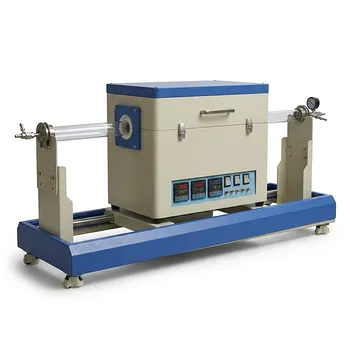
Double Temperature Zone Double Cover Tube Furnace for High Temperature CVD and Vacuum Annealing
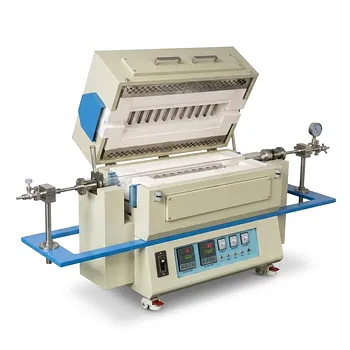
High Temperature Dual Zone Rotating Tube Furnace 1500C Silicon Carbide Heating for Advanced Material Synthesis
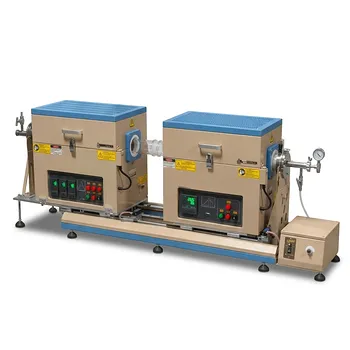
1200C Dual Temperature Zone Slidable Tube Furnace for 2D Material Growth and TCVD Synthesis
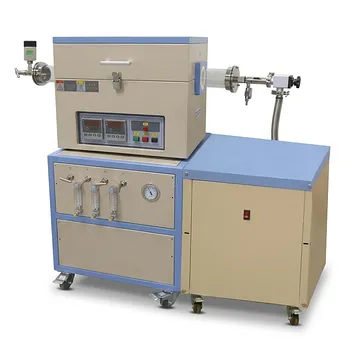
Dual Zone Quartz Tube Furnace with 80mm Diameter 1200C Max Temperature 3 Channel Gas Mixer and Vacuum Pump System
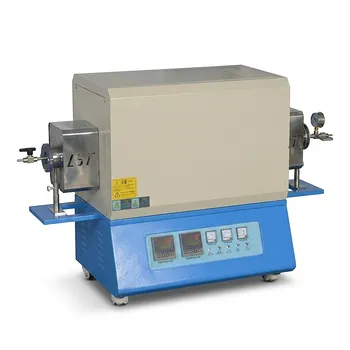
High Temperature Dual Zone Vacuum Tube Furnace for Material Research and CVD Processing
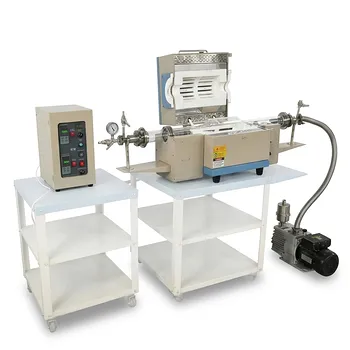
Two Zone Rotary Tube Furnace for Powder CVD Coating and Core Shell Material Synthesis 1100C
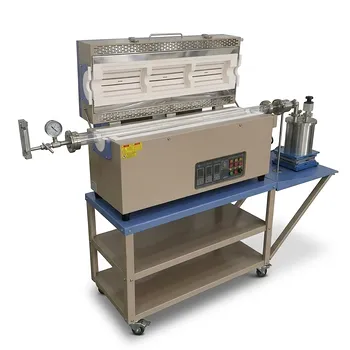
5 Inch Two Zone Rotary Tube Furnace 1100C for Powder CVD and Material Synthesis
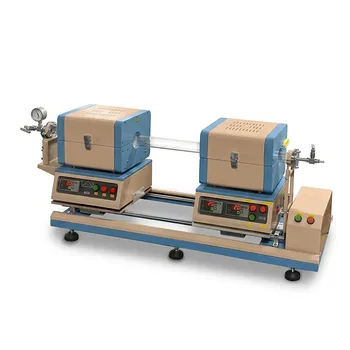
High Temperature 1200C Automatic Sliding Dual Zone Tube Furnace for 2D Transition Metal Dichalcogenides Growth and Material Sublimation Research
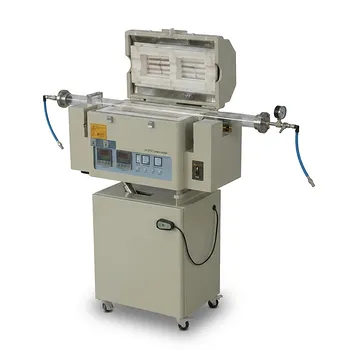
Double Temperature Revolving Tube Furnace with Precision Rotation and Adjustable Inclination for Advanced Material Research
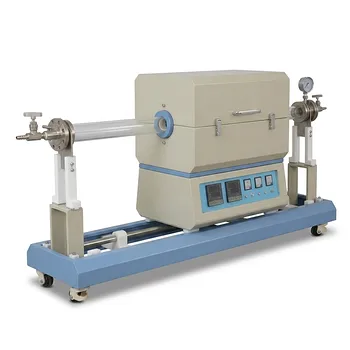
Double Zone Fast Heating Tube Furnace High Temperature Vacuum Atmosphere System
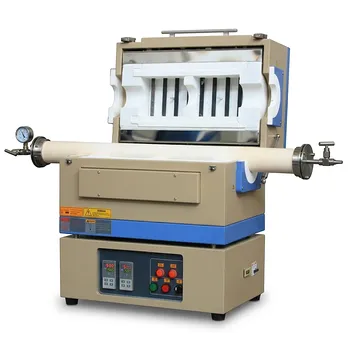
1500C Two Zone Split Tube Furnace with Vacuum Flange and 80mm Alumina Tube
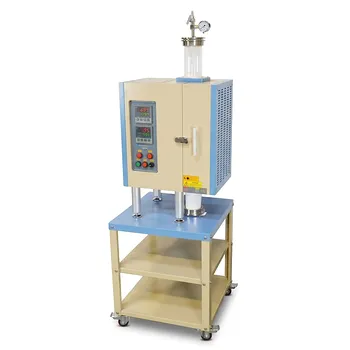
1100°C Dual Zone Split Vertical Tube Furnace with 4 Inch Quartz Tube and Vacuum Sealing Flanges
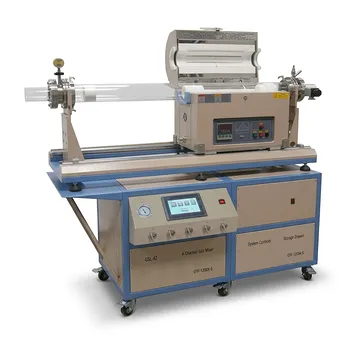
Dual Tube 100mm 80mm CVD Sliding Furnace with 4 Channel Gas Mixing and Vacuum System
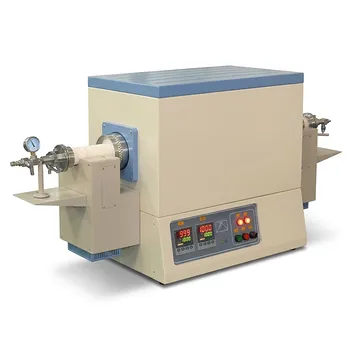
High Temperature 1700C Dual Zone Rotary Tube Furnace with 60mm Alumina Tube and Precision Rotation Control
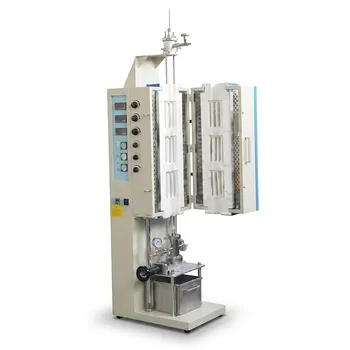
High Temperature Dual Zone Tube Furnace for Material Science Research and Professional Thermal Processing
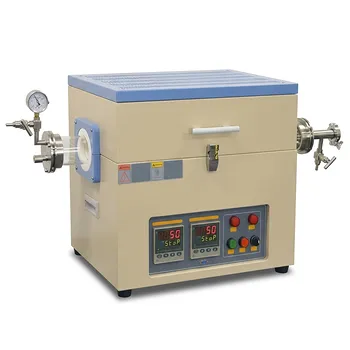
1200C Dual Zone Split Tube Furnace with Fused Quartz Tube and Vacuum Flanges Available in 60mm 80mm and 100mm Diameters