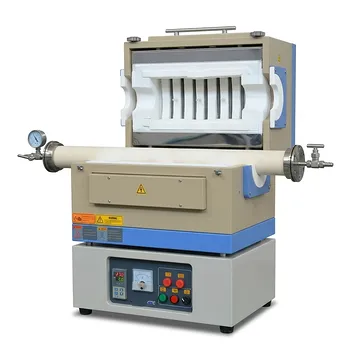
Role of tube furnaces in polyimide TR process? Achieve high-performance PBO conversion and gas separation.
Updated 3 months ago
Industrial high-temperature tube furnaces are the critical hardware required to facilitate the solid-state conversion of polyimide films into polybenzoxazole (PBO). By providing a precise thermal range of 350 to 450 °C and maintaining a micro-positive pressure nitrogen environment, these furnaces enable the structural rearrangement necessary for advanced gas separation applications. This controlled environment ensures the removal of reaction by-products while preventing the oxidative degradation of the polymer matrix.
The tube furnace acts as a controlled reactor that manages the delicate balance between high-temperature thermal energy and chemical purity. Its primary role is to drive the molecular rearrangement of polyimide into a TR-PBO structure while maintaining a uniform thermal field and an inert atmosphere.
Precision Thermal Management for Structural Conversion
Achieving the Critical Temperature Window
The thermal rearrangement (TR) process specifically requires a temperature range between 350 and 450 °C. The tube furnace provides the stability needed to maintain these temperatures over extended periods, which is essential for the solid-state reaction that transforms polyimide into polybenzoxazole (PBO).
Uniform Thermal Field Distribution
A uniform thermal field within the furnace chamber is vital to ensure that the entire surface area of the film undergoes simultaneous rearrangement. Inconsistent heating can lead to localized stresses or incomplete conversion, which compromises the mechanical integrity and separation efficiency of the final membrane.
Programmable Heating Cycles
Advanced tube furnaces allow for the implementation of precise heating programs, often required for the transition from thermal imidization (converting polyamic acid to polyimide) to the final TR process. This step-by-step ramp-up prevents thermal shock and ensures the formation of a stable chemical structure.
Atmospheric Control and By-product Removal
Maintenance of an Inert Environment
To prevent the oxidative degradation of the film at high temperatures, the furnace maintains a stable flow of nitrogen or other inert gases. This creates a protective "blanket" that excludes oxygen, which would otherwise destroy the polymer chains before the rearrangement is complete.
The Role of Micro-Positive Pressure
Industrial tube furnaces operate under a micro-positive pressure, which serves two functions: it prevents outside air from leaking into the chamber and ensures a consistent flow rate for the inert gas. This pressure is fundamental to maintaining the purity of the reaction environment.
Efficient Removal of Reaction By-products
As polyimide rearranges into PBO, it releases by-products such as carbon dioxide (CO2). The furnace's continuous gas flow efficiently sweeps these molecules away from the film surface, preventing them from interfering with the reaction kinetics or becoming trapped within the polymer matrix.
Impact on Final Material Performance
Development of High Free Volume
The precise control provided by the tube furnace directly influences the free volume of the TR-PBO film. By managing the rate of rearrangement and by-product removal, the furnace helps create the "micro-voids" necessary for superior gas permeability.
Prevention of Molecular Chain Breaking
Inadequate atmosphere sealing or temperature spikes can induce unintended molecular chain breaking rather than controlled rearrangement. The superior sealing performance of an industrial-grade furnace ensures that the polymer matrix transforms into a ceramic-like phase or PBO structure without losing its structural foundation.
Understanding the Trade-offs and Pitfalls
Atmosphere Purity vs. Gas Consumption
Maintaining a high-purity inert atmosphere requires a continuous, high-volume flow of nitrogen. While essential for preventing oxidation, this increases operational costs and requires sophisticated monitoring to ensure the micro-positive pressure remains stable throughout the cycle.
Heating Rates and Membrane Fragility
If the temperature is ramped too quickly, the rapid escape of CO2 by-products can cause physical defects or "pinholes" in the film. Balancing the speed of production with the delicate kinetics of the solid-state conversion is a frequent challenge for operators.
Scaling Constraints of the Tube Geometry
While tube furnaces provide excellent atmosphere control, their cylindrical geometry can limit the width of the film that can be processed. Scaling up from laboratory samples to industrial-wide rolls requires careful consideration of the uniform thermal field across larger diameters.
How to Apply This to Your Project
Recommendations for Implementation
- If your primary focus is gas separation efficiency: Prioritize a furnace with high-precision gas flow controllers to ensure the rapid and complete removal of CO2 by-products during the 350-450 °C phase.
- If your primary focus is membrane durability: Focus on furnaces with multi-zone heating capabilities to guarantee a perfectly uniform thermal field, which minimizes internal stresses during the rearrangement.
- If your primary focus is preventing material degradation: Invest in a system with advanced vacuum-sealing capabilities and oxygen sensors to maintain a strictly inert environment throughout the heating and cooling cycles.
The industrial high-temperature tube furnace is not merely a heater, but a precision instrument that dictates the molecular architecture and ultimate separation performance of TR-PBO films.
Summary Table:
| Key Role | Requirement/Feature | Impact on TR-PBO Film |
|---|---|---|
| Thermal Conversion | Stable 350 - 450 °C range | Facilitates solid-state conversion to PBO structure. |
| Atmosphere Control | Micro-positive nitrogen pressure | Prevents oxidative degradation and chain breaking. |
| Thermal Uniformity | Multi-zone heating elements | Ensures consistent rearrangement and mechanical integrity. |
| By-product Removal | Continuous inert gas flow | Sweeps away CO2 to create high-free-volume micro-voids. |
Elevate Your Material Research with THERMUNITS
Are you looking to optimize the thermal rearrangement (TR) process for high-performance membranes? THERMUNITS is a leading manufacturer of high-temperature laboratory equipment, providing the precision hardware necessary for advanced material science and industrial R&D.
Our Industrial Tube Furnaces are specifically engineered to provide the exact thermal stability (350-450 °C) and ultra-pure atmospheric control required for superior polyimide-to-PBO conversion. Beyond tube furnaces, we offer a comprehensive suite of solutions including Vacuum, Atmosphere, Hot Press, and CVD/PECVD systems to support your entire heat treatment workflow.
Partner with THERMUNITS for:
- Superior sealing performance for oxidative-sensitive materials.
- Programmable multi-zone heating for perfect thermal uniformity.
- Expert technical support for scaling from lab to industrial R&D.
Contact our technical team today to find your ideal thermal solution!
References
- Mario Rojas-Rodríguez, Carla Aguilar‐Lugo. Thermally Rearranged (TR) Polybenzoxazoles from <i>o</i>-Substituted Precursor Polyimides with Phenyl Pendant Groups: Synthesis, Properties, and Thermal Rearrangement Conditions. DOI: 10.1021/acs.macromol.4c00169
Mentioned Products
- Multi Position Tube Furnace 1100C for Laboratory Material Research and Advanced Industrial Thermal Processing
- High Temperature Tube Furnace 1500C with Sliding Flanges and 50mm OD for Rapid Thermal Processing Fast Heating and Cooling
- High Temperature 1700C Vertical Tube Furnace for Powder Spherification and Material Sintering
- High Temperature 1700C Vertical Split Tube Furnace for Material Quenching and Single Crystal Growth
- Compact High Temperature 1600C Tube Furnace with 50mm Alumina Tube and Vacuum Flanges for Material Sintering
People Also Ask
- Why use a tube furnace for oxygen annealing LaCrO3/LaMnO3? Optimize Phase Transition & Magnetic Performance.
- What key role does a laboratory high-temperature tube furnace play in the production of carbon nanofibers? Guide
- How is a laboratory high-temperature tube furnace utilized to research the products of aluminothermic reduction? Advanced Metallurgical Solutions
- What is the role of a laboratory tube furnace in the carbonization process of porous carbon foam (PCF)? Master 3D Synthesis
- What role does a laboratory tube furnace play in the pyrolysis and carbonization of biomass? Optimize Thermal Research.

Tech Team · ThermUnits
Last updated on Jun 02, 2026
Related Products
Multi Position Tube Furnace 1100C for Laboratory Material Research and Advanced Industrial Thermal Processing
High Temperature Tube Furnace 1500C with Sliding Flanges and 50mm OD for Rapid Thermal Processing Fast Heating and Cooling

High Temperature 1700C Vertical Tube Furnace for Powder Spherification and Material Sintering
High Temperature 1700C Vertical Split Tube Furnace for Material Quenching and Single Crystal Growth

Compact High Temperature 1600C Tube Furnace with 50mm Alumina Tube and Vacuum Flanges for Material Sintering

1100C Tube Furnace with Vacuum Flange and Programmable Temperature Controller for Material Science and Industrial Heat Treatment
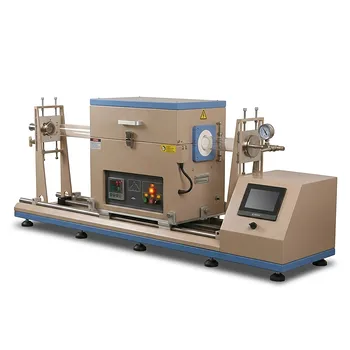
1200C Sliding Tube Furnace for Rapid Thermal Processing and CVD Graphene Growth with 100mm OD Capacity

High Temperature 1700C Benchtop Tube Furnace with 5 Inch Heating Zone High Purity Alumina Tube and Vacuum Sealing Flanges

High Temperature 1700C Tube Furnace with High Vacuum Turbomolecular Pump System and Multi Channel Mass Flow Controller Gas Mixer
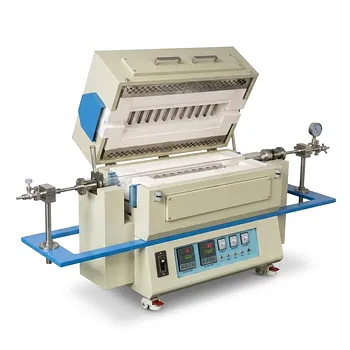
High Temperature Dual Zone Rotating Tube Furnace 1500C Silicon Carbide Heating for Advanced Material Synthesis
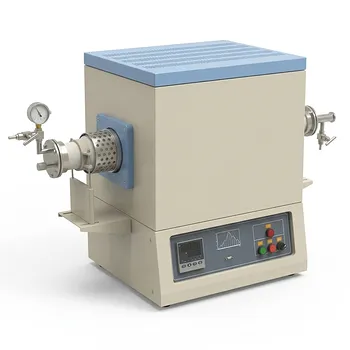
1750°C High Temperature Benchtop Vacuum Atmosphere Tube Furnace with Kanthal Super 1800 Heating Elements and 60mm Alumina Processing Tube
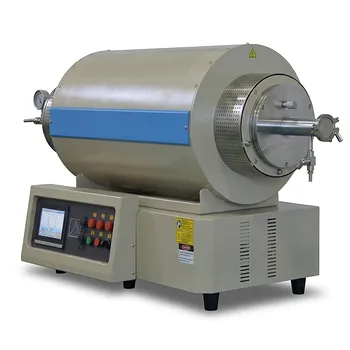
1200C Max Three Zone Tube Furnace 6 Inch OD Max with Tube and Flange
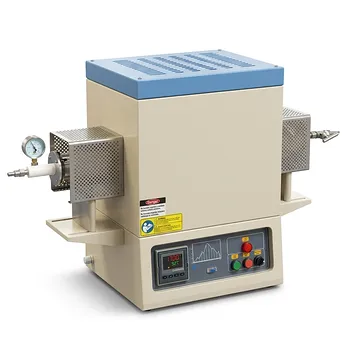
High Temperature Three Zone Tube Furnace 1700C with Alumina Tube and Water Cooled Flanges
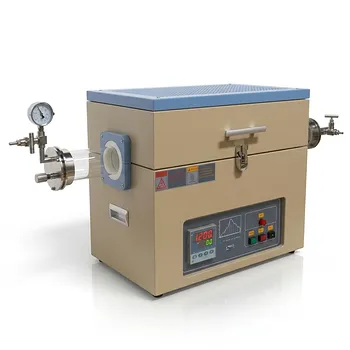
High Temperature 1200C Split Tube Furnace with Optional Quartz Tube Sizes and Vacuum Sealing Flanges for Material Science Research
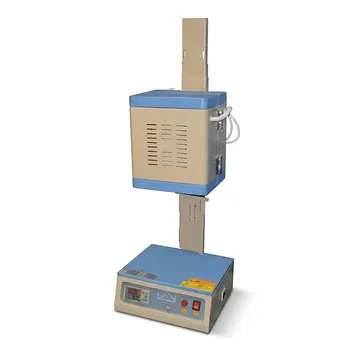
High Temperature Vertical Split Tube Furnace with PID Temperature Controller for 1 and 2 Inch Processing Tubes

High Temperature Automated 5 Inch Tube Furnace for Autonomous Material Research and Advanced Laboratory R&D
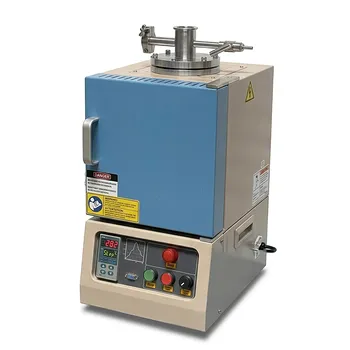
High Temperature Hybrid Muffle and Tube Furnace with Vacuum Capability and PID Control
High Temperature Muffle Furnace with Alloy Chamber for Debinding and Sintering Applications
High Temperature 1500C Benchtop Muffle Furnace 3.6L Alumina Fiber Chamber Programmable Controller Sintering Annealing Carbonization Thermal Processing System