What is the role of hydrogen (H2) carrier gas flow control in MoSe2 growth? Optimize Synthesis & Morphology
Updated 3 months ago
Hydrogen (H₂) flow control is the primary mechanism for regulating the chemical kinetics and structural morphology of single-layer Molybdenum Diselenide (MoSe₂) during synthesis. It acts as both a reducing agent that activates metal precursors and a dynamic etching agent that shapes the resulting crystal domains. By precisely tuning the H₂ ratio through mass flow controllers, researchers can balance the rate of material deposition against the removal of unstable atoms to ensure high-quality, single-crystal growth.
Core Takeaway: Effective MoSe₂ growth relies on H₂ flow control to manage the delicate equilibrium between precursor reduction and atomic etching. This precision determines whether the material forms as a continuous, high-quality monolayer or an irregular, multi-layered film.
The Chemical Role of Hydrogen in Precursor Activation
Reduction of Molybdenum Oxides
In a typical Chemical Vapor Deposition (CVD) process, hydrogen serves as a critical reducing agent for the metal precursor. It converts Molybdenum Trioxide (MoO₃) vapor into molybdenum suboxides (MoO₃₋ₓ), which are significantly more reactive with selenium vapor.
Facilitating Selenization
The presence of H₂ facilitates the chemical reaction between the suboxide and selenium (Se) atoms. This promotes a thorough selenization process, which is essential for the formation of the desired hexagonal-phase crystal structure in the MoSe₂ lattice.
Managing Precursor Concentration
The flow rate of H₂ directly influences the residence time and effective concentration of these precursors on the substrate. Stable flow ensures that the reaction zone maintains a consistent chemical potential, preventing localized fluctuations that could lead to non-uniform growth.
Morphology Regulation and Domain Shaping
The Growth-Etching Balance
Hydrogen flow control allows for the dynamic management of the growth and etching processes. While H₂ aids in adding atoms to the crystal lattice, it also acts as a "chemical scissor" that removes weakly bonded or unstable atoms from the edges of the growing film.
Achieving Hexagonal Single Crystals
By appropriately reducing the H₂ flow rate, the system favors the formation of regular hexagonal single-crystal domains. This controlled environment minimizes defects and ensures that the growth proceeds in a lateral epitaxial mode, which is necessary for creating large-area monolayers.
Edge Structure Compensation
High-precision adjustment of the hydrogen ratio provides atmospheric compensation for the edge structures. Increasing the flow rate enhances the etching of unstable edges, effectively "polishing" the crystal during growth to maintain structural integrity and high crystallinity.
Kinetic Control and Vapor Transport
Transport of Selenium Vapor
As a component of the carrier gas, H₂ (often mixed with Argon) regulates the transport rate of selenium vapor from the source to the reaction zone. This control is vital for maintaining the optimal Se:Mo precursor ratio, which dictates the final thickness and stoichiometry of the film.
Preventing Over-Reduction
Precise control is necessary to prevent over-reduction of the precursors, which can lead to metallic clusters rather than semiconducting MoSe₂. Limiting H₂ to trace amounts—often as low as a few sccm—ensures the reaction kinetics remain within the window for monolayer formation.
Fluid Pressure and Side Reactions
The total carrier gas flow determines the fluid pressure distribution within the furnace chamber. A managed flow suppresses unwanted side reactions and ensures that the material forms a continuous film rather than isolated, disordered particles.
Understanding the Trade-offs and Pitfalls
Excess Hydrogen and Lattice Damage
While H₂ is necessary for reduction, an excessive flow rate can lead to aggressive etching. This may result in "holey" films or the complete removal of the monolayer, as the etching rate overtakes the growth rate.
Insufficient Hydrogen and Poor Crystallinity
Conversely, inadequate H₂ flow leads to insufficient reduction of MoO₃. This results in poor reactivity, leading to incomplete selenization, low surface coverage, and the presence of unwanted oxide phases within the MoSe₂ film.
Thermal Mismatch During Cooling
The role of carrier gas extends to the cooling phase, where flow management helps control the natural cooling rate. Failure to stabilize the atmosphere during this stage can lead to thermal mismatch stress, causing the thin MoSe₂ layer to crack or peel from the substrate.
How to Apply This to Your Synthesis Goals
To achieve the best results in MoSe₂ growth, your H₂ flow strategy must align with your specific material requirements:
- If your primary focus is Maximum Monolayer Coverage: Use a moderate H₂ flow to ensure complete precursor reduction and promote lateral growth across the substrate.
- If your primary focus is High Crystal Quality: Prioritize a lower, highly stable H₂ flow to favor the formation of perfectly oriented hexagonal domains with minimal defects.
- If your primary focus is Precise Thickness Control: Carefully calibrate the H₂:Ar ratio to tune the Se transport rate, preventing the transition from monolayer to bilayer growth.
Mastering the balance of hydrogen flow transforms it from a simple carrier gas into a powerful tool for atomic-scale engineering of 2D materials.
Summary Table:
| Role of H2 Flow | Impact on MoSe2 Growth | Key Benefit |
|---|---|---|
| Precursor Reduction | Converts MoO3 to reactive molybdenum suboxides. | Activates precursors for efficient selenization. |
| Morphology Control | Manages the growth-etching balance of crystals. | Ensures regular hexagonal single-crystal domains. |
| Vapor Transport | Regulates the Se:Mo precursor transport ratio. | Prevents over-reduction and maintains stoichiometry. |
| Atmospheric Tuning | Provides edge structure compensation during growth. | Minimizes defects and improves lateral crystallinity. |
| Cooling Stability | Manages the cooling rate and fluid pressure. | Prevents thermal mismatch stress and cracking. |
Elevate Your Material Science Research with THERMUNITS
Precise control over chemical kinetics is the key to mastering 2D material synthesis like MoSe2. As a leading manufacturer of high-temperature laboratory equipment, THERMUNITS provides the advanced thermal processing solutions required for rigorous industrial R&D and material science applications.
Whether you need precision CVD/PECVD systems for monolayer growth, or high-performance Tube, Vacuum, and Atmosphere furnaces, our equipment ensures the stable flow control and temperature uniformity your research demands. Our comprehensive range includes:
- CVD/PECVD & Tube Furnaces for atomic-scale engineering.
- Vacuum Induction Melting (VIM) & Hot Press Furnaces for advanced metallurgy.
- Muffle, Rotary, & Dental Furnaces for versatile heat treatment.
Ready to enhance your lab's efficiency and crystal quality? Contact us today to find the perfect thermal solution for your project!
References
- Jitendra Singh, Hung‐Wei Yen. Growth of Wafer‐Scale Single‐Crystal 2D Semiconducting Transition Metal Dichalcogenide Monolayers. DOI: 10.1002/advs.202307839
Mentioned Products
- Molybdenum Disilicide MoSi2 Thermal Elements Electric Furnace Heating Element High Temperature Resistance
- High Temperature Bench Top Muffle Furnace 1700C with Integrated Evaporating Particle Collection and 8x8x8 Alumina Fiber Chamber
- High Temperature Muffle Furnace with Dual Controllers and 36L Large Chamber 1700C Max
- High Temperature Benchtop Muffle Furnace 1700C 10L Chamber Alumina Fiber Insulation MoSi2 Heating Elements
- 1750C Bench Top Muffle Furnace 3.6L High Grade Molybdenum Disilicide Heating Elements Laboratory Heat Treatment Equipment
People Also Ask
- What role do MoSi2 heating elements play in high-temperature smelting? Precision for Ferronickel & Slag Research
- Why is the selection of high-performance thermal elements critical for high-temperature testing? Ensure Data Integrity.
- How do electric thermal elements compare to combustion-based heating systems? Maximize Your Lab's Energy Efficiency
- What are the primary functions of an electric resistance furnace? Enhancing Precision in Industrial Thermal Processing
- How do optimized control schemes for electric resistance furnaces ensure accuracy? Enhance Heat Treatment Stability.

Tech Team · ThermUnits
Last updated on Jun 03, 2026
Related Products
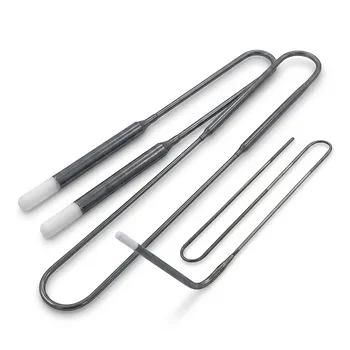
Molybdenum Disilicide MoSi2 Thermal Elements Electric Furnace Heating Element High Temperature Resistance
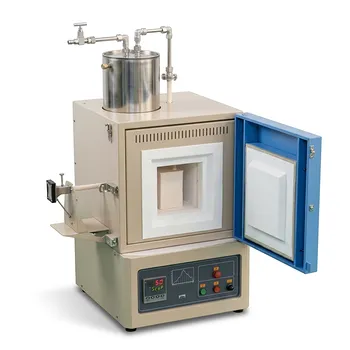
High Temperature Bench Top Muffle Furnace 1700C with Integrated Evaporating Particle Collection and 8x8x8 Alumina Fiber Chamber
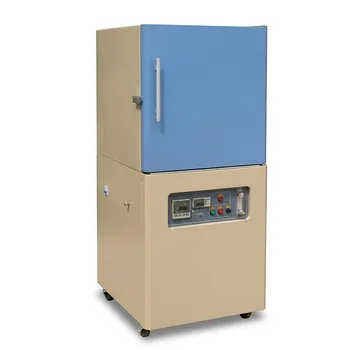
High Temperature Muffle Furnace with Dual Controllers and 36L Large Chamber 1700C Max
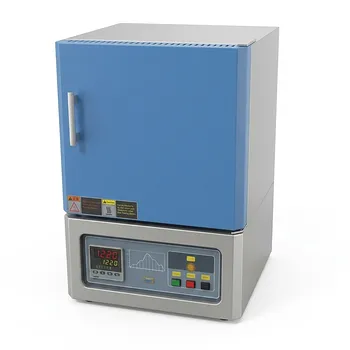
High Temperature Benchtop Muffle Furnace 1700C 10L Chamber Alumina Fiber Insulation MoSi2 Heating Elements
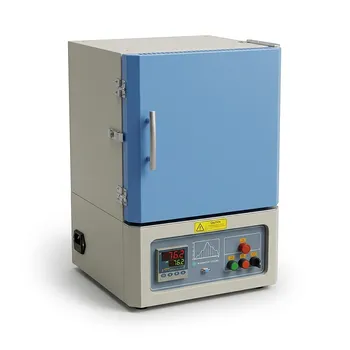
1750C Bench Top Muffle Furnace 3.6L High Grade Molybdenum Disilicide Heating Elements Laboratory Heat Treatment Equipment
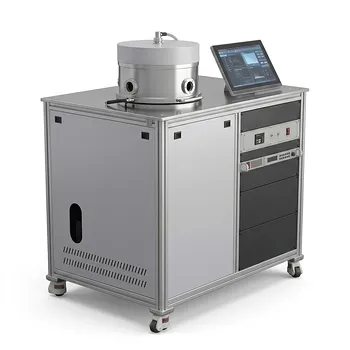
Inclined Rotary Plasma Enhanced Chemical Vapor Deposition PECVD System for Thin Film Deposition and Nanomaterial Synthesis
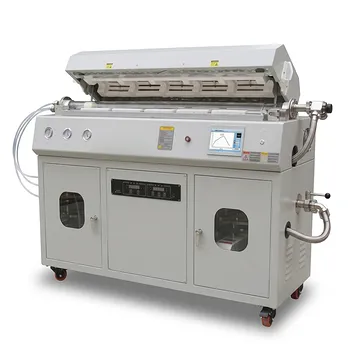
Multi Heating Zones CVD Tube Furnace System for Precision Chemical Vapor Deposition and Advanced Material Synthesis
Compact Spark Plasma Sintering SPS Furnace 1200 C Max 100 MPa Pressure High Speed Sintering System for Material Research
Versatile Chemical Vapor Deposition Tube Furnace System for Advanced Material Research and Industrial Coating Processes
1500C 3-Zone Rotary Tube Furnace 60mm with Automatic Powder Feeding and Receiving System for Continuous Material Synthesis
Chemical Vapor Deposition CVD System Slide PECVD Tube Furnace with Liquid Gasifier PECVD Machine
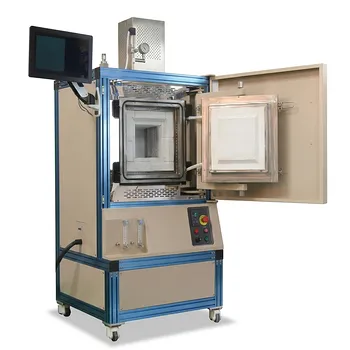
High Temperature Hydrogen Atmosphere Box Furnace 1650C Max Reducing Environment Material Synthesis System 8x8x8 Chamber
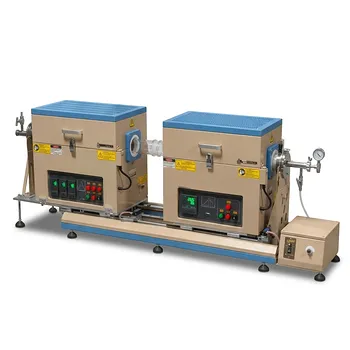
1200C Dual Temperature Zone Slidable Tube Furnace for 2D Material Growth and TCVD Synthesis
High Temperature Induction Melting System with Integrated Ultra High Purity Glove Box for Metallic Alloy Processing
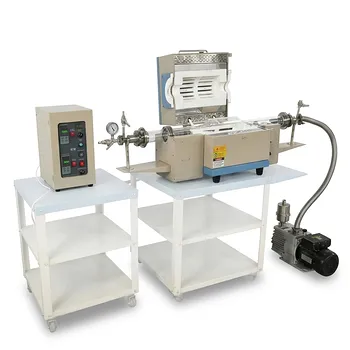
Two Zone Rotary Tube Furnace for Powder CVD Coating and Core Shell Material Synthesis 1100C
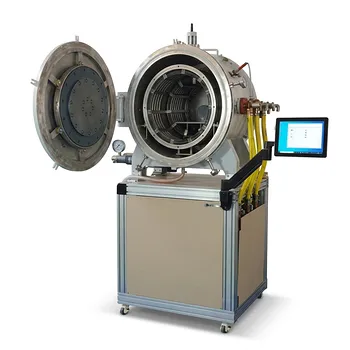
1600°C Cold Wall High Vacuum Chamber Furnace with Molybdenum Heating and 400mm Cube Work Zone
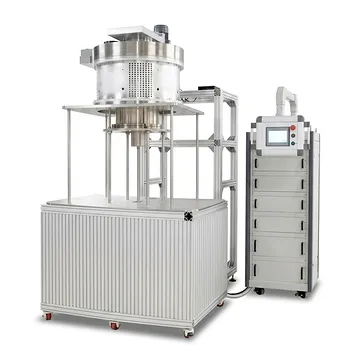
915MHz MPCVD Diamond Machine Microwave Plasma Chemical Vapor Deposition System Reactor
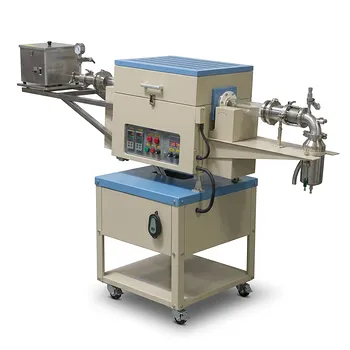
Two Zone Rotary CVD Furnace with Automatic Feeding and Receiving System for Powder Processing
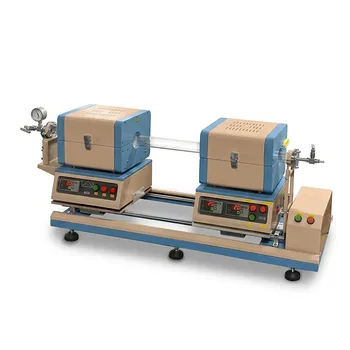
High Temperature 1200C Automatic Sliding Dual Zone Tube Furnace for 2D Transition Metal Dichalcogenides Growth and Material Sublimation Research