What is the role of KOH/NaOH in chemical activation for bitumen-based carbon? Master Precise Porosity Development.
Updated 5 months ago
Potassium hydroxide (KOH) and sodium hydroxide (NaOH) serve as powerful chemical activating agents that physically and chemically transform bitumen precursors into high-performance activated carbon. These strong alkalis trigger high-temperature etching reactions that erode the carbon skeleton, creating a dense network of micropores and mesopores while simultaneously introducing active functional groups to the material's surface.
Core Takeaway: KOH and NaOH act as catalytic etchants that decompose the carbon matrix at high temperatures, dramatically increasing the specific surface area and structural porosity required for advanced adsorption and energy storage applications.
The Mechanism of Chemical Etching
Thermal Activation and Corrosion
In the high-temperature environment of a tube furnace—typically between 600°C and 1000°C—KOH and NaOH melt and penetrate the internal structure of the carbon precursor. This triggers an in-situ etching reaction where the alkali chemically reacts with the carbon atoms, effectively "corroding" the carbon skeleton.
Removal of Amorphous Substances
The activation process specifically targets and removes amorphous substances trapped between carbon layers. By clearing these disordered carbon regions, the chemical agents open up the internal architecture of the material, which is essential for developing a high-degree of internal surface area.
Carbon Layer Peeling
As the temperature rises, the chemical reaction causes the carbon layers to peel and exfoliate. This structural breakdown transforms a low-surface-area precursor into a highly porous framework, often increasing the specific surface area from negligible levels to over 1000 m²/g.
Structural Transformation and Pore Development
Creation of Hierarchical Porosity
The primary role of these alkalis is the generation of extensive microporous and mesoporous structures. These pores are categorized by size, with a specific focus on ultramicropores which are critical for the physical interception of small molecular pollutants and ions.
Optimizing Pore Size Distribution
The chemical activation process does not just create pores randomly; it helps optimize pore size distribution. This ensures the resulting activated carbon has the specific "highway" (mesopores) and "destination" (micropores) structures needed for efficient mass transfer during adsorption.
In-Situ Metal Reduction
At higher temperatures (around 800°C), KOH can be reduced to metallic potassium. This metallic vapor intercalates between the carbon layers, expanding the lattice and further increasing the porosity before being washed away during the post-activation cleaning phase.
Surface Functionalization and Adsorption
Introduction of Active Groups
Beyond physical structural changes, KOH and NaOH modify the chemical nature of the carbon surface. The activation process introduces active functional groups, such as hydroxyl (-OH) and carboxyl (-COOH) groups, which serve as chemical bonding sites.
Enhanced Adsorption Capacity
These functional groups significantly improve the chemical adsorption of specific pollutants, such as polyiodides or electrolyte ions. The combination of high physical surface area and chemical reactivity makes the carbon highly effective for both liquid and gas-phase filtration.
The Role of the Tube Furnace Environment
Inert Atmosphere Protection
The tube furnace provides a continuous nitrogen or argon atmosphere, which is vital for the process. This oxygen-free environment ensures that the carbon material is not lost to air oxidation while the strong alkali is etching the surface.
Uniform Thermal Field
A tube furnace provides a precisely controlled thermal field and a stable heating rate (typically 3-10°C per minute). This precision is essential for ensuring a uniform degree of activation across the entire batch, preventing localized over-activation or under-developed pores.
Understanding the Trade-offs
Material Loss and Yield
The very process that creates porosity—etching—also results in carbon weight loss. Over-activation or excessively high temperatures can lead to "burn-off," where too much of the carbon matrix is consumed, significantly reducing the final yield of the product.
Equipment Corrosion
The use of strong alkalis like KOH and NaOH at high temperatures is highly corrosive to equipment. Standard quartz or ceramic tubes used in furnaces can be degraded over time by alkali vapors, necessitating specialized liners or frequent maintenance of the furnace chamber.
Post-Processing Requirements
Unlike physical activation (using steam or CO2), chemical activation requires an intensive washing step. Residual potassium or sodium compounds must be neutralized and removed using acid and deionized water to clear the newly formed pores and achieve the desired purity.
How to Apply This to Your Project
Selecting Activation Parameters
- If your primary focus is Maximum Surface Area: Utilize KOH at temperatures between 750°C and 800°C with a high alkali-to-carbon ratio to maximize the etching effect and pore development.
- If your primary focus is High Material Yield: Opt for lower activation temperatures (near 600°C) and shorter residence times to prevent excessive carbon consumption.
- If your primary focus is Specific Chemical Adsorption: Focus on maintaining moderate temperatures that preserve the introduction of hydroxyl and carboxyl functional groups without collapsing the pore structure.
By precisely controlling the interaction between the alkali agent and the carbon precursor within the stable environment of a tube furnace, you can engineer a material with the exact pore architecture and surface chemistry required for your specific application.
Summary Table:
| Feature | Role of KOH/NaOH | Impact on Carbon Structure |
|---|---|---|
| Chemical Etching | High-temp corrosion of skeleton | Removes amorphous substances; creates micropores |
| Pore Development | Hierarchical porosity creation | Boosts surface area (>1000 m²/g) for adsorption |
| Functionalization | Introduction of active groups | Adds -OH and -COOH for improved chemical bonding |
| Metal Reduction | Metallic vapor intercalation | Expands carbon lattice for deeper pore networks |
Advance Your Material Synthesis with THERMUNITS
The chemical activation of bitumen requires extreme thermal precision and atmosphere control to prevent oxidation and maximize yield. THERMUNITS is a leading manufacturer of high-temperature laboratory equipment, specializing in solutions for material science and industrial R&D.
Our Tube Furnaces and Atmosphere Furnaces are engineered to handle the rigorous demands of chemical etching, providing the stable thermal fields necessary for uniform activation. Whether you are developing materials for energy storage or advanced filtration, our comprehensive range—including Muffle, Vacuum, Rotary, and CVD/PECVD systems—ensures your research meets the highest standards of performance.
Ready to optimize your heat treatment process? Contact THERMUNITS Today to discuss our custom furnace solutions and enhance your lab's capabilities.
References
- Robert O. Gembo, Cecil K. King’ondu. The beneficiation of asphalt waste through conversion into an efficient activated carbon adsorbent for diazinon pesticide, optimized through response surface methodology. DOI: 10.1039/d4su00196f
Mentioned Products
- Vertical 1700C Vacuum and Atmosphere Tube Furnace with 80mm Alumina Tube
- Compact High Temperature 1600C Tube Furnace with 50mm Alumina Tube and Vacuum Flanges for Material Sintering
- 900°C Max Rotary Tube Furnace with 8 Inch 310S Alloy Tube and Optional Multi Zone Heating for Industrial Material Calcination
- Split Vertical Tube Furnace with 1200C Quartz Tube and Stainless Steel Vacuum Flanges for Rapid Thermal Processing
- High Temperature 1700C Tube Furnace with High Vacuum Turbomolecular Pump System and Multi Channel Mass Flow Controller Gas Mixer
People Also Ask
- How is an industrial-grade vertical tube furnace utilized in smelting leaching residues? Enhance Metal Recovery Efficiency
- What is the function of a laboratory-grade vertical tube furnace in fast pyrolysis? Optimize Composite Research.
- How does a vertical tube furnace facilitate thermoelectric alloy melting? Precision synthesis for material homogeneity.
- Why is a thermocouple sensor indispensable for monitoring the vertical tube furnace during gallium oxide nanowire production? Optimize VLS Growth
- What are the advantages of using a vertical tube furnace for crucible experiments simulating steel-slag interactions?

Tech Team · ThermUnits
Last updated on Apr 14, 2026
Related Products

Vertical 1700C Vacuum and Atmosphere Tube Furnace with 80mm Alumina Tube

Compact High Temperature 1600C Tube Furnace with 50mm Alumina Tube and Vacuum Flanges for Material Sintering
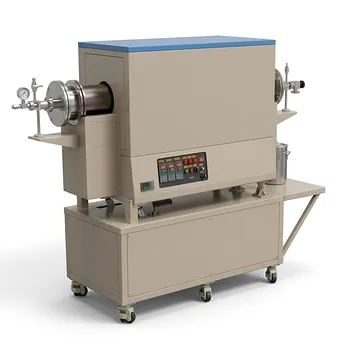
900°C Max Rotary Tube Furnace with 8 Inch 310S Alloy Tube and Optional Multi Zone Heating for Industrial Material Calcination
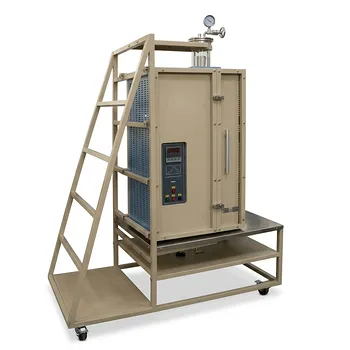
Split Vertical Tube Furnace with 1200C Quartz Tube and Stainless Steel Vacuum Flanges for Rapid Thermal Processing

High Temperature 1700C Tube Furnace with High Vacuum Turbomolecular Pump System and Multi Channel Mass Flow Controller Gas Mixer

1100C Tube Furnace with Vacuum Flange and Programmable Temperature Controller for Material Science and Industrial Heat Treatment

5 Inch Three Zone Rotary Tube Furnace with Integrated Gas Delivery System and 1200C Capability for Advanced Material CVD Processing

1700C Hydrogen Gas Tube Furnace with 60mm Alumina Process Tube and Integrated Hydrogen Safety Detector

1200°C 5 Inch Vertical Quartz Tube Furnace with Stainless Steel Vacuum Flanges

High Temperature 1700C Six Zone Split Tube Furnace with Alumina Tube and Water Cooled Flanges

Compact Vertical Split Quartz Tube Furnace with Stainless Steel Vacuum Flanges for Rapid Thermal Quenching and Controlled Atmosphere Material Processing

High Temperature 1700C Benchtop Tube Furnace with 5 Inch Heating Zone High Purity Alumina Tube and Vacuum Sealing Flanges

1800C High Temperature Compact Vacuum Tube Furnace with 60mm OD Alumina Tube and Kanthal MoSi2 Heating Elements

1200C High Throughput Multi Channel Tube Furnace with 50mm Quartz Tubes for Annealing and Material Phase Diagram Research

Three Zone Tube Furnace with 11 Inch or 15 Inch Quartz Tube and Hinged Flanges for Vacuum Atmosphere Heat Treatment

High Temperature 1700C Vertical Tube Furnace for Powder Spherification and Material Sintering
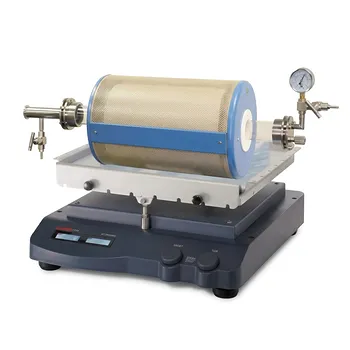
High Temperature Rocking Tube Furnace with Quartz Tube and Vacuum Flange for Materials Synthesis

High Temperature Automated 5 Inch Tube Furnace for Autonomous Material Research and Advanced Laboratory R&D
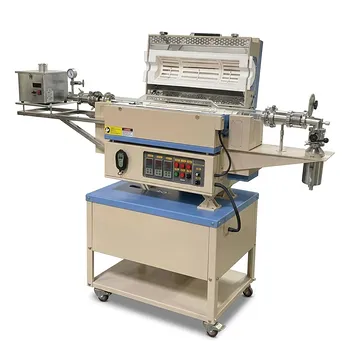
5 Inch Rotary Tube Furnace with Automatic Feeding and Receiving System 1200C Three Zone CVD Powder Processing