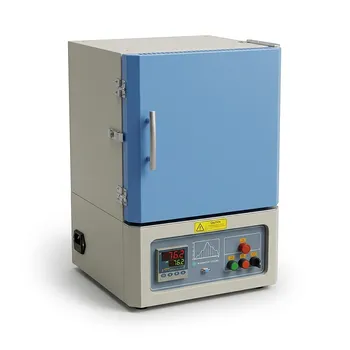
What is the significance of specialized aging furnaces for Li(Nb,Ta)O3? Ensuring Material Stability
Updated 3 months ago
The specialized high-temperature aging furnace is the essential tool for validating the long-term operational integrity of $Li(Nb,Ta)O_3$. By maintaining extreme thermal stability at target temperatures such as 700°C or 900°C for durations exceeding 350 hours, it allows engineers to monitor critical performance drift. Specifically, it identifies the impact of lithium oxide ($Li_2O$) volatilization, a primary degradation factor that determines the service life of piezoelectric sensors and optoelectronic devices in extreme industrial environments.
The core significance of the specialized aging furnace lies in its ability to simulate years of service life within a compressed timeframe through continuous thermal exposure. It provides the only reliable method to verify if $Li(Nb,Ta)O_3$ maintains its chemical stoichiometry and structural stability under the harsh conditions found in reactor cores or industrial sensors.
Monitoring Chemical and Structural Integrity
Detecting Lithium Oxide Volatilization
At sustained high temperatures, lithium-containing ceramics are prone to $Li_2O$ volatilization, which causes the material to lose its chemical balance. The specialized furnace allows researchers to observe this "performance drift" over hundreds of hours, ensuring the material does not lose its piezoelectric or optoelectronic properties.
Simulating Extreme Industrial Environments
To evaluate components for use in reactor cores or high-heat sensors, the furnace must subject the material to continuous thermal stress. This process reveals how the material's phase boundaries and fine-grained structures suppress thermal expansion and prevent the formation of micro-cracks over 500 hours or more.
Predicting Long-Term Service Life
Unlike standard heat treatments, aging furnaces are designed for uninterrupted operation ranging from 350 to 10,000 hours. This long-term data is vital for calculating the degradation trends of the material, allowing for the accurate prediction of when a sensor might fail in the field.
Distinguishing Aging from Other Thermal Processes
Aging vs. Sintering
While a sintering furnace is used at 1000°C to trigger solid-phase reactions and achieve chemical homogenization, the aging furnace focuses on the post-synthesis stability. Sintering creates the material; aging tests whether that material can survive the "real world" without degrading.
Aging vs. Precision Measurement
High-precision tube furnaces are often used for impedance spectroscopy and identifying conduction mechanisms at specific heating rates (e.g., 1 K/min). In contrast, the aging furnace prioritizes a constant, isothermal environment over thousands of hours to study slow kinetics, such as phase precipitation or creep properties.
Understanding the Trade-offs
Time Requirements vs. Research Velocity
The primary trade-off in long-term aging is the significant time investment required to gather meaningful data. Because processes like $Li_2O$ loss or phase growth occur slowly, researchers must commit to tests lasting hundreds or thousands of hours, which can slow down the initial development cycle.
Temperature Precision vs. Energy Consumption
Maintaining a furnace at 900°C with minimal temperature drift for weeks requires high-performance heating elements and sophisticated control systems. This results in higher operational costs and energy consumption compared to short-duration heat treatments.
Sample Representative Limits
While aging a small pellet provides data on material stability, it may not perfectly capture the mechanical stresses found in a fully assembled device. Users must be careful not to assume that material stability in a furnace automatically equates to the mechanical durability of a complex sensor housing.
How to Apply This to Your Project
When integrating $Li(Nb,Ta)O_3$ into your technical applications, choose your thermal evaluation strategy based on your specific development stage:
- If your primary focus is material synthesis: Use a high-temperature sintering furnace to ensure proper solid-phase reactions and stoichiometric fixation of the green bodies.
- If your primary focus is long-term reliability: Employ a specialized aging furnace at 700°C–900°C for at least 350 hours to quantify $Li_2O$ volatilization and performance drift.
- If your primary focus is electrical characterization: Utilize a high-precision tube furnace with controlled atmospheres to record Arrhenius characteristics and conduction transitions.
- If your primary focus is microstructure kinetics: Commit to an isothermal aging furnace capable of 1,000+ hours of failure-free operation to observe phase growth and creep.
Ultimately, the specialized aging furnace is the bridge between a laboratory-grown crystal and a reliable industrial component capable of surviving the world's harshest environments.
Summary Table:
| Feature | Sintering Furnace | Specialized Aging Furnace | High-Precision Tube Furnace |
|---|---|---|---|
| Primary Goal | Material Synthesis | Long-term Stability Evaluation | Electrical Characterization |
| Temperature | ~1000°C | 700°C – 900°C | Variable (controlled rates) |
| Duration | Short-term (hours) | Long-term (350 – 10,000+ hours) | Short to Medium |
| Key Insight | Chemical homogenization | Li₂O volatilization & drift | Conduction mechanisms |
Maximize Your Material Reliability with THERMUNITS
Transitioning from laboratory synthesis to reliable industrial application requires rigorous thermal validation. THERMUNITS is a leading manufacturer of high-temperature laboratory equipment specifically designed for the demanding needs of material science and industrial R&D.
Whether you are monitoring $Li_2O$ volatilization in $Li(Nb,Ta)O_3$ or conducting complex phase kinetics research, our thermal solutions ensure uninterrupted, failure-free operation. Our comprehensive range includes:
- Precision Furnaces: Muffle, Tube, Vacuum, and Atmosphere furnaces for stable isothermal aging.
- Advanced Systems: CVD/PECVD, Rotary Kilns, Vacuum Induction Melting (VIM), and Hot Press furnaces.
- Specialized Tools: Dental Furnaces and high-performance Thermal Elements.
Ready to validate your material’s performance? Contact us today to discover how THERMUNITS can provide the thermal precision and durability your research demands.
References
- Éva Tichy‐Rács, Yuriy Suhak. Influence of Li‐Stoichiometry on Electrical and Acoustic Properties and Temperature Stability of Li(Nb,Ta)O<sub>3</sub> Solid Solutions up to 900 °C. DOI: 10.1002/pssa.202300962
Mentioned Products
- High Temperature 1700C Vertical Tube Furnace for Powder Spherification and Material Sintering
- Large Bench Top 1700C High Temperature Muffle Furnace with 19L Chamber for Advanced Material Sintering and Annealing
- High Temperature 1500C Benchtop Muffle Furnace 3.6L Alumina Fiber Chamber Programmable Controller Sintering Annealing Carbonization Thermal Processing System
- High Temperature Vertical Crucible Furnace with 22L Heating Chamber and 1200C Maximum Temperature
- 1750°C High Temperature Benchtop Vacuum Atmosphere Tube Furnace with Kanthal Super 1800 Heating Elements and 60mm Alumina Processing Tube
People Also Ask
- What role does a high-temperature vertical tube furnace play in simulating high-carbon ferromanganese slag formation?
- What functions does a vertical high-temperature tube furnace perform? Master Industrial Sintering & R&D Simulation
- What is the primary function of a high-temperature tube furnace in Cu1-N-C synthesis? Precision Thermal Control.
- High-Temp Tube Furnace Role in Converting Microbial Proteins to Iron Single-Atom Sites: Expert Synthesis Guide
- What impact does the heating rate of a tube furnace have on biochar microstructure? Optimize Your Material R&D.

Tech Team · ThermUnits
Last updated on Jun 03, 2026
Related Products

High Temperature 1700C Vertical Tube Furnace for Powder Spherification and Material Sintering
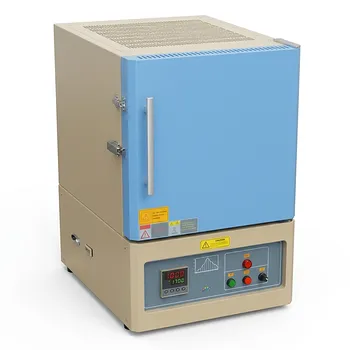
Large Bench Top 1700C High Temperature Muffle Furnace with 19L Chamber for Advanced Material Sintering and Annealing
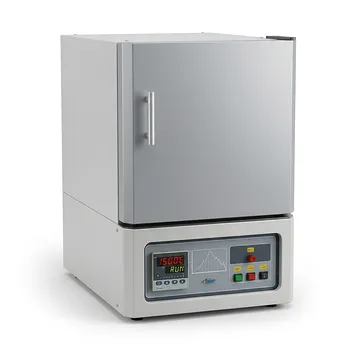
High Temperature 1500C Benchtop Muffle Furnace 3.6L Alumina Fiber Chamber Programmable Controller Sintering Annealing Carbonization Thermal Processing System
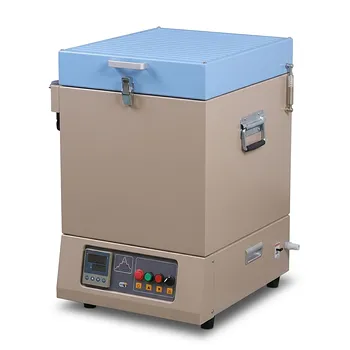
High Temperature Vertical Crucible Furnace with 22L Heating Chamber and 1200C Maximum Temperature

1750°C High Temperature Benchtop Vacuum Atmosphere Tube Furnace with Kanthal Super 1800 Heating Elements and 60mm Alumina Processing Tube
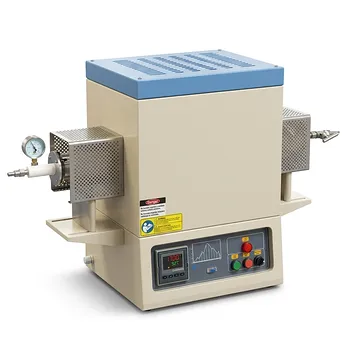
High Temperature Three Zone Tube Furnace 1700C with Alumina Tube and Water Cooled Flanges
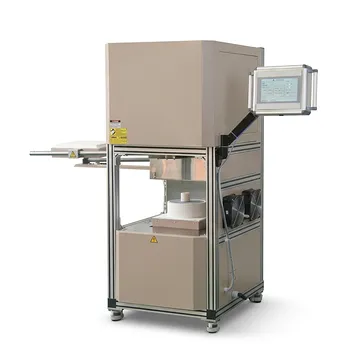
1600C High Temperature Automatic Bottom Loading Furnace for Thermal Shock Cycling and Material Fatigue Testing
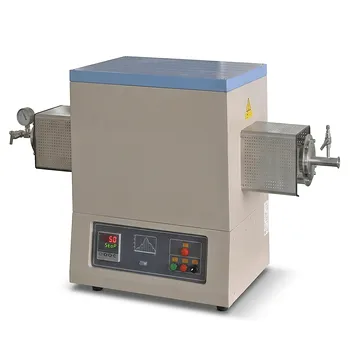
High Temperature 1700C Tube Furnace with 4 Inch OD Alumina Tube and Vacuum Sealing Flanges
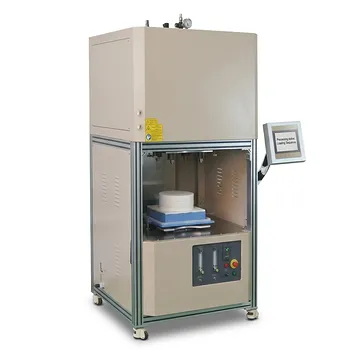
High Temperature Vertical Atmosphere Controlled Furnace with Automatic Bottom Loading and 1700°C Capacity for Advanced Material Research
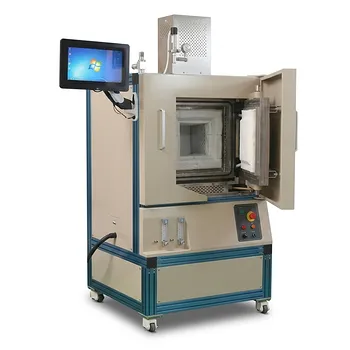
High Temperature Oxygen and Inert Atmosphere Controlled Furnace 8 Liter 1700C Sintering System for Advanced Materials RD
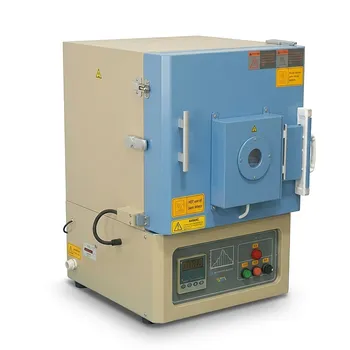
High Temperature Benchtop Muffle Furnace 1500C with 3.6L Chamber and Quartz Observation Window
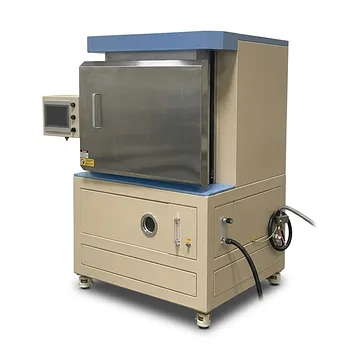
1650C High Temperature Atmosphere Controlled Box Furnace with 65L Chamber for Advanced Material Sintering and Industrial Heat Treatment
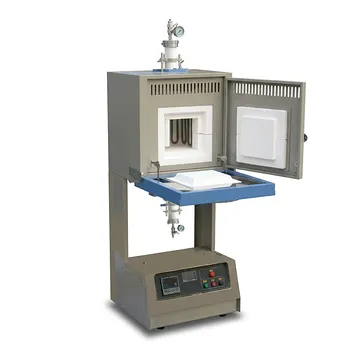
Vertical Hybrid High Temperature Furnace 1500C Alumina Tube SOFC Fuel Cell Testing Laboratory Heat Treatment Research Equipment

High Temperature Tube Furnace 1500C with Sliding Flanges and 50mm OD for Rapid Thermal Processing Fast Heating and Cooling

High Temperature 1700C Tube Furnace with High Vacuum Turbomolecular Pump System and Multi Channel Mass Flow Controller Gas Mixer
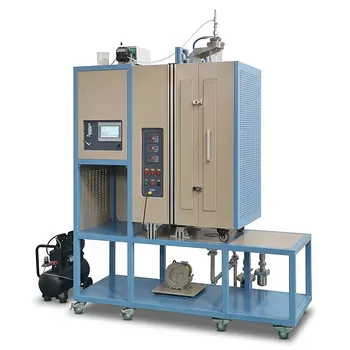
1500C Three Zone Vertical Pyrolysis Furnace for Nanoparticle Synthesis and Advanced Oxide Coating
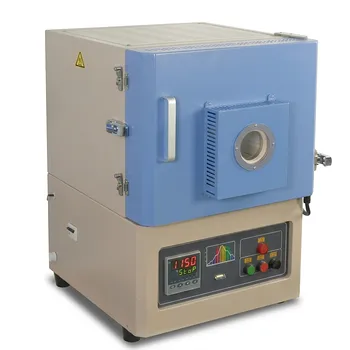
High Temperature Benchtop Muffle Furnace with Quartz Observation Window for Thermal Imaging and Material Analysis
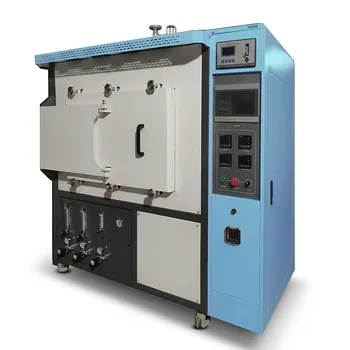
Roller Table Atmosphere Furnace 1500C High Temperature Battery Material Sintering System 112L Capacity
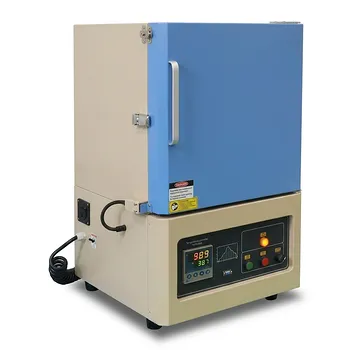
1200°C High Temperature Muffle Furnace 19L Chamber with 50 Segment Programmable Controller