What is the specific function of a tube furnace in the synthesis of phosphorus nitride (P3N5) precursors? Expert Insights
Updated 3 months ago
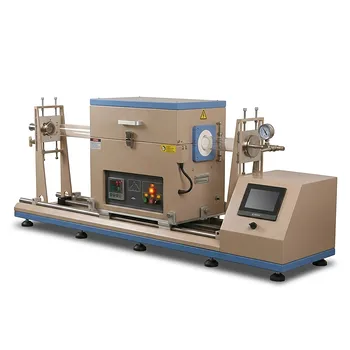
The tube furnace serves as the primary thermal reactor for the ammonolysis of phosphorus sulfides. It provides the precisely controlled, high-temperature environment (typically 850°C) and the sealed atmospheric conditions necessary to chemically transform raw materials like phosphorus pentasulfide into semi-crystalline phosphorus nitride ($P_3N_5$) powder.
Core Takeaway: A tube furnace is essential for $P_3N_5$ synthesis because it synchronizes stable thermal energy with a continuous reactive gas flow, ensuring the complete chemical replacement of sulfur with nitrogen while maintaining the phase purity of the resulting precursor.
Facilitating the Ammonolysis Reaction
High-Temperature Chemical Transformation
The synthesis of $P_3N_5$ requires significant activation energy to break the chemical bonds within phosphorus pentasulfide. The tube furnace provides a stable thermal field that maintains temperatures at approximately 850°C, which is the threshold required for efficient thermal decomposition and nitrogen substitution.
Controlled Reactive Atmosphere
Unlike standard ovens, a tube furnace is designed to maintain a sealed environment under a constant flow of ammonia ($NH_3$) gas. This continuous flow ensures that ammonia is always available to react with the phosphorus source while simultaneously sweeping away volatile sulfur byproducts.
Formation of Semi-Crystalline Structures
The precise temperature control of the furnace influences the crystallinity of the final powder. By regulating the heating rate and dwell time, the furnace ensures the production of a semi-crystalline $P_3N_5$ precursor, which is the ideal starting morphology for subsequent ammonothermal synthesis.
Ensuring Product Quality and Consistency
Uniform Thermal Field Distribution
One of the critical functions of the tube furnace is providing an isothermal zone within the quartz tube. This uniformity prevents local cold spots that could lead to incomplete reactions or the formation of unwanted phosphorus-sulfur-nitrogen intermediates.
Phase Purity and Precision
The stable environment inside the furnace is vital for achieving high phase purity. By preventing contamination from the external atmosphere and ensuring even heat distribution, the furnace allows the reactants to undergo a uniform transformation according to specific temperature profiles.
Management of Gas-Solid Phase Reactions
The tube furnace architecture facilitates an efficient gas-solid phase reaction. As the ammonia gas passes over the phosphorus pentasulfide held in a quartz boat, the furnace’s geometry ensures maximum contact between the gas and the solid surface, driving the reaction to completion.
Understanding the Trade-offs
Equipment Limitations and Risks
While tube furnaces offer superior control, they are generally limited to batch processing, which can restrict the total volume of $P_3N_5$ produced in a single run. Furthermore, the use of corrosive gases like ammonia at high temperatures requires specialized quartz or ceramic tubing to prevent material degradation.
Maintenance of Hermetic Seals
The integrity of the synthesis depends entirely on the furnace's seals. Any oxygen leakage into the system at 850°C will result in the formation of phosphorus oxides rather than nitrides, effectively ruining the precursor batch.
Thermal Gradient Challenges
In larger furnace models, managing the thermal gradient at the edges of the heating zone is critical. If the quartz boat is placed outside the "sweet spot" of the isothermal zone, the resulting $P_3N_5$ may exhibit inconsistent crystallinity or residual sulfur content.
How to Apply This to Your Synthesis Goal
Choosing the Right Strategy
Effective $P_3N_5$ synthesis depends on how you calibrate your furnace parameters to match your specific research or production needs.
- If your primary focus is phase purity: Prioritize the use of a furnace with a long isothermal zone and high-precision PID controllers to maintain a rock-steady 850°C.
- If your primary focus is morphological control: Adjust the ammonia flow rate and the ramp-up speed of the furnace to influence the particle size and surface area of the $P_3N_5$ powder.
- If your primary focus is safety and longevity: Ensure the furnace is equipped with proper gas scrubbing for the exhaust and use high-grade alumina or quartz tubes to withstand the corrosive ammonolysis environment.
By mastering the thermal and atmospheric variables of the tube furnace, researchers can reliably produce the high-quality phosphorus nitride precursors essential for advanced chemical synthesis.
Summary Table:
| Function | Description | Key Requirement |
|---|---|---|
| Thermal Reactor | Provides 850°C activation energy for bond breaking | Isothermal zone uniformity |
| Atmosphere Control | Maintains NH3 flow while removing sulfur byproducts | High-quality hermetic seals |
| Structural Control | Regulates heating rates for semi-crystalline morphology | Precise PID controllers |
| Gas-Solid Phase | Maximizes contact between ammonia gas and solids | Specialized quartz/alumina tubing |
Elevate Your Material Research with THERMUNITS Precision
As a leading manufacturer of high-temperature laboratory equipment, THERMUNITS provides the advanced thermal processing solutions required for complex tasks like phosphorus nitride synthesis. Whether you need specialized Tube furnaces for ammonolysis, Vacuum/Atmosphere furnaces, or CVD/PECVD systems, our equipment ensures the uniform thermal fields and hermetic seals essential for phase purity and material consistency.
Empower your R&D and industrial material science projects with our comprehensive range, including Muffle, Rotary, Hot Press, and Dental furnaces, as well as vacuum induction melting furnaces (VIM). Contact our technical experts today to find the perfect heat treatment solution for your lab and experience the reliability that drives innovation.
References
- Florian M. Engelsberger, Wolfgang Schnick. Ammonothermal Synthesis of Luminescent Imidonitridophosphate Ba<sub>4</sub>P<sub>4</sub>N<sub>8</sub>(NH)<sub>2</sub>:Eu<sup>2+</sup>. DOI: 10.1002/chem.202402743
Mentioned Products
- Vertical 1700C Vacuum and Atmosphere Tube Furnace with 80mm Alumina Tube
- Compact High Temperature 1600C Tube Furnace with 50mm Alumina Tube and Vacuum Flanges for Material Sintering
- 900°C Max Rotary Tube Furnace with 8 Inch 310S Alloy Tube and Optional Multi Zone Heating for Industrial Material Calcination
- Split Vertical Tube Furnace with 1200C Quartz Tube and Stainless Steel Vacuum Flanges for Rapid Thermal Processing
- High Temperature 1700C Tube Furnace with High Vacuum Turbomolecular Pump System and Multi Channel Mass Flow Controller Gas Mixer
People Also Ask
- How is an industrial-grade vertical tube furnace utilized in smelting leaching residues? Enhance Metal Recovery Efficiency
- What is the function of a laboratory-grade vertical tube furnace in fast pyrolysis? Optimize Composite Research.
- How does a vertical tube furnace facilitate thermoelectric alloy melting? Precision synthesis for material homogeneity.
- Why is a thermocouple sensor indispensable for monitoring the vertical tube furnace during gallium oxide nanowire production? Optimize VLS Growth
- What are the advantages of using a vertical tube furnace for crucible experiments simulating steel-slag interactions?

Tech Team · ThermUnits
Last updated on Jun 03, 2026
Related Products

Vertical 1700C Vacuum and Atmosphere Tube Furnace with 80mm Alumina Tube

Compact High Temperature 1600C Tube Furnace with 50mm Alumina Tube and Vacuum Flanges for Material Sintering
900°C Max Rotary Tube Furnace with 8 Inch 310S Alloy Tube and Optional Multi Zone Heating for Industrial Material Calcination
Split Vertical Tube Furnace with 1200C Quartz Tube and Stainless Steel Vacuum Flanges for Rapid Thermal Processing

High Temperature 1700C Tube Furnace with High Vacuum Turbomolecular Pump System and Multi Channel Mass Flow Controller Gas Mixer
1100C Tube Furnace with Vacuum Flange and Programmable Temperature Controller for Material Science and Industrial Heat Treatment
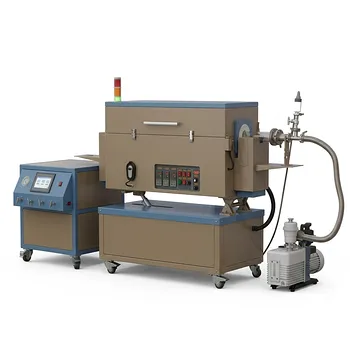
5 Inch Three Zone Rotary Tube Furnace with Integrated Gas Delivery System and 1200C Capability for Advanced Material CVD Processing
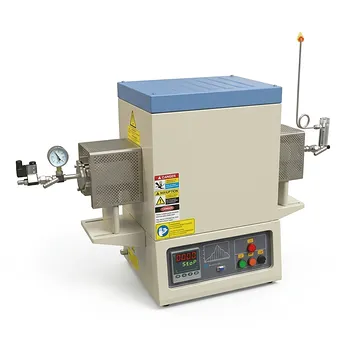
1700C Hydrogen Gas Tube Furnace with 60mm Alumina Process Tube and Integrated Hydrogen Safety Detector
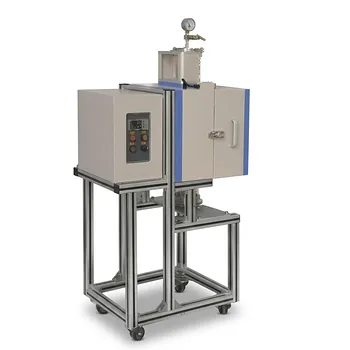
1200°C 5 Inch Vertical Quartz Tube Furnace with Stainless Steel Vacuum Flanges
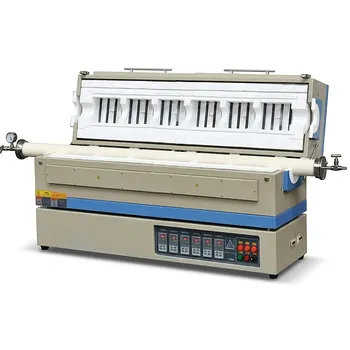
High Temperature 1700C Six Zone Split Tube Furnace with Alumina Tube and Water Cooled Flanges
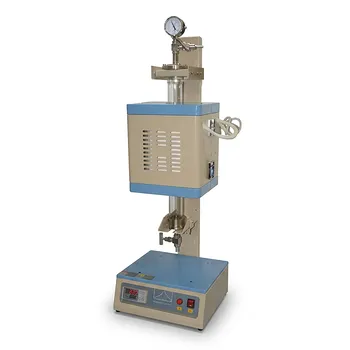
Compact Vertical Split Quartz Tube Furnace with Stainless Steel Vacuum Flanges for Rapid Thermal Quenching and Controlled Atmosphere Material Processing

High Temperature 1700C Benchtop Tube Furnace with 5 Inch Heating Zone High Purity Alumina Tube and Vacuum Sealing Flanges
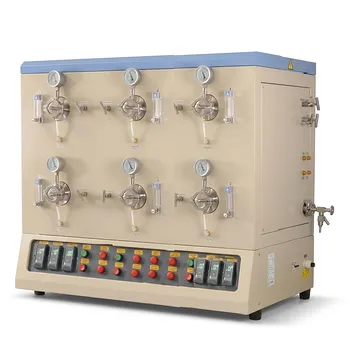
1200C High Throughput Multi Channel Tube Furnace with 50mm Quartz Tubes for Annealing and Material Phase Diagram Research
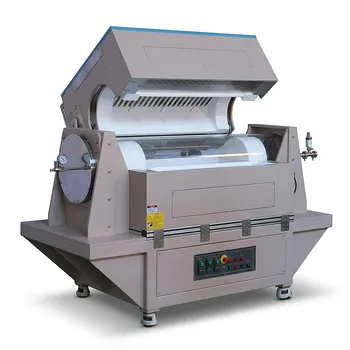
Three Zone Tube Furnace with 11 Inch or 15 Inch Quartz Tube and Hinged Flanges for Vacuum Atmosphere Heat Treatment

1800C High Temperature Compact Vacuum Tube Furnace with 60mm OD Alumina Tube and Kanthal MoSi2 Heating Elements

High Temperature 1700C Vertical Tube Furnace for Powder Spherification and Material Sintering
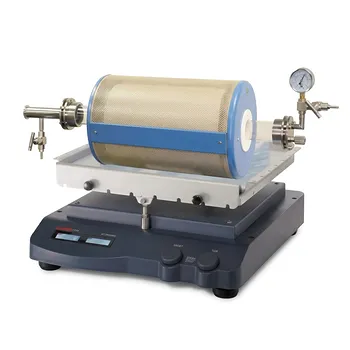
High Temperature Rocking Tube Furnace with Quartz Tube and Vacuum Flange for Materials Synthesis

High Temperature Automated 5 Inch Tube Furnace for Autonomous Material Research and Advanced Laboratory R&D
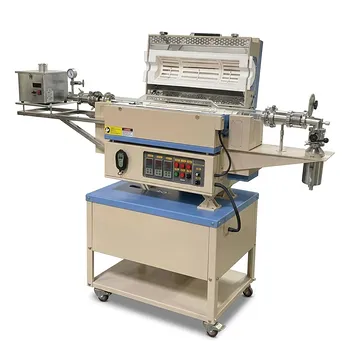
5 Inch Rotary Tube Furnace with Automatic Feeding and Receiving System 1200C Three Zone CVD Powder Processing