Why RT Deposition & 1000°C Tube Annealing for Bi2Rh2O7? Achieve Phase Purity and Stability
Updated 3 months ago
The technical rationale for this two-step process is the pursuit of phase purity. By depositing an amorphous precursor at room temperature and subsequently annealing it at 1000°C in a controlled oxygen environment, manufacturers ensure the complete transformation of the material into a well-crystallized pyrochlore phase while suppressing the formation of unwanted secondary phases.
This method decouples the physical deposition of the material from its chemical crystallization. It allows for a uniform precursor layer to be established before using high-temperature thermal energy to drive the specific solid-state reactions required for the stable Bi2Rh2O7 structure.
The Role of Room-Temperature Deposition
Creating a Homogeneous Amorphous Precursor
Depositing the Bi2Rh2O7 (BRO) layer at room temperature prevents premature, uncontrolled crystallization. This results in a highly uniform, amorphous precursor that serves as a "blank canvas" for the subsequent thermal treatment.
Bypassing Kinetic Barriers
At low temperatures, atoms lack the mobility to arrange themselves into a complex lattice. This state is easier to control during the initial coating process, ensuring that the stoichiometry of the bismuth and rhodium is maintained across the substrate before the final phase is locked in.
Thermal Dynamics of 1000°C Annealing
Overcoming Activation Energy for Pyrochlore Formation
The 1000°C threshold provides the necessary thermal energy to trigger solid-state reactions within the amorphous layer. This high temperature is essential for the transition from a disordered state to the specific nanocrystalline pyrochlore structure required for the material's performance.
Ensuring Isothermal Stability
A tube furnace provides a prolonged isothermal period, meaning the temperature remains extremely consistent over time. This stability allows the crystal grains to grow uniformly, minimizing internal defects and ensuring the material reaches its most thermodynamically stable phase.
Environmental Control in the Tube Furnace
The Necessity of Continuous Oxygen Flow
Annealing under a continuous oxygen flow is critical for maintaining the correct oxidation states of bismuth and rhodium. This environment prevents the loss of oxygen from the lattice, which is a common failure point in high-temperature processing that can lead to conductivity issues or phase degradation.
Suppression of Impurity Phases
The combination of high heat and a rich oxygen atmosphere effectively "cleans" the crystal structure. It ensures that the amorphous precursor is completely transformed, leaving no room for undesirable impurity phases that could disrupt the electronic or structural integrity of the BRO layer.
Understanding the Trade-offs
Thermal Budget and Substrate Constraints
The primary drawback of this method is the high thermal budget. At 1000°C, many common substrates (such as certain glasses or polymers) will melt or deform, limiting the choice of base materials to high-temperature ceramics or specialized silicon.
Complexity of Oxygen Regulation
While oxygen flow is beneficial for phase purity, it requires precise calibration. If the flow is inconsistent, it can lead to surface irregularities or localized variations in the film's chemical reorganization, potentially impacting the minority carrier lifetime or interface state density.
How to Apply This to Your Project
When preparing high-performance oxide layers like Bi2Rh2O7, your processing strategy must align with your material's final structural requirements.
- If your primary focus is Phase Purity: Utilize the 1000°C tube furnace anneal to ensure the complete elimination of amorphous remnants and secondary oxides.
- If your primary focus is Substrate Integrity: Consider lower-temperature alternatives or different materials if your substrate cannot withstand the 1000°C threshold required for the pyrochlore transition.
- If your primary focus is Optimized Crystallinity: Ensure a continuous, regulated oxygen flow during the entire heating and cooling cycle to maintain lattice stoichiometry.
By decoupling deposition from crystallization, you gain precise control over the structural evolution of the Bi2Rh2O7 layer.
Summary Table:
| Process Step | Technical Role | Key Benefit |
|---|---|---|
| Room-Temp Deposition | Create amorphous precursor | Maintains stoichiometry & homogeneity |
| 1000°C Annealing | Thermal activation energy | Drives transition to stable pyrochlore phase |
| Tube Furnace (O2 Flow) | Environmental control | Prevents oxygen loss & suppresses impurities |
| Isothermal Period | Structural stabilization | Minimizes defects & ensures uniform crystal growth |
Optimize Your Material Synthesis with THERMUNITS High-Performance Furnaces
Achieving precise phase purity in materials like Bi2Rh2O7 requires exceptional thermal stability and atmospheric control. THERMUNITS is a leading manufacturer of advanced high-temperature laboratory equipment, providing tailored thermal processing solutions for material science and industrial R&D.
Our specialized range includes:
- Tube Furnaces for precise annealing and isothermal stability.
- Atmosphere and Vacuum Furnaces for controlled oxidation environments.
- CVD/PECVD Systems for high-performance layer deposition.
- Muffle, Rotary, and Hot Press Furnaces for diverse heat treatment needs.
Whether you are working on pyrochlore structures or advanced thin-film oxides, our equipment ensures the accuracy and reliability your project demands. Contact us today to explore how our thermal elements and laboratory furnaces can enhance your research outcomes.
References
- Mizuki Ohno, M. Kawasaki. Proximity effect of emergent field from spin ice in an oxide heterostructure. DOI: 10.1126/sciadv.adk6308
Mentioned Products
- Vertical 1700C Vacuum and Atmosphere Tube Furnace with 80mm Alumina Tube
- Compact High Temperature 1600C Tube Furnace with 50mm Alumina Tube and Vacuum Flanges for Material Sintering
- 900°C Max Rotary Tube Furnace with 8 Inch 310S Alloy Tube and Optional Multi Zone Heating for Industrial Material Calcination
- Split Vertical Tube Furnace with 1200C Quartz Tube and Stainless Steel Vacuum Flanges for Rapid Thermal Processing
- High Temperature 1700C Tube Furnace with High Vacuum Turbomolecular Pump System and Multi Channel Mass Flow Controller Gas Mixer
People Also Ask
- How is an industrial-grade vertical tube furnace utilized in smelting leaching residues? Enhance Metal Recovery Efficiency
- What is the function of a laboratory-grade vertical tube furnace in fast pyrolysis? Optimize Composite Research.
- How does a vertical tube furnace facilitate thermoelectric alloy melting? Precision synthesis for material homogeneity.
- Why is a thermocouple sensor indispensable for monitoring the vertical tube furnace during gallium oxide nanowire production? Optimize VLS Growth
- What are the advantages of using a vertical tube furnace for crucible experiments simulating steel-slag interactions?

Tech Team · ThermUnits
Last updated on Jun 02, 2026
Related Products

Vertical 1700C Vacuum and Atmosphere Tube Furnace with 80mm Alumina Tube

Compact High Temperature 1600C Tube Furnace with 50mm Alumina Tube and Vacuum Flanges for Material Sintering
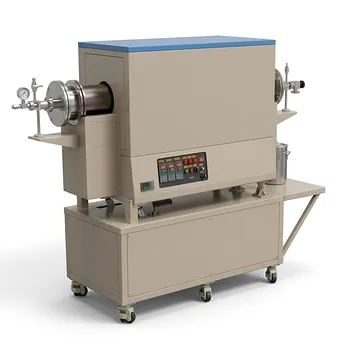
900°C Max Rotary Tube Furnace with 8 Inch 310S Alloy Tube and Optional Multi Zone Heating for Industrial Material Calcination
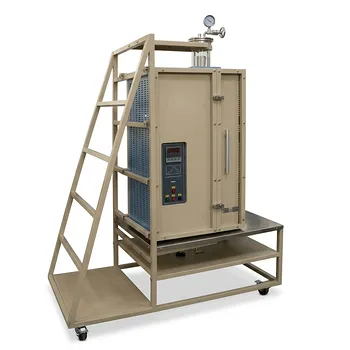
Split Vertical Tube Furnace with 1200C Quartz Tube and Stainless Steel Vacuum Flanges for Rapid Thermal Processing

High Temperature 1700C Tube Furnace with High Vacuum Turbomolecular Pump System and Multi Channel Mass Flow Controller Gas Mixer

1100C Tube Furnace with Vacuum Flange and Programmable Temperature Controller for Material Science and Industrial Heat Treatment
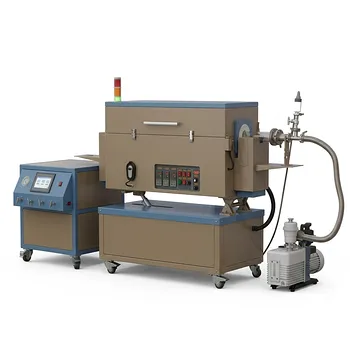
5 Inch Three Zone Rotary Tube Furnace with Integrated Gas Delivery System and 1200C Capability for Advanced Material CVD Processing

High Temperature 1700C Six Zone Split Tube Furnace with Alumina Tube and Water Cooled Flanges

1200°C 5 Inch Vertical Quartz Tube Furnace with Stainless Steel Vacuum Flanges

1700C Hydrogen Gas Tube Furnace with 60mm Alumina Process Tube and Integrated Hydrogen Safety Detector

Compact Vertical Split Quartz Tube Furnace with Stainless Steel Vacuum Flanges for Rapid Thermal Quenching and Controlled Atmosphere Material Processing

High Temperature 1700C Benchtop Tube Furnace with 5 Inch Heating Zone High Purity Alumina Tube and Vacuum Sealing Flanges
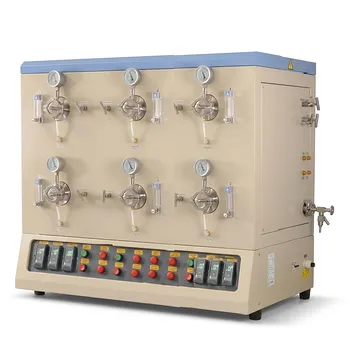
1200C High Throughput Multi Channel Tube Furnace with 50mm Quartz Tubes for Annealing and Material Phase Diagram Research

1800C High Temperature Compact Vacuum Tube Furnace with 60mm OD Alumina Tube and Kanthal MoSi2 Heating Elements
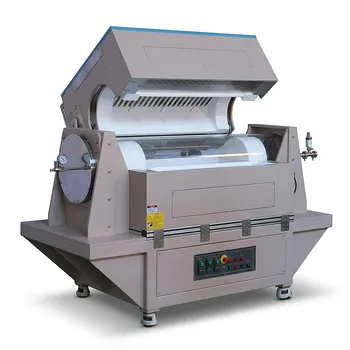
Three Zone Tube Furnace with 11 Inch or 15 Inch Quartz Tube and Hinged Flanges for Vacuum Atmosphere Heat Treatment

High Temperature 1700C Vertical Tube Furnace for Powder Spherification and Material Sintering
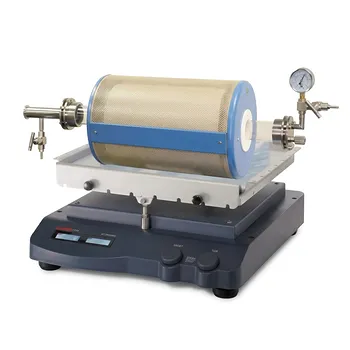
High Temperature Rocking Tube Furnace with Quartz Tube and Vacuum Flange for Materials Synthesis

High Temperature Automated 5 Inch Tube Furnace for Autonomous Material Research and Advanced Laboratory R&D
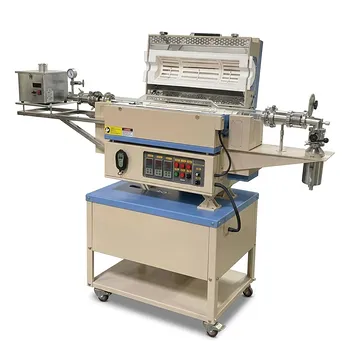
5 Inch Rotary Tube Furnace with Automatic Feeding and Receiving System 1200C Three Zone CVD Powder Processing