What methods are used to monitor and control the carbon potential (CP) in an atmosphere furnace? Master CP Precision.
Updated 5 months ago
Effective carbon potential (CP) control is the cornerstone of consistent heat treatment, ensuring the desired surface hardness and case depth. You can monitor this environment through three primary analytical methods: zirconia oxygen probes, infrared 3-gas analyzers, and dew-point analyzers. These electronic readings are typically validated by physical shim-stock tests and managed by automated PID controllers to dynamically adjust gas composition during cycles.
Core Takeaway: Maintaining the correct carbon potential requires a combination of real-time electronic sensing and periodic physical verification. By integrating gas analysis with automated feedback loops, operators can achieve precise metallurgical results while preventing furnace sooting or decarburization.
The Primary Monitoring Technologies
Zirconia Oxygen Probes
The most common real-time monitoring tool is the zirconia oxygen probe, which measures the electromotive force (EMF) generated by the difference in oxygen partial pressure.
Because oxygen levels in the furnace atmosphere are inversely related to carbon levels, this voltage allows the control system to calculate the carbon potential instantly.
These probes are favored for their high speed of response, allowing for immediate adjustments to the enriching gas flow.
Infrared (IR) 3-Gas Analyzers
Infrared analyzers provide a more comprehensive view of the furnace atmosphere by measuring the concentrations of CO, CO2, and CH4 (methane).
Unlike oxygen probes that often assume a constant CO level, IR analyzers measure the actual gas constituents, leading to a more accurate calculation of the carbon potential in varying conditions.
This method is particularly valuable in processes where the carrier gas composition may fluctuate, as it accounts for the actual chemical equilibrium of the furnace.
Dew-Point Analyzers
Dew-point measurement tracks the moisture content (water vapor) within the furnace atmosphere.
In many heat-treating environments, there is a predictable relationship between the dew point and the carbon potential; as the dew point drops, the carbon potential increases.
While less common than oxygen probes in modern high-speed lines, dew-point analysis remains a reliable, foundational method for atmosphere monitoring.
Validation and Automated Control
Physical Verification via Shim-Stock Tests
Despite the precision of electronic sensors, physical verification through shim-stock tests remains an industry standard for "ground truth" calibration.
A thin piece of low-carbon steel (the shim) is placed in the furnace, processed, and then analyzed—usually via weight gain or combustion analysis—to determine the actual carbon absorbed.
This test identifies if sensors have drifted or if the furnace atmosphere has become contaminated, ensuring that the electronic readings align with physical reality.
PID Logic and Boost-Diffuse Cycles
Modern control systems integrate sensor data into PID (Proportional-Integral-Derivative) logic to automate the gas injection process.
This is critical during complex "boost-diffuse" carburizing cycles, where the carbon potential is initially set high (boost) to drive carbon into the steel and then lowered (diffuse) to achieve the proper surface concentration.
Automated control minimizes human error and ensures that the atmosphere responds dynamically to the natural depletion of carbon as it enters the workpieces.
Understanding the Trade-offs
Sensor Sensitivity and Maintenance
Zirconia probes are susceptible to sooting and aging, which can cause the signal to drift and lead to incorrect carbon readings.
Infrared analyzers, while highly accurate, require sample lines and filters that must be maintained to prevent clogs and ensure the gas reaching the sensor is representative of the furnace interior.
The Delay of Manual Testing
While shim-stock tests are the most accurate reflection of the process, they are lagging indicators that provide information only after the test period is complete.
Relying solely on manual tests prevents real-time correction, making them a vital tool for verification rather than primary control.
How to Apply This to Your Process
Choosing the Right Monitoring Strategy
Your choice of monitoring and control methods should align with your specific metallurgical requirements and furnace type.
- If your primary focus is real-time response and automation: Prioritize the installation of high-quality zirconia oxygen probes integrated with a PID controller.
- If your primary focus is maximum precision in varying atmospheres: Use an Infrared 3-gas analyzer to account for fluctuations in CO and CH4 levels.
- If your primary focus is quality assurance and compliance: Implement a rigorous schedule of shim-stock testing to validate your electronic sensors.
By balancing immediate electronic feedback with periodic physical verification, you ensure a robust process that delivers consistent metallurgical results.
Summary Table:
| Method | Measurement Basis | Key Advantage | Best Use Case |
|---|---|---|---|
| Zirconia Oxygen Probe | Oxygen EMF levels | Instant, real-time response | Automated PID feedback loops |
| IR 3-Gas Analyzer | CO, CO2, and CH4 levels | High accuracy in varying gases | Precision chemical equilibrium |
| Dew-Point Analyzer | Moisture/Water vapor | Reliable foundational method | Standard atmosphere monitoring |
| Shim-Stock Test | Physical carbon absorption | Provides "ground truth" | Sensor calibration and QA |
Optimize Your Thermal Processing with THERMUNITS
Achieving precise carbon potential control is vital for high-performance material science and industrial R&D. As a leading manufacturer of high-temperature laboratory equipment, THERMUNITS provides the advanced thermal solutions you need to ensure consistent metallurgical results.
Whether you require Atmosphere, Vacuum, Tube, or Rotary furnaces, or specialized CVD/PECVD and Vacuum Induction Melting (VIM) systems, our equipment is engineered for precision and durability. We support researchers and manufacturers with high-quality Muffle furnaces, Dental furnaces, and Thermal Elements tailored to demanding heat treatment applications.
Enhance your lab's efficiency and heat treatment accuracy today.
Contact our expert team at THERMUNITS to find the ideal thermal solution for your project.
Mentioned Products
- 1650C High Temperature Atmosphere Controlled Box Furnace with 65L Chamber for Advanced Material Sintering and Industrial Heat Treatment
- 1200°C Atmosphere Controlled Automatic Bottom Loading Furnace with 6 Inch Quartz Tube
- Compact Atmosphere Controlled Rapid Thermal Processing RTP Furnace with 4 Inch ID Quartz Tube 1100C
- Rapid Thermal Processing RTP Atmosphere Controlled Bottom Loading Furnace 1100C High Throughput 50C per Second Heating Rate
- High Temperature Vertical Atmosphere Controlled Furnace with Automatic Bottom Loading and 1700°C Capacity for Advanced Material Research
People Also Ask
- What role does atmosphere control play in technical ceramics and glass? Master Material Purity and Precision
- What role does a high-temperature atmosphere furnace play in the direct electrochemical reduction of CO2? - Key Insights
- What is the role of a high-temperature box furnace in the solid-state synthesis of Europium-doped M3MgSi2O8 phosphors?
- What is the role of a high-temperature box furnace in Na3MnZr(PO4)3 synthesis? Engineering High-Performance NASICON.
- What physical conditions does a high-temperature atmosphere furnace provide for MXene exfoliation? Process Guide

Tech Team · ThermUnits
Last updated on Apr 14, 2026
Related Products
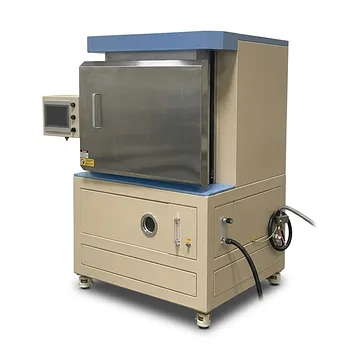
1650C High Temperature Atmosphere Controlled Box Furnace with 65L Chamber for Advanced Material Sintering and Industrial Heat Treatment
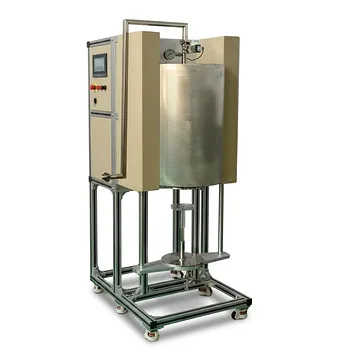
1200°C Atmosphere Controlled Automatic Bottom Loading Furnace with 6 Inch Quartz Tube
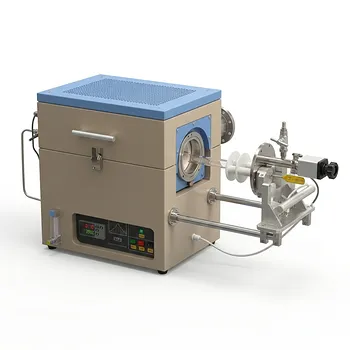
Compact Atmosphere Controlled Rapid Thermal Processing RTP Furnace with 4 Inch ID Quartz Tube 1100C
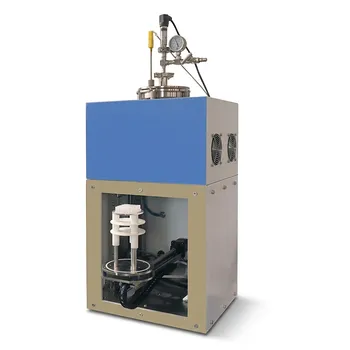
Rapid Thermal Processing RTP Atmosphere Controlled Bottom Loading Furnace 1100C High Throughput 50C per Second Heating Rate
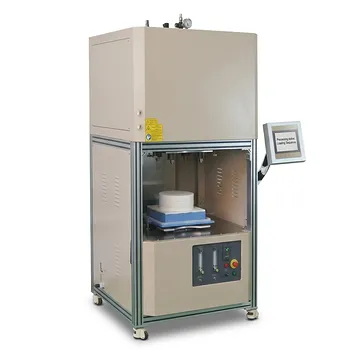
High Temperature Vertical Atmosphere Controlled Furnace with Automatic Bottom Loading and 1700°C Capacity for Advanced Material Research
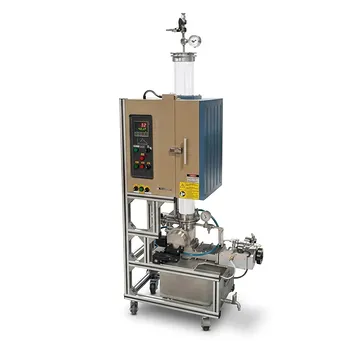
1200C High Temperature Atmosphere Controlled Vertical Quenching Tube Furnace with 4 Inch Quartz Tube
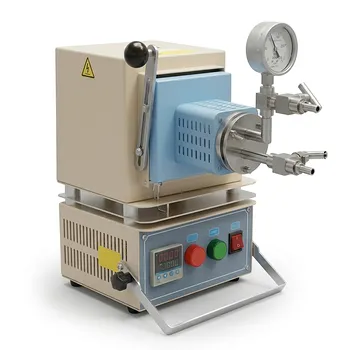
Compact Hybrid Muffle and Tube Furnace for 1000C Controlled Atmosphere Laboratory Material Sintering
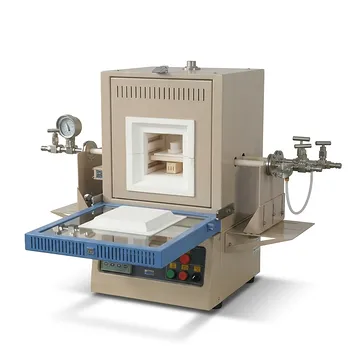
1700C Compact Hybrid Furnace with Dual Layer Box Sintering and Controlled Atmosphere Alumina Tubes
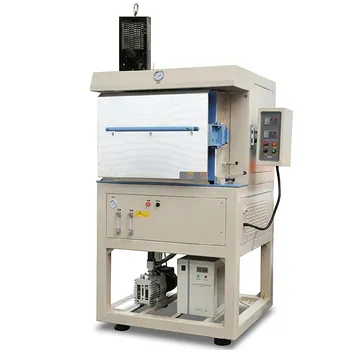
1200C Hydrogen Atmosphere Box Furnace with 5 Heated Sides and 64L Chamber
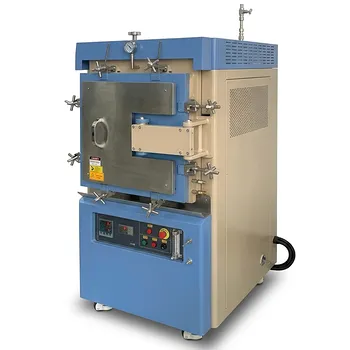
Atmosphere Controlled Muffle Furnace 1700C Maximum Temperature 80L High Capacity Vacuum Inert Gas Box Furnace
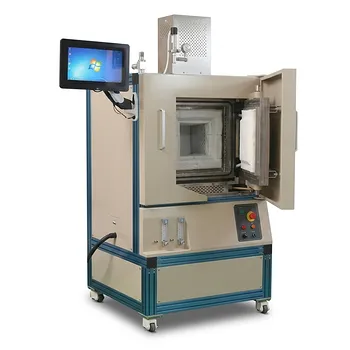
High Temperature Oxygen and Inert Atmosphere Controlled Furnace 8 Liter 1700C Sintering System for Advanced Materials RD
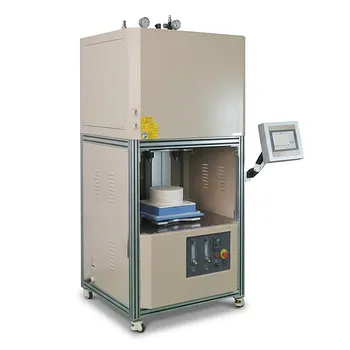
High Temperature Vertical Atmosphere Controlled Furnace 1700C Automatic Bottom Loading 13 Liter Vacuum Thermal System

Compact Vertical Split Quartz Tube Furnace with Stainless Steel Vacuum Flanges for Rapid Thermal Quenching and Controlled Atmosphere Material Processing
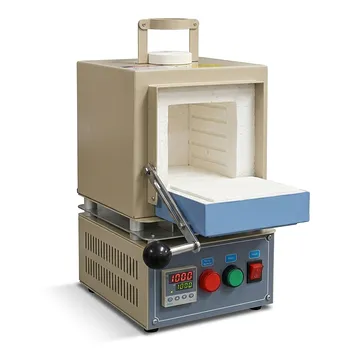
Compact 1000C Muffle Furnace with Programmable Controller and 2 Inch Top Port for Vacuum and Atmosphere Material Research
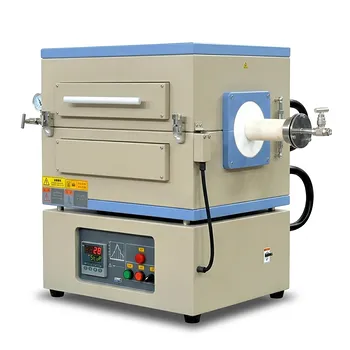
1500°C Split Tube Furnace with Alumina Tube and Vacuum Sealing Flanges for Material Research
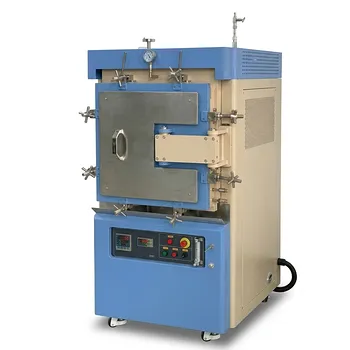
High Temperature Economic Hydrogen Gas Box Furnace 1600C Atmosphere Controlled Thermal Processing System 65L Capacity
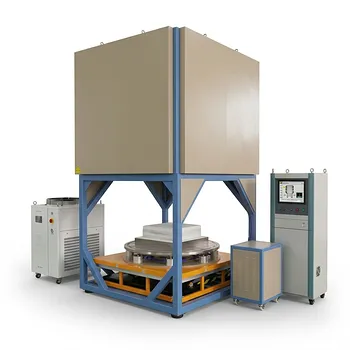
Bottom Loaded Inert Gas Atmosphere Box Furnace 1700C 1300C 216L Large Capacity Industrial Thermal Processing System
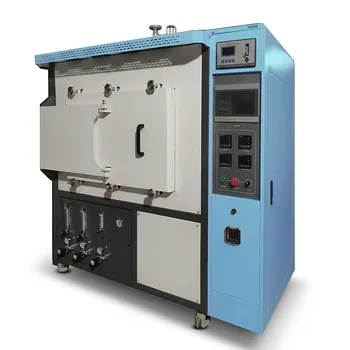
Roller Table Atmosphere Furnace 1500C High Temperature Battery Material Sintering System 112L Capacity
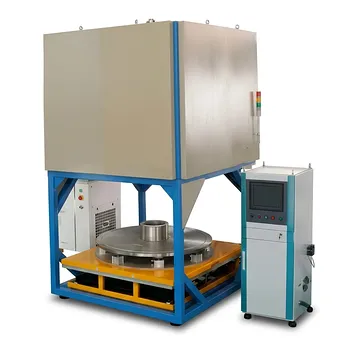
1400C Bottom Loaded Inert Gas Atmosphere Box Furnace with 125L Capacity and Precision Hydraulic Lift