What necessary conditions do tube furnaces provide for NMC cathode synthesis? Master Battery Material Production
Updated 3 months ago
Tube furnaces and atmosphere sintering furnaces provide two critical conditions: precise, multi-stage thermal profiles and a strictly regulated oxygen-rich atmosphere. These parameters are essential for transforming chemical precursors into a highly ordered, layered crystal structure while preventing internal atomic defects that would otherwise degrade battery performance.
The primary role of the furnace is to provide the thermodynamic energy for atomic diffusion while maintaining a chemical environment that stabilizes high-valence nickel ions. This dual control ensures the synthesis of high-capacity cathode materials with minimal "cation mixing," which is vital for long-cycle-life batteries.
Precise Thermal Management and Atomic Diffusion
Multi-Stage Annealing Cycles
Synthesis often requires a two-stage process: a pre-reaction phase at lower temperatures (approximately 450°C to 500°C) and a high-temperature sintering phase (750°C to 1000°C). The tube furnace allows for the precise control of these transitions, ensuring that organic components are removed before the solid-state reaction begins.
Uniform Temperature Fields
Maintaining a stable temperature field, particularly within the critical 800°C to 900°C range for high-nickel materials like NMC811, is essential for uniform element distribution. High-precision furnaces prevent localized "hot spots" that could lead to uneven crystallization or the volatilization of lithium.
Facilitating Atomic Ordering
The high-temperature environment provides the necessary energy for atomic diffusion, allowing disordered precursors to rearrange into ordered L10-type or P63/mmc space group structures. This structural development is the decisive factor in the material's final electrochemical activity and capacity.
Atmospheric Integrity and Chemical Stability
Suppression of Cation Mixing
A continuous flow of high-purity oxygen is required to prevent Ni2+ ions from migrating into Li+ sites, a detrimental phenomenon known as cation mixing. By maintaining an oxygen-rich environment, the furnace ensures that the transition metal ions remain in their designated layers, preserving the pathways for lithium-ion movement.
Stabilization of High-Valence Nickel
In high-nickel cathode materials, it is difficult to maintain nickel in its trivalent (Ni3+) state during high-temperature roasting. The atmosphere furnace provides the necessary partial pressure of oxygen to suppress the reduction of nickel, which is critical for achieving high energy density.
Control of Impurities and Reactions
The sealed environment of a tube furnace allows for the circulation of specific gases, such as nitrogen or oxygen, to protect the material from moisture and CO2. This isolation is vital for sensitive materials that are prone to forming surface impurities like lithium carbonate (Li2CO3) during the heating process.
Understanding the Trade-offs and Pitfalls
The Risk of Lithium Volatilization
While high temperatures are necessary for crystallization, excessive heat or prolonged sintering times can lead to the loss of lithium through volatilization. This creates a stoichiometric imbalance, resulting in a cathode with reduced capacity and poor structural stability.
Oxygen Flow Rate Sensitivity
Simply providing oxygen is often insufficient; the flow rate must be optimized to ensure consistent gas exchange throughout the tube. If the flow is too low, localized reduction zones can form; if it is too high, it may cause temperature fluctuations across the sample boat.
Sensitivity of High-Nickel Chemistries
Materials like NMC811 are significantly more sensitive to environmental conditions than lower-nickel variants. Any deviation in oxygen purity or temperature stability during the cooling phase can lead to micro-cracking or phase transitions that permanently damage the material's cycle life.
How to Apply This to Your Synthesis Project
Making the Right Choice for Your Goal
To achieve the best results in cathode synthesis, tailor your furnace settings to the specific chemistry of your material:
- If your primary focus is High-Nickel NMC (e.g., 811): Use a continuous flow of high-purity oxygen and a stable temperature between 800°C and 850°C to prevent cation mixing and stabilize Ni3+.
- If your primary focus is single-crystal synthesis: Employ a longer, high-temperature sintering stage to provide sufficient energy for full grain growth and a highly ordered layered structure.
- If your primary focus is coating or surface modification: Use the furnace to provide a controlled nitrogen or reducing atmosphere (such as Ar/H2) if the goal is to facilitate carbonization or the growth of conductive carbon nanotubes.
By mastering the balance between thermal energy and atmospheric chemistry, you can consistently produce cathode materials that meet the rigorous demands of modern battery testing.
Summary Table:
| Key Condition | Functional Purpose | Impact on Material Quality |
|---|---|---|
| Precise Thermal Management | Multi-stage annealing and uniform temperature fields | Ensures atomic ordering and prevents lithium volatilization. |
| Oxygen-Rich Atmosphere | High-purity O2 flow and partial pressure control | Suppresses cation mixing and stabilizes high-valence Ni3+ ions. |
| Atmospheric Integrity | Sealed environment isolating CO2 and moisture | Prevents surface impurities like Li2CO3 and improves cycle life. |
| Optimized Flow Rate | Continuous gas exchange across the sample | Maintains chemical stoichiometry and prevents localized reduction. |
Elevate Your Material Research with THERMUNITS
As a global leader in high-temperature laboratory equipment for material science and industrial R&D, THERMUNITS provides the precision and reliability necessary for advanced battery testing. Our specialized Atmosphere Sintering Furnaces and Tube Furnaces are engineered to provide the exact thermal profiles and oxygen-rich environments required for synthesizing high-nickel NMC cathodes.
Whether your project involves CVD/PECVD systems, Vacuum Induction Melting (VIM), or high-pressure Hot Press furnaces, our comprehensive range of thermal processing solutions ensures minimal cation mixing and maximum electrochemical performance for your research.
Ready to optimize your heat treatment process? Contact our technical experts today to find the perfect furnace solution for your laboratory.
References
- Divya Rathore, J. R. Dahn. Characterizing Structure and Electrochemical Properties of Advanced Si/C Anode Materials. DOI: 10.1149/1945-7111/ada370
Mentioned Products
- Vertical 1700C Vacuum and Atmosphere Tube Furnace with 80mm Alumina Tube
- Compact High Temperature 1600C Tube Furnace with 50mm Alumina Tube and Vacuum Flanges for Material Sintering
- 900°C Max Rotary Tube Furnace with 8 Inch 310S Alloy Tube and Optional Multi Zone Heating for Industrial Material Calcination
- Split Vertical Tube Furnace with 1200C Quartz Tube and Stainless Steel Vacuum Flanges for Rapid Thermal Processing
- High Temperature 1700C Tube Furnace with High Vacuum Turbomolecular Pump System and Multi Channel Mass Flow Controller Gas Mixer
People Also Ask
- How is an industrial-grade vertical tube furnace utilized in smelting leaching residues? Enhance Metal Recovery Efficiency
- What is the function of a laboratory-grade vertical tube furnace in fast pyrolysis? Optimize Composite Research.
- How does a vertical tube furnace facilitate thermoelectric alloy melting? Precision synthesis for material homogeneity.
- Why is a thermocouple sensor indispensable for monitoring the vertical tube furnace during gallium oxide nanowire production? Optimize VLS Growth
- What are the advantages of using a vertical tube furnace for crucible experiments simulating steel-slag interactions?

Tech Team · ThermUnits
Last updated on Jun 02, 2026
Related Products

Vertical 1700C Vacuum and Atmosphere Tube Furnace with 80mm Alumina Tube

Compact High Temperature 1600C Tube Furnace with 50mm Alumina Tube and Vacuum Flanges for Material Sintering
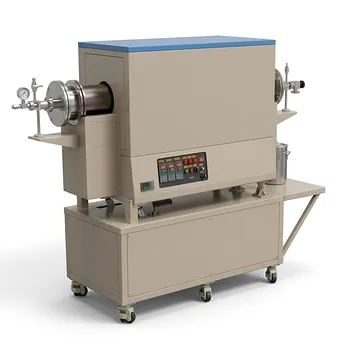
900°C Max Rotary Tube Furnace with 8 Inch 310S Alloy Tube and Optional Multi Zone Heating for Industrial Material Calcination
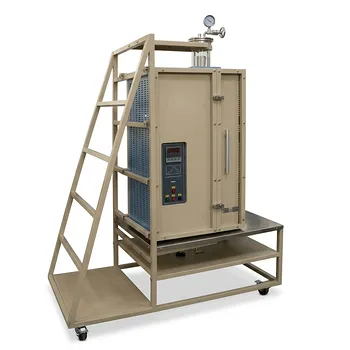
Split Vertical Tube Furnace with 1200C Quartz Tube and Stainless Steel Vacuum Flanges for Rapid Thermal Processing

High Temperature 1700C Tube Furnace with High Vacuum Turbomolecular Pump System and Multi Channel Mass Flow Controller Gas Mixer
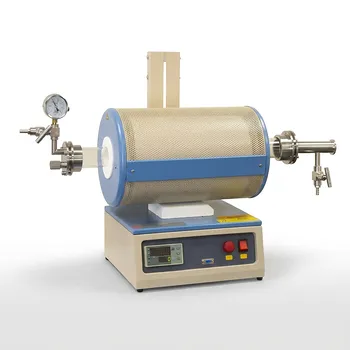
1100C Tube Furnace with Vacuum Flange and Programmable Temperature Controller for Material Science and Industrial Heat Treatment
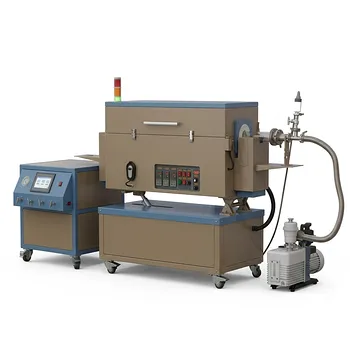
5 Inch Three Zone Rotary Tube Furnace with Integrated Gas Delivery System and 1200C Capability for Advanced Material CVD Processing

1200°C 5 Inch Vertical Quartz Tube Furnace with Stainless Steel Vacuum Flanges
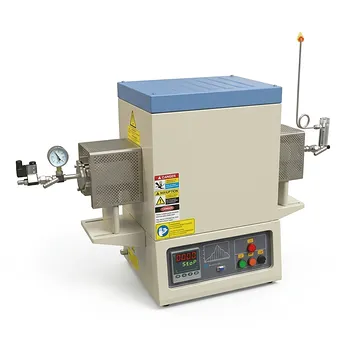
1700C Hydrogen Gas Tube Furnace with 60mm Alumina Process Tube and Integrated Hydrogen Safety Detector
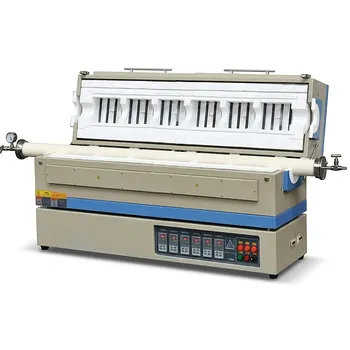
High Temperature 1700C Six Zone Split Tube Furnace with Alumina Tube and Water Cooled Flanges
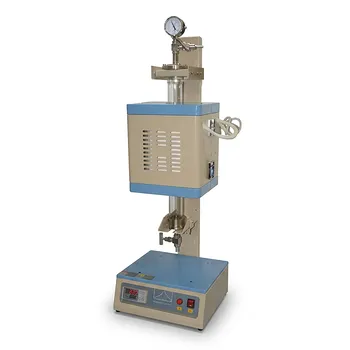
Compact Vertical Split Quartz Tube Furnace with Stainless Steel Vacuum Flanges for Rapid Thermal Quenching and Controlled Atmosphere Material Processing
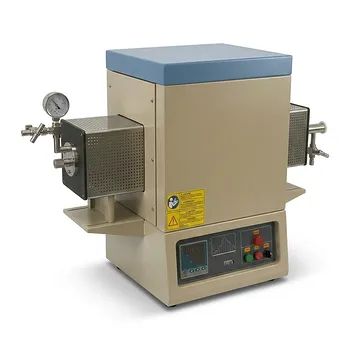
High Temperature 1700C Benchtop Tube Furnace with 5 Inch Heating Zone High Purity Alumina Tube and Vacuum Sealing Flanges
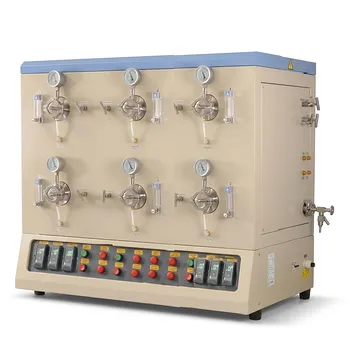
1200C High Throughput Multi Channel Tube Furnace with 50mm Quartz Tubes for Annealing and Material Phase Diagram Research
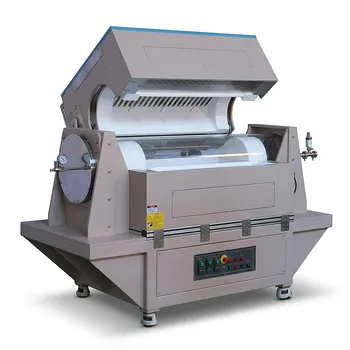
Three Zone Tube Furnace with 11 Inch or 15 Inch Quartz Tube and Hinged Flanges for Vacuum Atmosphere Heat Treatment

1800C High Temperature Compact Vacuum Tube Furnace with 60mm OD Alumina Tube and Kanthal MoSi2 Heating Elements

High Temperature 1700C Vertical Tube Furnace for Powder Spherification and Material Sintering
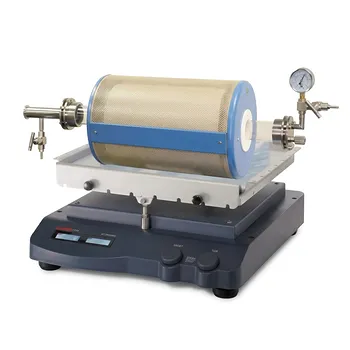
High Temperature Rocking Tube Furnace with Quartz Tube and Vacuum Flange for Materials Synthesis

High Temperature Automated 5 Inch Tube Furnace for Autonomous Material Research and Advanced Laboratory R&D
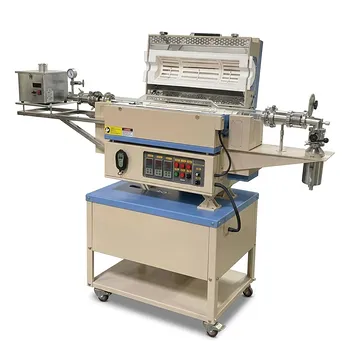
5 Inch Rotary Tube Furnace with Automatic Feeding and Receiving System 1200C Three Zone CVD Powder Processing