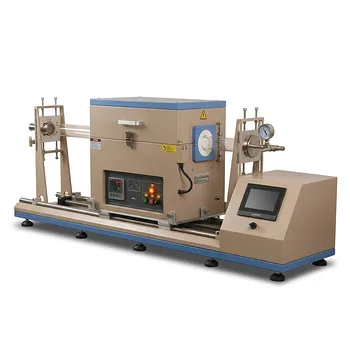
What physical conditions does a Tube Furnace provide during Laser Ablation? Optimize Thermal & Gas Flow for CNTs
Updated 6 months ago
A tube furnace serves as the foundational reaction environment for Laser Ablation, providing the precise thermal and atmospheric conditions necessary for carbon atoms to coalesce into nanotubes. This equipment maintains a high-temperature zone, typically between 700 and 1,500 Kelvin, while facilitating the flow of inert carrier gases. These conditions ensure that the carbon vapor generated by the laser retains enough energy for structural growth before being transported to a collection area.
The tube furnace acts as a stabilized thermodynamic chamber that prevents the premature cooling of carbon vapor and protects the material from oxidation. By balancing intense heat with controlled gas flow, it enables the transition from chaotic vapor to highly ordered carbon structures.
Precise Thermal Regulation
Sustaining High-Energy States
In the Laser Ablation process, a high-power laser strikes a graphite target, creating a plume of carbon vapor. The tube furnace provides a sustained environment of 700 to 1,500 Kelvin to ensure this vapor does not cool too rapidly. This thermal energy is critical for allowing carbon atoms to undergo structural rearrangement into the desired nanotube configuration.
Maintaining Isothermal Zones
Effective carbon nanotube (CNT) growth requires a stable and uniform temperature field. The furnace provides a stable isothermal zone that prevents temperature fluctuations from disrupting the growth kinetics. This stability is a decisive factor in determining the final graphitization degree and electrical conductivity of the nanotubes.
Atmospheric and Flow Control
Protection via Inert Environments
The sealed structure of the tube furnace allows for a strict inert atmosphere, usually maintained by nitrogen, argon, or helium. This oxygen-free environment is vital to prevent the oxidation of the carbon vapor and the metallic catalyst particles. Without this protection, the carbon would combust rather than form nanotubes.
Facilitating Material Transport
The furnace structure is designed to facilitate the introduction of inert carrier gases. These gases act as a transport medium, moving the newly formed carbon nanotubes from the high-temperature reaction zone to a cooling collection end. This continuous flow is essential for harvesting the material and preventing over-exposure to intense heat.
Management of Catalysts and Precursors
Optimization of Catalyst Activity
In many laser ablation setups, catalyst nanoparticles are mixed with the graphite target. The furnace provides the necessary thermodynamic conditions for these catalysts (such as nickel or cobalt) to remain active. Precise temperature control prevents the thermal agglomeration of these particles, ensuring they remain small enough to dictate the diameter of the nanotubes.
Regulation of Physical Properties
The interaction between the furnace temperature and the gas flow rate directly influences the porous properties and density of the CNTs. By controlling the heating rate and the maximum temperature, researchers can fine-tune the diameter and uniformity of the carbon networks. This level of control is necessary for applications requiring specific electromagnetic or conductive profiles.
Understanding the Trade-offs
Energy Intensity and Scalability
While a tube furnace provides exceptional control, it is an energy-intensive component that requires significant time to reach and stabilize at target temperatures. This makes the laser ablation process more suited for producing high-quality, high-purity nanotubes rather than low-cost, mass-market bulk materials.
Complexity of Flow Dynamics
Managing the gas flow within the tube requires a delicate balance; if the flow is too fast, the carbon vapor may be swept away before it can properly grow. Conversely, if the flow is too slow, the nanotubes may settle in the hot zone for too long, leading to structural defects or unwanted amorphous carbon buildup.
Applying These Conditions to Your Production
How to Optimize Your Process
To achieve the best results in carbon nanotube production, you must align the furnace settings with your specific material requirements.
- If your primary focus is High Purity: Maximize the stability of the inert gas flow to ensure all oxygen is purged and the vapor is transported efficiently to the cooling zone.
- If your primary focus is Diameter Control: Focus on the precise regulation of the isothermal zone temperature to keep catalyst particles from agglomerating.
- If your primary focus is Structural Integrity: Utilize slower heating rates to allow for more complete graphitization and fewer defects in the carbon lattice.
By mastering the thermal and atmospheric environment of the tube furnace, you can transform chaotic carbon vapor into a highly engineered nanomaterial.
Summary Table:
| Physical Condition | Operational Range/Type | Primary Role in Laser Ablation | Impact on Carbon Nanotubes (CNTs) |
|---|---|---|---|
| Temperature | 700 - 1,500 Kelvin | Sustains high-energy states; maintains isothermal zones | Enables graphitization & structural integrity |
| Atmosphere | Inert (Ar, He, N2) | Prevents oxidation of carbon vapor & catalysts | Ensures material purity; prevents combustion |
| Gas Flow | Controlled Carrier Flow | Transports material from reaction to collection zone | Regulates diameter, density, & cooling rate |
| Catalyst State | Active Nanoparticles | Prevents thermal agglomeration | Determines nanotube diameter & uniformity |
Elevate Your Nanomaterial Research with THERMUNITS
Precise thermal control is the difference between chaotic vapor and high-purity carbon nanotubes. As a leading manufacturer of high-temperature laboratory equipment, THERMUNITS provides the advanced thermal processing solutions required for cutting-edge material science and industrial R&D.
Whether you are performing Laser Ablation, CVD, or PECVD, our comprehensive range of equipment—including Tube Furnaces, Vacuum & Atmosphere Furnaces, Muffle Furnaces, and Rotary Kilns—is engineered to deliver the stable isothermal zones and strict atmospheric control your project demands.
Ready to optimize your heat treatment process? Contact our expert team today to discuss how our custom furnace solutions can enhance your lab's precision and efficiency.
References
- Aamar Shabir, Muhammad Sanaullah. Chirality Engineering of Carbon Nanotubes, Modeling and Photons Density Improvement for Solar cell Applications. DOI: 10.36348/sjet.2024.v09i02.005
Mentioned Products
- Vertical 1700C Vacuum and Atmosphere Tube Furnace with 80mm Alumina Tube
- Compact High Temperature 1600C Tube Furnace with 50mm Alumina Tube and Vacuum Flanges for Material Sintering
- 900°C Max Rotary Tube Furnace with 8 Inch 310S Alloy Tube and Optional Multi Zone Heating for Industrial Material Calcination
- Split Vertical Tube Furnace with 1200C Quartz Tube and Stainless Steel Vacuum Flanges for Rapid Thermal Processing
- High Temperature 1700C Tube Furnace with High Vacuum Turbomolecular Pump System and Multi Channel Mass Flow Controller Gas Mixer
People Also Ask
- How does a vertical tube furnace ensure stable experimental conditions during molten fluoride electrolysis testing? Precision Tips
- How does a vertical tube furnace facilitate thermoelectric alloy melting? Precision synthesis for material homogeneity.
- Why is a thermocouple sensor indispensable for monitoring the vertical tube furnace during gallium oxide nanowire production? Optimize VLS Growth
- What is the function of a laboratory-grade vertical tube furnace in fast pyrolysis? Optimize Composite Research.
- How is an industrial-grade vertical tube furnace utilized in smelting leaching residues? Enhance Metal Recovery Efficiency

Tech Team · ThermUnits
Last updated on Apr 14, 2026
Related Products
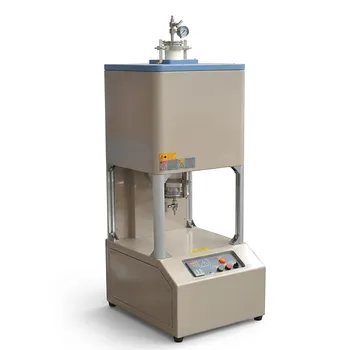
Vertical 1700C Vacuum and Atmosphere Tube Furnace with 80mm Alumina Tube
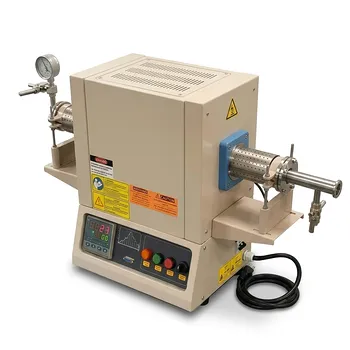
Compact High Temperature 1600C Tube Furnace with 50mm Alumina Tube and Vacuum Flanges for Material Sintering
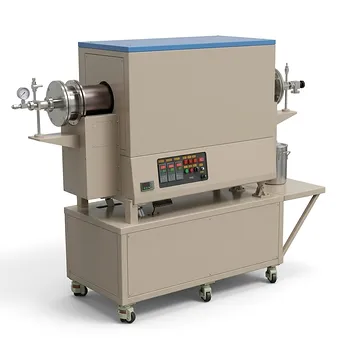
900°C Max Rotary Tube Furnace with 8 Inch 310S Alloy Tube and Optional Multi Zone Heating for Industrial Material Calcination
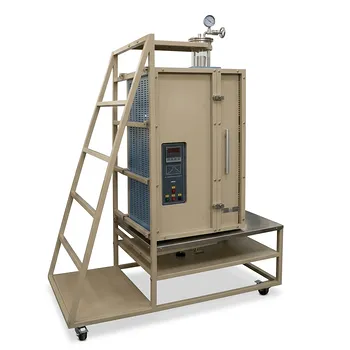
Split Vertical Tube Furnace with 1200C Quartz Tube and Stainless Steel Vacuum Flanges for Rapid Thermal Processing
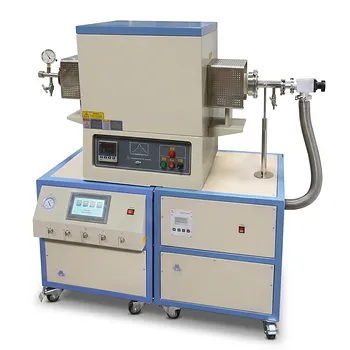
High Temperature 1700C Tube Furnace with High Vacuum Turbomolecular Pump System and Multi Channel Mass Flow Controller Gas Mixer
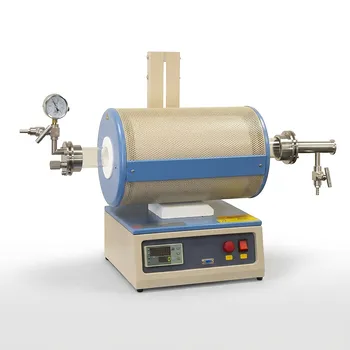
1100C Tube Furnace with Vacuum Flange and Programmable Temperature Controller for Material Science and Industrial Heat Treatment
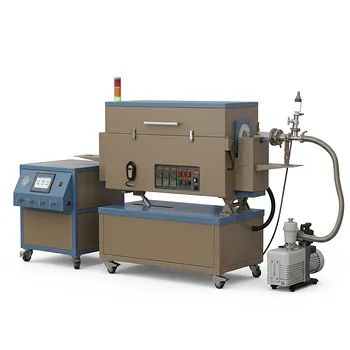
5 Inch Three Zone Rotary Tube Furnace with Integrated Gas Delivery System and 1200C Capability for Advanced Material CVD Processing
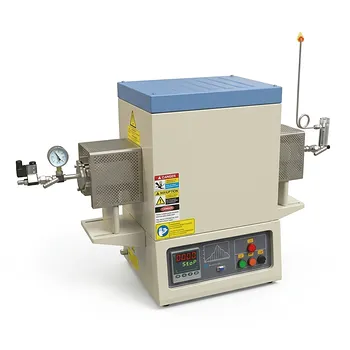
1700C Hydrogen Gas Tube Furnace with 60mm Alumina Process Tube and Integrated Hydrogen Safety Detector
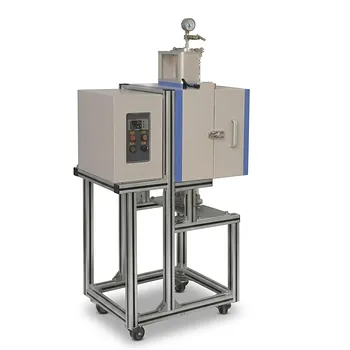
1200°C 5 Inch Vertical Quartz Tube Furnace with Stainless Steel Vacuum Flanges
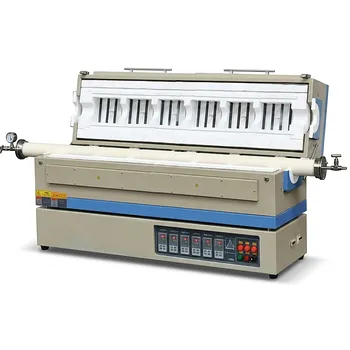
High Temperature 1700C Six Zone Split Tube Furnace with Alumina Tube and Water Cooled Flanges
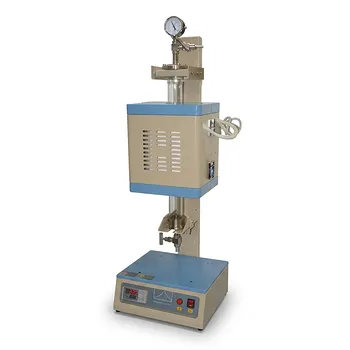
Compact Vertical Split Quartz Tube Furnace with Stainless Steel Vacuum Flanges for Rapid Thermal Quenching and Controlled Atmosphere Material Processing
High Temperature 1700C Benchtop Tube Furnace with 5 Inch Heating Zone High Purity Alumina Tube and Vacuum Sealing Flanges
1800C High Temperature Compact Vacuum Tube Furnace with 60mm OD Alumina Tube and Kanthal MoSi2 Heating Elements
1200C High Throughput Multi Channel Tube Furnace with 50mm Quartz Tubes for Annealing and Material Phase Diagram Research
Three Zone Tube Furnace with 11 Inch or 15 Inch Quartz Tube and Hinged Flanges for Vacuum Atmosphere Heat Treatment
High Temperature 1700C Vertical Tube Furnace for Powder Spherification and Material Sintering
High Temperature Rocking Tube Furnace with Quartz Tube and Vacuum Flange for Materials Synthesis
High Temperature Automated 5 Inch Tube Furnace for Autonomous Material Research and Advanced Laboratory R&D
5 Inch Rotary Tube Furnace with Automatic Feeding and Receiving System 1200C Three Zone CVD Powder Processing