What role do tube furnaces and alumina crucibles play in graphitization? Optimize Your Preliminary Pyrolysis Stage
Updated 3 months ago
In the preliminary pyrolysis stage, the tube furnace and alumina crucible function as a precision-controlled micro-reactor environment. The tube furnace provides the critical thermal and atmospheric conditions—specifically a 5 °C/min heating rate and a nitrogen-rich inert atmosphere—to reach 400 °C. Meanwhile, the alumina crucible serves as a chemically resistant vessel that holds the iron-impregnated cellulose, ensuring the resulting amorphous carbon matrix is uniform and properly doped for subsequent graphitization.
The tube furnace and alumina crucible are essential for converting raw biomass into a standardized, catalyst-doped amorphous carbon scaffold. This stage ensures the removal of volatile impurities and the stabilization of the iron catalyst, which are required for successful high-temperature graphitization.
The Role of the Tube Furnace in Environmental Control
Atmospheric Shielding and Oxygen Exclusion
The tube furnace provides a sealed environment that allows for the continuous introduction of high-purity nitrogen or argon. This inert atmosphere is vital to prevent the oxidative loss of the biomass precursor, which would otherwise burn rather than carbonize at 400 °C.
Precision Kinetic Management
By utilizing programmable temperature controllers, the furnace maintains a steady heating rate (typically 5 °C/min). This controlled ramp allows for the gradual escape of pyrolysis gases, which prevents internal pore pressure from accumulating and cracking the sample structure.
Uniformity of the Thermal Field
The design of the tube furnace ensures a stable, long temperature zone. This uniformity is necessary to ensure that the entire sample within the crucible experiences the same thermal history, leading to consistent crystallinity and catalyst distribution.
The Role of the Alumina Crucible in Material Stability
Thermal and Chemical Resilience
Alumina ($Al_2O_3$) is chosen for its high thermal stability and relative inertness during the early stages of pyrolysis. It can withstand the 400 °C setpoint without degrading or reacting with the iron nitrate precursors.
Sample Containment and Precursor Loading
The crucible serves as the physical interface for the impregnated cellulose. It ensures that the iron nitrate and biomass stay in intimate contact during dehydration, which is necessary for creating a well-distributed catalyst-doped matrix.
Protection Against Contamination
The high purity of alumina crucibles prevents unwanted metallic impurities from leaching into the carbon matrix. This ensures that the iron-catalyzed reactions observed in later stages are attributed solely to the added iron precursors.
The Evolution of the Amorphous Carbon Matrix
Dehydration and Volatile Removal
During this 400 °C stage, the furnace drives the thermal degradation of biomass components like cellulose. This process removes water and volatile organic compounds (VOCs), leaving behind a concentrated carbon skeleton.
Stabilization of Catalyst Sites
As the biomass transforms, the iron precursors are integrated into the resulting amorphous matrix. This creates a "standardized starting sample" where the iron is trapped within the carbon, preventing excessive aggregation of metal atoms before the high-temperature graphitization begins.
Understanding the Trade-offs and Limitations
Thermal Lag and Gradient Issues
While the furnace displays a specific temperature, there is often a thermal lag between the furnace atmosphere and the material inside the crucible. If the heating rate is too high, the core of the sample may not reach the target temperature simultaneously with the surface.
Crucible Surface Interactions
At very high temperatures, even alumina can show minor reactivity with certain precursors. For preliminary pyrolysis at 400 °C, this is negligible, but it becomes a factor if the same crucible is used for the subsequent high-temperature graphitization above 1200 °C.
How to Apply This to Your Process
Making the Right Choice for Your Goal
- If your primary focus is sample structural integrity: Prioritize a very low heating rate (1-2 °C/min) to allow pyrolysis gases to escape slowly without fracturing the carbon matrix.
- If your primary focus is preventing oxidative mass loss: Ensure the tube furnace is purged with nitrogen for at least 20-30 minutes before initiating the heating cycle to remove all residual oxygen.
- If your primary focus is catalyst dispersion: Use a wide, shallow alumina boat rather than a tall crucible to ensure a uniform thickness of the precursor layer and consistent heat exposure.
By mastering the transition at 400 °C, you create the necessary chemical foundation for high-performance iron-catalyzed graphitization.
Summary Table:
| Component | Role in Preliminary Pyrolysis | Key Benefits & Parameters |
|---|---|---|
| Tube Furnace | Environmental & Kinetic Control | Inert atmosphere (N2/Ar), 5°C/min heating rate, uniform thermal zone. |
| Alumina Crucible | Material Stability & Containment | Chemical resistance, thermal resilience up to 400°C+, prevents contamination. |
| Inert Gas (N2) | Atmospheric Shielding | Prevents oxidative mass loss; ensures carbonization instead of combustion. |
| Iron Catalyst | Matrix Doping | Stabilizes catalyst sites within the amorphous carbon scaffold. |
Elevate Your Material Research with THERMUNITS Precision Furnaces
Are you looking to achieve superior consistency in iron-catalyzed graphitization or advanced thermal processing? THERMUNITS is a leading manufacturer of high-temperature laboratory equipment designed specifically for material science and industrial R&D.
We offer a comprehensive range of thermal solutions to ensure your preliminary pyrolysis and high-temperature stages are flawless, including:
- Tube, Muffle, Vacuum, and Atmosphere Furnaces
- CVD/PECVD Systems for advanced material synthesis
- Rotary Kilns and Vacuum Induction Melting (VIM) Furnaces
- Hot Press Furnaces and Dental Furnaces
- High-quality Thermal Elements and heat treatment accessories
Ready to optimize your lab's efficiency and results? Contact our expert team today to discuss your specific requirements and discover how THERMUNITS can empower your next breakthrough.
References
- Robert Hunter, Zoë Schnepp. Elucidating the Mechanism of Iron‐Catalyzed Graphitization: The First Observation of Homogeneous Solid‐State Catalysis. DOI: 10.1002/adma.202404170
Mentioned Products
- Vertical 1700C Vacuum and Atmosphere Tube Furnace with 80mm Alumina Tube
- Compact High Temperature 1600C Tube Furnace with 50mm Alumina Tube and Vacuum Flanges for Material Sintering
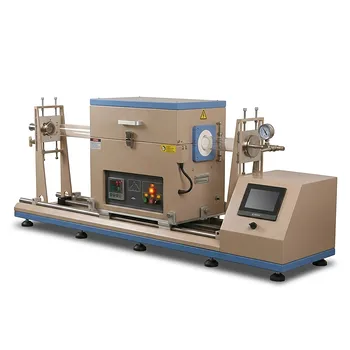
- 900°C Max Rotary Tube Furnace with 8 Inch 310S Alloy Tube and Optional Multi Zone Heating for Industrial Material Calcination
- Split Vertical Tube Furnace with 1200C Quartz Tube and Stainless Steel Vacuum Flanges for Rapid Thermal Processing
- High Temperature 1700C Tube Furnace with High Vacuum Turbomolecular Pump System and Multi Channel Mass Flow Controller Gas Mixer
People Also Ask
- How is an industrial-grade vertical tube furnace utilized in smelting leaching residues? Enhance Metal Recovery Efficiency
- What is the function of a laboratory-grade vertical tube furnace in fast pyrolysis? Optimize Composite Research.
- How does a vertical tube furnace facilitate thermoelectric alloy melting? Precision synthesis for material homogeneity.
- Why is a thermocouple sensor indispensable for monitoring the vertical tube furnace during gallium oxide nanowire production? Optimize VLS Growth
- What are the advantages of using a vertical tube furnace for crucible experiments simulating steel-slag interactions?

Tech Team · ThermUnits
Last updated on Jun 03, 2026
Related Products

Vertical 1700C Vacuum and Atmosphere Tube Furnace with 80mm Alumina Tube

Compact High Temperature 1600C Tube Furnace with 50mm Alumina Tube and Vacuum Flanges for Material Sintering
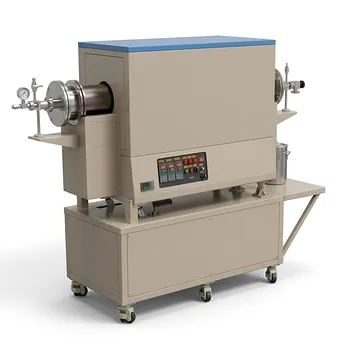
900°C Max Rotary Tube Furnace with 8 Inch 310S Alloy Tube and Optional Multi Zone Heating for Industrial Material Calcination
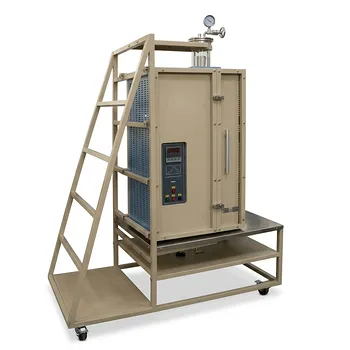
Split Vertical Tube Furnace with 1200C Quartz Tube and Stainless Steel Vacuum Flanges for Rapid Thermal Processing

High Temperature 1700C Tube Furnace with High Vacuum Turbomolecular Pump System and Multi Channel Mass Flow Controller Gas Mixer

1100C Tube Furnace with Vacuum Flange and Programmable Temperature Controller for Material Science and Industrial Heat Treatment
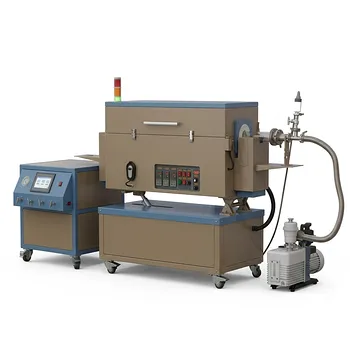
5 Inch Three Zone Rotary Tube Furnace with Integrated Gas Delivery System and 1200C Capability for Advanced Material CVD Processing
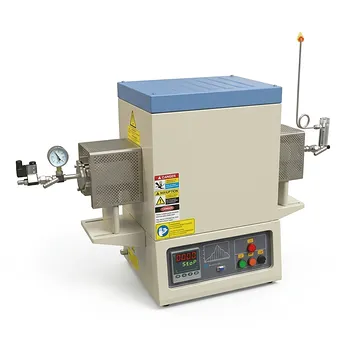
1700C Hydrogen Gas Tube Furnace with 60mm Alumina Process Tube and Integrated Hydrogen Safety Detector

1200°C 5 Inch Vertical Quartz Tube Furnace with Stainless Steel Vacuum Flanges

High Temperature 1700C Six Zone Split Tube Furnace with Alumina Tube and Water Cooled Flanges

Compact Vertical Split Quartz Tube Furnace with Stainless Steel Vacuum Flanges for Rapid Thermal Quenching and Controlled Atmosphere Material Processing

High Temperature 1700C Benchtop Tube Furnace with 5 Inch Heating Zone High Purity Alumina Tube and Vacuum Sealing Flanges
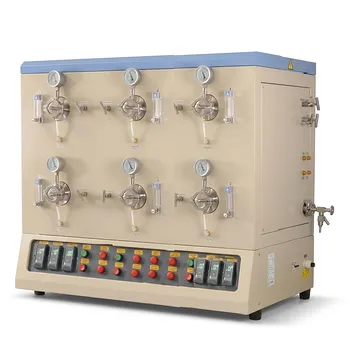
1200C High Throughput Multi Channel Tube Furnace with 50mm Quartz Tubes for Annealing and Material Phase Diagram Research

Three Zone Tube Furnace with 11 Inch or 15 Inch Quartz Tube and Hinged Flanges for Vacuum Atmosphere Heat Treatment

1800C High Temperature Compact Vacuum Tube Furnace with 60mm OD Alumina Tube and Kanthal MoSi2 Heating Elements

High Temperature 1700C Vertical Tube Furnace for Powder Spherification and Material Sintering
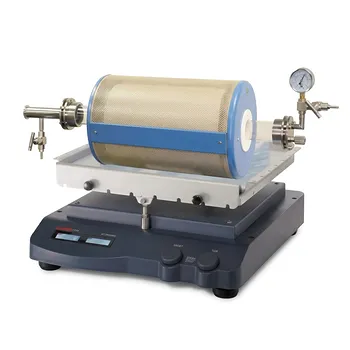
High Temperature Rocking Tube Furnace with Quartz Tube and Vacuum Flange for Materials Synthesis

High Temperature Automated 5 Inch Tube Furnace for Autonomous Material Research and Advanced Laboratory R&D
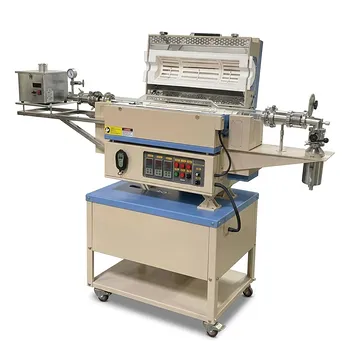
5 Inch Rotary Tube Furnace with Automatic Feeding and Receiving System 1200C Three Zone CVD Powder Processing