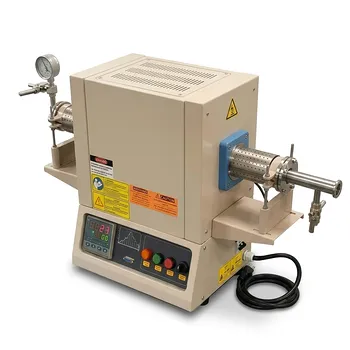
What role does a high-precision horizontal tube furnace play in the VLS growth of SnO2 nanowires? Master VLS Synthesis
Updated 6 months ago
In the synthesis of Tin Dioxide ($SnO_{2}$) nanowires via the Vapor-Liquid-Solid (VLS) method, the high-precision horizontal tube furnace acts as the primary reactor for thermochemical control. It provides the stable 950 °C environment necessary for tin powder evaporation while maintaining the precise vacuum and atmospheric conditions required for catalyst-guided crystal growth.
The horizontal tube furnace is the fundamental hardware that regulates the phase transitions and chemical kinetics of $SnO_{2}$ growth. By managing temperature gradients and gas flow, it ensures the precise conversion of bulk tin into oriented 1D nanostructures with specific morphologies.
Thermal Field Management
Driving Source Evaporation
The furnace provides a stable high-temperature field, typically reaching 950 °C, to facilitate the gasification of raw material powders. This constant energy supply ensures a consistent vapor pressure of tin, which is the necessary precursor for nanowire formation.
Catalyst Activation and Droplet Formation
High-precision heating is required to form liquid catalyst droplets on the substrate. These droplets act as the collection sites where the $SnO_{2}$ vapor dissolves, reaches supersaturation, and eventually precipitates as solid nanowires.
Regulating Growth Kinetics
Programmable heating curves allow the furnace to manage the energy required for reductive or oxidative reactions. By controlling the temperature precisely, the system dictates the crystallinity, growth rate, and final aspect ratio of the $SnO_{2}$ channels.
Atmospheric and Pressure Regulation
Strict Vacuum Control
The furnace maintains a low-pressure environment, often down to 1 mTorr, to eliminate contaminants and control the mean free path of gas molecules. This vacuum level is critical for ensuring the purity of the semiconductor nanowires and the repeatability of the growth process.
Carrier Gas Dynamics
By precisely regulating the flow rates of carrier gases like Oxygen ($O_{2}$) and Nitrogen ($N_{2}$), the furnace creates the necessary physicochemical conditions for oxidation. The ratio of these gases determines the stoichiometry of the $SnO_{2}$, which directly impacts its future electrical sensing capabilities.
Transport through Laminar Flow
The horizontal configuration promotes laminar gas flow, which is essential for the uniform transport of vaporized materials. This steady flow utilizes diffusion effects to move the vapor from the high-temperature source zone to the cooler deposition zone where the nanowires grow.
Understanding the Trade-offs
Temperature Gradient Instability
While a horizontal gradient is necessary to drive vapor migration, an unstable gradient can lead to non-uniform growth. If the temperature transition between the source and the substrate is too sharp or too shallow, the nanowires may exhibit inconsistent diameters or poor crystallinity.
Contamination and Wall Reactions
In a tube furnace, the quartz or ceramic tube itself can sometimes become a source of contamination at high temperatures. Over time, residual precursors deposited on the tube walls can flake off or re-evaporate, potentially doping the $SnO_{2}$ nanowires with unintended impurities.
Pressure Fluctuations
Maintaining a strict 1 mTorr vacuum requires high-quality seals and stable pumping speeds. Small fluctuations in internal pressure during the growth phase can disrupt the VLS process, causing the growth to stall or resulting in "kinked" nanowire structures.
Applying This to Your Synthesis Goals
How to Apply This to Your Project
- If your primary focus is High Aspect Ratio: Prioritize a furnace with a single-zone configuration that supports stable laminar flow and controlled diffusion over long distances.
- If your primary focus is Electrical Sensing Accuracy: Focus on the precision of the $O_{2}$ and $N_{2}$ gas mixing system to ensure the $SnO_{2}$ stoichiometry is perfectly tuned for semiconductor channels.
- If your primary focus is Uniformity across the Substrate: Ensure the furnace can maintain a horizontal temperature gradient that remains constant throughout the entire deposition window.
The high-precision horizontal tube furnace is the central engine of VLS growth, transforming raw materials into sophisticated nanostructures through the masterful calibration of heat, pressure, and chemistry.
Summary Table:
| Feature | Role in VLS Growth | Key Specification/Requirement |
|---|---|---|
| Thermal Field | Drives source evaporation & catalyst activation | Stable 950 °C environment |
| Vacuum Control | Ensures purity & controls gas mean free path | Low pressure down to 1 mTorr |
| Gas Dynamics | Regulates stoichiometry & vapor transport | Laminar flow of $O_2$ and $N_2$ |
| Heating Curves | Manages growth kinetics & crystallinity | Programmable high-precision ramps |
Elevate Your Nanomaterial R&D with THERMUNITS
Precision is non-negotiable in $SnO_{2}$ nanowire synthesis. THERMUNITS is a leading manufacturer of high-temperature laboratory equipment, providing the thermal stability and atmospheric purity required for advanced material science.
Our comprehensive range of solutions includes:
- Tube & Atmosphere Furnaces: Perfect for VLS and CVD/PECVD growth processes.
- Vacuum & Muffle Furnaces: For high-purity heat treatments.
- Specialized Equipment: Including Rotary kilns, Hot Press furnaces, Dental furnaces, and Vacuum Induction Melting (VIM) systems.
Whether you are scaling industrial R&D or conducting fundamental research, our equipment ensures repeatable, high-quality results for every nanostructure.
Ready to optimize your thermal processing?
Contact our experts today to find the perfect furnace for your application!
References
- Gen Li, Zhicheng Cai. Selective CO2 Detection at Room Temperature with Polyaniline/SnO2 Nanowire Composites. DOI: 10.3390/coatings14121590
Mentioned Products
- 1200°C 10-Zone Split Tube Furnace with Horizontal and Vertical Mounting for Multi-Zone Thermal Gradients and Large Diameter Material Processing
- Multi Position Tube Furnace 1100C for Laboratory Material Research and Advanced Industrial Thermal Processing
- Ten Zone Multi Orientation Laboratory Tube Furnace for 1200C High Temperature Gradient Thermal Processing
- Vertical 1700C Vacuum and Atmosphere Tube Furnace with 80mm Alumina Tube
- Split Vertical Tube Furnace with 1200C Quartz Tube and Stainless Steel Vacuum Flanges for Rapid Thermal Processing
People Also Ask
- What is the primary engineering purpose for using a customized ventilation hood when operating a split tube furnace? RCF Safety
- What are the technical advantages of using a multi-zone independently controlled tube furnace in the modified USP process?
- How does a split tube furnace facilitate debinding of ceramic green bodies? Master Precise Thermal & Atmosphere Control
- What are the advantages of using a split tube furnace for heating a catalytic reactor? Boost Efficiency and Precision
- How does a split tube furnace contribute to the thermal stabilization of Clignin@H-TiO2? Achieve Structural Precision

Tech Team · ThermUnits
Last updated on Apr 14, 2026
Related Products
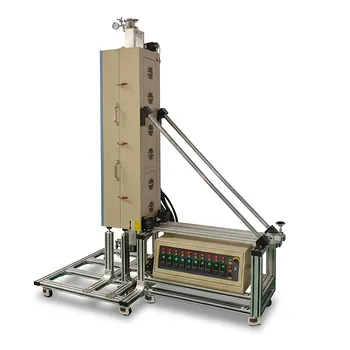
1200°C 10-Zone Split Tube Furnace with Horizontal and Vertical Mounting for Multi-Zone Thermal Gradients and Large Diameter Material Processing
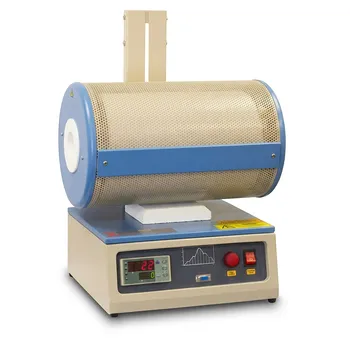
Multi Position Tube Furnace 1100C for Laboratory Material Research and Advanced Industrial Thermal Processing
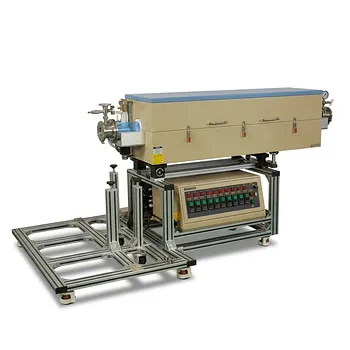
Ten Zone Multi Orientation Laboratory Tube Furnace for 1200C High Temperature Gradient Thermal Processing
Vertical 1700C Vacuum and Atmosphere Tube Furnace with 80mm Alumina Tube
Split Vertical Tube Furnace with 1200C Quartz Tube and Stainless Steel Vacuum Flanges for Rapid Thermal Processing
Five Zone Split Vertical Tube Furnace 1200C Max with 4 Inch Quartz Tube and Stainless Steel Vacuum Flanges
High Temperature 1700C Vertical Tube Furnace for Powder Spherification and Material Sintering
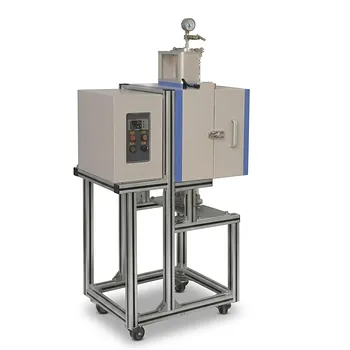
1200°C 5 Inch Vertical Quartz Tube Furnace with Stainless Steel Vacuum Flanges
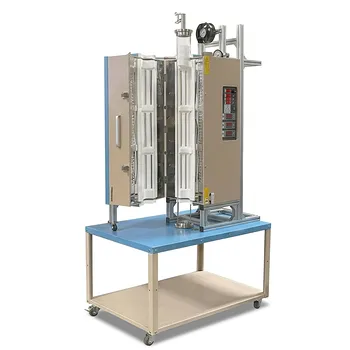
1200C Three Zone Split Vertical Tube Furnace 4 Inch Quartz Tube Stainless Steel Vacuum Flanges
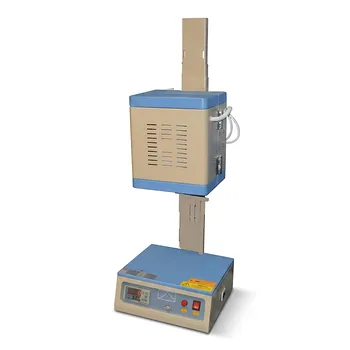
High Temperature Vertical Split Tube Furnace with PID Temperature Controller for 1 and 2 Inch Processing Tubes
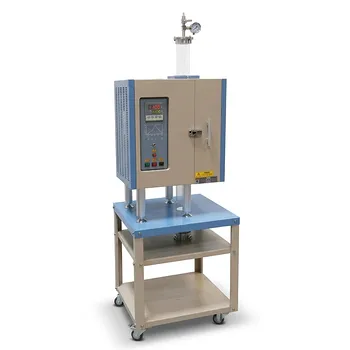
1100°C Split Vertical Tube Furnace with 80mm Quartz Tube and Stainless Steel Vacuum Flanges
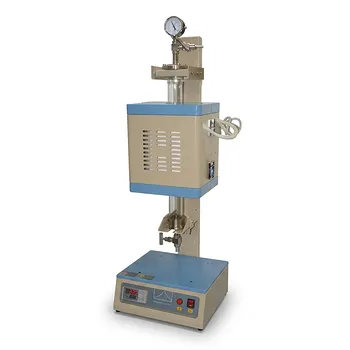
Compact Vertical Split Quartz Tube Furnace with Stainless Steel Vacuum Flanges for Rapid Thermal Quenching and Controlled Atmosphere Material Processing
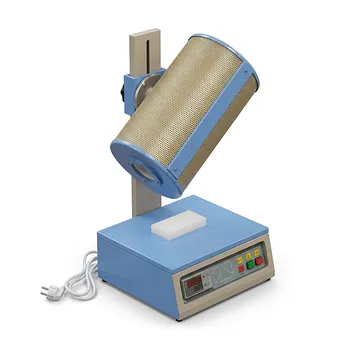
1100°C Vertical Laboratory Furnace for DIY Tubular Reactors with PID Temperature Controller
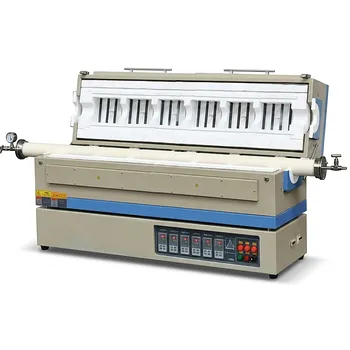
High Temperature 1700C Six Zone Split Tube Furnace with Alumina Tube and Water Cooled Flanges
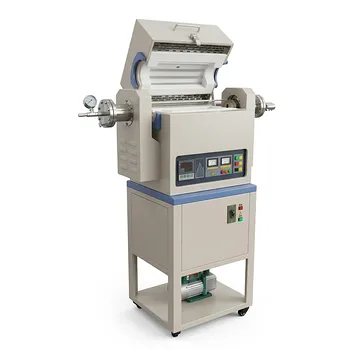
High Temperature Rotary Tilt Tubular Furnaces for Advanced Powder Sintering and Material Processing
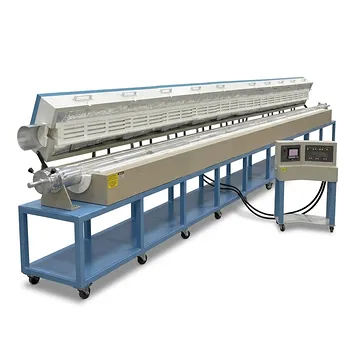
12 Zone Ultra Long Split Tube Furnace with 20 Foot Quartz Tube and 1100C Max Temperature
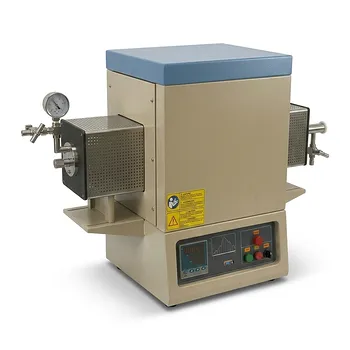
High Temperature 1700C Benchtop Tube Furnace with 5 Inch Heating Zone High Purity Alumina Tube and Vacuum Sealing Flanges
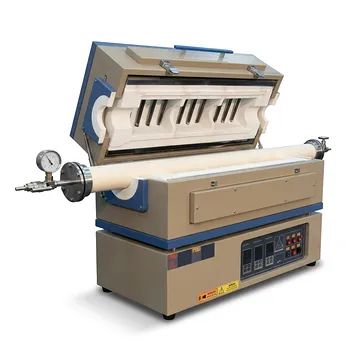
1600C Three Zone Split Tube Furnace with Alumina Tube and Vacuum Flange
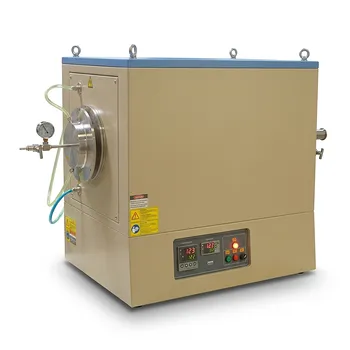
1100°C Large Diameter Quartz Tube Furnace with 24 Inch Heating Zone and Water Cooled Flanges