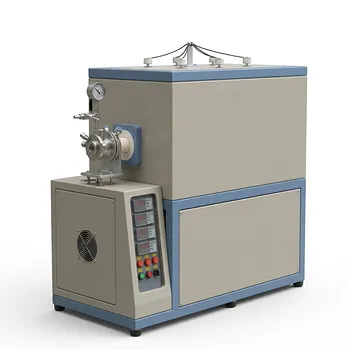
What are the technical advantages of using a multi-zone independently controlled tube furnace in the modified USP process?
Updated 3 months ago
The primary technical advantage of a multi-zone tube furnace in Ultrasonic Spray Pyrolysis (USP) is the ability to establish a precise, longitudinal temperature gradient. This configuration allows researchers to decouple the distinct physical and chemical stages of particle synthesis—such as solvent evaporation, solute precipitation, and nucleation—by assigning them to specific, independently controlled heating zones.
The use of multi-zone furnaces transforms the USP process from a single-stage thermal treatment into a sophisticated, multi-step chemical reactor. By managing temperature gradients, it ensures full phase formation and structural integrity that single-zone systems cannot achieve.
Precision Control of Reaction Kinetics
Segmented Thermal Processing Stages
In a modified USP process, the first temperature zone is specifically calibrated for the rapid evaporation of the droplet solvent. Subsequent independent zones provide a stable, high-temperature environment required for solute precipitation, reduction, and nucleation.
Extended Effective Residence Time
The multi-zone design significantly extends the effective residence time of materials within the reaction zone. This prolonged exposure at specific temperatures is critical for the full formation of complex phases, such as Ni-Y2O3 composites, which require time to achieve chemical homogeneity.
Management of Precursor Vapor Pressure
Independent control allows for the generation of stable precursor vapors in one zone (e.g., at 150 °C) while maintaining a significantly higher reaction temperature (e.g., 800 °C) in another. This prevents the over-sulfurization or ablation of sensitive materials, ensuring the creation of precise Janus structures or layered compounds.
Optimization of Material Morphology and Structure
Prevention of Agglomeration and Sintering
A stable and uniform thermal field effectively prevents excessive sintering and particle agglomeration. By maintaining precise heating rates, the furnace ensures that nanoparticles (such as Fe3O4) retain a high specific surface area and remain within narrow size ranges, typically 30-50 nm.
Atomic Rearrangement and Lattice Development
The constant temperature platforms provided by multi-zone systems facilitate the rearrangement of cations onto specific lattice sites. This thermal energy is essential for developing electrochemically active structures, such as the layered R3-m structure in battery materials, which directly improves cycling stability.
Uniform Surface Functionalization
As aerosol droplets flow through the stable temperature field, physical and chemical stages like activation etching and high-temperature carbonization occur simultaneously. This leads to the efficient production of carbon materials with hierarchical pore formations and consistent surface functionalization.
Managing Thermal and Fluid Dynamics
Mitigation of Exothermic Reaction Risks
In processes involving materials like polyacrylonitrile (PAN), reactions can be strongly exothermic, risking local overheating. Multi-zone furnaces allow for step-wise heating, which prevents fiber melting and ensures that chemical cross-linking occurs uniformly across the material.
Stabilization of Gas Flow and Vapor Transport
The use of specialized tube configurations within the furnace helps suppress turbulence and stabilize gas flow dynamics. This maintains a high local vapor concentration near the substrate, which is a prerequisite for achieving pixel consistency in large-area inorganic arrays.
Maintenance of Inert Environments
Advanced tube furnaces, particularly those using alumina, offer high-temperature resistance and structural integrity up to 700°C and beyond. Their design is highly effective for maintaining stable inert atmospheres through integrated gas flow control systems, which is vital for preventing unwanted oxidation during pyrolysis.
Understanding the Trade-offs
While multi-zone furnaces offer superior control, they introduce increased system complexity and a higher initial capital investment compared to single-zone models. The requirement for multiple controllers and sensors increases the potential points of failure within the laboratory setup.
Additionally, achieving a perfectly seamless transition between temperature zones can be challenging due to thermal bleed-over between adjacent sections. Operators must carefully calibrate the furnace to account for these "buffer zones" to ensure the temperature gradient matches the intended reaction path.
How to Apply This to Your Project
When integrating a multi-zone furnace into your USP workflow, your technical requirements should dictate the zone configuration.
- If your primary focus is synthesizing complex composite phases: Prioritize a furnace with at least three zones to separately manage evaporation, chemical reduction, and long-term phase maturation.
- If your primary focus is preventing nanoparticle sintering: Ensure the furnace has high-precision heating rate controllers to maintain a stable thermal environment that limits particle growth.
- If your primary focus is handling exothermic precursors: Select a system that allows for narrow temperature increments between zones to prevent localized structural damage or melting.
The multi-zone tube furnace acts as the definitive tool for researchers requiring absolute authority over the thermal history of their synthesized materials.
Summary Table:
| Technical Advantage | Key Benefit in USP Process | Material Impact |
|---|---|---|
| Segmented Heating | Decouples evaporation, precipitation, and nucleation | Ensures structural integrity and phase purity |
| Extended Residence Time | Increases exposure at critical temperature plateaus | Facilitates full formation of complex phases |
| Independent Vapor Control | Manages precursor vapor pressure separately from reaction | Prevents material ablation and over-sulfurization |
| Morphology Optimization | Prevents excessive sintering and particle agglomeration | Maintains high specific surface area (30-50 nm) |
| Thermal Stability | Mitigates exothermic risks and stabilizes gas flow | Improves cycling stability and lattice development |
Elevate Your Material Research with THERMUNITS Precision Technology
Are you looking to achieve absolute authority over the thermal history of your synthesized materials? THERMUNITS is a leading manufacturer of high-performance laboratory equipment designed for the most demanding R&D environments. Our advanced multi-zone tube furnaces are specifically engineered to provide the precise longitudinal temperature gradients required for complex processes like Ultrasonic Spray Pyrolysis (USP).
From Muffle, Vacuum, and Atmosphere furnaces to sophisticated CVD/PECVD systems and Vacuum Induction Melting (VIM) units, we offer a comprehensive suite of thermal processing solutions. Whether you are developing next-generation battery materials or functional nanoparticles, our equipment ensures uniform heating, stable inert environments, and superior reaction kinetics.
Ready to optimize your lab’s efficiency? Contact THERMUNITS today to discuss your specific heat treatment requirements and discover how our expert-engineered solutions can accelerate your material science breakthroughs.
References
- Marcin Krajewski, Mateusz Tokarczyk. Synthesis and characterization of magnetically-active nickel-yttrium oxide (Ni-Y2O3) nanocomposite particles prepared with modified ultrasound spray pyrolysis device. DOI: 10.1007/s10853-024-10517-7
Mentioned Products
- Ten Zone Multi Orientation Laboratory Tube Furnace for 1200C High Temperature Gradient Thermal Processing
- 1200°C 10-Zone Split Tube Furnace with Horizontal and Vertical Mounting for Multi-Zone Thermal Gradients and Large Diameter Material Processing
- Seven Zone 1200C Split Tube Furnace with Precision Temperature Controller and Quick Flange Vacuum System
- Six Zone Split Tube Furnace 1.8 Meter Quartz Tube 1200C High Temperature Heating System
- Five Zone 1200C High Temperature Split Tube Furnace with Touch Screen Controller and Multiple Quartz Tube Options
People Also Ask
- Role of multi-zone tube furnaces in CVD growth of 2D materials? Optimize Precise Single-Crystal Thermal Control.
- How does a multi-zone tube furnace facilitate the synthesis of two-dimensional alpha-Ga2Se3 crystals? Precision Growth
- What is the role of a multi-zone tube furnace in material science research? Mastering Precise Temperature Gradients
- What key role does a laboratory high-temperature tube furnace play in the production of carbon nanofibers? Guide
- Why use a tube furnace for oxygen annealing LaCrO3/LaMnO3? Optimize Phase Transition & Magnetic Performance.

Tech Team · ThermUnits
Last updated on Jun 03, 2026
Related Products
Ten Zone Multi Orientation Laboratory Tube Furnace for 1200C High Temperature Gradient Thermal Processing
1200°C 10-Zone Split Tube Furnace with Horizontal and Vertical Mounting for Multi-Zone Thermal Gradients and Large Diameter Material Processing
Seven Zone 1200C Split Tube Furnace with Precision Temperature Controller and Quick Flange Vacuum System
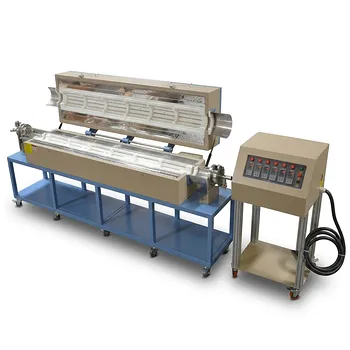
Six Zone Split Tube Furnace 1.8 Meter Quartz Tube 1200C High Temperature Heating System
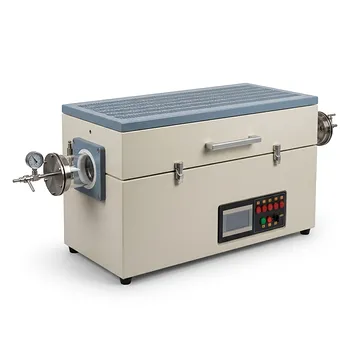
Five Zone 1200C High Temperature Split Tube Furnace with Touch Screen Controller and Multiple Quartz Tube Options
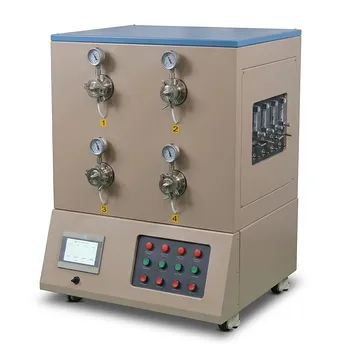
High Throughput 1200C Four Channel Tube Furnace with 3 Inch Quartz Tubes for Multi Zone Annealing and Material Research
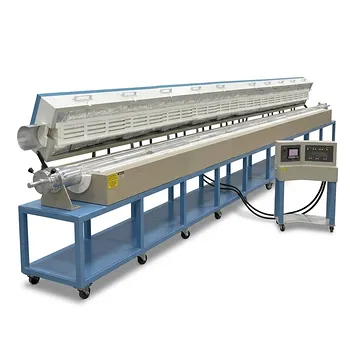
12 Zone Ultra Long Split Tube Furnace with 20 Foot Quartz Tube and 1100C Max Temperature
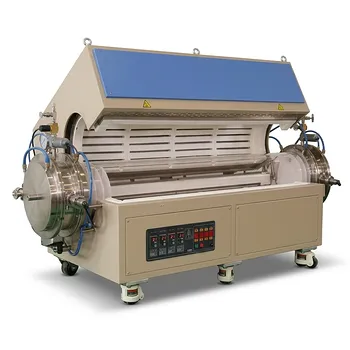
1200C Max Four Zone Split Tube Furnace with Optional Large Diameter Quartz Tubes
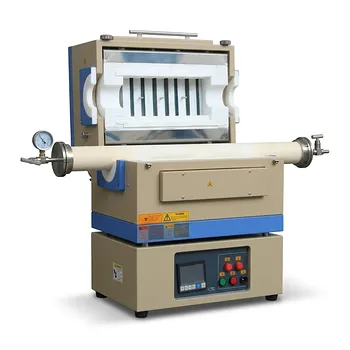
1500C Eight Zone Split Tube Furnace for Thermal Gradient Processing and Advanced Material Research
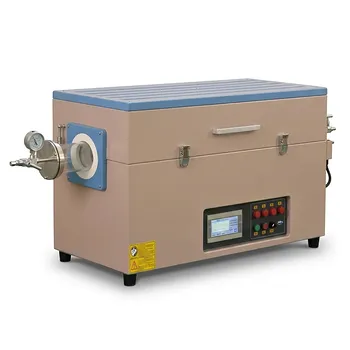
1200C Four Zone Split Tube Furnace with Touch Screen Control and High Purity Quartz Tube and Vacuum Sealing Flanges
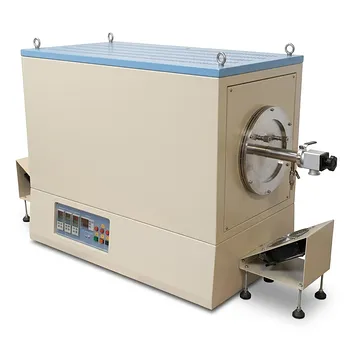
Four Zone Tube Furnace 1100C with 600mm Large Diameter Quartz Tube and Vacuum Flanges
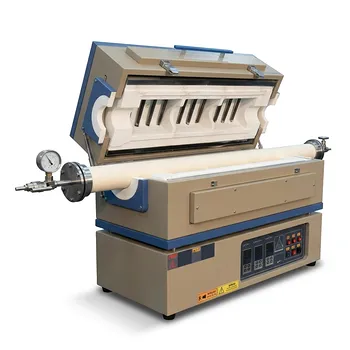
1600C Three Zone Split Tube Furnace with Alumina Tube and Vacuum Flange
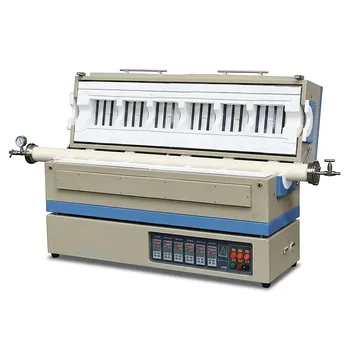
Six Zone Split Tube Furnace with Alumina Tube and Vacuum Flanges for 1500C High Temperature Thermal Processing and CVD
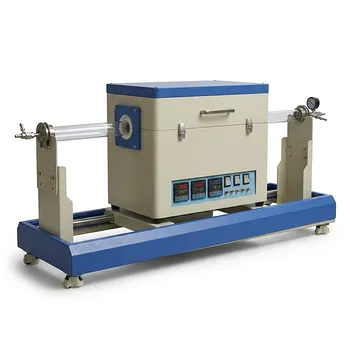
Double Temperature Zone Double Cover Tube Furnace for High Temperature CVD and Vacuum Annealing
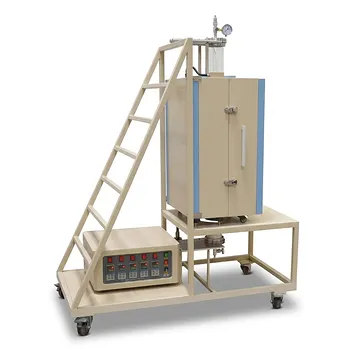
Five Zone Split Vertical Tube Furnace 1200C Max with 4 Inch Quartz Tube and Stainless Steel Vacuum Flanges
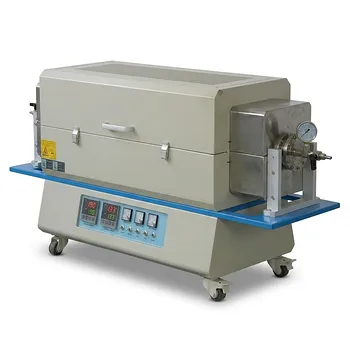
High Temperature Elongated Dual Zone Tube Furnace for Material Research and Industrial Heat Treatment
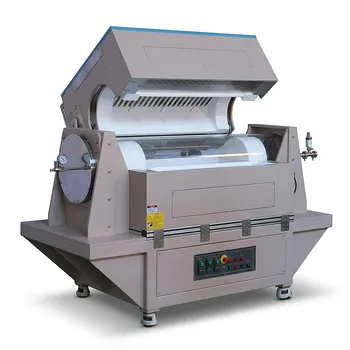
Three Zone Tube Furnace with 11 Inch or 15 Inch Quartz Tube and Hinged Flanges for Vacuum Atmosphere Heat Treatment

High Temperature 1700C Six Zone Split Tube Furnace with Alumina Tube and Water Cooled Flanges
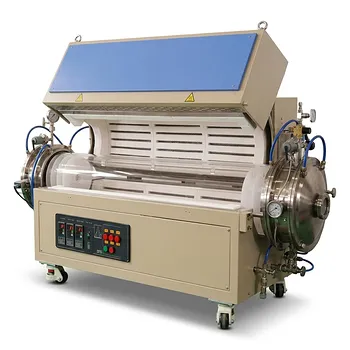
High Temperature Three Zone Split Tube Furnace 1200C Max 35.4 Inch Heating Length 8 Inch ID Tube