What role does a high-precision tube furnace play in CCA-modified biochar prep? Optimize Your Pyrolysis Results.
Updated 3 months ago
A high-precision tube furnace with a nitrogen environment serves as the reactor for controlled pyrolysis, ensuring that biomass precursors are transformed into a stable carbon framework rather than being lost to combustion. This setup allows for the simultaneous "in-situ" conversion of Chromated Copper Arsenate (CCA) into specific, conductive metal compounds like Cu3As and CrO2 that are securely anchored within the resulting biochar.
Core Takeaway: The tube furnace facilitates a precise, anaerobic thermal environment that prevents material oxidation while enabling the simultaneous synthesis of a conjugated carbon structure and the immobilization of functional metal species.
Achieving Pyrolysis Through Oxygen Exclusion
The Prevention of Oxidative Combustion
In the preparation of modified biochar, the presence of oxygen at high temperatures would lead to the complete combustion of the biomass into ash. By introducing a continuous flow of high-purity nitrogen, the tube furnace eliminates oxygen interference, allowing for anaerobic carbonization.
Facilitating Ordered Thermal Cracking
Under these inert conditions, the organic components of the wood—cellulose, hemicellulose, and lignin—undergo a process of pyrolysis. This results in an ordered thermal cracking that converts the organic precursor into a carbon material characterized by a stable, conjugated structure.
Metal Speciation and Structural Integrity
In-Situ Conversion of CCA Agents
The tube furnace environment is critical for the chemical transformation of the CCA agents themselves. Rather than simply coating the surface, the metal elements are converted into conductive metal compounds, such as Cu3As (copper arsenide) and CrO2 (chromium dioxide), during the heating process.
Preventing Over-Oxidation of Metals
The nitrogen environment plays a protective role by preventing the over-oxidation of these metal species. Maintaining specific oxidation states is vital for ensuring the resulting biochar has the correct electrocatalytic or conductive properties required for its intended application.
Precision Control of the Thermal Field
A high-precision furnace provides a uniform thermal field and a strict heating program, often utilizing specific ramp rates like 5°C per minute. This level of control ensures that the pore structure and functional group content are consistent throughout the entire sample.
Understanding the Trade-offs
Equipment and Resource Intensity
While a tube furnace offers unmatched precision, it requires a constant supply of industrial-grade or high-purity nitrogen, which increases operating costs compared to simpler carbonization methods. The process is also inherently batch-oriented, which can limit the throughput of material synthesis.
Sensitivity to Operational Parameters
Small fluctuations in the nitrogen flow rate or a breach in the seal can introduce trace amounts of oxygen, leading to localized combustion or undesired metal oxides. Furthermore, if the heating rate is not precisely calibrated, it can lead to the collapse of the microporous structure, reducing the material's surface area.
How to Apply This to Your Research
For successful CCA-modified biochar synthesis, your approach should be dictated by the specific properties required for your final application.
- If your primary focus is maximimizing electrical conductivity: Ensure the furnace maintains a strict anaerobic environment to favor the formation of metallic compounds like Cu3As and a highly conjugated carbon framework.
- If your primary focus is optimizing pore structure for adsorption: Prioritize the precision of the heating ramp rate and nitrogen flow to ensure uniform thermal cracking and high specific surface area.
- If your primary focus is benchmarking against other methods: Use the tube furnace as the "gold standard" reference point due to its ability to provide a highly repeatable and stable thermal environment.
By mastering the balance between the inert atmosphere and the thermal program, you can transform hazardous CCA-treated wood into a high-value, functionalized carbon material.
Summary Table:
| Feature | Function in CCA-Biochar Synthesis | Key Benefit |
|---|---|---|
| Nitrogen Atmosphere | Prevents oxidative combustion | Stabilizes carbon framework |
| In-situ Conversion | Facilitates chemical transformation | Creates conductive Cu3As/CrO2 |
| Precision Control | Regulates strict ramp rates (e.g., 5°C/min) | Ensures consistent pore structure |
| Thermal Uniformity | Provides a stable thermal field | Guarantees repeatable R&D results |
Advance Your Material Science Research with THERMUNITS
Are you looking to achieve the precise anaerobic conditions necessary for high-value biochar synthesis? THERMUNITS is a leading manufacturer of high-temperature laboratory equipment, specialized in providing the controlled environments required for advanced material R&D.
Our comprehensive range of thermal solutions—including Tube, Vacuum, Atmosphere, Muffle, and Rotary furnaces, as well as CVD/PECVD systems—is engineered to provide the uniform thermal fields and strict atmosphere control your research demands. Whether you are optimizing pore structures or facilitating metal speciation, our equipment delivers the reliability you need.
Ready to elevate your lab's thermal processing capabilities?
Contact our expert team today to discuss your specific requirements!
References
- Meiling Huang, Changlei Xia. Sustainable Supercapacitor Electrode Based on Activated Biochar Derived from Preserved Wood Waste. DOI: 10.3390/f15010177
Mentioned Products
- Vertical 1700C Vacuum and Atmosphere Tube Furnace with 80mm Alumina Tube
- 1200°C Atmosphere Controlled Automatic Bottom Loading Furnace with 6 Inch Quartz Tube
- Compact Vertical Split Quartz Tube Furnace with Stainless Steel Vacuum Flanges for Rapid Thermal Quenching and Controlled Atmosphere Material Processing
- Three Zone Tube Furnace with 11 Inch or 15 Inch Quartz Tube and Hinged Flanges for Vacuum Atmosphere Heat Treatment
- 1200C Hydrogen Atmosphere Box Furnace with 5 Heated Sides and 64L Chamber
People Also Ask
- How is an industrial-grade vertical tube furnace utilized in smelting leaching residues? Enhance Metal Recovery Efficiency
- What is the function of a laboratory-grade vertical tube furnace in fast pyrolysis? Optimize Composite Research.
- How does a vertical tube furnace facilitate thermoelectric alloy melting? Precision synthesis for material homogeneity.
- Why is a thermocouple sensor indispensable for monitoring the vertical tube furnace during gallium oxide nanowire production? Optimize VLS Growth
- What are the advantages of using a vertical tube furnace for crucible experiments simulating steel-slag interactions?

Tech Team · ThermUnits
Last updated on Jun 02, 2026
Related Products

Vertical 1700C Vacuum and Atmosphere Tube Furnace with 80mm Alumina Tube
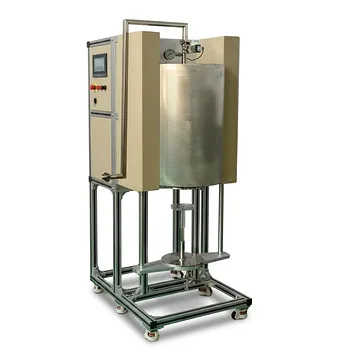
1200°C Atmosphere Controlled Automatic Bottom Loading Furnace with 6 Inch Quartz Tube

Compact Vertical Split Quartz Tube Furnace with Stainless Steel Vacuum Flanges for Rapid Thermal Quenching and Controlled Atmosphere Material Processing

Three Zone Tube Furnace with 11 Inch or 15 Inch Quartz Tube and Hinged Flanges for Vacuum Atmosphere Heat Treatment
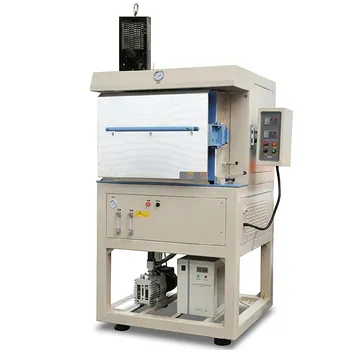
1200C Hydrogen Atmosphere Box Furnace with 5 Heated Sides and 64L Chamber
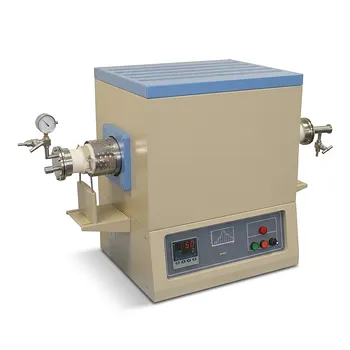
1700C High Temperature Alumina Tube Furnace with 18 Inch Heated Zone and Vacuum Sealing Flanges
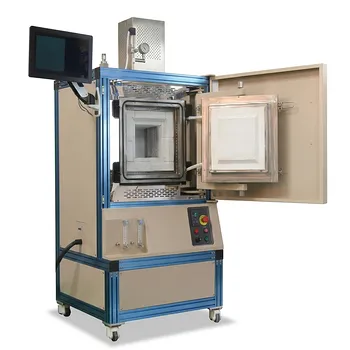
High Temperature Hydrogen Atmosphere Box Furnace 1650C Max Reducing Environment Material Synthesis System 8x8x8 Chamber
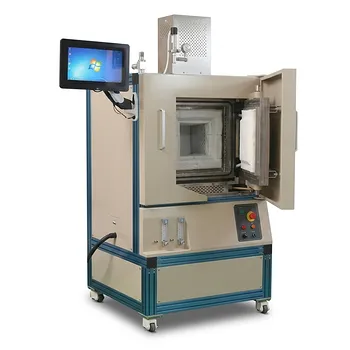
High Temperature Oxygen and Inert Atmosphere Controlled Furnace 8 Liter 1700C Sintering System for Advanced Materials RD
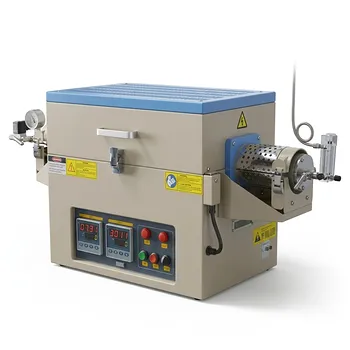
1100C Dual Zone Hydrogen Gas Tube Furnace with Quartz Tube and Integrated H2 Leak Detection System
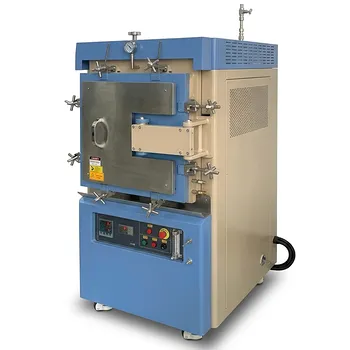
Atmosphere Controlled Muffle Furnace 1700C Maximum Temperature 80L High Capacity Vacuum Inert Gas Box Furnace
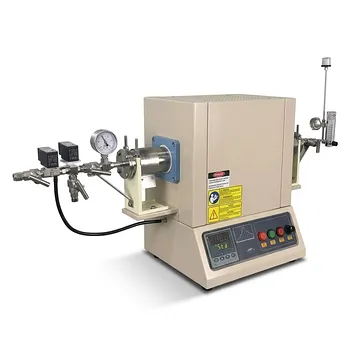
1500C Compact Hydrogen Gas Tube Furnace with 2 Inch Alumina Tube and Hydrogen Detector
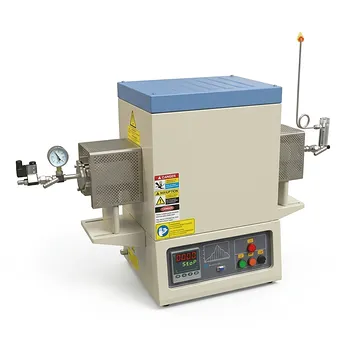
1700C Hydrogen Gas Tube Furnace with 60mm Alumina Process Tube and Integrated Hydrogen Safety Detector

High Temperature 1700C Vertical Tube Furnace for Powder Spherification and Material Sintering

Compact High Temperature 1600C Tube Furnace with 50mm Alumina Tube and Vacuum Flanges for Material Sintering
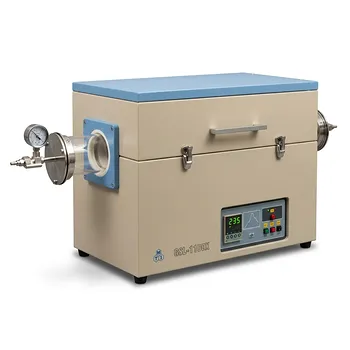
Single Zone Tube Furnace 5 Inch Quartz Tube 36 Inch Heating Zone Vacuum Flanges

High Temperature 1700C Six Zone Split Tube Furnace with Alumina Tube and Water Cooled Flanges
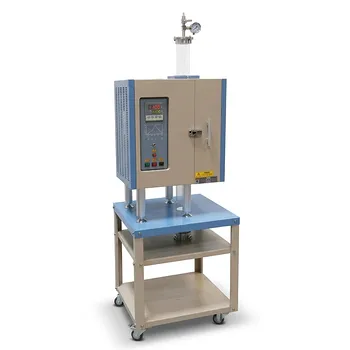
1100°C Split Vertical Tube Furnace with 80mm Quartz Tube and Stainless Steel Vacuum Flanges
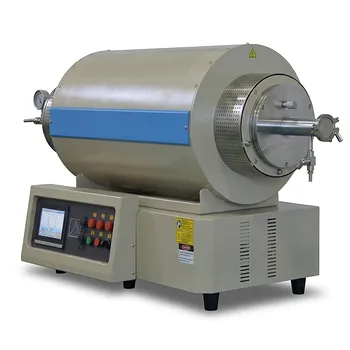
1200C Max Three Zone Tube Furnace 6 Inch OD Max with Tube and Flange
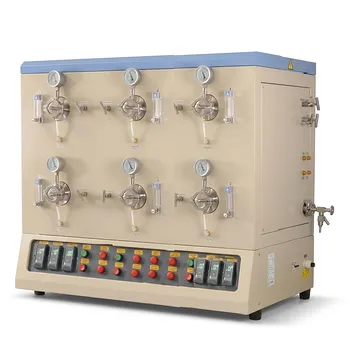
1200C High Throughput Multi Channel Tube Furnace with 50mm Quartz Tubes for Annealing and Material Phase Diagram Research
