What role does a horizontal tube furnace play in the combustion synthesis of hercynite? Master 1550°C Thermal Stability
Updated 3 months ago
A horizontal tube furnace serves as the critical high-temperature reactor for the synthesis of hercynite by providing a precise thermal environment reaching 1550°C. This specific temperature and the furnace's ability to maintain a stable thermal field over long durations enable iron oxide from scale to react with alumina from dross. Under the reductive influence of graphite, the furnace facilitates a solid-liquid interface reaction that allows for the essential rearrangement of the crystal structure into hercynite.
The core takeaway is that a horizontal tube furnace provides the sustained 1550°C thermal stability and atmospheric control necessary for the reductive solid-liquid reaction between iron oxide and alumina. Without this precise high-temperature regulation, the crystalline rearrangement required to form phase-pure hercynite would be unattainable.
Precise Thermal Regulation at Ultra-High Temperatures
Maintaining the 1550°C Reaction Threshold
The synthesis of hercynite is highly dependent on reaching and maintaining an exact temperature of 1550°C. The horizontal tube furnace is engineered to sustain this extreme heat, which is significantly higher than standard pyrolysis or carbonization processes.
Stability During Long-Duration Roasting
The furnace provides a stable thermal field that remains consistent over extended periods. This long-duration roasting is vital for ensuring that the heat penetrates the reactants thoroughly, allowing the chemical transformation to reach completion throughout the entire sample volume.
Facilitating the Chemical and Structural Transformation
Enabling the Solid-Liquid Interface Reaction
At 1550°C, the furnace creates the conditions necessary for iron oxide in the scale to interact with alumina in the dross. The horizontal orientation of the furnace helps maintain the physical contact required for these materials to react at the solid-liquid interface.
Supporting Reductive Action via Graphite
While the furnace can operate under standard atmospheres, it provides the sealed environment where graphite can effectively act as a reducing agent. This reductive environment is necessary to drive the chemical rearrangement of the precursor materials into the specific spinel structure of hercynite.
Crystal Structure Rearrangement
The controlled heating environment ensures that the atoms within the iron oxide and alumina have sufficient kinetic energy to move. This mobility, provided by the furnace’s heat, is what allows the materials to rearrange their crystal structure into the final hercynite phase.
Understanding the Trade-offs and Technical Challenges
Thermal Stress and Equipment Longevity
Operating a furnace at 1550°C places extreme thermal stress on the heating elements and the work tube itself. Frequent cycling to these temperatures can lead to material fatigue, requiring high-grade ceramic components that are more expensive than standard quartz tubes used in lower-temperature applications.
Managing Reaction Byproducts
High-temperature roasting of industrial waste like scale and dross can release volatile impurities. If the furnace is not equipped with proper exhaust or filtration, these residues can accumulate on the inner walls of the tube, potentially contaminating subsequent batches or damaging sensitive internal sensors.
How to Apply This to Your Synthesis Goals
The success of hercynite synthesis depends on how you configure the furnace's parameters to match your specific material purity and yield requirements.
- If your primary focus is Phase Purity: Ensure the furnace is calibrated to maintain exactly 1550°C with minimal fluctuation to prevent the formation of unwanted intermediate oxides.
- If your primary focus is Material Efficiency: Utilize the horizontal layout to maximize the contact area between the scale and dross, ensuring the solid-liquid interface reaction is as thorough as possible.
- If your primary focus is Equipment Longevity: Implement a controlled ramp-up and ramp-down heating rate (e.g., 5-10°C/min) to protect the ceramic tube from thermal shock during the high-temperature roasting cycle.
By mastering the thermal field of the horizontal tube furnace, you can transform industrial byproducts into high-quality hercynite through precise crystalline engineering.
Summary Table:
| Key Feature | Role in Hercynite Synthesis | Synthesis Impact |
|---|---|---|
| 1550°C Capability | Reaches the critical reaction threshold | Ensures formation of phase-pure hercynite |
| Stable Thermal Field | Maintains heat over long roasting durations | Guarantees complete chemical transformation |
| Horizontal Layout | Optimizes solid-liquid interface contact | Facilitates interaction between scale and dross |
| Atmospheric Control | Provides sealed reductive environment | Supports graphite-driven crystal rearrangement |
Elevate Your Material Synthesis with THERMUNITS
At THERMUNITS, we understand that achieving phase purity in materials like hercynite requires uncompromising thermal precision. As a leading manufacturer of high-temperature laboratory equipment for material science and industrial R&D, we provide the robust solutions you need to master 1550°C+ environments.
Our comprehensive range of thermal processing solutions includes:
- Tube Furnaces (Horizontal, Rotary, and Multi-zone)
- Muffle, Vacuum, and Atmosphere Furnaces
- CVD/PECVD Systems and Vacuum Induction Melting (VIM)
- Hot Press and Dental Furnaces
- High-Grade Thermal Elements
Ready to optimize your heat treatment process?
Contact our expert team today to discuss how our advanced furnaces can enhance your R&D outcomes and industrial efficiency.
References
- Nuntaporn Kongkajun, Somyote Kongkarat. Upcycling Mill Scale and Aluminum Dross for Sustainable Materials Processing: Synthesis of Hercynite via Fe2O3-Al2O3-C Combustion. DOI: 10.3390/recycling9050080
Mentioned Products
- Multi Position Tube Furnace 1100C for Laboratory Material Research and Advanced Industrial Thermal Processing
- 1500C Max Dual Zone Rotary Tube Furnace with 60 mm OD Alumina Tube for High Temperature Material Synthesis
- 1100C High Pressure Rocking Tube Furnace with 2 Inch Super Alloy Processing Tube for Material Synthesis
- High Temperature 1700C Vertical Tube Furnace for Powder Spherification and Material Sintering
- 24 Inch Three Zone Split Tube Furnace with Optional Quartz Tube and Vacuum Flange System for High Temperature Material Synthesis
People Also Ask
- Why use a tube furnace for oxygen annealing LaCrO3/LaMnO3? Optimize Phase Transition & Magnetic Performance.
- What key role does a laboratory high-temperature tube furnace play in the production of carbon nanofibers? Guide
- How is a laboratory high-temperature tube furnace utilized to research the products of aluminothermic reduction? Advanced Metallurgical Solutions
- What is the role of a laboratory tube furnace in the carbonization process of porous carbon foam (PCF)? Master 3D Synthesis
- What role does a laboratory tube furnace play in the pyrolysis and carbonization of biomass? Optimize Thermal Research.

Tech Team · ThermUnits
Last updated on Jun 02, 2026
Related Products
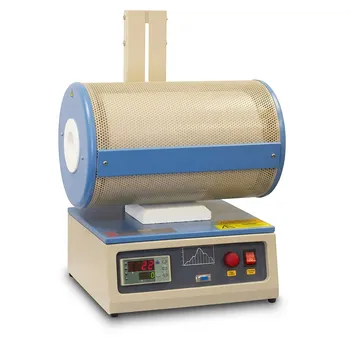
Multi Position Tube Furnace 1100C for Laboratory Material Research and Advanced Industrial Thermal Processing
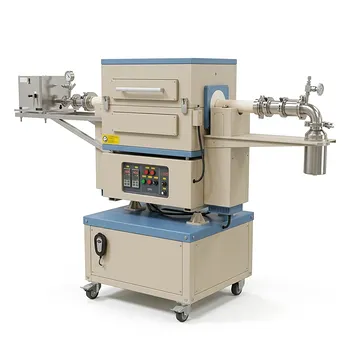
1500C Max Dual Zone Rotary Tube Furnace with 60 mm OD Alumina Tube for High Temperature Material Synthesis
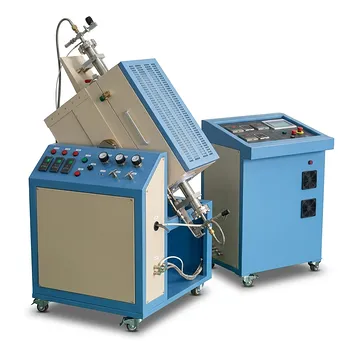
1100C High Pressure Rocking Tube Furnace with 2 Inch Super Alloy Processing Tube for Material Synthesis

High Temperature 1700C Vertical Tube Furnace for Powder Spherification and Material Sintering
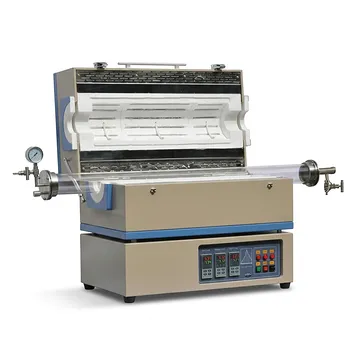
24 Inch Three Zone Split Tube Furnace with Optional Quartz Tube and Vacuum Flange System for High Temperature Material Synthesis

Compact Vertical Split Quartz Tube Furnace with Stainless Steel Vacuum Flanges for Rapid Thermal Quenching and Controlled Atmosphere Material Processing
Split Vertical Tube Furnace with 1200C Quartz Tube and Stainless Steel Vacuum Flanges for Rapid Thermal Processing

Vertical 1700C Vacuum and Atmosphere Tube Furnace with 80mm Alumina Tube

Compact High Temperature 1600C Tube Furnace with 50mm Alumina Tube and Vacuum Flanges for Material Sintering
1100°C Split Vertical Tube Furnace with 80mm Quartz Tube and Stainless Steel Vacuum Flanges
High Temperature Vertical Split Tube Furnace with PID Temperature Controller for 1 and 2 Inch Processing Tubes
Compact Hybrid Muffle and Tube Furnace for 1000C Controlled Atmosphere Laboratory Material Sintering

1200°C 5 Inch Vertical Quartz Tube Furnace with Stainless Steel Vacuum Flanges

High Temperature Automated 5 Inch Tube Furnace for Autonomous Material Research and Advanced Laboratory R&D
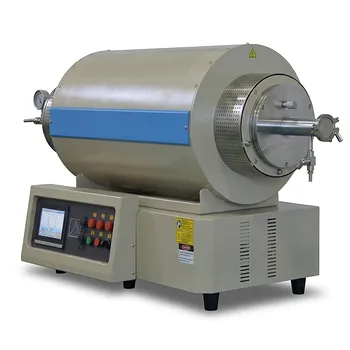
1200C Max Three Zone Tube Furnace 6 Inch OD Max with Tube and Flange
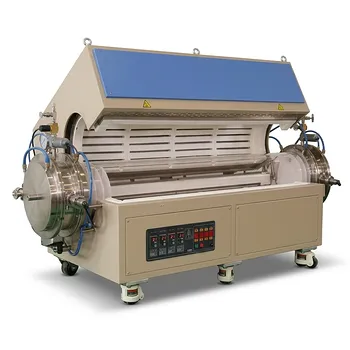
1200C Max Four Zone Split Tube Furnace with Optional Large Diameter Quartz Tubes
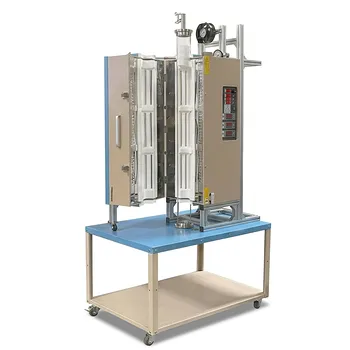
1200C Three Zone Split Vertical Tube Furnace 4 Inch Quartz Tube Stainless Steel Vacuum Flanges
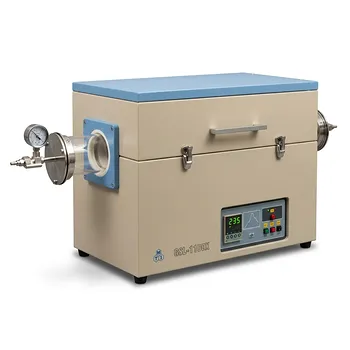
Single Zone Tube Furnace 5 Inch Quartz Tube 36 Inch Heating Zone Vacuum Flanges
1100C Dual Zone Hydrogen Gas Tube Furnace with Quartz Tube and Integrated H2 Leak Detection System
