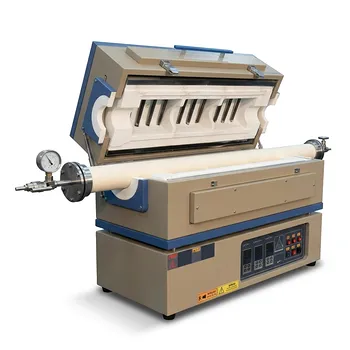
What role does a horizontal tube furnace play in the initial sintering of CaAlSiN3? Essential Pre-reaction Guide
Updated 3 months ago
The horizontal tube furnace acts as the essential pre-reaction vessel for CaAlSiN3 phosphor, providing the 1550°C environment required for initial phase formation. By maintaining a stable flow of high-purity nitrogen and a precise heating rate (3°C per minute), it facilitates a solid-state reaction that transforms raw mixed materials into critical intermediate phases while purging impurities.
Core Takeaway: The horizontal tube furnace is not the final step, but a preparatory stage that establishes chemical purity and intermediate structures. It creates a high-quality "chemical base" that is strictly required before the material can undergo the high-pressure sintering necessary for final crystal growth.
The Pre-Reaction Stage: Establishing Material Integrity
Precision Thermal Management
The furnace provides a highly controlled temperature profile that is vital for the initial solid-state reaction. By adhering to a specific heating rate of 3°C per minute, the system ensures that the raw materials react uniformly without suffering from thermal shock or inconsistent phase transitions.
Atmospheric Control and Purification
A core function of the horizontal design is its ability to maintain a stable flow of high-purity nitrogen. This flow serves two purposes: it creates the necessary inert environment to prevent unwanted oxidation and acts as a carrier gas to remove reaction impurities from the system.
Formation of Intermediate Phases
At the target temperature of 1550°C, the mixed raw materials begin their initial chemical transformation. The furnace provides the residence time needed for these materials to rearrange into intermediate phases, which are the structural precursors to the final phosphor lattice.
Bridging the Gap to High-Performance Phosphors
Preparing for High-Pressure Sintering
The horizontal tube furnace is a specialized tool for the initial sintering stage, but it does not complete the process. Its primary role is to create a refined chemical base that is optimized for the high-pressure gas atmosphere sintering that follows at much higher temperatures.
Ensuring Structural Homogeneity
By providing a stable and controllable thermal field, the furnace promotes atomic migration and diffusion between the matrix powders. This ensures that the intermediate compact is chemically homogeneous, which is a prerequisite for achieving high quantum efficiency in the final red phosphor.
Prevention of Premature Decomposition
While the tube furnace operates at high temperatures, it does so at standard or near-standard pressures. This environment is ideal for the initial solid-state reaction without the complexity of high-pressure systems, allowing for a controlled transition before the nitrides require high-pressure suppression to prevent thermal decomposition.
Understanding the Trade-offs
Temperature and Pressure Limitations
While excellent for pre-reaction, a standard horizontal tube furnace cannot reach the extreme temperatures (e.g., 1780°C) or the high-pressure nitrogen environments required for the final growth of CaAlSiN3. Without high pressure, nitrides may undergo thermal decomposition, leading to a loss of structural integrity and poor optical performance.
Atmosphere vs. Vacuum Constraints
The horizontal tube furnace excels at flowing-gas environments but may not be the optimal choice for processes requiring a high vacuum. For nitride phosphors, the purity of the nitrogen is the critical factor; any leak or contamination in the tube's sealed flanges can result in oxygen contamination, which degrades the phosphor's thermal stability.
How to Apply This to Your Process
Making the Right Choice for Your Goal
- If your primary focus is initial phase synthesis: Use the horizontal tube furnace at 1550°C with a slow heating ramp to ensure a clean, intermediate chemical base.
- If your primary focus is achieving maximum quantum efficiency: Focus on the high-pressure sintering stage following the tube furnace treatment to lock in the crystal structure and prevent nitride decomposition.
- If your primary focus is impurity management: Maximize the flow rate of high-purity nitrogen during the 1550°C hold time to effectively purge volatile reaction by-products.
The horizontal tube furnace is the foundation of the phosphor production chain, transforming raw chemical mixtures into the purified intermediate phases necessary for high-performance optical materials.
Summary Table:
| Process Stage | Key Parameters | Function in Phosphor Synthesis |
|---|---|---|
| Pre-reaction | 1550°C @ 3°C/min | Facilitates uniform solid-state reaction & phase formation |
| Atmosphere Control | High-purity N2 Flow | Prevents oxidation and purges reaction impurities |
| Structural Prep | Chemical Diffusion | Creates a homogeneous base for high-pressure sintering |
| Purity Management | Sealed Gas Path | Ensures atomic integrity and prevents oxygen contamination |
Optimize Your Thermal Processing with THERMUNITS
Precision is the foundation of high-performance material science. As a leading manufacturer of high-temperature laboratory equipment, THERMUNITS provides the advanced thermal solutions necessary for successful industrial R&D. Our high-stability Horizontal Tube Furnaces, Atmosphere Furnaces, and CVD/PECVD systems are designed to meet the rigorous demands of phosphor synthesis and nitride material production.
Whether you require Muffle, Vacuum, Rotary, or Hot Press furnaces, we deliver equipment that ensures structural homogeneity and maximum process purity. Contact our technical team today to explore how our specialized heat treatment solutions can enhance your laboratory's efficiency and material quantum performance.
References
- Wei Dong, W.S. Su. Synthesis and Luminescence Improvement of CaAlSiN<sub>3 </sub>Phosphors Doped with Eu<sup>2+</sup> and Mn<sup>2+</sup> for White LEDs. DOI: 10.37188/cjl.20240168
Mentioned Products
- Multi Position Tube Furnace 1100C for Laboratory Material Research and Advanced Industrial Thermal Processing
- 1200°C 10-Zone Split Tube Furnace with Horizontal and Vertical Mounting for Multi-Zone Thermal Gradients and Large Diameter Material Processing
- Ten Zone Multi Orientation Laboratory Tube Furnace for 1200C High Temperature Gradient Thermal Processing
- Vertical 1700C Vacuum and Atmosphere Tube Furnace with 80mm Alumina Tube
- Split Vertical Tube Furnace with 1200C Quartz Tube and Stainless Steel Vacuum Flanges for Rapid Thermal Processing
People Also Ask
- Why use a tube furnace for oxygen annealing LaCrO3/LaMnO3? Optimize Phase Transition & Magnetic Performance.
- What key role does a laboratory high-temperature tube furnace play in the production of carbon nanofibers? Guide
- How is a laboratory high-temperature tube furnace utilized to research the products of aluminothermic reduction? Advanced Metallurgical Solutions
- What is the role of a laboratory tube furnace in the carbonization process of porous carbon foam (PCF)? Master 3D Synthesis
- What role does a laboratory tube furnace play in the pyrolysis and carbonization of biomass? Optimize Thermal Research.

Tech Team · ThermUnits
Last updated on Jun 03, 2026
Related Products
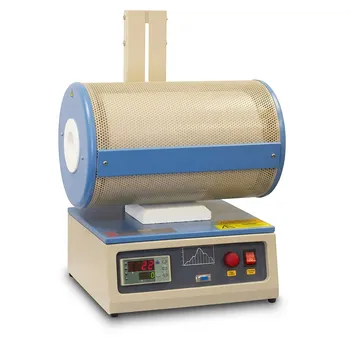
Multi Position Tube Furnace 1100C for Laboratory Material Research and Advanced Industrial Thermal Processing
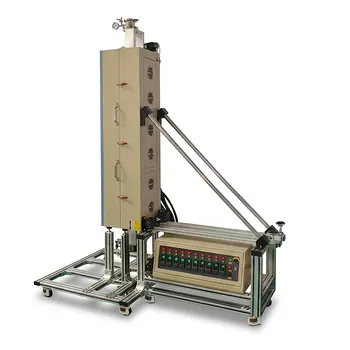
1200°C 10-Zone Split Tube Furnace with Horizontal and Vertical Mounting for Multi-Zone Thermal Gradients and Large Diameter Material Processing
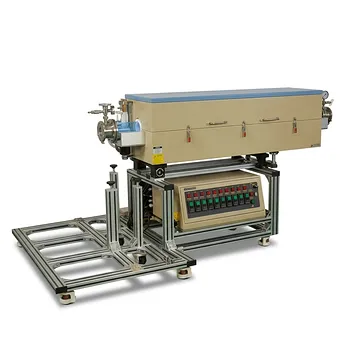
Ten Zone Multi Orientation Laboratory Tube Furnace for 1200C High Temperature Gradient Thermal Processing

Vertical 1700C Vacuum and Atmosphere Tube Furnace with 80mm Alumina Tube
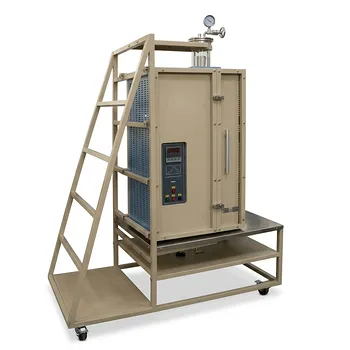
Split Vertical Tube Furnace with 1200C Quartz Tube and Stainless Steel Vacuum Flanges for Rapid Thermal Processing

High Temperature 1700C Vertical Tube Furnace for Powder Spherification and Material Sintering

1200°C 5 Inch Vertical Quartz Tube Furnace with Stainless Steel Vacuum Flanges
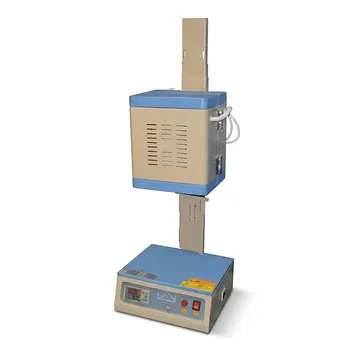
High Temperature Vertical Split Tube Furnace with PID Temperature Controller for 1 and 2 Inch Processing Tubes
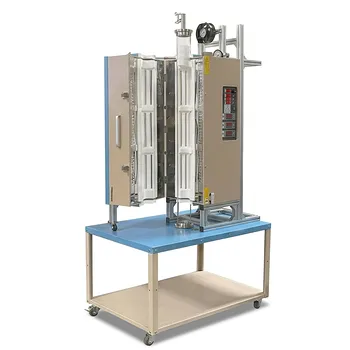
1200C Three Zone Split Vertical Tube Furnace 4 Inch Quartz Tube Stainless Steel Vacuum Flanges
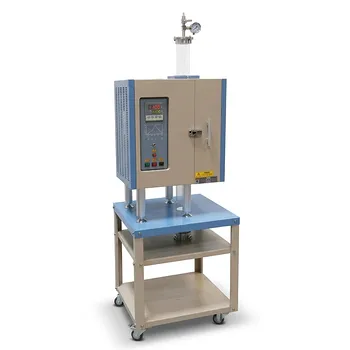
1100°C Split Vertical Tube Furnace with 80mm Quartz Tube and Stainless Steel Vacuum Flanges

Compact Vertical Split Quartz Tube Furnace with Stainless Steel Vacuum Flanges for Rapid Thermal Quenching and Controlled Atmosphere Material Processing

High Temperature 1700C Six Zone Split Tube Furnace with Alumina Tube and Water Cooled Flanges
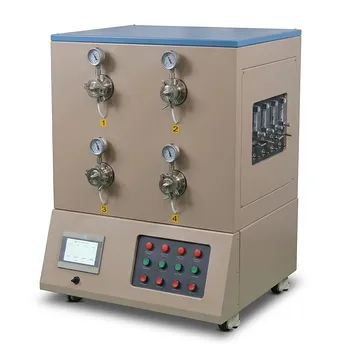
High Throughput 1200C Four Channel Tube Furnace with 3 Inch Quartz Tubes for Multi Zone Annealing and Material Research
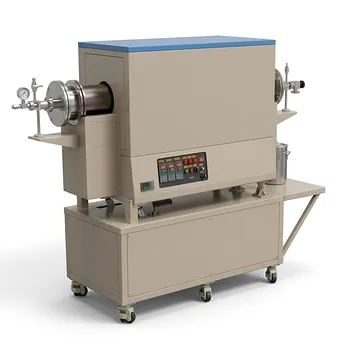
900°C Max Rotary Tube Furnace with 8 Inch 310S Alloy Tube and Optional Multi Zone Heating for Industrial Material Calcination
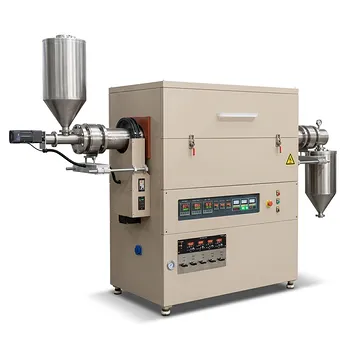
High Temperature Tilting Rotary Tube Furnace with Integrated Mass Flow Control and Multi Zone Heating
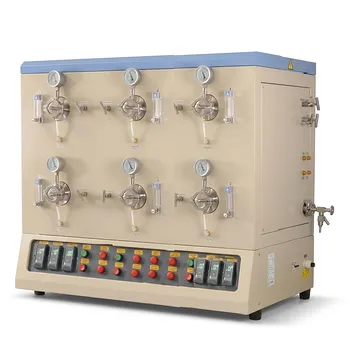
1200C High Throughput Multi Channel Tube Furnace with 50mm Quartz Tubes for Annealing and Material Phase Diagram Research

Compact High Temperature 1600C Tube Furnace with 50mm Alumina Tube and Vacuum Flanges for Material Sintering
1200C Max Three Zone Tube Furnace 6 Inch OD Max with Tube and Flange
1700C Hydrogen Gas Tube Furnace with 60mm Alumina Process Tube and Integrated Hydrogen Safety Detector