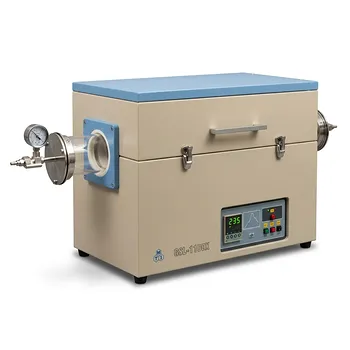
What role does a laboratory atmosphere tube furnace play in the sulfurization process of molybdenum-based catalysts?
Updated 3 months ago
A laboratory atmosphere tube furnace acts as the primary thermochemical reactor for converting molybdenum precursors into their active sulfide forms. By providing a hermetically sealed environment where temperature and gas composition are strictly regulated, the furnace enables the precise reduction of oxidized molybdenum components into a layered molybdenum disulfide (MoS2) active phase, typically at temperatures around 400°C.
The core role of a tube furnace in sulfurization is to provide a stable, reproducible environment for gas-solid or solid-solid reactions. It ensures that sulfur atoms correctly replace oxygen atoms in the molybdenum lattice to create the specific crystalline structures required for catalysis.
Precise Control of the Thermochemical Environment
Regulation of Reactive Gas Mixtures
The furnace allows for the introduction of specific ratios of reactive gases, such as H2 and H2S mixtures. This controlled atmosphere is essential for reducing molybdenum oxides while simultaneously providing the sulfur source necessary for phase conversion.
Strict Temperature Profiling
Sulfurization requires precise thermal stages to ensure the reaction goes to completion without damaging the catalyst structure. The furnace maintains a constant temperature profile (ranging from 300°C for solid-phase reactions to 900°C for advanced annealing) to drive the substitution of sulfur anions into the oxide lattice.
Inert Gas Protection
During heating and cooling phases, the furnace can be purged with Argon (Ar) or Nitrogen (N2). This prevents unwanted oxidation of the catalyst and allows for the stable synthesis of molybdenum disulfide from sulfur powder precursors.
Phase Transformation and Structural Engineering
Formation of the MoS2 Active Phase
The primary function of the furnace is the conversion of oxidized molybdenum into layered MoS2. This layered structure is the "active phase" of the catalyst, providing the edges and surfaces necessary for chemical reactions.
Optimization of Active Sites
By adjusting the temperature and atmosphere, the furnace helps increase the number of electrochemical active sites. This is achieved by inducing morphological transformations that are critical for enhancing hydrogen evolution reaction (HER) and oxygen evolution reaction (OER) activities.
Control of Defect Density
At higher temperatures (400°C to 900°C), the furnace facilitates the dissociation of sulfur atoms to generate sulfur vacancies. These defects are not accidental; they are precisely tuned to regulate the electronic and magnetic properties of the catalyst, such as triggering room-temperature ferromagnetism.
Maximizing Reaction Efficiency and Quality
Optimal Gas-Solid Contact
The horizontal tube design ensures that the gas flow passes directly over the catalyst particles. This configuration maximizes contact between the sulfurizing agent and the precursor, resulting in uniform sulfurization throughout the entire sample batch.
Post-Recrystallization and Purity
Beyond the initial reaction, the furnace is used for post-treatment recrystallization. High-temperature environments (600°C to 800°C) improve the crystalline quality of the MoS2 powder, which ensures stable and predictable electronic performance during industrial use.
Synthesis of Specialized Structures
The furnace enables the redispersion of metal clusters and the embedding of single atoms (like Ruthenium) into the catalyst matrix. This level of atomic-scale engineering is only possible because the furnace can maintain a specific, localized reducing environment.
Understanding the Trade-offs and Limitations
Thermal Gradients and Uniformity
While tube furnaces are excellent for small batches, they can suffer from internal temperature gradients. If the catalyst bed is too thick or the tube is too large, the center of the sample may not reach the same temperature as the exterior, leading to incomplete sulfurization.
Atmosphere Sensitivity and Safety
The use of H2S gas is highly toxic and corrosive, requiring specialized furnace materials and robust scrubbing systems. Any leak in the atmosphere control can not only ruin the catalyst batch through oxidation but also pose a significant safety risk to the laboratory.
Precursor Volatility
At high temperatures, sulfur powder can vaporize faster than it reacts with the molybdenum. This requires the user to carefully manage the positioning of the sulfur source and the gas flow rate to ensure the vapor stays in contact with the sample long enough for the reaction to occur.
How to Apply This to Your Project
Recommendations Based on Your Goals
- If your primary focus is maximizing catalytic activity for HER: Prioritize a furnace setup that allows for precise H2/H2S gas mixing at 400°C to ensure the formation of a layered MoS2 phase with high surface area.
- If your primary focus is electronic or magnetic tuning: Use a high-vacuum or inert atmosphere (Argon) at temperatures between 700°C and 900°C to intentionally create sulfur vacancies and defects.
- If your primary focus is large-scale powder synthesis: Utilize a furnace with a quartz tube and N2 protective atmosphere to facilitate the reaction between MoO3 and sulfur powder at 600°C–800°C.
The laboratory tube furnace is the indispensable "engine" of molybdenum sulfurization, transforming raw precursors into high-performance catalytic materials through rigorous atmospheric and thermal control.
Summary Table:
| Feature | Role in Sulfurization | Impact on Catalyst |
|---|---|---|
| Atmosphere Control | Regulates H2/H2S gas mixtures | Converts precursors into active MoS2 phase |
| Temperature Profiling | Maintains stable 300°C-900°C | Controls crystallinity and defect density |
| Inert Gas Purging | Provides Ar/N2 protection | Prevents oxidation and ensures batch purity |
| Tube Geometry | Direct gas-solid contact | Ensures uniform sulfurization of powder samples |
Optimize Your Catalyst Research with THERMUNITS
Achieving the perfect MoS2 active phase requires rigorous control over your thermochemical environment. THERMUNITS is a leading manufacturer of high-temperature laboratory equipment, offering specialized solutions for material science and industrial R&D.
From Atmosphere and Tube furnaces tailored for sulfurization to Muffle, Vacuum, Rotary, and Hot Press furnaces, our equipment ensures precision and safety. We also provide CVD/PECVD systems, Dental Furnaces, Electric Rotary Kilns, Vacuum Induction Melting (VIM) furnaces, and Thermal Elements.
Why Partner with THERMUNITS?
- Precision Control: Accurate thermal stages for consistent catalytic phase transformation.
- Safety & Reliability: Robust designs capable of handling reactive and toxic atmospheres.
- Customized Solutions: A comprehensive range of heat treatment equipment for any scale of R&D.
Ready to enhance your lab's efficiency and material performance? Contact THERMUNITS Today to discuss your specific heat treatment requirements!
References
- Hao Wang, Yongming Luo. The Influence of Sulfurization and Carbonization on Mo-Based Catalysts for CH3SH Synthesis. DOI: 10.3390/catal14030190
Mentioned Products
- Compact Hybrid Muffle and Tube Furnace for 1000C Controlled Atmosphere Laboratory Material Sintering
- 1000C Mini Tube Furnace with 20mm Quartz Tube and Vacuum Flanges for Material Science Research and Controlled Atmosphere Small Sample Processing
- 1700C High Temperature Alumina Tube Furnace with 18 Inch Heated Zone and Vacuum Sealing Flanges
- 1200C Hybrid Muffle and Tube Furnace for Material Research with Dual Atmosphere Control Quartz Tubes
- Bottom Loaded Inert Gas Atmosphere Box Furnace 1400C Maximum Temperature 125L High Capacity Laboratory Heat Treatment System
People Also Ask
- Why is an atmosphere-controlled tube furnace required for the pre-sulfidation of NiMo/gamma-Al2O3 catalysts?
- Why is an atmosphere-controlled tube furnace required for 800 °C CNF annealing? Essential for Oxidative Protection.
- Why is an atmosphere-controlled tube furnace required for [email protected]/C preparation? Key for Purity & Structure
- Why is an atmosphere-controlled tube furnace required for single-atom sensor calcination? Ensure Atomic Dispersion.
- What is the function of a controlled atmosphere tube furnace in LiGa alloying? Achieving High-Purity Thermal Synthesis

Tech Team · ThermUnits
Last updated on Jun 03, 2026
Related Products
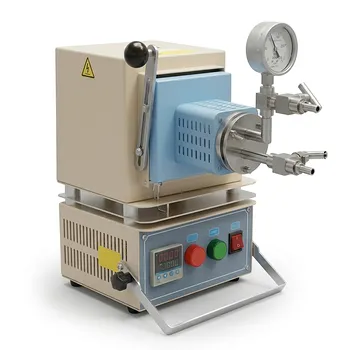
Compact Hybrid Muffle and Tube Furnace for 1000C Controlled Atmosphere Laboratory Material Sintering
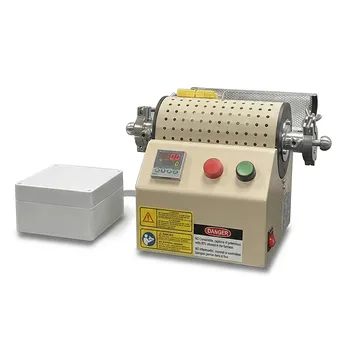
1000C Mini Tube Furnace with 20mm Quartz Tube and Vacuum Flanges for Material Science Research and Controlled Atmosphere Small Sample Processing
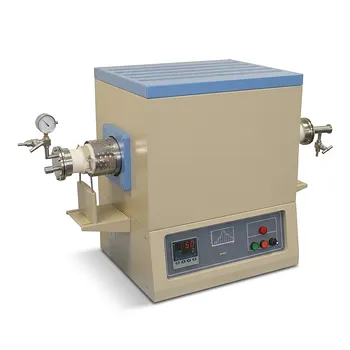
1700C High Temperature Alumina Tube Furnace with 18 Inch Heated Zone and Vacuum Sealing Flanges
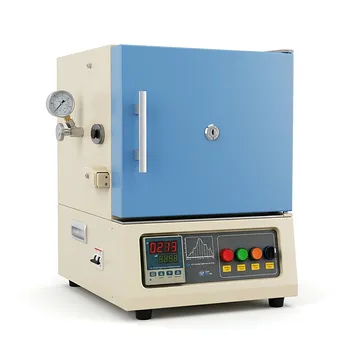
1200C Hybrid Muffle and Tube Furnace for Material Research with Dual Atmosphere Control Quartz Tubes
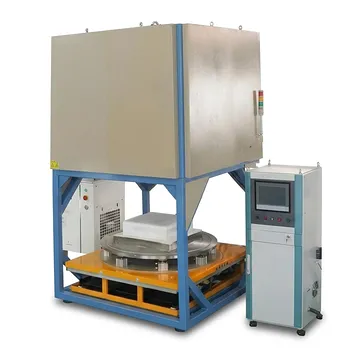
Bottom Loaded Inert Gas Atmosphere Box Furnace 1400C Maximum Temperature 125L High Capacity Laboratory Heat Treatment System

Compact Vertical Split Quartz Tube Furnace with Stainless Steel Vacuum Flanges for Rapid Thermal Quenching and Controlled Atmosphere Material Processing
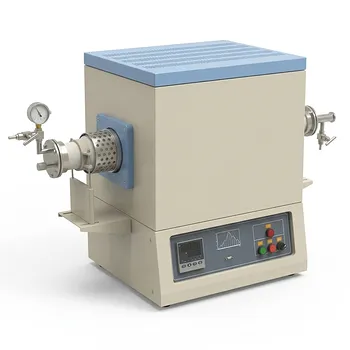
1750°C High Temperature Benchtop Vacuum Atmosphere Tube Furnace with Kanthal Super 1800 Heating Elements and 60mm Alumina Processing Tube
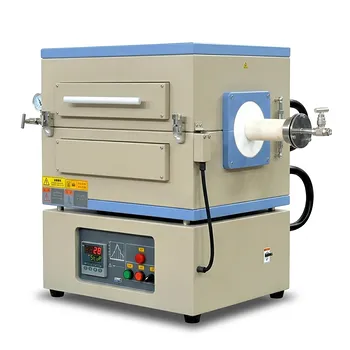
1500°C Split Tube Furnace with Alumina Tube and Vacuum Sealing Flanges for Material Research
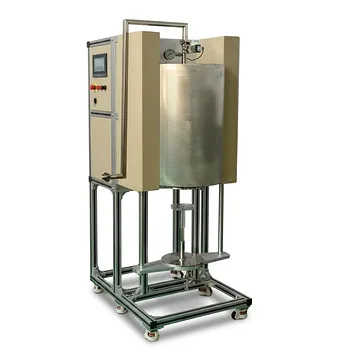
1200°C Atmosphere Controlled Automatic Bottom Loading Furnace with 6 Inch Quartz Tube
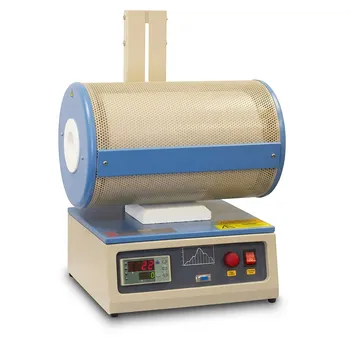
Multi Position Tube Furnace 1100C for Laboratory Material Research and Advanced Industrial Thermal Processing

Vertical 1700C Vacuum and Atmosphere Tube Furnace with 80mm Alumina Tube
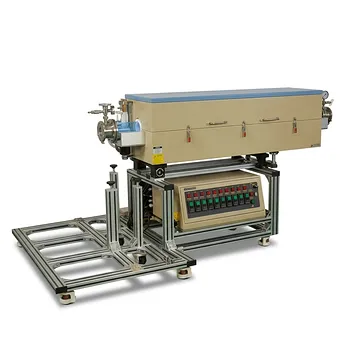
Ten Zone Multi Orientation Laboratory Tube Furnace for 1200C High Temperature Gradient Thermal Processing

High Temperature Automated 5 Inch Tube Furnace for Autonomous Material Research and Advanced Laboratory R&D
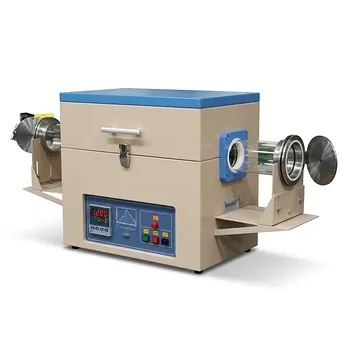
High Temperature 1200C Split Tube Furnace with Hinged Vacuum Flanges and 4 Inch Quartz Tube for Laboratory Research
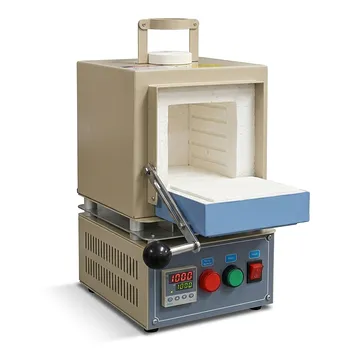
Compact 1000C Muffle Furnace with Programmable Controller and 2 Inch Top Port for Vacuum and Atmosphere Material Research
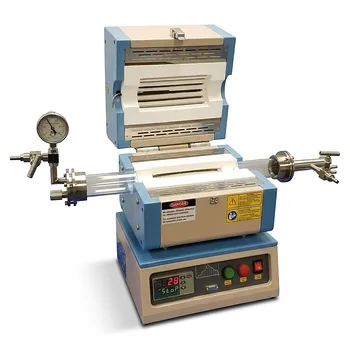
Compact Split Tube Furnace with Integrated Vacuum System and Precision Temperature Calibrator

1800C High Temperature Compact Vacuum Tube Furnace with 60mm OD Alumina Tube and Kanthal MoSi2 Heating Elements
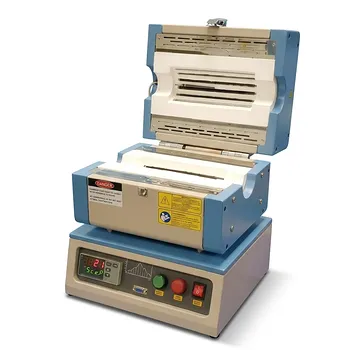
1250C Compact Split Tube Furnace with 8 Inch Heating Zone and Programmable Controller
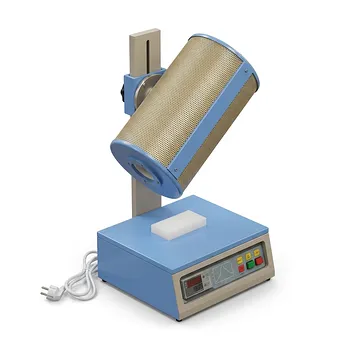
1100°C Vertical Laboratory Furnace for DIY Tubular Reactors with PID Temperature Controller