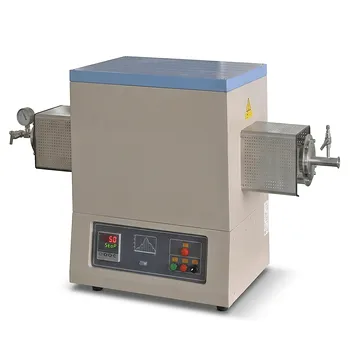
Why must the pyrolysis of Fe-Co co-doped carbon-based materials be performed in a tube furnace under a nitrogen atmosphere?
Updated 3 months ago
The primary reason for using a nitrogen-filled tube furnace is to create a strictly non-oxidative environment that prevents the carbon precursor from burning. At the high temperatures required for pyrolysis (typically 500°C to 1000°C), the presence of even trace oxygen would lead to the combustion of organic ligands and the loss of the carbon skeleton as $CO_2$. Nitrogen acts as an inert shield, ensuring that the material undergoes carbonization—a chemical transformation into a functional carbon matrix—rather than being reduced to ash.
Pyrolysis in a nitrogen atmosphere is essential to exclude oxygen, preventing the oxidative destruction of the carbon framework while enabling the precise thermal rearrangement of atoms. This controlled environment ensures the formation of nitrogen-doped structures and maintains the specific valence states of Fe and Co necessary for catalytic activity.
Preventing Oxidative Destruction
Exclusion of Atmospheric Oxygen
A tube furnace provides a sealed reaction chamber where a continuous flow of high-purity nitrogen displaces all oxygen. Without this displacement, the organic precursors and biomass-derived materials would undergo combustion at elevated temperatures.
Preservation of Carbon Yield
By maintaining a non-oxidative atmosphere, the organic components are converted into solid carbon products through devolatilization rather than being lost as gaseous byproducts. This ensures a high carbon yield and the complete development of the biochar or graphitic pore structure.
Facilitating Chemical and Structural Transformation
In-situ Nitrogen Doping
The nitrogen atmosphere is not merely protective; it supports the thermal rearrangement of nitrogen atoms within the carbon lattice. This process is critical for creating nitrogen-doped carbon substrates, which significantly enhance electrical conductivity and provide active sites for chemical reactions.
Graphitization and Conductivity
High-temperature treatment in an inert environment promotes the graphitization of the carbon structure. This creates a stable, conductive framework that can support transition metals while maintaining high porosity and surface area.
Morphological Control
The controlled environment of a tube furnace allows for the construction of advanced geometries, such as one-dimensional carbon nanotubes and two-dimensional nanosheets. These structures are formed through gas-phase exfoliation and stable chemical potential environments that only an inert flow can provide.
Protecting Transition Metal Active Sites
Maintaining Metal Valence States
Fe and Co co-doping requires precise control over the oxidation state of the metals. An inert atmosphere ensures that these transition metals are reduced to or maintained in specific active states (such as zero-valent species) rather than forming bulk, inactive oxides.
Formation of Protective Shells
Under nitrogen flow, the carbon source can transform into a protective graphene shell around the Fe-Co particles. This encapsulation prevents the metal species from leaching or aggregating, thereby enhancing the chemical stability and longevity of the material.
Understanding the Trade-offs
Atmosphere Purity vs. Material Integrity
If the nitrogen flow is interrupted or the purity is insufficient, trace oxygen will cause oxidative burnout, leading to a collapse of the pore structure. This results in a significant loss of surface area and the destruction of the delicate Fe-Co active sites.
Gas Flow Dynamics
The flow rate of nitrogen must be carefully calibrated to remove byproduct gases like CO and $CO_2$ released during carbonization. If these byproducts are not efficiently purged, they can alter the chemical potential within the tube, interfering with the intended nitrogen-doping reactions and graphitization degree.
How to Apply This to Your Project
Recommendations Based on Material Goals
- If your primary focus is maximized catalytic activity: Ensure a strict nitrogen flow to maintain the transition metals in their active, low-valence states and promote the formation of metal-nitrogen ($M-N_x$) coordination sites.
- If your primary focus is high electrical conductivity: Target higher pyrolysis temperatures (above 800°C) within the nitrogen environment to maximize the graphitization degree of the carbon framework.
- If your primary focus is structural porosity: Use the nitrogen flow to facilitate gas-phase exfoliation, ensuring that byproduct gases are swept away to allow for the clear development of micro- and mesopores.
Successful synthesis of Fe-Co co-doped materials depends entirely on the nitrogen atmosphere's ability to decouple thermal decomposition from oxidative combustion.
Summary Table:
| Requirement | Function in Pyrolysis | Benefit to Fe-Co Material |
|---|---|---|
| Nitrogen Flow | Displaces oxygen and oxidants | Prevents combustion; ensures high carbon yield |
| Sealed Tube | Creates controlled environment | Precise thermal rearrangement & in-situ N-doping |
| Inert Shield | Protects metal valence states | Maintains active Fe-Co sites & graphene shells |
| Purge Dynamic | Removes byproduct gases (CO/CO2) | Optimizes porous structure & graphitization degree |
Elevate Your Material Research with THERMUNITS
Achieving precise atmospheric control is vital for the synthesis of advanced Fe-Co co-doped catalysts. As a leading manufacturer of high-temperature laboratory equipment for material science and industrial R&D, THERMUNITS provides the specialized Tube Furnaces, Vacuum/Atmosphere Furnaces, and CVD/PECVD systems required for high-performance pyrolysis.
Our thermal processing solutions—including Rotary Kilns and Hot Press Furnaces—ensure the non-oxidative environments and stable chemical potentials necessary for superior carbonization and catalytic activity.
Ready to optimize your heat treatment process? Contact THERMUNITS today to discuss our comprehensive range of furnace solutions and how we can bring precision to your laboratory or production line.
References
- Ziwei Deng, Jianbo Jia. Fe-Co Co-Doped 1D@2D Carbon-Based Composite as an Efficient Catalyst for Zn–Air Batteries. DOI: 10.3390/molecules29102349
Mentioned Products
- Gas Pre-Heating Tube Furnace for High Temperature Pyrolysis Reactors and Material Science Research
- Compact Vertical Split Quartz Tube Furnace with Stainless Steel Vacuum Flanges for Rapid Thermal Quenching and Controlled Atmosphere Material Processing
- Three Zone Tube Furnace with 11 Inch or 15 Inch Quartz Tube and Hinged Flanges for Vacuum Atmosphere Heat Treatment
- Vertical 1700C Vacuum and Atmosphere Tube Furnace with 80mm Alumina Tube
- 1500C Three Zone Vertical Pyrolysis Furnace for Nanoparticle Synthesis and Advanced Oxide Coating
People Also Ask
- What is the function of a preheated high-temperature tube furnace in the rapid pyrolysis synthesis of carbon nitride films?
- What is the role of a high-temperature tube furnace in coal powder pyrolysis benchmarking? Achieve Precise Baselines.
- Why is high-precision temperature control essential in a pyrolysis furnace? Master Pd NPs/NO-C Catalyst Synthesis
- How does a high-temperature tube furnace facilitate the pyrolysis of PR-ZS hybrid aerogels into carbon aerogels?
- How is a laboratory tube heating furnace applied during the evaluation of denitration catalysts? Essential Guide

Tech Team · ThermUnits
Last updated on Jun 02, 2026
Related Products
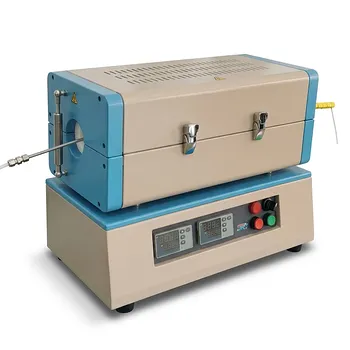
Gas Pre-Heating Tube Furnace for High Temperature Pyrolysis Reactors and Material Science Research

Compact Vertical Split Quartz Tube Furnace with Stainless Steel Vacuum Flanges for Rapid Thermal Quenching and Controlled Atmosphere Material Processing
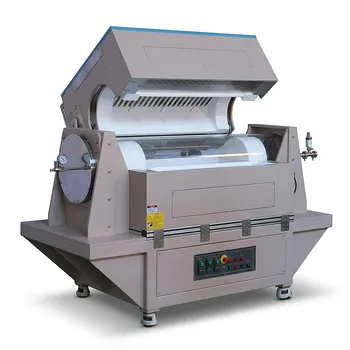
Three Zone Tube Furnace with 11 Inch or 15 Inch Quartz Tube and Hinged Flanges for Vacuum Atmosphere Heat Treatment

Vertical 1700C Vacuum and Atmosphere Tube Furnace with 80mm Alumina Tube
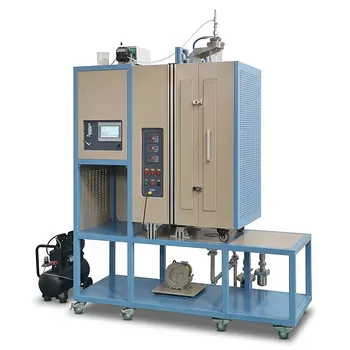
1500C Three Zone Vertical Pyrolysis Furnace for Nanoparticle Synthesis and Advanced Oxide Coating

1750°C High Temperature Benchtop Vacuum Atmosphere Tube Furnace with Kanthal Super 1800 Heating Elements and 60mm Alumina Processing Tube
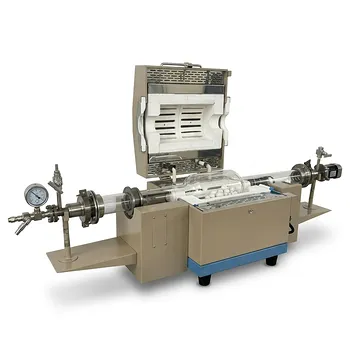
High Temperature Rotary Tube Furnace with Integrated Ball Milling and Gas Flow Function for Powder Nitriding

High Temperature 1700C Vertical Tube Furnace for Powder Spherification and Material Sintering

Compact High Temperature 1600C Tube Furnace with 50mm Alumina Tube and Vacuum Flanges for Material Sintering

High Temperature Automated 5 Inch Tube Furnace for Autonomous Material Research and Advanced Laboratory R&D
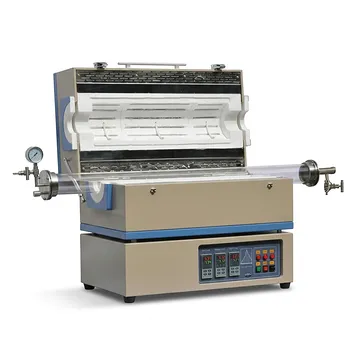
24 Inch Three Zone Split Tube Furnace with Optional Quartz Tube and Vacuum Flange System for High Temperature Material Synthesis
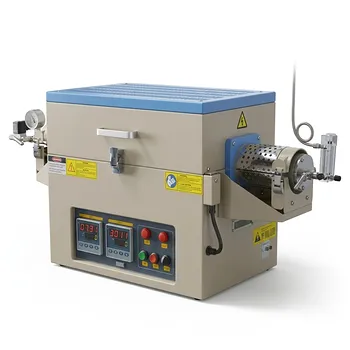
1100C Dual Zone Hydrogen Gas Tube Furnace with Quartz Tube and Integrated H2 Leak Detection System
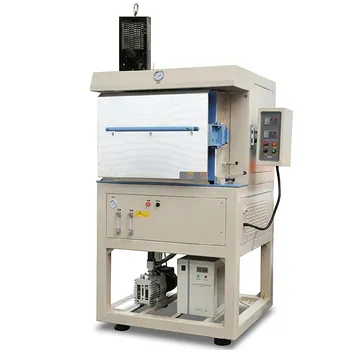
1200C Hydrogen Atmosphere Box Furnace with 5 Heated Sides and 64L Chamber
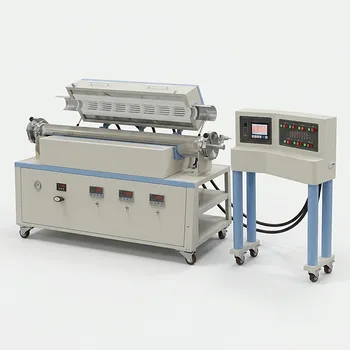
1100C Eight Zone High Pressure Super Alloy Tube Furnace with Integrated High Pressure Gas Control System
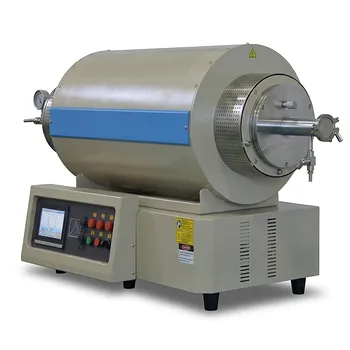
1200C Max Three Zone Tube Furnace 6 Inch OD Max with Tube and Flange
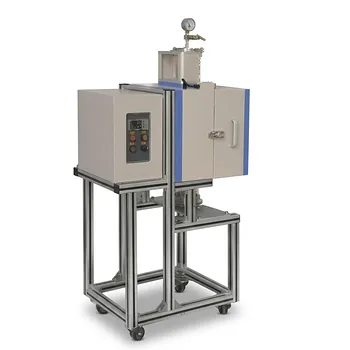
1200°C 5 Inch Vertical Quartz Tube Furnace with Stainless Steel Vacuum Flanges
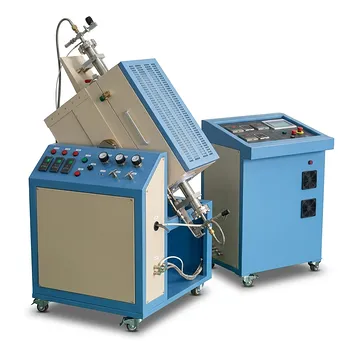
1100C High Pressure Rocking Tube Furnace with 2 Inch Super Alloy Processing Tube for Material Synthesis

1800C High Temperature Compact Vacuum Tube Furnace with 60mm OD Alumina Tube and Kanthal MoSi2 Heating Elements
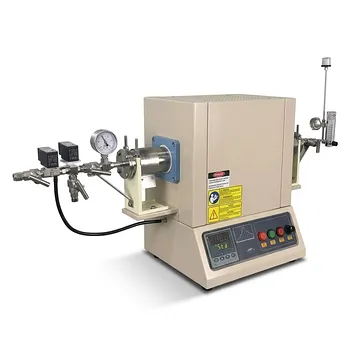
1500C Compact Hydrogen Gas Tube Furnace with 2 Inch Alumina Tube and Hydrogen Detector